Polycarbonate plastic
Polycarbonate (PC) is a transparent, impact-resistant plastic with high temperature resistance. Ideal for the electronics and automotive industries.
PC plastic, short for polycarbonate, is a transparent engineering thermoplastic with very high impact strength, good heat resistance and reliable electrical insulation properties. The material is used particularly when components need to withstand mechanical loads while also being lightweight, dimensionally stable or transparent.
Typical applications are protective sheets, machine guards, transparent housings, viewing windows, electrical components, lighting components and technical moulded parts. Polycarbonate can be processed as a semi-finished product, sheet, film, profile or injection-moulded part. Martan Plastics supports you in selecting suitable engineering plastics and manufactures components to match your technical requirements.
What is PC plastic?
Polycarbonate belongs to the group of amorphous thermoplastics. The disordered molecular structure enables high transparency and means that the material does not have a sharply defined melting point when heated. Instead, PC softens within a temperature range and can then be processed by various methods.
Compared with many transparent plastics, PC stands out above all for its high fracture and impact resistance. The material is significantly lighter than glass and splinters far less under mechanical load. This makes it particularly suitable for structural and safety-related applications.
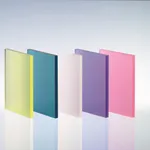
Polycarbonate is available in transparent, translucent, coloured, UV-stabilised, flame-retardant or reinforced versions. Which variant is suitable depends on the temperature, the mechanical load, contact with chemicals and the required approvals.
Properties of polycarbonate
Very high impact strength and fracture resistance
The most important property of PC plastic is its exceptionally high impact strength. Polycarbonate absorbs impact energy without breaking or splintering immediately. It is therefore used for protective covers, machine enclosures, viewing windows and robust housings.
Even at lower temperatures, PC remains comparatively tough. However, the specific load capacity is influenced by the material grade, the component geometry, existing notches and the ambient temperature.
High transparency
Depending on material thickness and surface quality, colourless polycarbonate achieves a light transmission of up to about 90 percent. The material is therefore an important alternative to glass and other transparent engineering plastics.
For visually demanding applications, the surface quality, possible internal stresses and the intended machining must be taken into account. Scratch-resistant coatings can reduce the sensitivity of the surface.
Good temperature resistance
PC has a higher heat resistance than numerous standard plastics. Depending on the material grade and load, continuous service temperatures of approximately 100 to 120 °C are possible. Higher temperatures may be permissible for short periods.
The actual service limit depends on the mechanical stress, the duration of exposure and the component geometry. For designs involving heat exposure, therefore, not only the maximum temperature but also the heat resistance of the plastic should be taken into account.
Good dimensional stability
Polycarbonate exhibits low processing shrinkage and good dimensional stability. This allows components with tight tolerances to be produced. Under continuous mechanical load, however, it can undergo creep deformation like other thermoplastics.
For precision components, therefore, temperature, load duration, wall thickness, moisture and structural stress peaks must be considered together.
Electrical insulation
PC has good electrical and dielectric properties. The material is therefore frequently used for housings, covers, switch components, connectors and insulating parts.
Flame-retardant PC grades are available for applications with special fire protection requirements. The respective fire protection classification must be verified using the specific material data sheet. Further possible applications can be found in the section Plastics for the electrical industry.
Limited scratch resistance
Uncoated polycarbonate is softer and more scratch-sensitive than glass or PMMA. Special hard coatings can therefore be advisable for viewing panels and optical components. They improve abrasion and scratch resistance, but may change the options for further processing.
UV and weather resistance
Standard PC has only limited resistance to prolonged UV radiation. Without suitable stabilisation, the material can yellow, lose transparency or become brittle outdoors.
For long-term outdoor applications, UV-stabilised polycarbonate grades, protective layers or suitable coatings should be used. Information on material selection can be found in the article on UV-resistant plastics.
Technical data for PC plastic
The following figures are typical reference values for unreinforced polycarbonate. The actual values may vary depending on manufacturer, material grade, colouring, reinforcement and test method.
| Property | Typical value |
|---|---|
| Material | Polycarbonate |
| Abbreviation | PC |
| Material group | Amorphous engineering thermoplastic |
| Density | approx. 1.20 g/cm³ |
| Light transmission | up to about 90 % |
| Glass transition temperature | approx. 145 to 150 °C |
| Continuous service temperature | typically approx. 100 to 120 °C |
| Tensile strength | typically approx. 60 to 70 MPa |
| Modulus of elasticity | typically approx. 2,200 to 2,500 MPa |
| Water absorption | low to moderate |
| Impact strength | very high |
| Electrical insulation | good |
| Transparency | very good |
The data for the specific PC grade intended for use is decisive for material selection. General values do not replace technical testing under actual operating conditions.
Chemical resistance of PC
Polycarbonate is generally resistant to water at moderate temperatures, dilute mineral acids, many oils and greases. Contact with alkalis, ammonia, ketones, esters, aromatic hydrocarbons, chlorinated solvents and various cleaning chemicals is more critical.
Certain media can cause stress cracks, especially if the component is already under mechanical stress or contains internal stresses from processing. Even substances that appear uncritical on an unstressed test specimen can lead to failure under tensile or bending stress.
For chemical exposure, the following factors should therefore always be checked:
- type and concentration of the medium
- temperature during contact
- duration and frequency of exposure
- mechanical load on the component
- stress state and surface condition
- cleaning and disinfecting agents used
Our guide to the chemical resistance of plastics provides a general classification of various materials.
Hydrolysis and contact with hot water
Prolonged contact with hot water or steam can cause polycarbonate to degrade hydrolytically. This damages the molecular chains, which can reduce impact strength and mechanical strength.
High temperatures, long exposure times and repeated sterilisation cycles are particularly critical. For applications with continuous contact with hot water or frequent autoclaving, materials such as PSU, PPSU or PEEK may be more suitable.
Whether PC is suitable for a sterilisation process must be verified using the specific material grade and the process used. An overview is provided in the article on sterilisable plastics.
Is polycarbonate food-safe?
Polycarbonate is not automatically approved for food contact. The specific formulation, regulatory conformity, intended contact conditions and the material manufacturer's information are decisive.
For applications in food technology, only appropriately tested and documented PC grades may be used. In addition, temperature, contact duration, cleaning agents and the specific food must be taken into account.
Processing of PC plastic
Polycarbonate can be processed by various thermal and mechanical methods. These include extrusion, injection moulding, thermoforming, milling, drilling, sawing, turning, waterjet cutting, bonding and welding.
Injection moulding
PC is suitable for producing complex moulded parts in plastic injection moulding. Due to its hygroscopic properties, the granules must be carefully dried before processing. Residual moisture can lead to surface defects, streaks and degradation of the mechanical properties.
Extrusion
Extrusion produces, among other things, sheets, films and profiles made of polycarbonate. The process is suitable for continuous cross-sections and larger production volumes.
CNC machining
Sheets and semi-finished products made of PC can be processed into individual components by CNC plastic machining. When milling, drilling and sawing, sharp tools, suitable cutting parameters and controlled heat generation are important.
Excessively high machining temperatures can cause stresses, melt marks or surface defects. For optical components, the subsequent visible surface and the desired edge quality must also be taken into account.
Waterjet cutting
Waterjet cutting of plastic enables contour-accurate cut pieces without pronounced thermal stress on the cutting zone. The process can be particularly useful for complex contours and greater material thicknesses.
Bonding and joining
Polycarbonate can be joined using suitable adhesives. The choice of adhesive must be matched to the chemical compatibility, the mechanical load, the temperature and the desired optical quality.
Unsuitable solvents or adhesive systems can cause stress cracks. A joint test with the specific PC grade is therefore advisable before series application.
Application areas of PC plastic
Mechanical and plant engineering
In mechanical and plant engineering, PC is used for protective sheets, machine enclosures, viewing windows, covers and transparent partitions. The high impact strength increases safety, while the transparency enables visual monitoring of machines and processes.
Vehicle construction
In vehicle construction, polycarbonate is used, among other things, for light covers, display elements, trim panels and transparent moulded parts. The low weight and high fracture resistance offer advantages over mineral glass.
Electrical engineering and electronics
Due to its electrical insulation, dimensional stability and heat resistance, PC is suitable for housings, switches, connectors, covers and technical components. Flame-retardant grades can meet additional fire protection requirements.
Medical technology and laboratory technology
Transparent housings, filter components, containers, instrument parts and laboratory equipment are manufactured from suitable PC grades. For medical technology, biocompatibility, sterilisation resistance and regulatory documentation must always be verified for the specific material grade.
Construction and safety technology
Polycarbonate is used for safety glazing, roofing, partitions and transparent protective systems. For outdoor applications, UV-stabilised or coated versions are required.
Advertising technology and lighting technology
In advertising technology, PC is suitable for displays, light covers, signs and resistant transparent structures. The material can be coloured, printed, coated and thermally formed.
Advantages and limitations of polycarbonate
| Advantages | Limitations to consider |
|---|---|
| Very high impact strength | Comparatively scratch-sensitive surface |
| High transparency | Limited UV resistance without stabilisation |
| Good heat resistance | Sensitive to various solvents and alkalis |
| Good electrical insulation | Risk of stress cracks with unsuitable media |
| Low weight | Risk of hydrolysis on prolonged contact with hot water |
| Easily formed and machined | Drying required before thermoplastic processing |
| Good dimensional stability | Note creep behaviour under long-term load |
PC compared with other transparent plastics
PC or PMMA?
Polycarbonate offers significantly higher impact strength and fracture resistance than PMMA. PMMA, by contrast, has higher light transmission, better natural UV resistance and a harder, more scratch-resistant surface.
PC is therefore particularly suitable for protective and safety applications. PMMA is often the better choice when optical brilliance, weather resistance and surface hardness are the priority.
PC or PETG?
PETG can often be thermoformed more easily and offers good chemical resistance. PC, by contrast, usually achieves higher heat resistance and mechanical load capacity.
For simple transparent covers, PETG can be economically attractive. At higher temperatures or under strong impact loads, PC often offers advantages.
PC or PCT-G?
PCT-G plastic has high transparency, good impact strength and a lower tendency to stress cracks. Depending on the grade, polycarbonate offers higher heat resistance and rigidity.
PC or PSU?
PSU plastic can withstand higher thermal loads and is more resistant to repeated steam sterilisation. PC, by contrast, is more economical, more impact-resistant and sufficient for many transparent standard applications.
When is PC plastic the right choice?
Polycarbonate is particularly suitable when a component must meet several of the following requirements:
- high impact and shock resistance
- transparent or translucent version
- low weight
- good electrical insulation
- higher heat resistance than many standard plastics
- complex shaping or precise mechanical machining
- low risk of fracture and splintering
Standard PC is less suitable for continuous contact with aggressive chemicals, repeated hot steam sterilisation, high scratch stress or long-term outdoor use without UV protection.
Available polycarbonate grades and PC qualities
For different technical requirements, polycarbonate is available in numerous grades, colours and reinforcement levels. The range includes transparent qualities such as PC KRISTALL MAKROLON® ET3113 550060, PC KRISTALL LEXAN® 103R 111, PC KRISTALL MAKROLON® 2458 550115FBL and PC KRISTALL LEXAN® EX9332T 116. These are complemented by black and white variants such as PC SCHWARZ MAKROLON® 2405 450601, PC WEISS MAKROLON® 2405 010027, PC SCHWARZ LEXAN® 141R 701, PC SCHWARZ LEXAN® EXL1414 739, PC SCHWARZ LEXAN® EXL9330 BK1A233, PC SCHWARZ LEXAN® 940 701 and PC SCHWARZ LEXAN® 920 701. For applications with special technical requirements, PC NAT MAKROLON® 6557 550115, PC NAT MAKROLON® 6717 550016 and PC SCHWARZ MAKROLON® 6485 901510 are also available. Glass fibre-reinforced polycarbonates are available in various reinforcement levels, including PC GV10% NAT MAKROLON® 9415 000000, PC GV10% SCHWARZ LEXAN® 500R 739, PC GV10% SCHWARZ LEXAN® 2814R 739, PC GV20% NAT. MAKROLON® 9425 000000, PC GV20% SCHWARZ MAKROLON® 9125 901510, PC GV20% SCHWARZ LEXAN® 3412R 701, PC GV30% NAT. MAKROLON® 8035 000000, PC GV30% SCHWARZ MAKROLON® 8035 901510, PC GV30% GRAU MAKROLON® 8035 700394, PC GV35% SCHWARZ MAKROLON® 8345 901510 and PC GV40% SCHWARZ LEXAN® 3414R 739. This allows the right PC quality to be selected specifically by colour, transparency, rigidity, strength and area of application.
Have polycarbonate machined to size
Martan Plastics supplies technical plastic solutions for industrial applications and supports you from material selection through to the finished component. Depending on your requirements, polycarbonate semi-finished products can be cut to size, milled, drilled, turned, waterjet cut or processed into individual moulded parts.
For a reliable material recommendation, we need information including dimensions, tolerances, quantity, temperature, mechanical load, chemical contact, optical requirements and required approvals.
Send us your drawing, technical data or a description of the application. We will check which PC grade and which manufacturing process are suitable for your component.
FAQ on PC plastic
What does PC stand for in plastics?
PC is the standardised abbreviation for polycarbonate. It is an amorphous thermoplastic with high transparency and very high impact strength.
Is polycarbonate break-resistant?
Polycarbonate is considerably more impact- and fracture-resistant than many other transparent plastics and mineral glass. However, the material is not completely unbreakable. The load capacity depends on material thickness, component geometry, temperature and ageing.
Is PC plastic UV-resistant?
Standard polycarbonate has only limited UV resistance. For long-term outdoor use, UV-stabilised, coextruded or coated variants are required.
How high is the temperature resistance of PC?
Depending on the material grade and load, the continuous service temperature is often approximately 100 to 120 °C. Higher temperatures may be possible for short periods. The technical data sheet and the actual operating conditions are decisive.
Is polycarbonate food-safe?
Not every PC grade is approved for food contact. Only materials whose conformity for the intended contact is expressly documented may be used.
Can polycarbonate be sterilised?
Certain PC grades can be sterilised using suitable processes. However, frequent steam sterilisation can damage the material hydrolytically. The process, temperature, number of cycles and material grade must therefore be matched to one another.
Which is better: polycarbonate or acrylic glass?
Polycarbonate is more impact-resistant and more heat-resistant. Acrylic glass or PMMA offers higher natural UV resistance, better scratch resistance and slightly higher light transmission. The better choice depends on the application.
Can polycarbonate be milled and drilled?
Yes. PC can be milled, drilled, sawn and turned. Sharp tools, suitable cutting parameters and controlled heat generation are important so that no stresses or melt marks occur.