Polysulfone
PSU (polysulfone) stands out for its high temperature resistance, chemical resistance and electrical insulation. Processing and advantages.
PSU plastic, written out polysulfone, is a transparent to translucent amorphous high-performance plastic. The material combines high temperature resistance with good mechanical strength, excellent hydrolysis resistance and reliable electrical insulation properties.
Polysulfone is used above all for technical components that come into repeated contact with hot water, steam or cleaning media. Typical applications are found in medical technology, food technology, electrical engineering, equipment manufacturing and other demanding industrial sectors.
Martan Plastics supplies suitable PSU material types as semi-finished products and produces individual cut pieces and precise technical components to drawing from them.
What is PSU?
PSU stands for polysulfone and belongs to the group of thermoplastic polyarylsulfones. It is an amorphous plastic that has no crystalline regions and therefore no classic melting point. When heated, the material increasingly changes to a softer state above its glass transition temperature.
The characteristic amber-coloured transparency distinguishes PSU from many other temperature-resistant high-performance plastics. At the same time, the material offers significantly higher heat and hydrolysis resistance than numerous transparent standard plastics.
PSU is selected in particular when the following requirements coincide:
- permanently elevated service temperatures
- repeated contact with hot water or steam
- high dimensional accuracy and low creep tendency
- reliable electrical insulation
- transparency or visual inspection through the component
- good mechanical strength and rigidity
Properties of PSU plastic
| Property | Significance for the application |
|---|---|
| Amorphous material structure | Enables transparent to translucent components and low processing shrinkage |
| High temperature resistance | Suitable for components used permanently at elevated temperatures |
| Very good hydrolysis resistance | Advantageous with repeated contact with hot water, steam and cleaning processes |
| High rigidity and strength | Suitable for dimensionally stable housings, holders and technical functional parts |
| Low creep tendency | Supports dimensional accuracy under prolonged mechanical load |
| Good electrical insulation | Enables use for insulators, connectors and electrical components |
| Amber-coloured transparency | Suitable for sight windows, transparent housings and fluid-carrying components |
| Good radiation resistance | Depending on the material type, interesting for applications with gamma, X-ray or other radiation exposure |
Temperature resistance
Depending on the material type, load and operating conditions, PSU can be used at continuous service temperatures of approximately 150 °C. Higher temperatures are possible for short periods. The glass transition temperature of typical PSU types is around 185 °C.
However, the actually permissible component temperature cannot be derived from a single material property alone. Mechanical load, duration of use, wall thickness, surrounding medium and required service life must be assessed together.
For applications at even higher continuous temperatures, materials such as PEI, PES or PEEK may be more suitable.
Hydrolysis and steam resistance
One of the most important properties of polysulfone is its very good hydrolysis resistance. PSU withstands repeated contact with hot water and steam significantly better than many standard plastics.
This makes the material suitable for components that are regularly cleaned, disinfected or steam-sterilised. The number of possible sterilisation cycles depends on the specific PSU type, the process, the temperature, the cycle duration and the mechanical load on the component.
Mechanical strength and dimensional stability
PSU has high tensile and flexural strength as well as good rigidity. The mechanical properties remain comparatively stable over a broad temperature range.
The low creep tendency is particularly important for components that are under pressure, tension or bending over a longer period. In combination with low processing shrinkage, dimensionally accurate technical components and housings can be produced.
Glass fibre-reinforced PSU types offer even higher rigidity and reduce deformation under mechanical load. At the same time, glass fibres change, among other things, the anisotropic behaviour, the surface quality and the machinability of the material.
Chemical resistance
Polysulfone is resistant to many mineral acids, alkalis, salt solutions, cleaning agents, mineral oils and aqueous media. However, the specific resistance depends on the chemical, its concentration, the temperature and the duration of exposure.
PSU can be sensitive to certain organic solvents, ketones, chlorinated hydrocarbons and aromatic hydrocarbons. Under simultaneous mechanical stress, unsuitable media can cause stress cracks.
For chemically critical applications, the intended PSU type should therefore be tested under realistic operating conditions.
Electrical properties
PSU has good dielectric properties and a high electrical resistance. The insulation properties remain comparatively stable even at elevated temperatures and over a broad frequency range.
The material is therefore suitable, among other things, for:
- electrical insulators
- coil formers
- connectors
- switch components
- housings and covers
- components in electrical and electronic devices
If particular requirements are placed on tracking resistance, flame retardancy or electrical approvals, a correspondingly tested material type must be selected.
Transparency and colour
Unreinforced PSU is transparent to translucent and has a typical pale yellow to amber inherent colour. The material does not achieve the colour-neutral clarity of PMMA or polycarbonate, but offers significantly higher heat and steam resistance.
PSU is therefore suitable for technical visible parts, transparent housings, containers and components where processes or liquid levels must be monitored.
Advantages of polysulfone
- High thermal load capacity at permanently elevated service temperatures
- Very good hydrolysis resistance on contact with hot water and steam
- Repeated sterilisation of suitable material types
- High mechanical strength and rigidity
- Low creep tendency under prolonged load
- Good dimensional stability and low processing shrinkage
- Good electrical insulation properties
- Transparent to translucent appearance
- Good resistance to many aqueous media and cleaning agents
- Thermoplastic processability and good machinability
Limits and disadvantages of PSU
PSU is not the best choice for every technically demanding application. When selecting the material, the following limitations in particular must be taken into account:
- lower impact strength than PPSU
- lower maximum temperature resistance than PEEK and some other high-temperature plastics
- sensitivity to certain organic solvents
- possible stress cracking with unsuitable media and mechanical preload
- no colour-neutral transparency due to the amber inherent colour
- comparatively high processing temperatures
- careful drying required before injection moulding and extrusion
- food, drinking water or medical suitability only with correspondingly tested types
PSU material variants
Martan Plastics offers various PSU material qualities for technical applications. Depending on the requirement, unreinforced, coloured and glass fibre-reinforced material types are available.
Unreinforced PSU types
Unreinforced PSU offers the characteristic combination of transparency, hydrolysis resistance, dimensional accuracy and electrical insulation. The available qualities include:
- PSU natural UDEL® P-1700 NT11
- PSU natural ULTRASON® S2010
- PSU black UDEL® P-1700 BK937
Natural-coloured types are particularly suitable for applications where the transparent to translucent appearance is to be retained. Black variants are used for technical components where a dark, opaque design is required.
Glass fibre-reinforced PSU
For components with increased requirements for rigidity, strength and dimensional stability, glass fibre-reinforced PSU types are available:
- PSU GV20 black UDEL® GF-120 BK937 with 20 percent glass fibre content
- PSU GV30 natural LASULF® G/30 NT with 30 percent glass fibre content
Glass fibre reinforcement particularly increases the modulus of elasticity and dimensional stability under load. At the same time, elongation at break, surface quality and direction-dependent shrinkage behaviour can change.
Which PSU variant is suitable depends, among other things, on component geometry, mechanical load, temperature, media contact, tolerances and the desired surface.
Processing PSU
Injection moulding
PSU can be processed by injection moulding into complex and dimensionally accurate components. Due to the high processing temperatures, the machine, mould and hot runner system must be designed for the material.
The granulate must be carefully dried before processing in accordance with the manufacturer's specifications. Residual moisture can lead to surface defects, material degradation and a deterioration in the mechanical properties.
Extrusion
Suitable PSU types can be processed by extrusion into sheets, rods, profiles, tubes or films. The exact suitability depends on the viscosity and composition of the respective material type.
Extruded semi-finished products can then be further processed by machining into individual finished parts.
Milling, turning and drilling
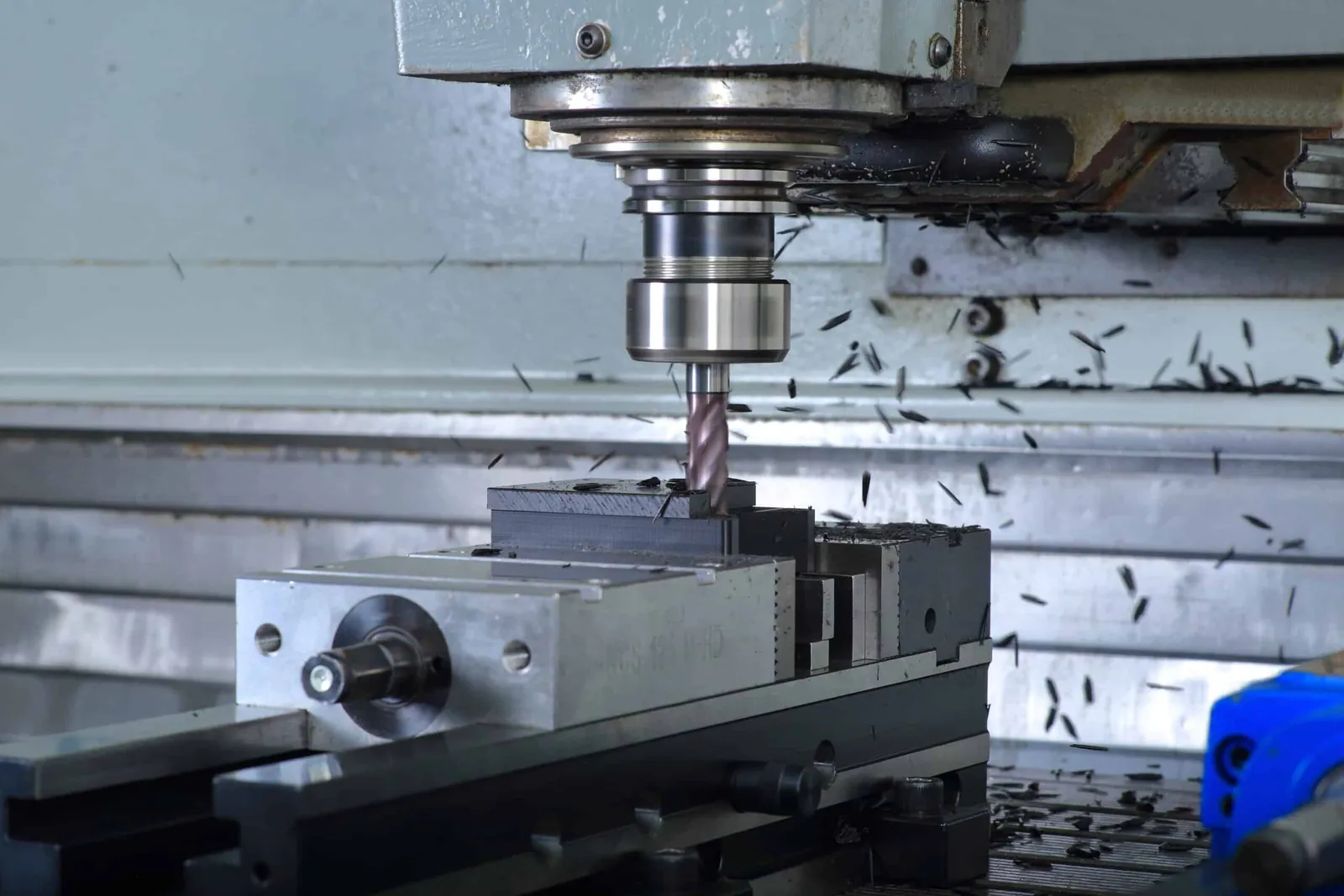
PSU semi-finished products can be precisely machined by milling, turning, drilling and sawing. Sharp tools, adapted cutting parameters and controlled heat dissipation reduce the risk of chipping, deformation and internal stresses.
With tight tolerances, material stresses, thermal expansion and the later service temperature should be taken into account already during production planning. Glass fibre-reinforced variants cause higher tool wear than unreinforced PSU.
Bonding, welding and printing
PSU can be joined with suitable adhesive systems. Epoxy resin, polyurethane or specially matched solvent adhesives are often suitable. The adhesive selection must be adapted to the specific PSU type, the surface condition and the later thermal and chemical load.
Thermal joining processes and various welding techniques are also generally possible. Before series production, joint strength, stress cracking behaviour and media resistance should be tested on original components.
Unreinforced PSU can also be printed, painted or coated. Suitable cleaning and surface pre-treatment improve adhesion.
Application areas of PSU plastic
Medical technology and laboratory technology
In medical technology, PSU is used above all where transparency, dimensional accuracy and repeated sterilisation are required.
Typical applications are:
- sterilisation containers and instrument trays
- medical housings and covers
- laboratory containers and transparent functional parts
- components for analysis and diagnostic devices
- fluid manifolds and fluid-carrying components
- filter housings and process components
Not every PSU type is automatically suitable for medical use. Biocompatibility, sterilisation capability and regulatory conformity must be demonstrated on the basis of the specific material quality and the finished component.
Food and beverage industry
PSU is used for components that come into contact with hot food, beverages, water or cleaning media. The good hydrolysis resistance is particularly advantageous in repeated cleaning and sterilisation processes.
Possible applications are:
- components in filling and dosing systems
- valve and pump components
- sight glasses and inspection windows
- filter components
- containers and technical housings
- parts of hot water and beverage systems
For food contact, only correspondingly compliant PSU types may be used. In addition, colourants, additives, processing and the finished component must be taken into account.
Electrical engineering and electronics
The combination of high temperature resistance, dimensional stability and electrical insulation makes PSU a suitable material for electrical and electronic components.
These include, among others, connectors, coil formers, insulators, switch parts, lamp components and temperature-loaded housings.
Mechanical and plant engineering
In mechanical and plant engineering, PSU is used for dimensionally accurate components that are exposed to elevated temperatures, moisture or cleaning media.
Typical components are:
- housings and covers
- insulating structural elements
- valve and pump components
- holders and supports
- inspection windows and visible parts
- precisely milled functional parts
Aerospace
In aerospace, PSU can be used for lightweight housings, electrical insulating parts, transparent technical components and interior components.
The specific suitability depends on the required fire protection, smoke gas, approval and documentation requirements. A correspondingly tested material type must therefore be selected.
PSU in comparison with other high-performance plastics
| Criterion | PSU | PPSU | PEI | PEEK |
|---|---|---|---|---|
| Material structure | amorphous | amorphous | amorphous | semi-crystalline |
| Transparency | transparent to translucent | transparent to translucent | transparent to translucent | opaque |
| Continuous service temperature | high | high | very high | very high |
| Hydrolysis resistance | very good | excellent | good to very good | excellent |
| Impact strength | good | very high | good | high |
| Chemical resistance | good, with limitations | better than PSU | good, type-dependent | very high |
| Rigidity | high | medium to high | high | high |
| Price level | high | higher | higher | significantly higher |
PSU or PPSU?
PPSU has a higher impact strength and withstands repeated sterilisation cycles better in many applications. PSU, on the other hand, offers high rigidity, good dimensional accuracy and is often more economical.
PPSU is preferred when impact load, break resistance and intensive steam sterilisation are the main focus. PSU is interesting when a rigid, transparent and thermally loadable material is required.
PSU or PEI?
PEI usually offers higher temperature resistance and is available in numerous flame-retardant types suitable for aviation. PSU can offer advantages in hydrolysis resistance and processability.
The decision depends, among other things, on continuous temperature, steam load, electrical requirements, fire protection and required approvals.
PSU or PES?
PES generally achieves a higher heat deflection temperature than PSU. Both materials have good hydrolysis resistance and are suitable for thermally demanding applications.
PSU can be the more economical solution provided its temperature and chemical resistance is sufficient for the application.
PSU or PEEK?
PEEK offers significantly higher temperature and chemical resistance as well as very good mechanical properties. However, the material is opaque, more demanding to process and considerably more cost-intensive.
PSU is particularly suitable for transparent components and applications with hot water or steam when the extreme performance of PEEK is not required.
PSU semi-finished products and finished parts to drawing
Martan Plastics supplies polysulfone as a semi-finished product depending on material quality and dimension and processes the material into individual technical components.
Possible delivery and production forms are:
- PSU sheets
- PSU rods
- PSU cut pieces
- milled components
- turned precision parts
- prototypes and individual parts
- small and series components
- components to drawing, sample or CAD data
For the selection of the suitable material type, temperature, mechanical load, media contact, sterilisation process, tolerances, quantity and required approvals should be defined as completely as possible.
When is PSU the right material?
PSU plastic is particularly suitable when a component is exposed to permanently elevated temperatures and at the same time requires good hydrolysis resistance, mechanical stability and electrical insulation.
The material is an interesting solution for transparent technical components, sterilisable housings, fluid-carrying components and dimensionally accurate functional parts. However, with very high impact stress, aggressive solvents or extreme continuous temperatures, PPSU, PES, PEI, PEEK or other engineering plastics should be included in the material selection.
Martan Plastics supports you in assessing suitable PSU types and in manufacturing individual semi-finished products, cut pieces and technical components.
Frequently asked questions about PSU plastic
What does PSU mean in plastics?
PSU is the short designation for polysulfone. It is an amorphous thermoplastic high-performance plastic with high temperature resistance, very good hydrolysis resistance and good electrical insulation properties.
How temperature-resistant is PSU?
Typical PSU material types can be used permanently at approximately 150 °C depending on load and operating conditions. Higher temperatures are possible for short periods. The data sheet of the specific type and the actual operating conditions are always decisive.
Can PSU be steam-sterilised?
Yes, suitable PSU types can be repeatedly sterilised with hot steam due to their high hydrolysis resistance. The permissible number of cycles depends on material type, temperature, duration, component geometry and mechanical load.
Is PSU transparent?
Unreinforced PSU is transparent to translucent and has a typical yellowish to amber inherent colour. It is suitable for technical visible parts, but does not achieve the colour-neutral transparency of PMMA or polycarbonate.
Is PSU food-safe?
PSU is not food-safe across the board. However, material types are available that meet defined requirements for food contact. Conformity must be checked on the basis of the specific material type and the applicable specifications.
Is PSU chemical-resistant?
PSU is resistant to many mineral acids, alkalis, salt solutions, cleaning agents and oils. However, certain solvents can attack the material or cause stress cracks. Testing under real operating conditions is advisable with critical media.
What is the difference between PSU and PPSU?
PPSU has a higher impact strength and usually better resistance to repeated steam sterilisation and certain chemicals. PSU is rigid, dimensionally accurate and a more economical alternative for many thermally demanding applications.
Can PSU be milled and turned?
Yes, PSU semi-finished products can be milled, turned, drilled and sawn. For dimensionally accurate and low-stress components, sharp tools, adapted cutting parameters and controlled heat generation are required.