Transparent engineering plastics
Transparent plastics: PC, PMMA, PET, PVC, PEI & PSU. Properties, heat resistance, production, machining and applications.
Transparent plastics combine optical clarity with the design advantages of modern polymer materials. Depending on the plastic, they offer high impact strength, good chemical resistance, low weight, electrical insulation or increased temperature resistance. This makes them suitable for viewing windows, protective covers, machine enclosures, transparent housings and numerous other industrial components.
The most important transparent engineering plastics include polycarbonate (PC), PMMA, PET or PET-G, transparent PVC and selected high-performance plastics such as PSU, PES and PEI.
Which transparent plastic is suitable depends on the application. In addition to light transmission, you should consider in particular mechanical load, service temperature, UV radiation, contact with chemicals, required approvals and the planned machining.
An overview of further material groups can be found under our plastic materials. For particularly demanding thermal operating conditions, you will also find information on high-temperature plastics.
Why are some plastics transparent?
Whether a plastic appears transparent depends essentially on its molecular structure. Particularly amorphous plastics have no pronounced crystalline regions at which incident light is strongly scattered. This is why materials such as polycarbonate or PMMA can achieve high optical transparency.
In addition to the internal material structure, other factors influence the actual light transmission:
- material thickness
- surface quality
- colouring and additives
- UV stabilisers
- coatings
- processing and internal stresses
- ageing and ambient conditions
Depending on the requirement, a plastic can be made fully transparent, translucent or specifically coloured.
Which transparent plastics are there?
Polycarbonate (PC)
Polycarbonate is a transparent engineering thermoplastic with particularly high impact strength. The material is therefore suitable for applications in which transparency and mechanical safety are required at the same time.
Typical areas of use are:
- machine guard windows
- transparent protective covers
- viewing windows
- housings
- lighting components
- technical covers
PC also has comparatively good heat deflection resistance. For permanently weathered components, UV-stabilised grades or suitable coatings should be used.
PMMA – acrylic glass
PMMA, often referred to as acrylic glass, offers very high light transmission and excellent optical quality. It is naturally highly UV- and weather-resistant and is therefore particularly suitable for outdoor applications and for optically demanding components.
Typical applications are:
- transparent covers
- displays
- lighting technology
- signage
- display cases
- glazing
- optical components
Compared with polycarbonate, PMMA is less impact-resistant, but offers higher surface hardness and very good optical properties.
PET and PET-G
Transparent PET variants combine good optical properties with strength and comparatively good chemical resistance. Depending on the material type, they are used for technical covers, displays, containers and moulded parts.
Further information on the material family can be found under PET plastic.
Transparent PVC
Transparent PVC is used when, in addition to visibility, chemical resistance, rigidity or flame retardancy are required in particular. Typical applications are found in laboratory, plant and process engineering.
Transparent high-performance plastics
For higher temperatures or special requirements, transparent or translucent high-performance plastics are available. These include, for example, PSU, PES and PEI.
PEI plastic offers a combination of thermal load capacity, rigidity and good electrical properties. Polysulfones are also used in particular in applications in which temperature, sterilisation capability and hydrolysis resistance play an important role.
Further suitable materials can be found in our overview of high-performance plastics.
Transparent plastics in comparison
| Material | Particular strengths | Temperature requirement | Typical applications |
|---|---|---|---|
| Polycarbonate (PC) | Very impact-resistant, transparent, dimensionally stable | elevated | machine guards, viewing windows, housings |
| PMMA | Very high optical clarity, UV-resistant | moderate | glazing, lighting technology, displays |
| PET/PET-G | Transparent, tough, easy to form | moderate | covers, containers, displays |
| PVC transparent | Chemical-resistant, rigid, flame-retardant | rather moderate | plant engineering, laboratory, protective covers |
| PSU/PES/PEI | High thermal load capacity | high | medical technology, electronics, technical viewing parts |
The actual properties differ depending on the material type, manufacturer, material thickness and modification. For design applications, the technical data of the intended grade should therefore always be checked.
Transparent plastics with high heat resistance
Not every transparent plastic is suitable for high temperatures. For thermally loaded applications, you should therefore consider not only optical transparency but also continuous service temperature, heat deflection resistance, mechanical load and load duration.
Polycarbonate already has a higher heat deflection resistance than many classic transparent standard plastics. For significantly more demanding thermal conditions, transparent or translucent high-performance plastics such as PEI, PSU or PES may be considered, depending on the application.
When selecting a transparent plastic for high temperatures, you should check in particular the following points:
- continuous service temperature
- short-term temperature peaks
- mechanical load at elevated temperature
- temperature changes
- contact with water or steam
- chemicals and cleaning agents
- required optical properties
- sterilisation requirements
A high maximum temperature figure alone is not sufficient for material selection. A material can be thermally suitable and still become unsuitable under simultaneous mechanical or chemical load.
For applications with particularly high temperatures, you will find further information under high-temperature plastics.
How are transparent plastics produced?
The production of transparent plastic parts depends on the material, the desired geometry and the quantity. The starting point is often a thermoplastic plastic, which is processed into semi-finished products or finished components via various shaping processes.
Typical production processes are:
- Extrusion: production of sheets, profiles, tubes and films
- Injection moulding: production of complex moulded parts and larger series
- Thermoforming: shaping of heated plastic sheets
- Casting: production of special sheets or moulded parts
- Machining: production of precise individual parts and small series from semi-finished products
For transparent components, process control is of particular importance. Surface defects, contamination, stresses or unsuitable machining parameters can impair optical quality.
Information on the production of semi-finished products can also be found under extrusion.
How can transparent plastics be machined?
Depending on the material, transparent plastics can be machined using different processes. Particularly for optically visible components, cut quality, heat input and stresses in the material must be taken into account.
Typical processes are:
- sawing
- drilling
- milling
- turning
- waterjet cutting
- laser cutting for suitable materials
- thermoforming
- bonding
- polishing
For machining, sharp tools and suitable cutting parameters are important. Excessive temperatures can lead to melting, stresses or impairment of the surface.
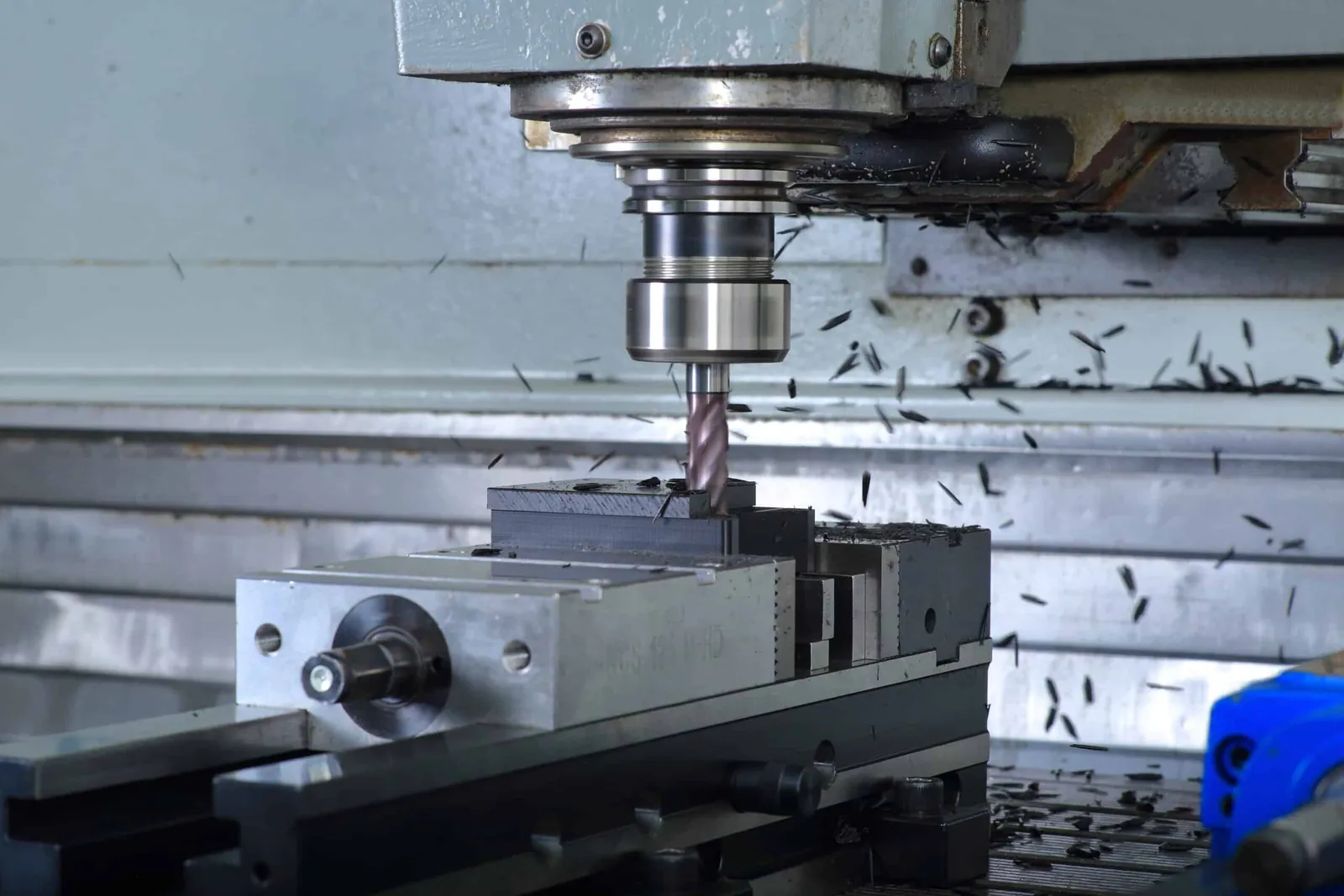
For precise contours, holes, pockets and individually manufactured components, plastic machining is suitable. More complex components can be manufactured, among other things, by CNC milling.
For transparent visible components, it should already be taken into account during design which surfaces will remain visible later and which post-processing is required.
Where are transparent engineering plastics used?
Mechanical and plant engineering
In mechanical and plant engineering, transparent plastics are used, for example, as viewing windows, guard panels and machine enclosures. Employees can thereby observe processes while moving or sensitive machine areas remain protected.
Medical technology
In medical technology, transparent components are used, among other things, when liquid levels or processes must remain visible. In addition, requirements for cleaning, sterilisation, chemical resistance and documentation may be relevant.
Electronics and electrical engineering
For electronics and electrical applications, transparent plastics can be used as covers, housings or viewing windows. In addition to transparency, electrical insulation, temperature resistance and, if applicable, flame retardancy play a role here.
Vehicle construction
In vehicle construction, transparent plastics are used, for example, for lighting components, covers and visible parts. Their low weight offers an additional design advantage.
Food industry
In the food industry too, transparent components can facilitate the visual monitoring of production processes. Depending on the application, suitable material grades and required conformities must be taken into account.
Transparent plastic or glass?
Transparent plastics can replace glass in many technical applications. However, which solution is better suited depends on the specific requirements.
Advantages of transparent plastics
- lower weight
- high design freedom
- good machinability
- high impact strength with selected materials
- complex geometries feasible
- different chemical and thermal property profiles
- possibility of functional coatings and modifications
Limits compared with glass
Glass offers, among other things, high surface hardness, good scratch resistance and high thermal load capacity. Plastics, by contrast, can be more sensitive to scratches, UV radiation, solvents or high temperatures.
The right material choice should therefore not be made on the basis of transparency alone.
Which transparent plastic is suitable for your application?
For a reliable material selection, you should first define the actual operating conditions:
- How transparent does the component need to be?
- What mechanical load occurs?
- What continuous and peak temperatures arise?
- Will the component be used indoors or outdoors?
- Is there contact with chemicals or cleaning agents?
- Does the material need to be impact- or break-resistant?
- Are special approvals required?
- Is the component to be milled, drilled, bonded or thermally formed?
- What surface quality is required?
- What dimensions and tolerances must be maintained?
Martan Plastics supports you in selecting suitable engineering plastic materials and in manufacturing individual components. From plastic semi-finished products to precise machining, you receive a solution tailored to your technical requirements.
Frequently asked questions about transparent plastics
Which plastic is transparent?
The best-known transparent plastics include polycarbonate, PMMA, PET or PET-G and transparent PVC. Various high-performance plastics such as PEI, PSU or PES can also be made transparent or translucent.
Which transparent plastic is particularly impact-resistant?
Polycarbonate has a very high impact strength and is therefore often used for guard panels, machine enclosures and other mechanically stressed transparent components.
Which transparent plastics have a high heat resistance?
For higher temperatures, polycarbonate and high-performance plastics such as PEI, PSU and PES may be considered, among others. Which material is suitable depends on the continuous and peak temperature as well as mechanical and chemical load.
How are transparent plastics produced?
Depending on the material, transparent plastic parts can be produced by extrusion, injection moulding, thermoforming, casting or by machining semi-finished products.
How can transparent plastics be machined?
Many transparent plastics can be sawn, drilled, milled, polished, bonded or thermally formed. The suitable process depends on the respective plastic and the requirements for dimensional accuracy and surface quality.
Which is better: polycarbonate or PMMA?
Polycarbonate is known above all for its high impact strength. PMMA, by contrast, offers particularly high optical quality and good UV and weather resistance. For safety-relevant components, PC is often of interest, while PMMA offers advantages for particularly high optical requirements.
Are transparent plastics suitable for outdoor use?
Yes, provided a suitable material is chosen. PMMA has good natural UV and weather resistance. For polycarbonate, UV-stabilised grades or suitable protective layers should be used for permanent outdoor applications.
Can transparent plastics be CNC-machined?
Yes. Numerous transparent engineering plastics can be machined by CNC milling or other machining processes. Suitable tool selection and process control help to reduce heat input, stresses and surface defects.