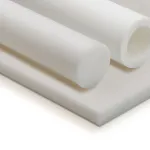
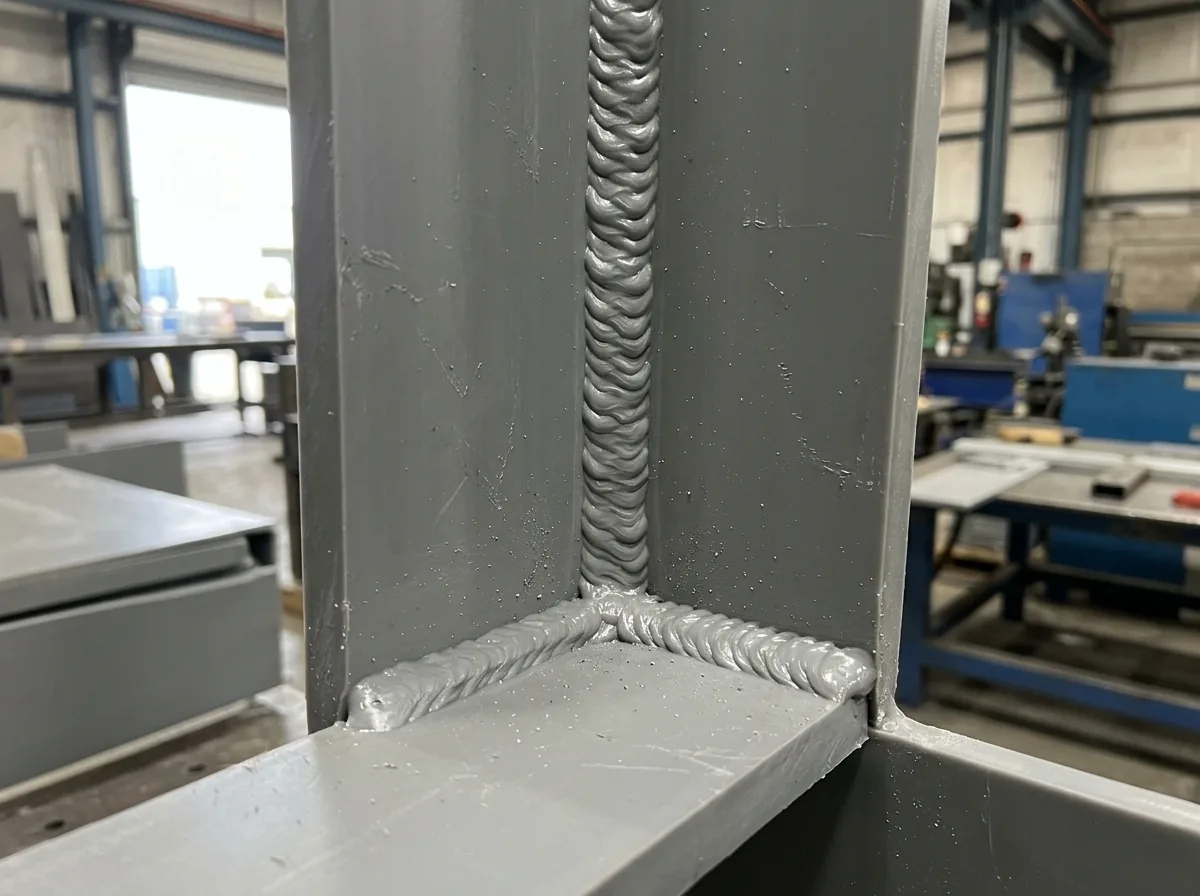
 This image was created with artificial intelligence – marked under Art. 50 of the AI Act, Regulation (EU) 2024/1689. It is a placeholder until the company's photos arrive.
Polymethylpentene
PMP (polymethylpentene) stands out for its high transparency, low density and chemical resistance. Applications, processing and advantages.
Polymethylpentene, or PMP for short, is a transparent, semi-crystalline thermoplastic from the polyolefin group. The material combines an exceptionally low density with good heat resistance, very low water absorption, high gas permeability and excellent electrical insulation properties.
Under the trade name TPX®, PMP is known in particular for applications in which transparency must be retained even at higher temperatures. Typical fields of use are medical technology, laboratory technology, electrical engineering, high-frequency engineering, packaging technology and industrial mould making.
Martan Plastics supports you in selecting suitable engineering plastics and in manufacturing custom plastic components. What matters here is not just the material designation PMP, but the selection of a grade whose thermal, chemical and regulatory properties suit the specific application.
What is PMP?
PMP is the abbreviation for polymethylpentene or poly-4-methyl-1-pentene. Chemically, the material belongs to the polyolefin family, like polypropylene and polyethylene. Compared with these standard plastics, however, PMP offers higher heat deflection resistance and, for a semi-crystalline plastic, unusually high transparency.
The transparency arises because the crystalline and amorphous regions of the material have similar refractive indices. Light is therefore scattered comparatively little within the material. This makes PMP suitable for transparent technical components where PMMA or polycarbonate are not optimally suited due to temperature, water absorption or certain chemical influences.
Another special feature is the low density of approximately 0.83 g/cm³. PMP is therefore one of the lightest thermoplastics used commercially and is lighter than water.
Properties of PMP plastic
| Property | Typical classification | Significance for the application |
|---|---|---|
| Density | approximately 0.83 g/cm³ | Very light components and low moving masses |
| Material structure | semi-crystalline | Combines transparency with chemical and thermal resistance |
| Light transmission | depending on grade and component thickness up to approximately 90 % | Suitable for transparent containers, viewing parts and optical applications |
| Melting range | approximately 230 to 240 °C | Higher heat resistance than many standard polyolefins |
| Water absorption | very low | Good dimensional stability in humid environments |
| Electrical properties | very good insulation and low dielectric losses | Suitable for electrical and high-frequency components |
| Gas permeability | comparatively high | Interesting for membranes, gassing and special packaging |
| Surface energy | very low | Good release effect, but makes bonding and printing more difficult |
The values given serve as a general material classification. Binding characteristic values must always be taken from the data sheet of the intended PMP grade. Component thickness, mechanical load, duration of use, medium and temperature influence the actual suitability.
High transparency
PMP has high light transmission in the visible range and can also be interesting for certain applications in the UV, microwave and terahertz range. Its transparency is retained even at temperatures at which other transparent plastics may already lose considerable dimensional stability.
This makes PMP suitable, among other things, for transparent laboratory containers, measuring components, viewing windows, covers and special optical components. For applications where impact strength and mechanical load capacity are the main requirements, on the other hand, polycarbonate may be the more suitable choice.
Exceptionally low density
With a density of around 0.83 g/cm³, PMP is significantly lighter than many other transparent plastics. The low weight is particularly relevant for moving components, mobile devices, laboratory products and components in which a low mass improves handling or energy efficiency.
However, the low density must not be equated with particularly high mechanical load capacity. PMP is rigid, but depending on grade and temperature it may have limited impact strength. Notches, sharp transitions and impact loads must therefore be taken into account in the design.
Good temperature resistance
PMP has a melting range of approximately 230 to 240 °C and significantly higher heat resistance than polypropylene or polyethylene. Some grades are suitable for repeated sterilisation or autoclaving cycles and short-term temperature loads in the range of approximately 150 to 175 °C.
However, a blanket continuous service temperature of 180 °C cannot be applied to every PMP grade. The permissible service temperature depends on the mechanical load, the duration of use, the geometry and the particular material type. For permanently loaded precision components, creep behaviour must also be taken into account.
For components with particularly high thermal and mechanical requirements, other temperature-resistant high-performance plastics may be more suitable.
Very low water absorption
PMP absorbs only very small amounts of water. Its dimensions and electrical properties therefore change only slightly under humid conditions. This distinguishes the material from polyamides, for example, whose properties can be influenced more strongly by moisture content.
The low water absorption is particularly advantageous for laboratory equipment, analysis components, electrical insulating parts and dimensionally stable components.
Good chemical resistance
PMP is resistant to many dilute acids, alkalis, alcohols and aqueous solutions. Its chemical resistance is similar to that of polypropylene in many areas. This makes the plastic suitable for containers, laboratory articles and components with alternating media contact.
However, the chemical resistance is not universal. Certain hydrocarbons, ketones, aromatic or chlorinated solvents can lead to swelling, stress cracks or impairment of the mechanical properties. Before use with aggressive media, a test under realistic temperature, time and load conditions should therefore be carried out.
Where very high demands are placed on chemical resistance, PTFE can represent an alternative. However, PTFE is not transparent and differs significantly in terms of rigidity, processing and dimensional stability.
Excellent electrical properties
PMP is a very good electrical insulator and has a low relative permittivity as well as low dielectric losses. These properties remain stable over a comparatively wide frequency range.
The material is therefore used for insulating parts, coil formers, high-frequency components, microwave components and moulds for electronic components. Further solutions for this area can be found under plastics for electronics and electrical engineering.
High gas permeability
In contrast to many other engineering plastics, PMP is comparatively gas-permeable. This property can be undesirable in conventional containers, but it opens up special application possibilities.
PMP is used, for example, for gas-permeable packaging, membranes, gassing components and special medical or laboratory products. Whether gas permeability is an advantage or a disadvantage therefore depends directly on the intended function.
Low surface energy and good release properties
The surface of PMP has a low surface energy. The material therefore adheres only weakly to many other materials and shows good release and detachment properties. This property is used, among other things, in release films, moulded parts and aids for industrial moulding processes.
At the same time, the low surface energy makes bonding, painting and printing more difficult. For a durable bond, pre-treatment by plasma, corona, flame treatment or a suitable primer is often required.
Advantages and limitations of PMP
Key advantages
- Very low density of approximately 0.83 g/cm³
- High transparency despite semi-crystalline material structure
- Higher heat resistance than conventional polyolefins
- Very low water absorption
- Good electrical insulation properties
- Low dielectric losses
- Good resistance to many chemicals
- High gas permeability for special applications
- Good release and detachment properties
- Processing possible by various thermoplastic methods
Limitations to be taken into account
- Lower impact strength than some other transparent plastics
- Possible sensitivity to notches and impact loads
- Not resistant to all solvents
- Limited UV and oxidation resistance without suitable stabilisation
- High gas permeability unsuitable for tight containers or barrier layers
- Difficult bonding and printing without surface pre-treatment
- Higher material price than standard plastics such as PP or PE
- Mechanical characteristic values are lower than those of high-strength engineering plastics
PMP compared with other transparent plastics
| Material | Strengths | Typical distinction from PMP |
|---|---|---|
| PMP | Very light, transparent, low water absorption, good electrical properties | Particularly for light, thermally loaded and gas-permeable applications |
| PMMA | Very high optical quality, good weather resistance | Often optically superior, but less temperature-resistant |
| Polycarbonate | High impact strength and good mechanical load capacity | More robust against impact loads, but heavier and more dependent on moisture |
| PPSU | High impact strength and good steam sterilisation capability | Mechanically more resilient, but heavier and usually less clearly transparent |
| PCT-G | Good transparency and impact strength | Simpler for transparent moulded parts, but designed for other temperature ranges |
| PP | Inexpensive, light and chemically resistant | Less transparent and significantly less heat-resistant |
For transparent components, PMP should not be chosen solely on the basis of its light transmission. The decision also depends on impact stress, service temperature, sterilisation method, media contact, gas tightness and regulatory requirements. A more comprehensive comparison is provided by the article on transparent engineering plastics.
Application areas of PMP plastic
Medical technology and laboratory technology
In medical technology and laboratory technology, PMP is used above all where transparency, low water absorption, chemical resistance and temperature resistance must be combined.
Typical products and components are:
- Measuring cylinders and laboratory containers
- Reagent vessels and sample containers
- Cuvettes and transparent analysis components
- Filter housings and filter components
- Autoclavable laboratory articles
- Components for medical analysis devices
- Gas-permeable components
The general suitability of PMP does not automatically mean that every grade is approved for medical applications. Biocompatibility, sterilisation resistance, traceability and regulatory evidence must be verified for the specific type.
Electrical engineering and high-frequency engineering
The low permittivity and low dielectric losses make PMP interesting for electrical and high-frequency applications. Possible uses include insulators, coil formers, microwave components, radar covers and moulds for LED components.
For electrical applications, requirements relating to tracking resistance, dielectric strength, burning behaviour and long-term temperature must also be taken into account.
Chemical industry and apparatus engineering
PMP can be used for transparent containers, viewing parts, measuring components and laboratory equipment with chemical media contact. Its low water absorption supports dimensional stability, while the transparency enables visual monitoring of fill levels or processes.
Before use in the chemical industry, a media-related resistance test is required. Concentration, temperature, contact duration and mechanical stress can significantly influence the behaviour.
Food and packaging technology
Suitable PMP grades can be used for food contact, microwave applications, transparent containers and gas-permeable packaging solutions. The combination of low weight, transparency and heat resistance is particularly interesting for special packaging.
Whether a specific grade may actually be used for food contact must be verified on the basis of the applicable declaration of conformity. Further information can be found in the article on plastics for the food industry.
Mould making and release technology
Due to its low surface energy, PMP has good release properties. It is therefore used, among other things, for release films, mould inserts, mandrels, sheathing and aids in the production of composite parts or elastomer products.
The low adhesion tendency can facilitate demoulding and reduce the use of additional release agents. However, the actual suitability depends on temperature, pressure, surface requirement and process medium.
Optics, acoustics and metrology
PMP is used for special optical windows, covers and measuring components. Applications in acoustics, ultrasonic technology and microwave technology are also possible, since the material combines special optical, acoustic and dielectric properties.
Processing of PMP
In principle, PMP can be processed using the usual methods for thermoplastics. Due to its high melting range, its sensitivity to oxidation and its specific flow behaviour, however, the process parameters must be precisely matched to the grade used.
Injection moulding
In plastic injection moulding, complex PMP moulded parts with thin wall thicknesses and transparent areas can be produced. Typical processing temperatures are significantly above the melting temperature of the material.
Controlled temperature management and short residence times are important in order to avoid thermal damage, discolouration and degradation of the material. Venting, gate position and uniform wall thicknesses also influence the optical and mechanical quality of the moulded part.
Extrusion and blow moulding
Extrusion can be used to produce films, sheets, profiles and other continuous semi-finished products. PMP can also be blow moulded and is therefore suitable for light, transparent hollow bodies and containers.
Because of the high processing temperatures, the extrusion line, tool and downstream cooling must be adapted to the material.
Machining
PMP can be milled, turned, drilled and polished into precise components. Martan Plastics manufactures custom geometries, among other things by CNC milling and CNC turning.
During machining, sharp tools, secure workpiece clamping and controlled heat dissipation are important. Excessive cutting forces or unfavourable clamping conditions can cause notches, chipping, stress cracks or deformation.
For prototypes, individual parts and small series, existing plastic semi-finished products can also be machined economically.
Joining, bonding and printing of PMP
Welding
Depending on the component geometry and grade, PMP can be thermally welded. Suitable methods can be hot plate, hot gas, ultrasonic or laser welding. The welding parameters must be matched to the material type, wall thickness and component geometry.
Bonding
The low surface energy makes a durable adhesive bond more difficult. Without pre-treatment, many commercially available adhesives achieve only low bond strength.
For durable bonds, the following measures may be required:
- Plasma or corona treatment
- Flame treatment of the surface
- Chemical pre-treatment
- Suitable adhesion promoters or primers
- Special adhesive systems for low-energy plastics
- Structural support through positive locking
Printing and coating
Printing and coating generally also require activation of the surface. Without suitable pre-treatment, printing inks, paints or coatings can become easily detached. Methods and pre-treatment should therefore be tested together with the ink or coating system.
What matters when selecting PMP?
PMP is particularly interesting when several of its specific properties are required at the same time. The selection should be based on a clear technical requirement profile.
In particular, the following must be checked:
- Continuous and peak temperature
- Mechanical load and impact stress
- Required transparency and optical quality
- Contact media, concentrations and exposure times
- Required gas permeability or gas barrier
- Sterilisation method and number of cycles
- Electrical and dielectric requirements
- UV and weather exposure
- Food or medical conformity
- Intended manufacturing and joining methods
- Required surface treatment
- Tolerances, quantities and component geometry
Especially for chemically or thermally loaded components, the material selection should not be based exclusively on general table values. Martan Plastics supports you in assessing the operating conditions and in selecting a suitable grade from the range of engineering and high-performance plastics.
Have PMP components manufactured to technical requirements
PMP plastic combines a very low density with transparency, low water absorption, good electrical properties and higher heat resistance than conventional polyolefins. This makes the material suitable for specialised applications in laboratory and medical technology, electronics, packaging technology, metrology and industrial release technology.
Whether PMP is actually the best solution for a component depends, however, on the specific grade and the operating conditions. Chemical media, mechanical loads, continuous service temperature, gas permeability and requirements for bonding or printing in particular must be taken into account at an early stage.
Martan Plastics supports you from material selection through the definition of suitable semi-finished products to the precise manufacture of custom plastic parts. On this basis, PMP components are created that are matched to your industrial application in terms of geometry, load capacity, surface quality and operating conditions.
Frequently asked questions about PMP plastic
What does the abbreviation PMP stand for?
PMP stands for polymethylpentene or poly-4-methyl-1-pentene. The semi-crystalline thermoplastic belongs to the polyolefin group and is also known under the trade name TPX®.
Is PMP transparent?
Yes. For a semi-crystalline plastic, PMP has unusually high transparency. Depending on the material grade, component thickness, surface and processing, light transmission can reach approximately 90 %.
What is the density of PMP?
The density is typically approximately 0.83 g/cm³. PMP is therefore one of the lightest thermoplastics.
What temperature can PMP withstand?
The melting range is typically approximately 230 to 240 °C. However, the permissible continuous service temperature is considerably lower and depends on the material grade, mechanical load and duration of use. Certain PMP products can be exposed to temperatures of approximately 150 to 175 °C for short periods or autoclaved repeatedly.
Is PMP chemical-resistant?
PMP is resistant to many acids, alkalis, alcohols and aqueous solutions. With ketones, aromatic or chlorinated solvents and certain hydrocarbons, a precise test is required. Temperature and mechanical stress can additionally influence the resistance.
Can PMP be autoclaved?
Suitable PMP grades can be autoclaved repeatedly. The permissible temperature, cycle duration and number of sterilisation cycles must be taken from the data sheet of the respective material.
Is PMP suitable for food contact?
Certain PMP grades can meet the requirements for food contact. However, approval does not automatically apply to every PMP material. The declaration of conformity and the regulations applicable to the respective application are decisive.
Can PMP be bonded?
PMP can be bonded, but has a very low surface energy. Durable adhesive bonds usually require surface activation, a suitable primer and a specially matched adhesive.
What is the difference between PMP and polycarbonate?
PMP is lighter, absorbs less water and offers special dielectric and gas-permeable properties. Polycarbonate, on the other hand, usually has a significantly higher impact strength and is better suited to transparent components subjected to heavy impact loads.
In what forms is PMP available?
Depending on the manufacturer and grade, PMP is available, among other things, as granules, film, sheet, rod, profile or injection-moulded part. The availability of semi-finished products is more limited than for widespread plastics such as PP, POM or polycarbonate.