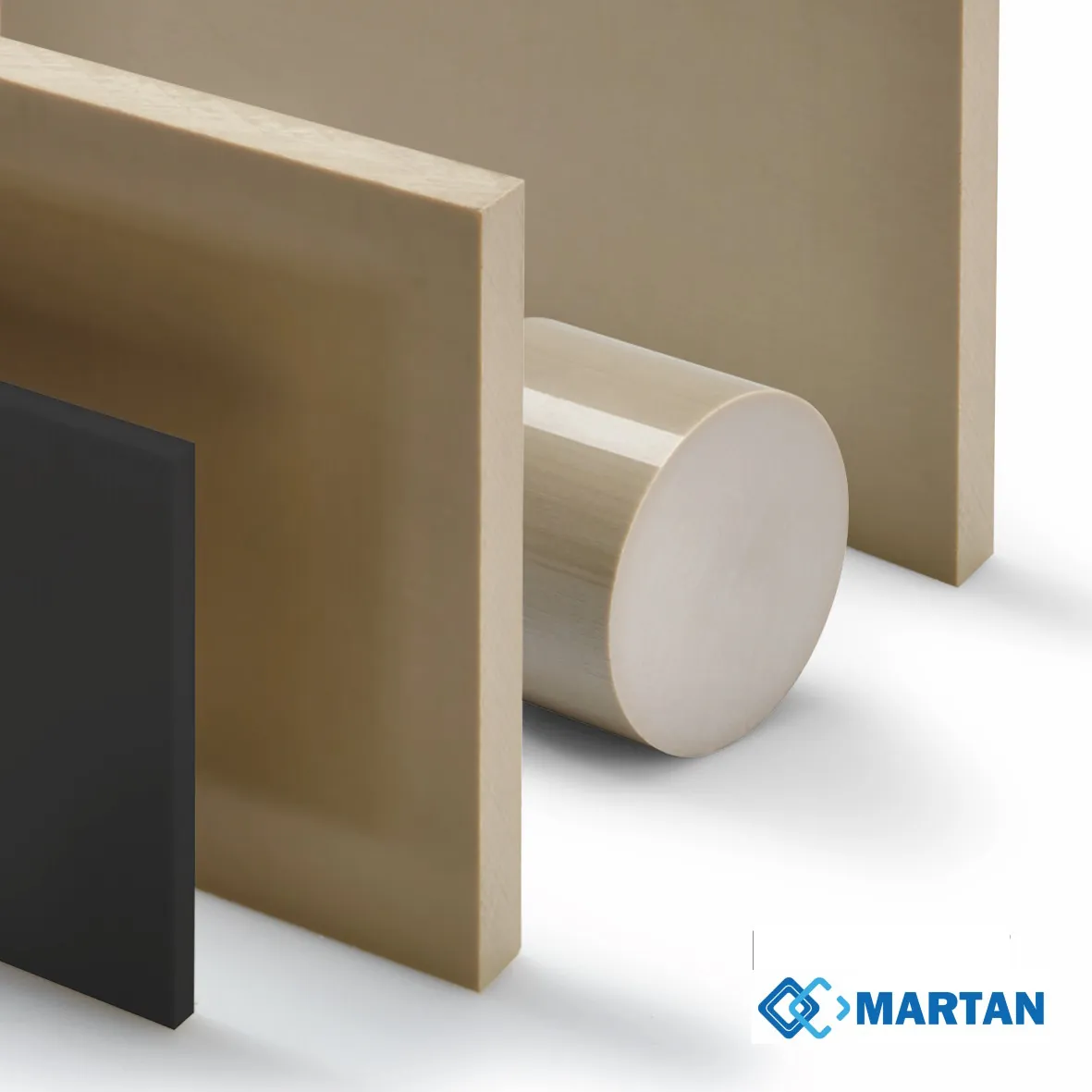
Polyphenylene ether
PPE plastic explained: properties, temperature resistance, technical data, applications and differences from PC and PBT.
PPE plastic is the short name for polyphenylene ether, an amorphous engineering thermoplastic with high dimensional stability, very low water absorption and good electrical insulating properties. PPE material is used above all where components must reliably retain their dimensions even under heat and changing humidity.
Typical applications are therefore found in electrical engineering, mechanical engineering and the automotive industry. In practice, PPE is often modified or combined with other polymers in order, for example, to adjust impact strength, processability or other application-specific properties.
On this page you will learn what PPE is, what properties and technical characteristics PPE plastic has and when the material offers advantages over alternatives such as polycarbonate or PBT plastic.
This change particularly strengthens the search terms "PPE plastic", "PPE material" and "what is PPE", without fundamentally rebuilding the content that follows.
What is PPE plastic?
PPE stands for polyphenylene ether and refers to a thermoplastic from the group of amorphous engineering plastics. PPE is characterised in particular by low moisture absorption, high dimensional stability and good electrical properties.
Put simply: PPE plastic is suitable for technical components that should remain as stable in shape and dimensions as possible even under temperature and humidity fluctuations. Examples are housings, electrical components, connectors and components in mechanical and vehicle engineering.
This means the previously barely exploited search query "what is PPE" is answered directly in the upper area of the page.
Properties of PPE plastic
High dimensional stability
PPE changes its dimensions only slightly under changing ambient conditions. The amorphous material structure, the low moisture absorption and the low creep tendency support a long-term stable component geometry.
This property is particularly advantageous for housings, mounts, supports, plug connections and components with tight tolerances. Glass-fibre-reinforced PPE types achieve even higher rigidity and lower thermal expansion.
Very low water absorption
Compared with many other engineering plastics, PPE absorbs only little moisture. As a result, dimensions as well as mechanical and electrical properties remain largely constant even under changing humidity.
For components in humid environments or in contact with warm water, PPE can therefore be a suitable alternative to materials that are more strongly dependent on moisture. Nevertheless, the specific suitability must be checked on the basis of the temperature, duration of exposure and material type.
Good electrical insulation
PPE has good dielectric properties and is suitable for electrically insulating components. The low water absorption helps to ensure that the insulating effect changes only comparatively little under moisture.
Typical applications are therefore found in electronics and electrical engineering, for example in housings, coil formers, switches, fuse components, connectors and carrier parts.
Electrical characteristics such as dielectric strength, tracking resistance and dielectric loss factor depend on the exact PPE type, the material thickness, the temperature and the additives used.
Good heat deflection resistance
Modified PPE materials can retain their shape and rigidity even at elevated temperatures over longer periods. However, the actually permissible continuous service temperature depends strongly on the respective formulation, the mechanical load and the required service life.
Many technical PPE blends are suitable for applications in the range of approximately 80 to 120 °C. Specially adjusted or reinforced types can achieve values that deviate from this. For design purposes, therefore, it is not general material specifications alone that are decisive, but the values in the specific data sheet.
Low creep tendency
Under a permanently applied load, every thermoplastic deforms over time. However, PPE shows comparatively good creep resistance even at elevated temperature. Glass-fibre-reinforced versions further improve rigidity and long-term dimensional stability.
For permanently mechanically loaded designs, load level, temperature, component geometry and duration of use must be considered together.
Hydrolysis resistance
Suitable PPE blends have good resistance to water and moisture. They can therefore be considered for pump parts, water-carrying components, housings and technical components in humid environments.
For permanent contact with hot water, steam, cleaning media or increased pressure, the suitability should be checked on the basis of the specific material type.
Technical data for PPE
The properties of commercial PPE materials differ in some cases considerably. Unreinforced, glass-fibre-reinforced and flame-retardant types cannot be described by a single characteristic value. The following table therefore shows typical orientation ranges for modified PPE materials.
| Property | Typical orientation range |
|---|---|
| Density | approx. 1.05 to 1.30 g/cm³ |
| Tensile strength | approx. 50 to 110 MPa |
| Modulus of elasticity | approx. 2,000 to over 8,000 MPa |
| Water absorption | very low, often below 0.1 % |
| Glass transition temperature of pure PPE | about 200 to 215 °C |
| Typical continuous service temperature of PPE blends | often approx. 80 to 120 °C |
| Heat deflection resistance | strongly dependent on type and load |
| Flammability | depending on type, for example UL 94 HB, V-1 or V-0 |
| Electrical properties | good insulation, type-dependent CTI and dielectric strength values |
The values serve exclusively for initial material orientation. For design purposes, the technical data of the PPE type actually used must be taken into account.
Chemical resistance of PPE
PPE exhibits good resistance to numerous aqueous media. Depending on the material type, the material is suitable among other things for contact with:
- cold and warm water,
- dilute acids,
- dilute alkalis,
- alcohols,
- many household and industrial cleaners as well as
- numerous salt solutions.
PPE can react more sensitively to aromatic and halogenated hydrocarbons, ketones, esters and certain organic solvents. Possible consequences are swelling, stress cracking, softening or a loss of mechanical strength.
Chemical resistance is not determined by the medium alone. Concentration, temperature, duration of exposure, mechanical stress and the specific material formulation also influence the behaviour. For critical media contact, an application-related resistance test is therefore recommended.
Weathering and UV resistance
Standard PPE is only limitedly resistant to long-term UV and weathering influences. Without suitable stabilisation, colour, surface and mechanical properties can change over the course of time.
For permanent outdoor use, UV-stabilised or correspondingly coated material types should be used. Alternatively, the component must be protected from direct sunlight by design.
Advantages of PPE plastic
- very low water absorption,
- high dimensional and shape stability,
- good electrical insulating properties,
- good heat deflection resistance,
- comparatively low creep tendency,
- good resistance to water and numerous aqueous media,
- low processing shrinkage,
- available as unreinforced, reinforced and flame-retardant type as well as
- suitable for precise technical components.
Limits of PPE
PPE is not the best solution for every technical application. When selecting the material, the following limitations in particular must be taken into account:
- limited resistance to various organic solvents,
- only restricted UV and weathering resistance in standard types,
- lower impact strength than polycarbonate in certain formulations,
- higher price level than many standard plastics,
- temperature and strength values that are strongly dependent on type as well as
- demanding processing of the unmodified polymer.
PPE types and material variants
The property profile of PPE can be specifically changed by polymer blends, reinforcing materials and additives. As a result, numerous material variants are available for different requirements.
Unreinforced PPE types
Unreinforced PPE blends offer a balanced ratio of dimensional accuracy, electrical insulation, toughness and processability. They are used among other things for housings, covers and electrical functional parts.
The available range includes, for example, NORYL® 7310 in grey or black as well as other coloured and application-specifically modified types.
Glass-fibre-reinforced PPE
Glass fibre contents of, for example, 10, 20 or 30 percent can increase rigidity, flexural strength, heat deflection resistance and dimensional stability. At the same time, thermal expansion is reduced.
Glass-fibre-reinforced PPE materials are particularly suitable for:
- load-bearing housing parts,
- mounts and supports,
- components with tight tolerances,
- components under continuous thermal load as well as
- electrical functional parts with increased mechanical requirements.
Available among others are NORYL® GFN1, GFN2 and GFN3 with different glass fibre contents and colour versions.
Flame-retardant PPE types
Flame-retardant PPE blends are available for the electrical and electronics industry. Depending on material thickness and material type, these can achieve defined flammability classifications such as UL 94 V-0.
The available versions include among others NORYL® SE1 as well as reinforced SE1 variants. Whether a type fulfils the required classification must be checked on the basis of the current manufacturer data sheet and the intended component thickness.
PPE semi-finished products and machined components
Martan Plastics supplies PPE in different material qualities, colours and glass-fibre-reinforced versions. The materials are available as semi-finished products or as individually machined components.
Depending on type and availability, the following variants among others can be offered:
- PPE Grey NORYL® 7310-960,
- PPE Black NORYL® 7310-701,
- PPE Black NORYL® SE1 701,
- PPE Red NORYL® SE1 604,
- PPE Black NORYL® V0 150B 701,
- PPE GV10 % NORYL® GFN1,
- PPE GV20 % NORYL® GFN2,
- PPE GV30 % NORYL® GFN3 as well as
- glass-fibre-reinforced SE1 versions.
The actual availability, dimensions, colours and material thicknesses must be checked on a project-specific basis. An overview of further materials can be found on the page on available plastic materials.
Applications of PPE plastic
Due to its dimensional accuracy, heat deflection resistance and electrical properties, PPE is used in various technical industries.
Electrical engineering and electronics
- switch and fuse housings,
- connectors,
- coil formers,
- relay components,
- electrical covers,
- insulating parts as well as
- housings for power electronics.
Mechanical and plant engineering
In mechanical and plant engineering, PPE is suitable for dimensionally stable housings, supports, mounts, covers and structural components. The material is particularly interesting when tight tolerances must be maintained even under changing temperature and humidity conditions.
Vehicle engineering
- sensor carriers,
- fan housings,
- components in the area of electrical systems,
- pump components,
- covers in the engine compartment as well as
- dimensionally stable technical mounts.
Which PPE type is suitable for a specific application in the automotive industry depends on the temperature profile, media contact, vibration, flame protection and the respective manufacturer approvals.
Water-carrying applications
The low water absorption and good hydrolysis resistance of suitable PPE blends enable use in pumps, valve components, water meters, housings and other water-carrying systems.
For drinking water applications, only material types that have the required application-specific and country-specific approvals may be used.
Processing and machining of PPE
Injection moulding
PPE blends are frequently processed by injection moulding. The modification of the material improves the flow behaviour compared with pure PPE and enables the production of complex moulded parts.
Depending on the material type, pre-drying as well as comparatively high melt temperatures may be required. The exact processing parameters are governed by the manufacturer data sheet. A controlled mould temperature supports uniform surfaces, low internal stresses and high dimensional accuracy.
Mechanical machining
Depending on their version, PPE semi-finished products can be sawn, milled, turned, drilled and processed into precise components. With glass-fibre-reinforced types, increased tool wear must be expected.
For dimensionally accurate components, sharp tools, suitable cutting parameters, controlled heat generation and low-stress clamping are important. For this purpose, Martan Plastics offers among other things individual plastic machining to drawing or technical specifications.
Joining and surface treatment
Depending on type and pre-treatment, PPE can be bonded, screwed, printed, painted or metallised. Suitable cyanoacrylate, polyurethane or reactive adhesives among others can be considered for adhesive joints.
Before series production, it should be checked whether adhesive, surface pre-treatment and material type are compatible with one another. Possible stress cracks caused by solvents or cleaning agents must also be taken into account.
PPE compared with PC and PBT
PPE or PC?
| Property | PPE | PC |
|---|---|---|
| Transparency | generally opaque | transparent possible |
| Water absorption | very low | low |
| Dimensional stability under moisture | very good | good |
| Impact strength | type-dependent medium to high | very high |
| Heat deflection resistance | high depending on type | high |
| Electrical insulation | very good and moisture-stable | good |
Polycarbonate is suitable above all for transparent components and applications with very high impact stress. PPE is often the better choice when low water absorption, electrical insulation and long-term dimensional stability are the priority.
PPE or PBT?
| Property | PPE | PBT |
|---|---|---|
| Material structure | amorphous | semi-crystalline |
| Water absorption | very low | low |
| Dimensional accuracy | very high | high |
| Chemical resistance | good against many aqueous media | often broader against oils and fuels |
| Electrical properties | very good | very good |
| Processing shrinkage | comparatively low | higher and possibly direction-dependent |
PBT plastic offers advantages in numerous chemically stressed applications and is often an economical solution for electrical moulded parts. PPE particularly convinces with tight tolerances, humidity changes and requirements for long-term dimensional stability.
PPE or PPS?
For applications with significantly higher temperatures and particularly aggressive chemicals, PPS plastic may be more suitable. PPS achieves higher temperature and chemical resistance, but is more brittle in many versions and often more cost-intensive.
PPE is a sensible solution when the thermal requirements lie below the PPS range and at the same time good electrical properties, dimensional accuracy and a balanced cost-benefit ratio are required.
When is PPE the suitable material?
PPE should be examined more closely when a component must fulfil several of the following requirements:
- very low moisture absorption,
- tight and permanently stable tolerances,
- electrical insulation,
- increased continuous service temperature,
- low creep deformation,
- good hydrolysis resistance,
- defined flammability or
- high rigidity in glass-fibre-reinforced versions.
Another material may be more suitable when transparency, extreme impact strength, permanent contact with aggressive solvents or temperatures significantly above the typical PPE application range are required. For particularly high thermal requirements, for example PEEK and other high-performance plastics are available.
Available PPE and NORYL® variants
For different technical requirements, polyphenylene ether is available in numerous NORYL® variants. The range includes PPE GREY NORYL® 7310-960, PPE BLACK NORYL® 7310-701, PPE BLACK NORYL® SE1 701, PPE RED NORYL® SE1 604 and PPE BLACK NORYL® V0 150B 701. For applications in which higher rigidity and mechanical load capacity are required, glass-fibre-reinforced materials are also available. These include PPE GV10% BLACK NORYL® GFN1 701, PPE GV20% NAT. NORYL® GFN2 801, PPE GV20% BLACK NORYL® GFN2 701, PPE GV30% NAT NORYL® GFN3 801 and PPE GV30% BLACK NORYL® GFN3 701. The range is supplemented by the flame-retardant versions PPE GV10% BLACK NORYL® GFN1 SE1 701, PPE GV20% NAT NORYL® GFN2 SE1 801, PPE GV20% BLACK NORYL® GFN2 SE1 701, PPE GV30% NAT NORYL® GFN3 SE1 801 and PPE GV30% BLACK NORYL® GFN3 SE1 701. This allows the material to be selected specifically according to colour, glass fibre content, strength and requirements for flammability.
Material selection for your PPE component
For a reliable selection, material type and application must be considered together. Important details are:
- continuous and peak temperature,
- mechanical load and load duration,
- required tolerances,
- contact with water, chemicals or cleaning agents,
- electrical requirements,
- flammability classification,
- UV and weathering influence,
- component geometry and dimensions,
- desired manufacturing process as well as
- quantity and required approvals.
Martan Plastics supports you in selecting suitable PPE semi-finished products and material variants. On the basis of your drawing, technical data or application description, it can be checked whether an unreinforced, glass-fibre-reinforced or flame-retardant PPE type is suitable for the planned component.
Frequently asked questions about PPE plastic
What does PPE stand for in plastic?
PPE stands for polyphenylene ether. The designation PPO or polyphenylene oxide is also frequently used. Commercially available materials are predominantly modified PPE blends.
Is NORYL® the same as PPE?
NORYL® is a trade name for various modified PPE materials. Depending on the type, these are for example unreinforced, glass-fibre-reinforced or flame-retardant polymer blends with different properties.
What temperature can PPE withstand?
The permissible continuous service temperature depends strongly on the PPE type, the mechanical load and the required duration of use. Many modified PPE materials are used approximately in the range of 80 to 120 °C. The technical data sheet of the specific type is always decisive.
Is PPE plastic water-resistant?
PPE has a very low water absorption and good hydrolysis resistance. Suitable types can therefore be used in humid and water-carrying applications. For hot water, steam or increased pressure, a separate test is required.
Is PPE chemical-resistant?
PPE is resistant to many aqueous media, dilute acids, alkalis and alcohols. However, resistance to various aromatic or halogenated hydrocarbons, ketones and esters can be limited.
Is PPE suitable for electrical components?
Yes. PPE has good electrical insulating properties, which change comparatively little under moisture due to the low water absorption. The material is therefore frequently used for housings, connectors, coil formers and other electrical functional parts.
Can PPE be used outdoors?
Standard PPE has only limited UV and weathering resistance. For long-term outdoor use, UV-stabilised, coated or otherwise protected material variants should be selected.
What advantages does glass-fibre-reinforced PPE offer?
Glass fibre reinforcement increases rigidity, flexural strength, heat deflection resistance and dimensional stability. At the same time, thermal expansion decreases. This makes the material suitable for components subjected to greater structural and thermal loads.
Can PPE be machined?
Depending on type, PPE semi-finished products can be sawn, milled, turned and drilled. With glass-fibre-reinforced materials, the increased tool wear and the anisotropic material properties must be taken into account.