Plastic sheets
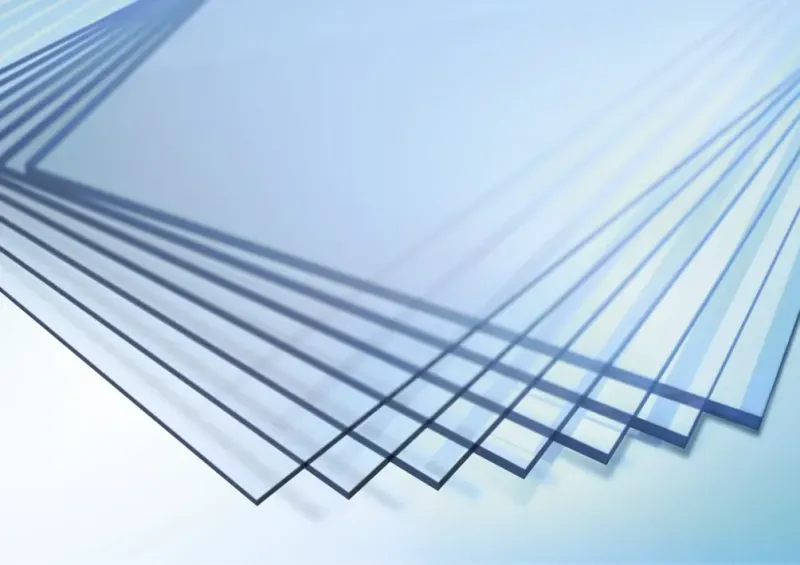
PC sheet – cut to size
Buy polycarbonate sheet – robust and cut to the millimetre When you want to buy polycarbonate sheet, quality, precision and reliability are what matter most…
Datenblatt PC (Polycarbonat) (PDF, in German)More about the product
Configure your cut
Description
Buy polycarbonate sheet – robust and cut to the millimetre
When you want to buy polycarbonate sheet, quality, precision and reliability are what matter most. At technischekunststoffe24.de you receive custom-made polycarbonate sheets that meet the highest requirements – from machine cladding to industrial roofing.
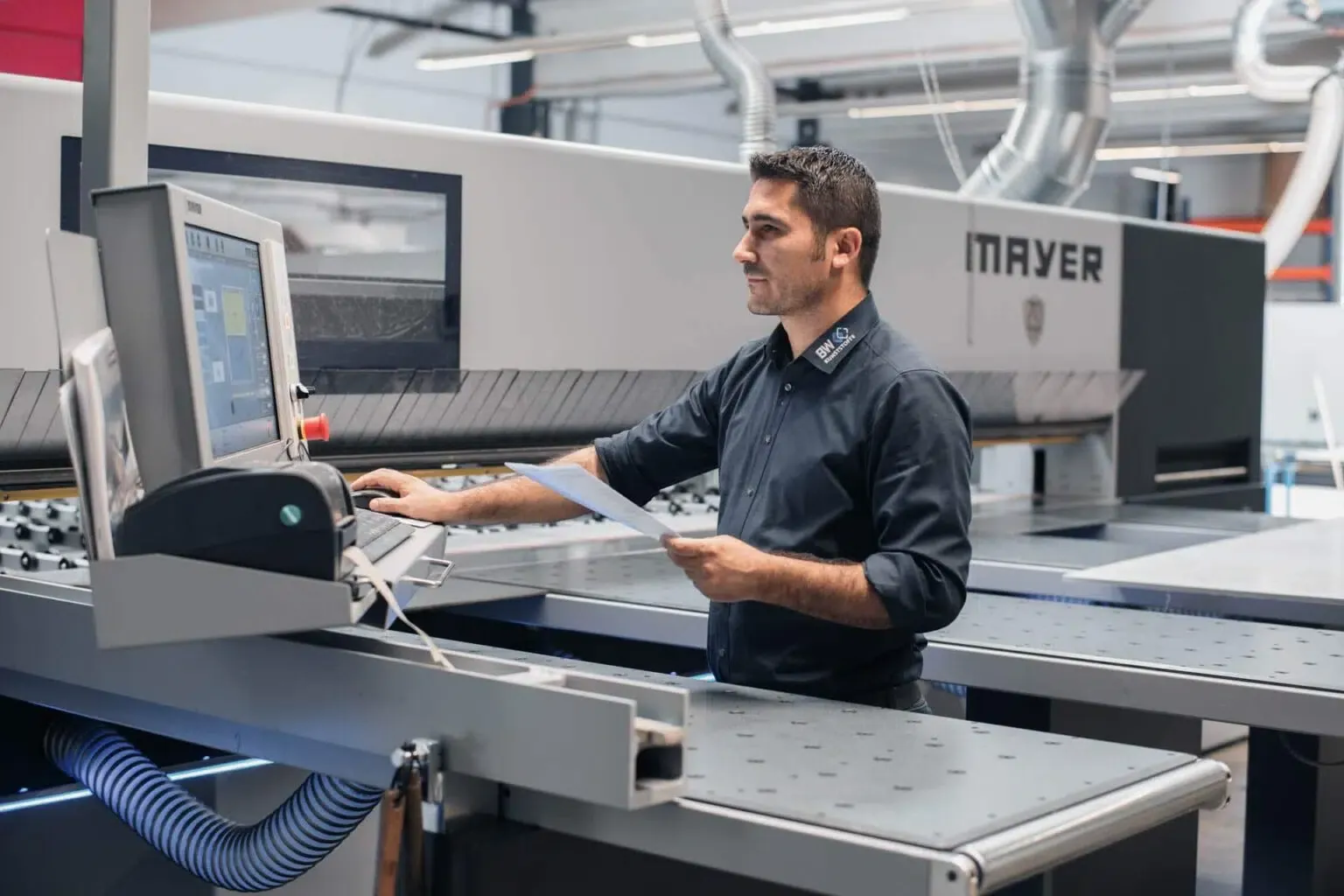
Our sheets are characterised by exact custom fabrication, clear transparency and outstanding impact strength. You choose the thickness, length and width directly in the online configurator – we deliver cut to the millimetre. Whether a single piece or series requirements: every order is individually manufactured, inspected and prepared ready for dispatch.
The high impact resistance and temperature resistance make PC cut pieces particularly durable – both indoors and outdoors. At technischekunststoffe24.de you can configure your polycarbonate sheets online to the millimetre and conveniently order them cut to size – with short delivery times and personal expert advice.
PC sheets cut to size – precisely manufactured to measure
Polycarbonate (PC), a material with far higher impact strength than other thermoplastics, offers potential applications wherever resistance to external impacts (hail, vandalism) is required.
With its outstanding mechanical, thermal and electrical properties, this plastic can be used virtually anywhere and, thanks to its excellent formability, allows a high degree of design freedom.
Applications & advantages of polycarbonate sheets
Our PC sheets cut to size impress with high impact resistance, UV stability and clean, industrial processing. As the material of choice for applications involving mechanical stress or weathering, they can be used in many ways – e.g. for protective covers, partition discs or transparent façade elements.
Every sheet is manufactured to measure – with precise edge finishing and optionally colourless or opal. Thanks to individual online configuration, you not only save time but also secure a precisely fitting quality product straight from a specialist supplier. We also reliably implement complex requirements – including advice on the suitable material thickness and further processing on request.
Polycarbonate sheets: advantages compared with other plastics
Polycarbonate is an outstanding plastic that stands out through its particular combination of properties. These make it ideal for both indoor and outdoor use. If you choose the polycarbonate sheets from technischekunststoffe24.de, you benefit from numerous advantages.
Outstanding impact strength
Polycarbonate is particularly known for its exceptional impact resistance. It is up to 250 times stronger than conventional glass and therefore extremely robust. This plastic is ideal for shatterproof glazing of all kinds.
Easy processing
Despite its high stability, polycarbonate is very flexible and easy to process. Whether sawing, drilling, cutting, painting or bonding – processing is straightforward with standard tools.
Flame-retardant material
Polycarbonate belongs to fire protection class B1 and is flame-retardant and hard to ignite. This makes the plastic the ideal choice for projects where safety is the priority, such as safety glazing.
High transparency
Polycarbonate impresses with its light transmission, which is comparable to glass. No additional sun protection is needed for roofing, as all polycarbonate sheets from technischekunststoffe24.de are equipped with reliable UV protection
Polycarbonate sheets colourless or opal – which colour suits?
- Colourless: An excellent alternative to glass with a light transmission of about 72 %.
- Opal white: Lower light transmission of about 52 %, but with optimum glare protection.
Variants for privacy screening
For privacy screens or the glazing of doors and railings, polycarbonate sheets with crystal structure are particularly suitable.
Versions of the polycarbonate discs
In the range from technischekunststoffe24.de you will find polycarbonate sheets in various designs, including multiwall sheets and corrugated sheets.
Polycarbonate multiwall sheets – load-bearing and light-transmitting
Multiwall sheets consist of two layers connected to one another by webs. This structure gives the sheets their exceptional stability and at the same time provides effective glare protection. Find out more about our multiwall sheetsProperties of multiwall sheets
- Outstanding impact and shatter resistance
- Ideal for outdoor areas such as greenhouses or patio roofs
- Better insulation thanks to the twin-wall construction
Polycarbonate corrugated sheets: robust solution for roof & wall
Corrugated sheets have a corrugated cross-section and are characterised by their easy installation. They require less installation material and have special surface structures that reduce the glare of the sun.
Properties of corrugated sheets
- Single-layer design
- Low material usage thanks to overlapping of the corrugations
- Available in various surface structures to reduce glare effects
UV protection of polycarbonate sheets
All polycarbonate sheets from technischekunststoffe24.de are equipped with UV protection. Make sure not to use aggressive cleaning agents or pressure washers when cleaning, so as not to damage the UV protection.
Buy polycarbonate sheets at technischekunststoffe24.de
Technischekunststoffe24.de offers a large selection of high-quality plastic sheets. In addition to polycarbonate sheets, you will also find multiwall sheets, HPL sheets and acrylic glass sheets. As an experienced supplier, we place particular value on personal advice and fast delivery.Why buy polycarbonate sheets from us – your advantages
- Large range of plastic sheets
- Highest quality
- Personal expert advice
- Fast delivery
- Attractive bulk customer prices
PC sheet and rod transparent
Polycarbonate sheets in detail
Polycarbonate sheets are used wherever other plastics are too soft, too fragile, too scratch-sensitive or not sufficiently dimensionally stable. Among other things, they are used as mounting sheets or as multiwall sheets for patio roofs and greenhouses. The polycarbonate sheets are flat, transparent or tinted plastic sheets that are manufactured from the plastic material polycarbonate.
Polycarbonate sheets are manufactured by the process of extrusion. In this process, the polycarbonate granulate is melted in an extruder and then pressed through a die to form a continuous sheet. Additives such as colourants, UV stabilisers or flame retardants can be added to the material to achieve special properties for specific applications.
After the extrusion process, the sheet is passed through rollers to control the thickness and width and to obtain a smooth surface. After cooling, the sheet is cut to the desired dimensions. If required, surface treatments such as UV protection or scratch resistance can be applied.
Alternative manufacturing methods
In addition to extrusion, polycarbonate can also be processed by injection moulding and by bending. In all processes, polycarbonate remains a transparent, colourless and thermoplastic material that is often used as an alternative to glass.
Cutting, drilling & bending polycarbonate sheets – how processing succeeds
Processing polycarbonate sheets requires some precautions in order to avoid damage and cracks. However, the sheets can easily be processed with standard tools.
Cutting polycarbonate sheets
The sheets can be cut with a jigsaw, circular saw or table saw. It is important to use a sharp blade in order to achieve clean cut edges.
Drilling polycarbonate sheets
Polycarbonate sheets can easily be processed with a drill. A low speed and a sharp drill tip should be used in order to obtain clean drilled holes.
Material thicknesses
The polycarbonate sheet is available in various thicknesses ranging from 2 mm to 10 mm, so that it can be adapted to various requirements.
More information on polycarbonate can be found in our data sheet download or on the page https://de.wikipedia.org/wiki/Polycarbonate.Processing of polycarbonate sheets
Polycarbonate can be processed using a wide range of common methods. In particular, cut pieces to measure, drilled holes or edge finishing can be implemented without difficulty. The following overview shows which processing techniques have proven themselves in practice:
| Processing method | Suitable for polycarbonate? | Notes on use |
|---|---|---|
| Sawing | very good | Circular saw or jigsaw with fine toothing |
| Milling | very good | CNC milling for precisely fitting shapes |
| Drilling | good | Use low speed, sharp drill tip |
| Turning | with restrictions | Only worthwhile for cylindrical parts |
| Bending | very good | Hot bending at approx. 150?°C, do not overheat edges |
| Folding | good | Requires precise temperature control |
| Bonding | good | Use special adhesive for polycarbonates |
| Printing | partly | Only with suitable inks / adhesion promoters |
| Punching | for thinner sheets | Worthwhile up to approx. 2 mm |
| Vacuum forming | very good | Shaping at approx. 160–190?°C |
| Welding | unsuitable | Polycarbonate cannot be welded |
Trade names for polycarbonate
Polycarbonate is known under various brand names, which are used depending on the manufacturer and purpose. The best known are:
-
Makrolon® – a registered brand name from Covestro, frequently used for building sheets, safety glazing and technical components.
-
EUROPLEX® – a branded product from Röhm, which is used among other things in medical technology and for special applications.
These trade names differ above all in availability, surface finishing (e.g. scratch-resistant, antistatic) and standardisation. However, they are all based on polycarbonate and can be processed very well using the methods mentioned above.
Properties
- outstanding optical properties and glossy surface
- excellent mechanical, thermal and electrical properties
- very high impact strength
- weather-resistant (available on request)
- Normally flammable (B2) – for thicknesses from 1.5 to 6.0 mm, B1 applies
- exceptionally high-performance even at very low and very high temperatures (-40°C to +120°C)
- good electrical insulating properties
- easy to process
- abrasion-resistant
Polycarbonate is a thermoplastic that can be deformed under heat and retains its shape when cooled. The special properties of the material include its high impact resistance, transparency, rigidity and temperature resistance.
Impact resistance
Polycarbonate is extremely impact-resistant and withstands high loads without breaking or shattering. It is about 250 times more impact-resistant than glass and is frequently used in applications where strength and durability are decisive.
Transparency and light transmission
The material has a high light transmission, which makes it ideal for applications where clear visibility is required.
Temperature and chemical resistance
Polycarbonate can withstand temperatures from -135°C to +135°C without its physical properties changing. With regard to chemicals, however, the material should be checked for resistance to specific substances.
Weather resistance and UV protection
Polycarbonate is weather-resistant and withstands external influences well. By adding UV stabilisers, the material can also be used outdoors. Without these additives, however, polycarbonate sheets tend to yellow or become brittle over time.
Low weight and flexibility
Thanks to its low density, polycarbonate is lighter and more flexible than glass and many other plastics. This makes it easy to handle and versatile in use.
Sustainability & recycling
Polycarbonate sheets are thermoplastic and can in principle be recycled. In industrial applications, offcuts and used sheet materials can often be returned to the cycle. In the end-consumer sector, take-back has so far been less widespread. For sustainable projects, the use of long-lasting, UV-stabilised sheets in standardised formats is recommended.
Applications
- Machine covers
- Vision panels
- Safety glazing
- Partition walls
- Balcony cladding
- Industrial buildings
- Advertising signs
- Illuminated transparencies
- Displays and stands
- Road and traffic signs
- Electrical switchgear
- Lighting covers
- Noise barriers
- Greenhouses
- Conservatories
- Doors and windows
- Vaulted and porch roofs
Polycarbonate sheets are extremely versatile and are used in many industries. Among other things, they are used for spectacle lenses, CDs and DVDs, headlight covers, safety glass, aircraft windows, car parts, protective helmets, building material for greenhouses, safety signs and illuminated advertising.
Industries and areas of application
Polycarbonate sheets are used in various industries, including the construction industry, automotive industry, electronics industry, mechanical engineering, medical technology and the packaging industry. Thanks to their superior impact resistance, they are often the preferred choice over other plastics such as polymethyl methacrylate (PMMA), also known as acrylic glass.
The sheets are particularly popular for roofing over patios, conservatories, swimming pools and carports. They are also readily used as protective screens and data carriers.
Industries & typical applications
| Industry | Typical applications |
|---|---|
| Mechanical engineering | Protective cladding, partition discs, covers |
| Advertising technology | Displays, light boxes, stands |
| Construction industry | Patio roofs, carports, conservatories |
| Electrical engineering | Vision panels, control cabinet doors, housing covers |
| Traffic technology | Road signs, noise barriers, roof lights |
Frequently asked questions
Which is better: acrylic or polycarbonate?
Polycarbonate is particularly stable and therefore ideal for roofing. Acrylic scores with its scratch resistance and optical clarity.
What is a polycarbonate sheet?
Polycarbonate sheets are high-quality plastic sheets with high impact resistance, transparency and flexibility. They are suitable for both indoor and outdoor use.
How stable is polycarbonate?
Polycarbonate is 25 times stronger than glass and offers exceptional break and impact resistance. It is a recommended choice especially in hail-prone regions.
How long does a polycarbonate sheet last?
With proper use, polycarbonate sheets with UV protection remain dimensionally stable and light-transmitting for up to 10 years and longer. Without UV protection, however, yellowing and material embrittlement can occur over time.
Is polycarbonate suitable for outdoor use?
Yes, UV-stabilised polycarbonate sheets are ideal for outdoor use. They are weather-resistant and retain their mechanical and optical properties over many years.
How are the polycarbonate sheets delivered?
Delivery takes place within the delivery time stated in the shop, usually between 2 and 6 weeks.
If you require special formats, special coatings or technical advice on material selection, we will be happy to assist you personally. Simply send us an email at: info@martan.dePolycarbonate vs. acrylic glass – differences and areas of application
Break resistance and impact strength
Polycarbonate is up to 250 times more impact-resistant than glass and considerably more break-resistant than acrylic glass. For applications with increased risk from hail, vandalism or impact, polycarbonate is the more robust solution. It does not shatter and is ideal for safety glazing, partition walls or machine covers.
Transparency and appearance
Both materials offer high light transmission, but acrylic glass scores with higher surface brilliance and better scratch resistance. Polycarbonate, by contrast, has a slightly softer surface that can be shaped well.
Processing and temperature resistance
Polycarbonate sheets can be processed more flexibly: they are thermally deformable, weldable and can easily be drilled or milled. The material also remains dimensionally stable at higher temperatures – an advantage over acrylic glass.
UV protection and outdoor use
Polycarbonate is available with UV protection as standard and is therefore very well suited to outdoor use. Acrylic glass, by contrast, often requires additional coatings for long-term UV stability.
Polycarbonate, acrylic glass or glass? – material comparison at a glance
| Property | Polycarbonate | Acrylic glass (PMMA) | Glass |
|---|---|---|---|
| Break resistance | Very high (≈250× glass) | High | Low |
| Impact strength | Extremely high | Good | Very low |
| Transparency | Approx. 86?% light transmission | Approx. 92?% light transmission | Very good (up to 90?%) |
| UV resistance | Yes, with UV-stabilised variant | Only with special version | Depends on type of glass |
| Scratch resistance | Medium | High | High |
| Temperature range | approx. –40?°C to +120?°C | approx. –10?°C to +70?°C | Up to 200?°C (depending on type) |
| Deformability | Very good | Limited | Not deformable |
| Weight | Very light | Light | Heavy |
| Price | Medium | Inexpensive | High |
Untreated polycarbonate sheets are less scratch-resistant than acrylic glass and can become electrostatically charged. For visually demanding applications or sensitive areas, variants with a scratch-resistant or antistatic coating are recommended.
If you are looking for a cheaper alternative, PP sheets or HPL sheets are also an option – both also available cut to size. For particularly brilliant surfaces, acrylic glass is the best choice.
Technical data
Sheets:
2050 x 1250 mm
3050 x 2050 mm
3000 x 2000 mm
2000 x 1500 mm
Thicknesses: 1 to 30 mm
Colours: colourless, other colours on request.
Types: UV protection, structured, scratch-resistant coated, electrically conductive
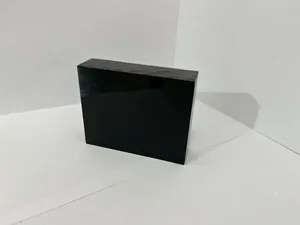
Blocks: Formats: 1000 x 600 mm