Plastic machining: which processes offer the highest precision?
Which plastic machining processes offer the highest precision? Find out more about CNC milling and extrusion for precise components.
Plastic machining requires the highest precision, particularly in industries such as medical technology, aerospace or mechanical engineering. Processes such as CNC milling, waterjet cutting and various extrusion methods enable exact shaping. But which process offers the best accuracy?
CNC milling in plastic machining
In CNC milling, material is machined by computer-controlled milling tools that process plastic blocks precisely in multiple axes. This subtractive process is particularly suitable for complex 3D geometries.
One advantage is the high repeatability, which makes it possible to produce dimensionally accurate components of consistent quality. In addition, the targeted material removal results in only minor losses. However, tool wear can affect precision, which is why regular maintenance is required.
This process is particularly well suited to engineering plastics such as POM, PTFE or PA, which are used in industry for prototypes and small series.
Waterjet cutting as a precision process
Waterjet cutting uses an extremely thin, high-pressure water jet to cut plastic precisely.
If necessary, an abrasive is added to increase cutting performance. A decisive advantage is that no mechanical forces act on the material, so even sensitive plastics can be cut without distortion. In addition, no thermal loads occur that could lead to material deformation.
This makes the process ideal for materials such as acrylic or polycarbonate. The disadvantages lie in the higher operating costs due to the consumption of water and abrasives as well as the limited cutting depth, depending on the material thickness.
Matching the material selection: Material selection for plastic components.
Other precise plastic machining processes
Laser and ultrasonic cutting
Laser cutting offers fine and precise cuts, but is more suitable for thin materials, as it can cause thermal deformation. Ultrasonic cutting, on the other hand, uses high-frequency vibrations to separate plastic gently, which makes it particularly attractive for the packaging industry.
Extrusion: standard, RAM and extrusion pressing
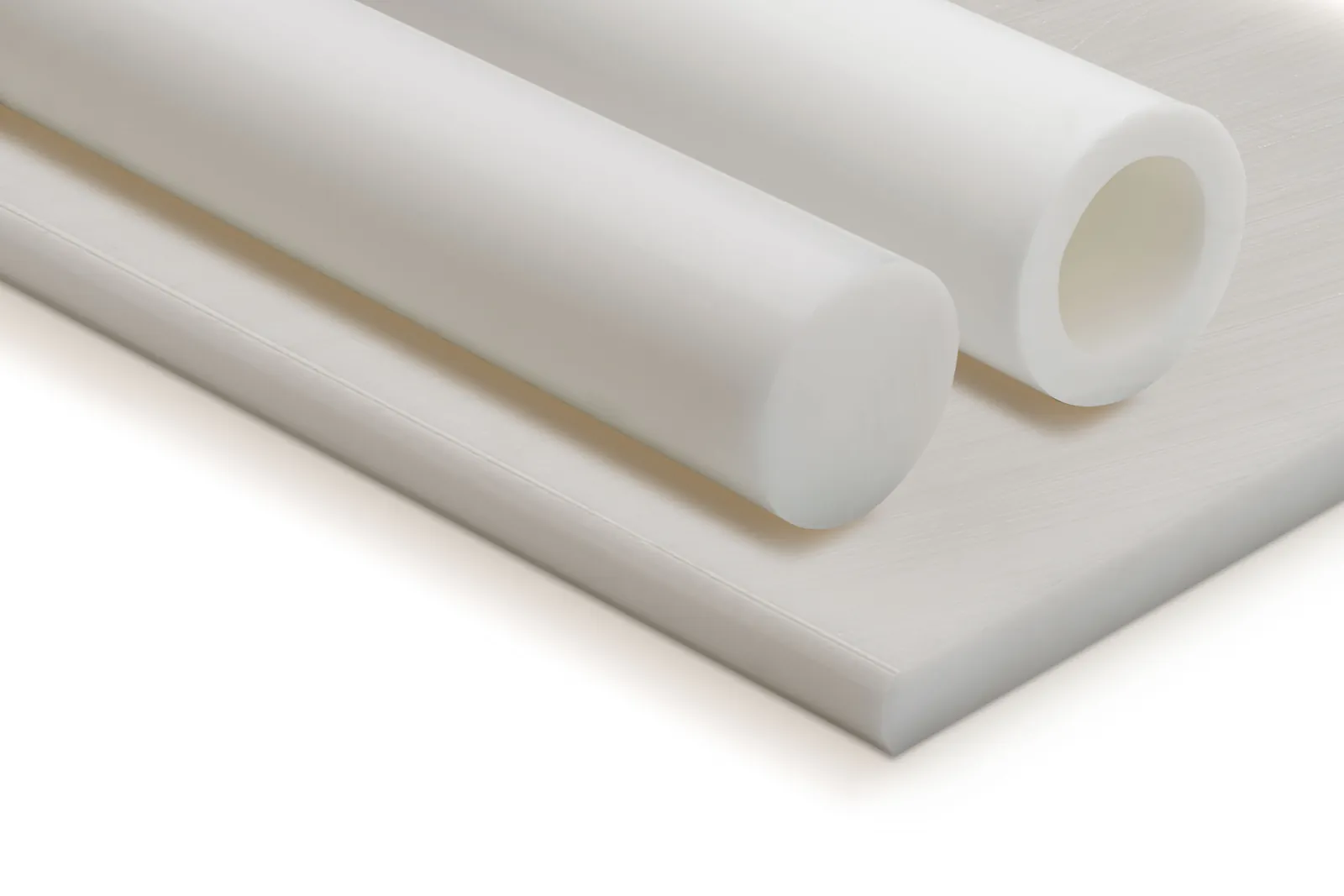
Extrusion is a continuous process in which plastic is pressed through a die opening. In standard extrusion, molten material is shaped evenly.
RAM extrusion is designed specifically for highly viscous plastics such as PTFE and enables compacted structures through cyclic pressing. Extrusion pressing combines pressure and shaping and is used for high-density plastic parts.
Injection moulding for maximum dimensional accuracy
In the injection moulding process, plastic is injected under pressure into a mould. It is particularly suitable for the mass production of components with high dimensional accuracy, but is less flexible than subtractive machining methods.
Comparison of processes: precision, costs, areas of application
| Process | Precision | Material loss | Costs | Best applications |
|---|---|---|---|---|
| CNC milling | Very high | Low | Medium | Prototypes, mechanical engineering |
| Waterjet cutting | High | Very low | High | Sensitive materials |
| Laser machining | Medium | Barely any | Medium | Thin plastics |
| Ultrasonic cutting | Medium | Very low | Medium | Packaging industry |
| Extrusion | Medium | No waste | Low | Tubes, profiles |
| RAM extrusion | High | No waste | High | PTFE components, dense structures |
| Extrusion pressing | Very high | No waste | High | High-density plastic parts |
| Injection moulding | Very high | No waste | High | Series production |
Which process is suitable for which requirements?
The choice of the right process depends on the requirements for precision, material compatibility and costs. CNC milling is suitable for precise individual parts and complex geometries. Waterjet cutting is ideal for sensitive plastics, while laser cutting and ultrasonic cutting are suitable for specific applications such as thin materials or packaging. Extrusion processes are optimal for the continuous production of profiles or dense structures.
Injection moulding remains the best choice for high volumes with maximum dimensional accuracy.
In-depth information on individual machining techniques: milling, turning, laser cutting and waterjet cutting.






