Polyamide-imide plastic (PAI)
PAI (polyamide-imide) stands out for its high strength, temperature and chemical resistance. Everything about properties and applications.
Polyamide-imide, or PAI for short, is one of the most capable high-performance plastics for components subject to high mechanical, thermal and tribological stress. The material combines very high strength and stiffness with low creep tendency, high wear resistance and pronounced dimensional stability.
PAI is therefore used above all when conventional engineering plastics no longer function reliably at high temperatures, high surface pressures or tight dimensional tolerances. Typical fields of application are found in mechanical and plant engineering, in aerospace, in electronics as well as in semiconductor and precision engineering.
What is PAI?
PAI is the abbreviation for polyamide-imide. The polymer structure combines characteristic constituents of polyamides and polyimides. This results in a material profile that combines high mechanical load capacity with very good heat deflection resistance.
PAI occupies a special position within high-performance plastics. The material has a very high compressive strength, remains stiff even at elevated temperatures and shows only slight deformation under sustained load. This makes it particularly suitable for precision components, bearing points and structural components where dimensional accuracy and functional reliability are decisive.
Depending on the material type, PAI is available unreinforced or with glass fibres, carbon fibres, graphite, PTFE or other wear-reducing additives. The modification influences, among other things, strength, thermal expansion, coefficient of friction, wear behaviour and electrical properties.
Properties of PAI plastic
Very high strength and stiffness
PAI is one of the stiffest and most mechanically loadable unreinforced plastics. Even at elevated temperatures, the material retains a large part of its strength. This is particularly relevant for components that are simultaneously exposed to high compressive forces, alternating loads and thermal influences.
Reinforced PAI types can further increase stiffness and dimensional stability. They are used, for example, for load-bearing components, holders, precision guides and components with high surface pressures.
High temperature resistance
PAI is suitable for applications with permanently high operating temperatures. Depending on the material type, load, ambient medium and component geometry, continuous service temperatures of around 250 to 260 °C are possible. For short periods, suitable PAI types can also be exposed to higher temperatures.
However, the maximum temperature specification alone is not decisive. When selecting the material, the mechanical load, the duration of use, possible temperature changes and contact with media must also be taken into account.
Low creep tendency and high dimensional accuracy
Under a constant mechanical load, plastics can deform permanently over time. Compared with many other thermoplastic materials, PAI shows a very low creep tendency. As a result, fits, clearances and functional surfaces remain comparatively stable even under prolonged load.
The high dimensional stability makes PAI interesting for components with tight tolerances. These include, for example, bearing cages, sealing rings, valve seats, insulating bodies, precision bushes and components in measuring or positioning systems.
High compressive and wear resistance
PAI has a high compressive strength and can withstand large surface pressures. Specially modified bearing types also offer favourable friction and wear properties. They are suitable for moving components where lubrication is only possible to a limited extent or is undesirable.
Typical applications are plain bearings, thrust washers, guide rings, sealing rings, rollers and machine elements subject to wear. The wear actually achievable depends, among other things, on the mating partner, surface quality, speed, temperature and load.
Good electrical insulation
Unreinforced PAI types have good electrical insulation properties and can retain their dielectric properties even at elevated temperatures. PAI is therefore used for insulating bodies, connectors, coil formers, spacers and other electrotechnical components.
However, filled or conductively modified variants may exhibit different electrical behaviour. For electrical applications, the data sheet of the specific material type is therefore always authoritative.
Chemical resistance
PAI is resistant to many oils, greases, fuels, lubricants and organic solvents. Resistance to acids, alkalis, hot water or steam, on the other hand, depends strongly on the respective medium, the concentration, the temperature and the duration of exposure.
A blanket approval for aggressive chemicals is therefore not sensible. For safety-critical applications, resistance should be tested on the basis of specific operating conditions.
Take water absorption into account
Like other materials with amide constituents, PAI can absorb moisture. This water absorption can influence dimensions and mechanical properties. For highly precise components, the moisture state of the semi-finished product, the later ambient conditions and, if applicable, conditioning must therefore be taken into account.
Technical data of PAI
The following values serve as a guide. The actual data differ depending on manufacturer, PAI type, fillers, manufacturing process and conditioning.
| Property | Typical range |
|---|---|
| Density | approx. 1.40–1.50 g/cm³ |
| Tensile strength | approx. 90–190 MPa |
| Modulus of elasticity | approx. 4,000–20,000 MPa, depending on reinforcement |
| Continuous service temperature | up to around 250–260 °C, depending on type and load |
| Thermal expansion | low to very low, depending on modification |
| Moisture absorption | higher than PEEK or PPS |
| Electrical insulation | good with suitable, non-conductively modified types |
| Wear behaviour | very good with tribologically modified variants |
PAI variants and their fields of application
Unreinforced PAI
Unreinforced PAI offers a balanced combination of strength, toughness, electrical insulation and temperature resistance. It is suitable for highly stressed precision parts, electrical insulating components and components where uniform material behaviour is required.
Glass fibre reinforced PAI
Glass fibres increase stiffness, compressive strength and dimensional stability. At the same time, thermal expansion is reduced. Glass fibre reinforced variants are frequently used for structural components, housing components, holders and precision supports.
Carbon fibre reinforced PAI
Carbon fibres enable particularly high stiffness and low thermal expansion. Such PAI types are suitable for components where dimensional accuracy under changing temperatures or high mechanical loads is decisive.
Tribologically modified PAI
Additives such as graphite or PTFE can reduce friction and wear. These variants are used, among other things, for plain bearings, guide rings, thrust washers, seals and other moving machine elements.
PAI compared with PEEK and polyimide
PAI, PEEK and polyimide are among the most capable plastics for high temperatures. However, the materials are not freely interchangeable.
| Criterion | PAI | PEEK | Polyimide |
|---|---|---|---|
| Mechanical strength | very high | very high | high to very high |
| Stiffness under heat | very high | high | very high |
| Wear resistance | very high, especially with modified types | very high | good to very high |
| Chemical resistance | good to very good, medium-dependent | very high | good to very good, type-dependent |
| Moisture absorption | comparatively high | low | type-dependent |
| Typical strength | highly stressed precision and wear parts | components subject to chemical and mechanical stress | high-temperature and insulation applications |
PAI is particularly advantageous when maximum mechanical load capacity, low creep tendency and dimensional accuracy under heat come together. PEEK often offers advantages in chemically demanding applications, hydrolysis exposure and simpler thermoplastic processing. Polyimide plays to its strengths above all at very high temperatures, electrical insulation and special cleanroom or vacuum requirements.
Delivery forms and manufacturing options
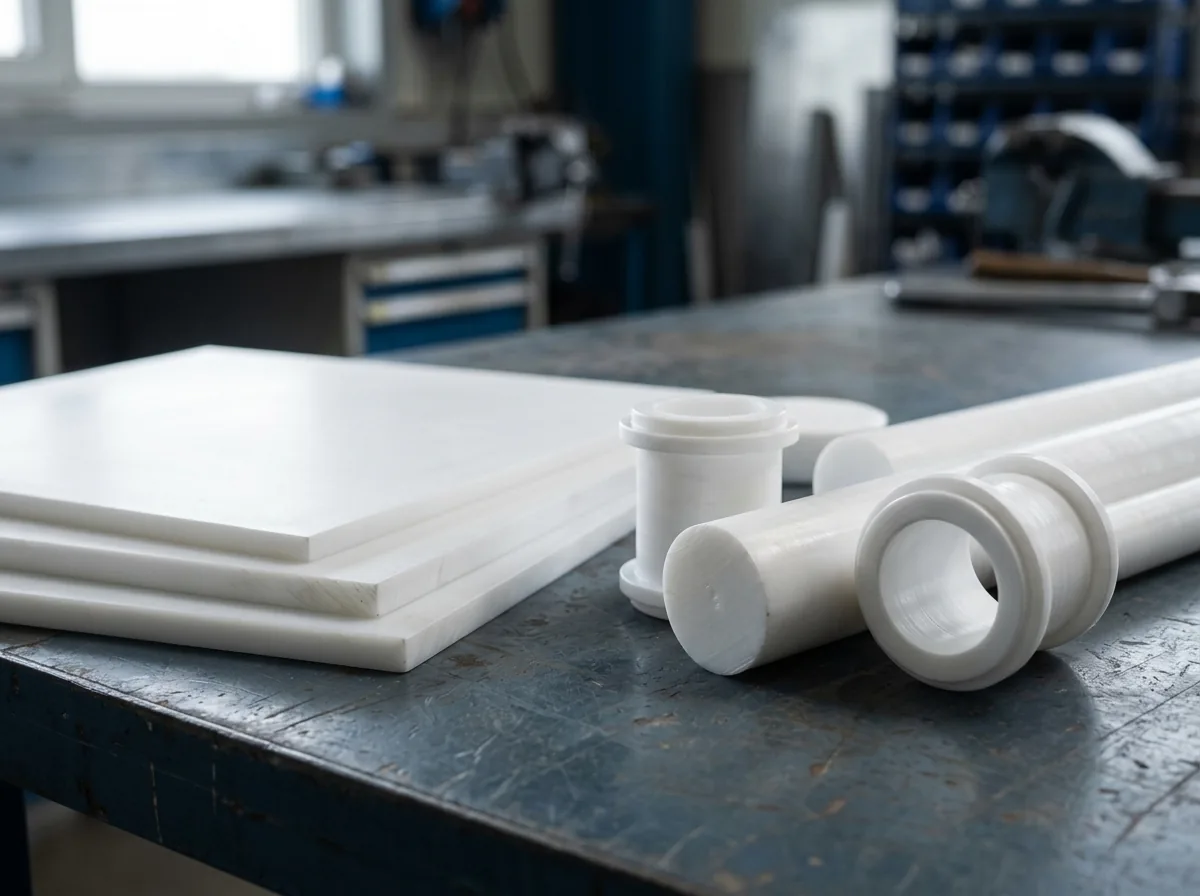
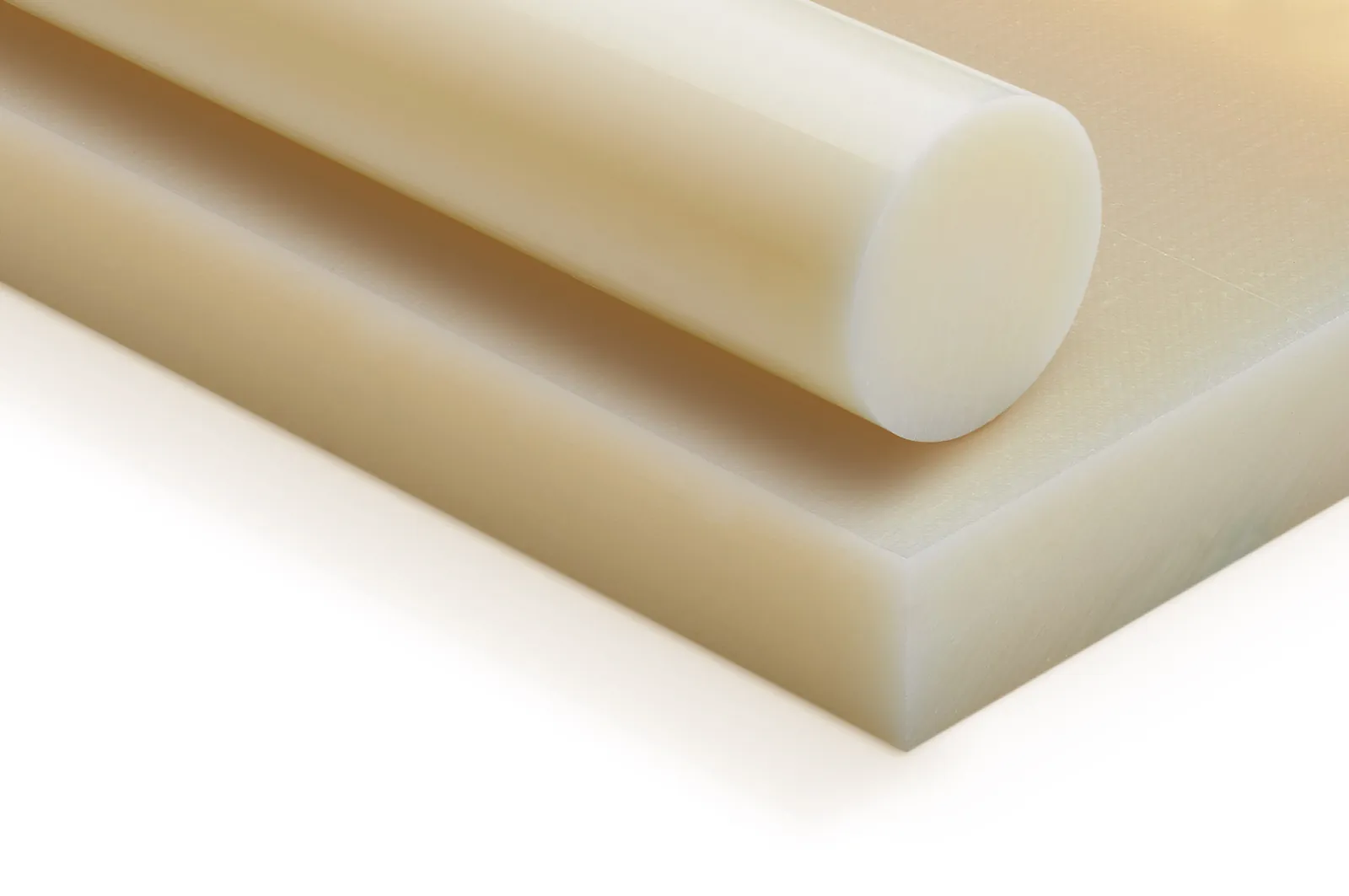
Depending on the available material type, PAI is available, among other things, as sheet, rod, tube, hollow rod or preformed semi-finished product. From these semi-finished products, precise finished parts can be produced to drawing, sample or CAD data.
Martan Plastics processes high-performance plastics through professional plastic machining. Depending on the component geometry, CNC milling, CNC turning, drilling, reaming, thread production and other machining processes are particularly suitable.
Possible PAI finished parts include, for example:
- plain bearings and bearing bushes
- bearing cages and guide rings
- thrust washers and wear plates
- sealing rings and valve seats
- gears and rollers
- electrical insulating bodies
- coil formers and connectors
- precision holders and spacer elements
- pump and compressor components
- components to drawing or sample
Machining PAI correctly
CNC milling and CNC turning
PAI can be machined precisely, but due to its high strength and hardness it places high demands on tools, clamping technology and machining parameters. For clean surfaces and tight tolerances, sharp carbide or suitable diamond-tipped tools are used.
Excessive heat input must be avoided during machining. Adapted cutting speeds, controlled feed and low-stress clamping reduce the risk of dimensional deviations, chipping or internal stresses.
Tolerances and moisture state
For very tight tolerances, the later moisture and temperature state should already be taken into account during design. Depending on the semi-finished product and requirement, intermediate tempering, conditioning steps or multi-stage machining may be necessary.
Particularly for thin-walled, asymmetric or heavily machined components, a material-appropriate machining strategy is recommended so that existing residual stresses can be relieved in a controlled manner.
Bonding and mechanical joining
PAI can generally be bonded, but this requires suitable surface preparation and an adhesive matched to the material and operating conditions. Mechanical joints, form-fitting designs or screw connections are often the more robust solution.
Classic thermoplastic welding is possible only to a limited extent or not economically viable with many PAI semi-finished product types. The suitable joining technique should therefore be determined already during the design phase.
Fields of application of PAI
Mechanical and plant engineering
In mechanical and plant engineering, PAI is used for highly stressed bearing points, guides, rollers, seals, pump components and precision components. The material is particularly interesting when metallic components are to be replaced, weight reduced or electrical and thermal insulation achieved.
Aerospace
In aerospace, PAI is suitable for lightweight, temperature-resistant and mechanically highly loadable components. Typical examples are bearing cages, sealing elements, rollers, insulating components and structural precision parts.
Electronics and electrical engineering
In the electronics industry, PAI is used for electrically insulating and temperature-resistant components. These include connectors, coil formers, test fixtures, holders and components for thermally stressed manufacturing processes.
Semiconductor industry
PAI can be used in semiconductor manufacturing for precise handling, positioning and insulating components. Depending on the application, requirements regarding outgassing, purity, abrasion, electrical properties and temperature stability must be checked.
Vehicle construction and drive technology
In vehicle construction, PAI is suitable, among other things, for bearing, sealing and insulating components in assemblies subject to thermal and mechanical stress. The material is particularly interesting for small precision parts with a high functional density.
Medical technology
In medical technology, PAI can be used for temperature-resistant technical components, instrument parts or insulating functional elements. However, general biocompatibility cannot be derived from this. For applications involving body contact, only correspondingly tested and approved material types may be used.
Advantages of PAI at a glance
- Very high mechanical strength and stiffness
- High compressive strength even at elevated temperatures
- Low creep tendency under long-term load
- Very good dimensional stability
- High wear resistance with suitable material types
- Good electrical insulation with unreinforced variants
- Good resistance to many oils, greases and fuels
- Suitable for precision components with tight tolerances
- Available as unreinforced, reinforced and tribologically modified variant
Limits and disadvantages of PAI
PAI is not automatically the most economical solution for every high-temperature application. The material is comparatively cost-intensive and places high demands on machining. In addition, its moisture absorption must be taken into account for precision components.
Further possible limitations are:
- higher material costs than many standard engineering plastics
- demanding machining
- type-dependent chemical resistance
- dimensional changes due to moisture absorption possible
- limited weldability
- not every variant is electrically insulating
- no blanket suitability for food or medical contact
When is PAI the right material?
PAI is a suitable choice when a component is simultaneously exposed to high mechanical loads, elevated temperatures and tight dimensional specifications. Its use is particularly sensible with high surface pressure, low permissible deformation or pronounced wear.
Before selecting the material, at least the following requirements should be clarified:
- continuous and short-term operating temperature
- static and dynamic load
- permissible deformation and tolerances
- sliding speed and surface pressure
- contact with chemicals, steam or moisture
- electrical requirements
- specifications regarding purity, outgassing or approvals
- desired quantity and manufacturing process
On the basis of this information, it can be assessed whether unreinforced, fibre-reinforced or tribologically modified PAI is suitable or whether another high-performance plastic represents the technically and economically better solution.
PAI semi-finished products and finished parts to drawing
Polyamide-imide is suitable for particularly demanding components where strength, heat resistance, wear resistance and dimensional accuracy come together. Martan Plastics supports you in selecting suitable plastic materials and manufactures precise plastic parts to drawing, sample or individual technical requirements.
For a well-founded assessment, we require information on the component geometry, quantity, operating temperature, mechanical load, chemical environment and the required tolerances.
FAQ on PAI plastic
What does the abbreviation PAI stand for?
PAI stands for polyamide-imide. This is a high-performance plastic that combines high mechanical strength with pronounced temperature and wear resistance.
How temperature-resistant is PAI?
Suitable PAI types can, depending on load and operating conditions, be used continuously at temperatures of around 250 to 260 °C. The specific temperature approval must be taken from the technical data sheet of the respective material.
Is PAI a thermoplastic?
PAI is often classified among thermoplastic high-performance plastics. However, processing differs from classic thermoplastics, since many PAI types are thermally post-treated or cured after shaping.
What is the difference between PAI and PEEK?
PAI often offers higher stiffness, compressive strength and lower creep tendency. PEEK, on the other hand, usually has advantages in hydrolysis resistance, chemical resistance and thermoplastic processability. The better choice depends on the specific application.
Does PAI absorb moisture?
Yes. PAI can absorb moisture from the environment. This can change dimensions and individual material properties. For precision components, this effect must be taken into account during design and machining.
Can PAI be machined?
PAI can be machined by CNC milling, CNC turning, drilling, reaming and other machining processes. Due to the high strength, suitable tools, adapted machining parameters and controlled heat input are required.
Is PAI suitable for plain bearings?
Tribologically modified PAI types are very well suited for plain bearings, guide rings and thrust washers. When designing, surface pressure, speed, temperature, mating material and possible lubrication must be taken into account.
Is PAI electrically insulating?
Unreinforced PAI types generally have good electrical insulation properties. However, fillers such as carbon fibres or conductive additives can significantly change electrical conductivity.
Is PAI approved for medical technology?
PAI is not generally approved for medical applications. Whether a material may be used depends on the specific type, the available tests, contact with the human body and the regulatory requirements.