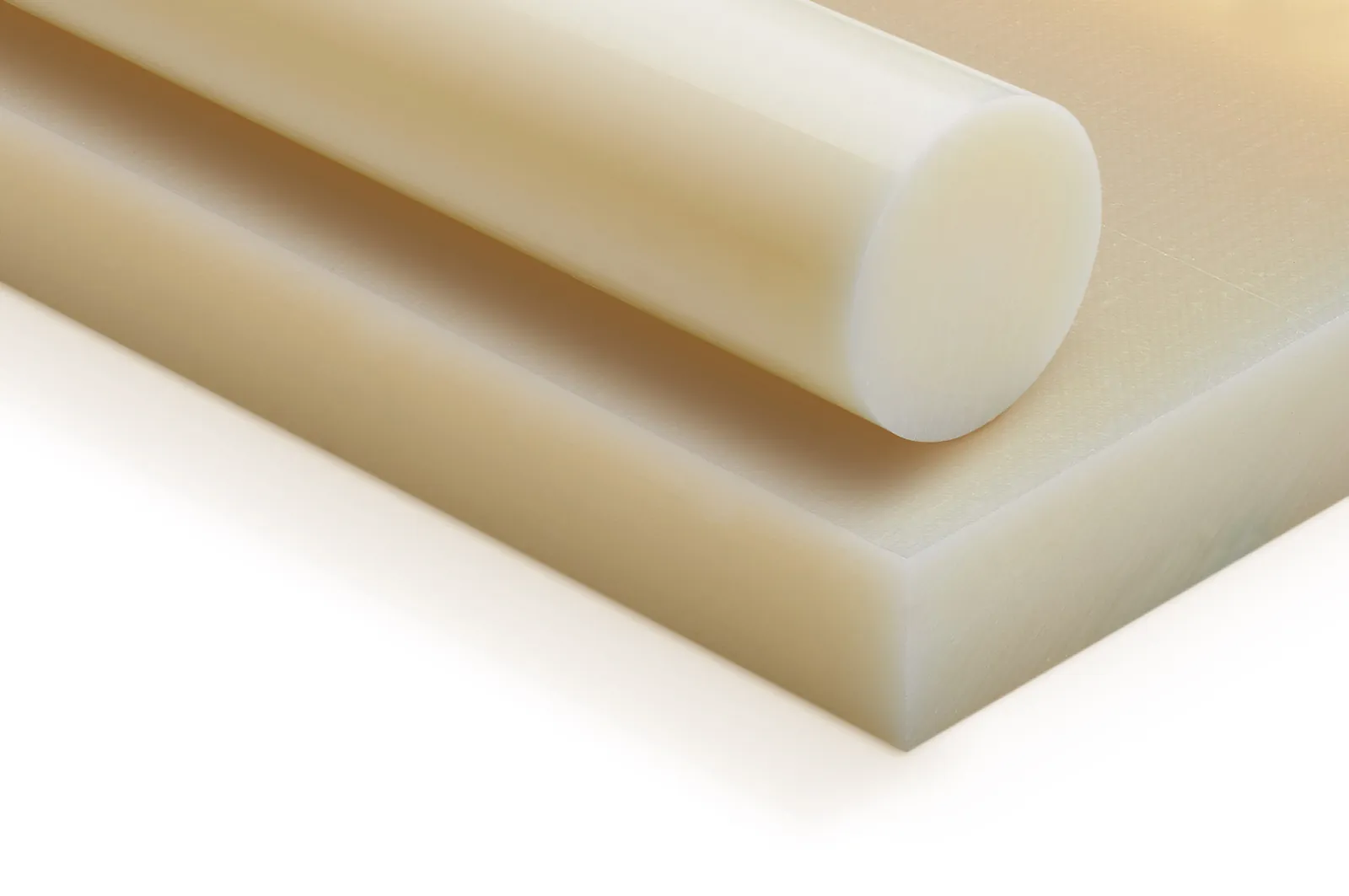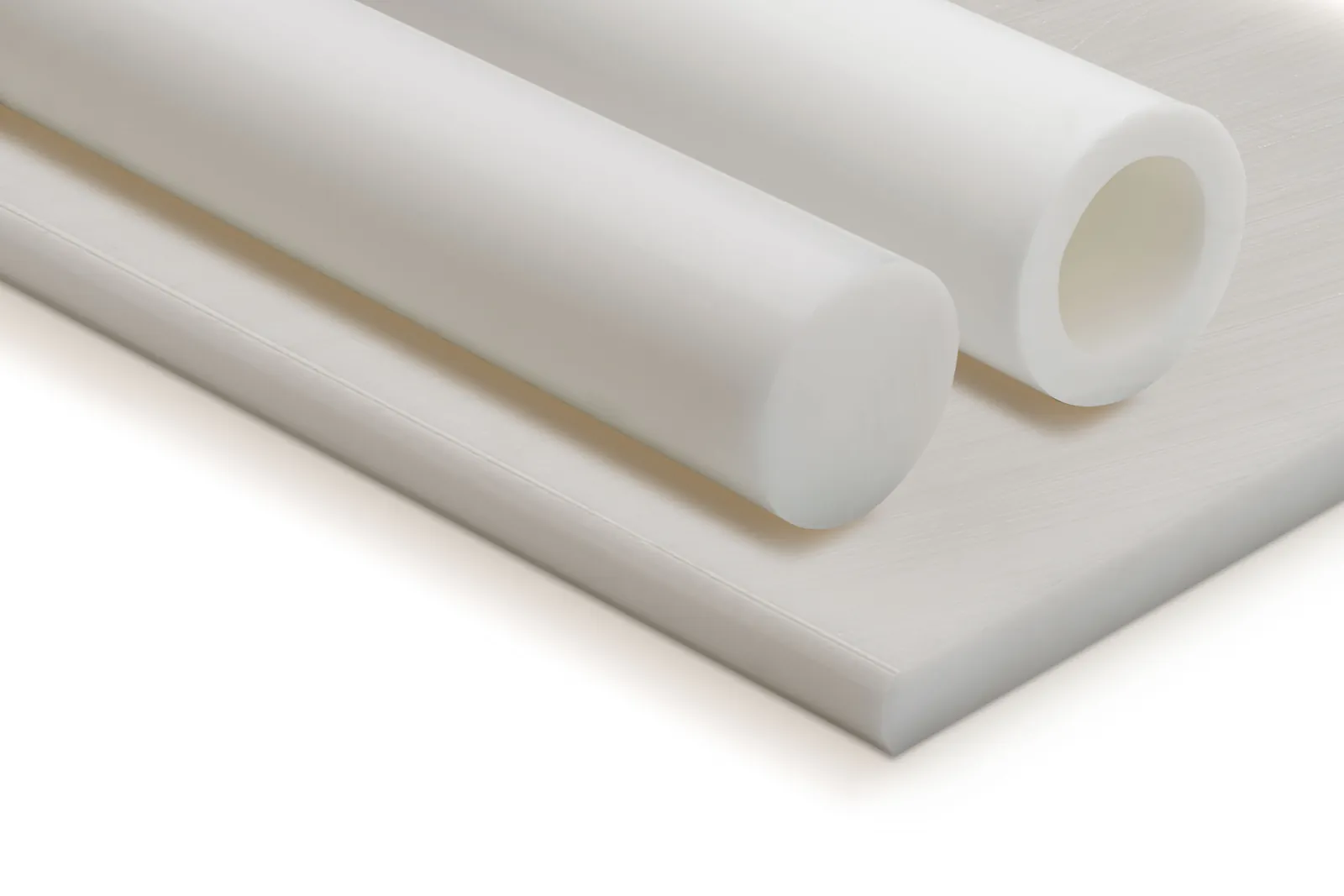
Differences between POM-C and POM-H - comparison of the variants
POM-C or POM-H? Compare the properties & applications of the two plastics to make the best choice for your project.
The choice of the right plastic is crucial for the performance and durability of a component. Particularly in the field of engineering plastics, polyoxymethylene (POM) is a popular material due to its high strength, rigidity and good machinability. However, within the POM family there are two main variants: POM-C (copolymer) and POM-H (homopolymer). Although both variants offer high performance, they differ in numerous properties. This article highlights the most important differences between the two materials and helps you make the right choice for your application.
What is POM?
Polyoxymethylene (POM) is a high-performance thermoplastic material, which is characterised by its high mechanical load capacity, low friction and good chemical resistance. Due to these properties, POM is frequently used in the automotive, mechanical engineering and electrical industries. The two main types of POM are POM-C (copolymer) and POM-H (homopolymer), which differ in their chemical composition and their properties.
POM-C vs. POM-H: The main differences
Chemical composition
- POM-C (copolymer): Contains several monomers and has a more stable molecular structure, which gives it better chemical and hydrolysis resistance. This makes it more resistant to hot, humid environments.
- POM-H (homopolymer): Consists of a uniform molecular structure that offers higher strength and rigidity, but is more susceptible to hydrolysis. POM-H can be improved in certain areas through the use of special additives.
Mechanical properties
- POM-H has a higher tensile strength and better fatigue strength than POM-C, which makes it particularly suitable for highly loaded applications.
- POM-C is more impact-resistant, which makes it better suited to applications with high impact exposure where cracking must be avoided.
- POM-H also offers higher surface hardness, which makes it more abrasion-resistant than POM-C.
Moisture absorption
- POM-C absorbs less moisture, which leads to better dimensional stability in humid environments. This makes it particularly suitable for components in water pumps or humid environments.
- POM-H can swell slightly through the effect of moisture, which can lead to possible changes in shape. This is particularly important in precise applications where high dimensional accuracy is required.
Temperature resistance
- POM-H has a higher temperature resistance, which makes it ideal for applications with increased thermal load.
- POM-C offers better resistance to thermal ageing, which makes it more durable under changing temperature conditions.
Machinability
- POM-C is easier to machine, as it has less tendency to form chips and is characterised by more stable cutting.
- POM-H can offer better surface quality, but is more difficult to machine, as it is more brittle.
- In addition, even better results can be achieved through special finishing processes, such as polishing or special milling methods.
On machining production: turning and milling of POM at a glance.
Areas of application for both materials
Where is POM-C preferably used?
- Components exposed to humid environments (e.g. pump housings, valves)
- Parts with high chemical requirements (e.g. seals, guide elements)
- Applications with high impact exposure (e.g. housings for mechanical engineering components)
- Plain bearings and moving elements with high abrasion resistance
Where is POM-H the better choice?
- Mechanically highly loaded components (e.g. gears, plain bearings)
- Applications with low moisture absorption and high temperature requirements (e.g. bearing bushes, gears with high load)
- Parts with particularly high requirements for surface quality (e.g. precision parts in fine mechanics)
- Applications where high dimensional stability under temperature fluctuations is required
Comparison table: POM-C vs. POM-H
| Property | POM-C (copolymer) | POM-H (homopolymer) |
|---|---|---|
| Chemical resistance | Very good | Good |
| Moisture absorption | Low | Higher |
| Temperature resistance | Good | Very good |
| Mechanical strength | Good | Very high |
| Impact resistance | Higher | Lower |
| Machinability | Easier | More demanding |
| Surface quality | Good | Very good |
| Wear resistance | Good | Very high |
| Property | POM-C | POM-H |
|---|---|---|
| Chemical resistance | ⭐⭐⭐⭐⭐ | ⭐⭐⭐ |
| Hydrolysis | ⭐⭐⭐⭐⭐ | ⭐⭐ |
| Strength | ⭐⭐⭐⭐ | ⭐⭐⭐⭐⭐ |
| Hardness | ⭐⭐⭐⭐ | ⭐⭐⭐⭐⭐ |
| Machinability | ⭐⭐⭐⭐⭐ | ⭐⭐⭐⭐ |
| Dimensional accuracy | ⭐⭐⭐⭐⭐ | ⭐⭐⭐⭐ |
| Mechanical engineering | ⭐⭐⭐⭐⭐ | ⭐⭐⭐⭐ |
Which material should you choose?
The choice between POM-C and POM-H depends heavily on the specific application:
- If high chemical resistance and moisture resistance are required, POM-C is the better choice.
- For applications with high mechanical load and temperature requirements, POM-H is better suited.
- Machinability and cost can also play a role, with POM-C being more economical in many cases.
- If extreme hardness and high temperature resistance are required, POM-H offers advantages.
For tougher alternatives in the friction pairing comparison, it is worth taking a look at polyamide.
Direct purchase: POM-C sheets and POM-C rods.
High-performance engineering plastics
Both POM-C and POM-H are high-performance engineering plastics, which offer different advantages depending on the application. While POM-H impresses with its high strength and temperature resistance, POM-C scores with better chemical resistance and easier machining. The right choice depends on the specific requirements of your project. If you need advice, we will be happy to help you further!