Why custom-made plastic profiles make economic sense
Why plastic profiles cut to size make economic sense. Precise, efficient and cost-saving – perfect for industry & mechanical engineering.
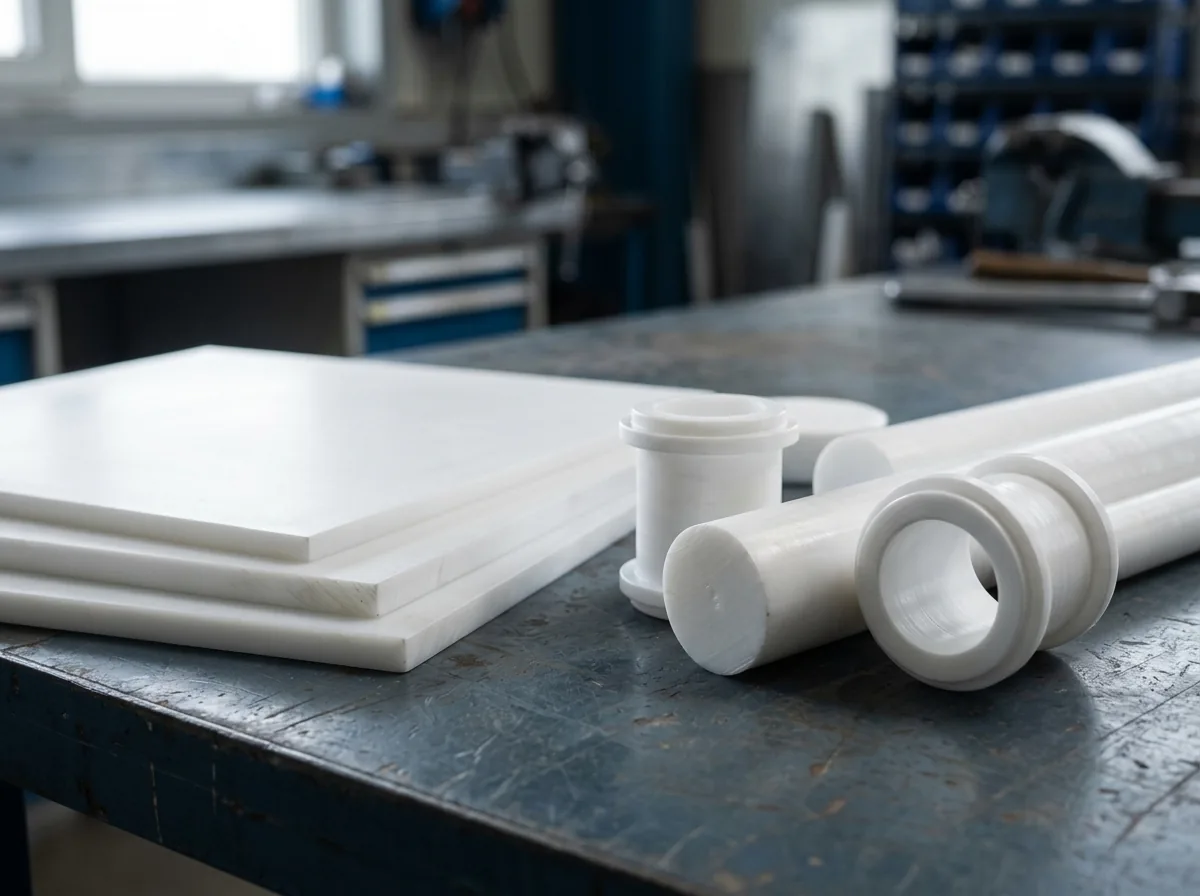
In today's industry, efficiency is a decisive factor for economic success. Companies face the challenge of minimising production costs while at the same time ensuring high quality and precision.Custom-made plastic profiles offer a solution here by being cut exactly to the specific requirements of projects. Whether mechanical engineering, the automotive industry, construction, medical technology or electrical engineering – the ability to manufacture plastic solutions individually opens up numerous advantages.
Through the precisely fitting adaptation, not only can material and storage costs be reduced, but assembly processes can also be optimised and rejects minimised. In addition, they enable precise integration into complex assemblies and systems, which increases efficiency throughout the entire production chain. Custom-made plastic profiles therefore combine precision, flexibility and cost-effectiveness and are thus a strategic tool for companies that want to reduce costs while at the same time promoting quality and innovation.
Individual adaptation for maximum efficiency
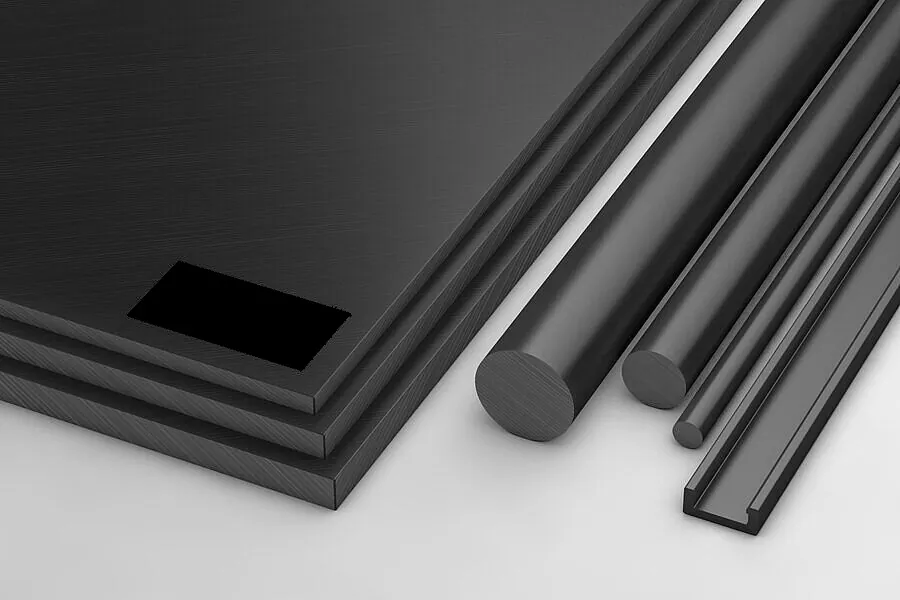
Every project places different requirements on material, dimensions, surfaces and functionality. Standard profiles rarely meet all specific specifications. With tailor-made plastic profiles, companies can choose exactly the shape, length, thickness, geometry and even colour that are required for the respective component or application.
This minimises material waste, eliminates unnecessary reworking and considerably reduces assembly times. Precisely manufactured profiles can be integrated into production immediately, which leads to time savings and higher productivity.
In addition, tailor-made profiles enable the integration of special functions, such as cavities for cables or seals, locking mechanisms, variable wall thicknesses or mounting surfaces, without additional machining steps.
Reduction of material and storage costs
A decisive advantage of custom-made plastic profiles is the efficient use of material. Standard profiles often have to be cut, which creates offcuts. Made-to-measure profiles are manufactured exactly to the required length, shape and functionality, which optimises material consumption and reduces costs.
Storage is also reduced: companies need less standard stock and can align material inventories better with demand. This lowers tied-up capital and offers more flexibility in production planning. Seasonal fluctuations or project-related requirements can also be accommodated more easily.
Comparison of standard profiles vs. made-to-measure profiles
| Criterion | Standard profiles | Made-to-measure profiles | Advantage |
|---|---|---|---|
| Material utilisation | Low, often offcuts | High, cut exactly | Lower material costs and waste |
| Assembly time | Longer machining required | Ready to use immediately | Time savings, higher productivity |
| Storage costs | High, many standard sizes required | Low, demand-oriented | Lower tied-up capital |
| Flexibility | Low, fixed dimensions | High, individually adaptable | Fast response to changes |
| Error rate | Higher due to reworking | Lower, precisely fitting | Fewer rejects and complaints |
Variety of materials and properties
Tailor-made plastic profiles can be manufactured from a wide range of materials, starting with standard plastics such as PVC, PE, PP or ABS through to high-performance plastics such as POM, PA, PTFE or PC. Every material brings specific properties with it:
- Abrasion resistance: Longer service life for moving or mechanically loaded components.
- Chemical resistance: Suitable for applications in the chemical, food or medical sector.
- Temperature resistance: Use in hot or cold environments without material distortion.
- UV resistance: Stability in outdoor use over long periods.
- Lightweight construction: Reduction of weight in designs without losing stability.
By combining the choice of material, surface treatment and precise manufacturing, the profiles can be optimally matched to the requirements of the project, which increases reliability, durability and cost-effectiveness.
Faster production processes and less reworking
A precisely manufactured profile reduces the need for additional machining steps such as sawing, milling, drilling, grinding or edge grinding. This has several immediate advantages: production lines run more efficiently, machine downtime is minimised and employees can concentrate on value-adding activities. In series production, these effects add up particularly strongly – time savings per component multiply across the entire production volume and significantly lower overall costs.
In addition, precisely fitting profiles improve the quality of assembly, as components interlock exactly. Errors and complaints due to inaccurate components are drastically reduced. Smooth integration into automated manufacturing processes also enables reliable planning and predictability of production times.
The reduction of reworking also affects delivery dates: projects can be completed faster and delivered on time, which increases customer satisfaction. At the same time, the plannability of resources improves, as fewer unexpected machining steps and less material waste occur.
Through this combination of increased efficiency, quality assurance and plannability,plastic profiles made to measure become a decisive lever for economically successful production processes.
Flexibility and individual solutions
Tailor-made plastic profiles offer companies the opportunity to respond flexibly to any kind of change or specific requirement. These include short-term adjustments to dimensions, the addition of special functional elements such as guide grooves, mounting tabs or sealing grooves, as well as material changes depending on the application environment. These profiles can be manufactured and delivered quickly without the production line being stopped for long or additional machines having to be retooled.
In addition, they enable the realisation of prototypes, special solutions and complex assemblies that would not be feasible with standard profiles. Companies can integrate new designs directly into manufacturing, carry out tests and switch production to the final version immediately. This promotes innovation and considerably accelerates development cycles.
In addition, the flexibility allows the profiles to be used for different applications in various industries. One and the same base profile can be used for different projects with minimal adjustments, which achieves economies of scale and further reduces costs. Adaptability thus becomes a strategic advantage in competition, as companies can react quickly to market requirements while at the same time ensuring the quality and functionality of their products.
Integration into complex systems
In many industries, plastic profiles must not be considered in isolation, but as part of complex assemblies or machine components. Tailor-made solutions enable exact matching to adjacent components, mechanical tolerances and functional elements. This reduces assembly errors, increases operational safety and simplifies maintenance.
Prefabricated profiles also allow electrical cables, seals or sensors to be planned in during production, which facilitates integration into automated systems and improves production quality.
Sustainability and conservation of resources
Tailor-made solutions lead to less offcut and optimised material utilisation. This not only contributes to cost reduction, but also to a more sustainable production process. Companies can use resources more efficiently, reduce waste and improve their ecological footprint – an increasingly important factor in competition and in customer requirements.
In addition, the profiles can be manufactured from recycled plastics or recycled after use, which supports a closed material circular economy.
Economic advantage through total cost consideration
When considering cost-effectiveness, companies should not only take into account the purchase costs.Plastic profiles made to measure bring savings in:
- Material costs through less offcut
- Storage through lower inventories
- Assembly time through precisely fitting delivery
- Reworking through ready-cut profiles
- Production planning through better integration into series manufacturing
- Reduced error rate and rejects in final assembly
In the total cost consideration, the advantages of the made-to-measure solution clearly outweigh the often higher purchase costs, especially for complex or high-quality applications.
Future prospects and innovations
The future for custom-made plastic profiles is closely linked to the trends of digitalisation, automation and Industry 4.0. Companies are increasingly using CAD-supported designs, virtual simulations and digital twins to plan the profiles precisely before they go into production. Automated cutting and manufacturing processes, combined with 3D printing, enable the rapid realisation of even complex geometries.
In addition, new material developments and coatings open up additional functionalities, such as increased resistance to abrasion, chemicals or extreme temperatures, which were previously only possible with complex reworking. This considerably expands the possible applications of plastic profiles.
With integrated sensors and smart factory applications, profiles can in future also be equipped with functions such as load or temperature monitoring, which allows production processes to be designed even more efficiently and predictively. Overall, these innovations offer not only cost advantages, but also strategic competitive advantages for companies that adopt tailor-made, intelligent solutions at an early stage.
In conclusion
Custom-made plastic profiles combine precision, efficiency, flexibility, sustainability and cost-effectiveness. They enable the optimal use of material, reduce storage and production costs and support sustainable manufacturing processes. Through precisely fitting manufacturing, individually selectable materials, surfaces and properties, projects can be realised more efficiently and the quality of the end products increased.
Companies that want to operate economically and at the same time meet the highest quality standards are therefore increasingly turning to tailor-made plastic solutions – a clear advantage over standardised products, especially in demanding industrial applications.
FAQ on custom-made plastic profiles
What is meant by custom-made plastic profiles? Custom-made plastic profiles are specially manufactured profiles that correspond exactly to the requirements of a project, e.g. in shape, length, wall thickness, material and colour.
What advantages do tailor-made profiles offer over standard profiles? Tailor-made profiles reduce material waste, save assembly and production time, increase flexibility and improve the fit in complex assemblies.
Which materials can be used? Depending on the requirement, standard plastics such as PVC, PE, ABS or high-performance plastics such as POM, PA, PTFE or PC can be used to ensure properties such as abrasion resistance, chemical resistance, temperature and UV resistance.
For which industries are tailor-made plastic profiles suitable? They are used in mechanical engineering, the automotive industry, construction, medical technology, electrical engineering, the food industry and many other technical areas.
How quickly can tailor-made profiles be delivered? Delivery times depend on material, complexity and production capacity. However, many manufacturers offer flexible, project-related deliveries within a few weeks.
Are custom-made plastic profiles sustainable? Yes, they reduce offcut, enable the use of recycled materials and support efficient use of resources, which increases sustainability.