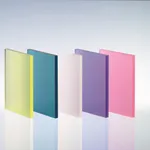
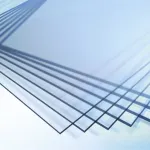
Cleaning transparent plastic glazing: Guide & approval list
Practical guide: safe cleaning and care of transparent plastic glazing. Approved cleaner list, cycle schedule, training checklist, error prevention.
Relevance and purpose of this guide
Transparent plastic glazing made from polycarbonate and acrylic glass is used in machine enclosures, protective hoods, test rigs, cleanrooms and building glazing. Unsuitable cleaning methods quickly lead to scratches, micro-hazing or stress cracks. This guide is aimed at operators, maintenance and quality managers. It describes safe, reproducible methods for cleaning and care, including an approval list, cycle planning and a training checklist.
Material basics and surface conditions
The cleaning strategy depends on the material and the surface. Polycarbonate offers high impact strength, but is sensitive to certain solvents and alkaline media. Acrylic glass (PMMA) is characterised by very good optical quality, but is more susceptible to scratching and can develop stress cracks through alcohols and aggressive cleaners.
Coatings with hard lacquers increase scratch resistance and can significantly change chemical tolerance. Hard-coated polycarbonate sheets generally achieve more consistent optical properties and a more stable cleaning window in operation compared with uncoated surfaces. Manufacturer approvals for cleaning are decisive in every case.
For a higher-level material overview, transparent engineering plastics and details on the material polycarbonate provide support. Information on UV and weathering is provided by the article UV and weathering resistance of transparent plastics.
Approval list: permitted and non-permitted cleaners
The following approval list serves as a practical guideline. The approvals of the sheet or coating manufacturer and internal factory instructions are always decisive. Before broad application, a suitability test at a non-critical point on the component is recommended.
Approved for routine care
- Lukewarm, preferably demineralised water for low-dust pre-cleaning and post-cleaning.
- pH-neutral, surfactant-based cleaning agents in low concentration. Rinse with low residue.
- Special plastic cleaners for polycarbonate or acrylic glass without ammonia and without abrasive components. Observe manufacturer instructions.
- Antistatic plastic cleaners or wipe solutions, provided they are expressly specified for PC or PMMA.
- Oil-free compressed air or ionising blowers for blowing off particles before wiping.
Only after approval and preliminary test
- Alcohol-based cleaners or disinfectants, for example ethanol or isopropanol. These can promote stress cracks on uncoated surfaces. On hard-coated surfaces they may be permissible depending on the coating. Manufacturer approvals are required (comparison of hard coatings on PC and PMMA).
- Oxidative disinfectant solutions or quaternary ammonium compounds. Minimise contact time and then rinse immediately with demineralised water.
- Gentle plastic polishes for removing fine hairline scratches only after proven suitability and not on coated surfaces without explicit approval.
Do not use
- Strongly dissolving solvents such as acetone, MEK, dichloromethane, toluene, petrol or terpenes.
- Glass cleaners with ammonia or aggressive additives.
- Strongly alkaline or acidic cleaners, powders and scouring agents, scouring sponges or abrasive pastes.
- High-pressure cleaners, steam cleaners or hot water with a high temperature differential directly on the surface.
- Coarse paper or fibrous materials that cause scratches.
For material selection and media compatibility, the basics of the chemical resistance of plastics help. For coated surfaces, the approvals of the coating system take priority.
Notes on surface conditions
- Uncoated polycarbonate: use pH-neutral, mild cleaners, avoid alcohol, rinse consistently.
- Uncoated PMMA: particularly susceptible to scratching, avoid alcohol and ammonia, use soft cloths.
- Hard-coated surfaces: increased scratch resistance, in some cases extended chemical tolerance. The approvals of the respective coating must be complied with without fail.
Standard process for manual cleaning
- Visual inspection: document the condition. Look out for cracks, edge damage and delaminated coatings.
- Particle removal: loosen particles with oil-free compressed air or ionisation. Do not wipe dry.
- Pre-cleaning: wet the surface with lukewarm demineralised water and rinse off loose contamination.
- Wet cleaning: apply pH-neutral surfactant solution to a soft, lint-free microfibre cloth or a PVA sponge. Wipe with minimal pressure in overlapping passes.
- Post-rinsing: rinse thoroughly with demineralised water to remove surfactant residues.
- Drying: dab dry with a clean, soft cloth. No circular, dry movements.
- Antistatic: if required, apply an approved antistatic plastic cleaner to reduce dust attraction.
Tools and aids
- Soft, high-quality microfibre cloths with a smooth surface or PVA wipes, colour-coded separately for the wash and rinse zone.
- Weighed dosing systems or labelled mixing bottles to ensure reproducible concentrations.
- ESD-compliant cleaning cloths in sensitive areas.
- Personal protective equipment in accordance with the safety data sheets of the media used.
Cleaning cycles and documentation
Cleaning intervals depend on the process environment, degree of contamination, optical requirements and coating condition. In oily production environments, shorter cycles with water and pH-neutral surfactants are generally appropriate. In cleanrooms, low-particle methods with validated media are the priority. Coated surfaces often allow longer intervals, provided the contamination is primarily particulate.
A cycle plan with minimum and maximum intervals, documented media approval per surface and a simple checklist for operating and cleaning personnel are recommended. Deviations from the plan should be recorded with date, medium, concentration, contact time and observation.
Training checklist for operating and cleaning personnel
- Identifying the surface type: uncoated, hard-coated, special version.
- Approved media, mixing ratio and contact times.
- Sequence of work steps from particle removal to drying.
- Changing cloths between the wash and rinse zone, avoiding cross-contamination.
- Behaviour with critical contamination such as oils, coolants, paint mist or disinfectant films.
- Safe handling, PPE, disposal of residual quantities, documentation in the cycle plan.
Avoiding typical mistakes
- Dry rubbing causes micro-scratches. Always moisten and work with minimal pressure.
- Circular movements encourage streaks. Wipe linearly in overlapping passes.
- Unsuitable cleaners increase the risk of stress cracks. Check approvals and carry out a preliminary test.
- Avoid temperature shock from hot water or steam. Maintain moderate temperatures.
- Insufficient post-rinsing leads to residues and optical defects. Use demineralised water.
Troubleshooting for visible damage
- Micro-scratches and haze: polishes only after proven suitability and never on coated surfaces without approval. For coated surfaces, have the coating system checked.
- Stress cracks: stop media contact immediately, relieve the component, determine the cause. Frequent triggers are alcohol, ammonia or solvent content.
- Delamination of coatings: document mechanical load and chemical history. Verify approvals and process parameters of cleaning.
- Stubborn films: check contact time, concentration and post-rinsing. If necessary, define and validate a graduated cleaning strategy with pH-neutral media.
Frequently asked questions
Which cloths are best suited to PC and PMMA?
Soft microfibre cloths with a smooth surface or PVA wipes. They minimise abrasion, bind particles securely and reduce streak formation. Strictly separate cloths between the wash and rinse zone and replace them regularly.
May isopropanol be used for disinfection?
Only after manufacturer approval and preliminary test. On uncoated PC or PMMA, isopropanol increases the risk of stress cracks. On hard-coated surfaces it may be permissible depending on the coating. Keep contact time short and rinse afterwards.
How do hard coatings influence cleaning cycles?
Hard coatings increase scratch resistance and often stabilise the cleaning window. As a result, intervals can be extended if contamination is mainly particulate. However, approvals and optical requirements remain decisive.
How do I recognise stress cracks at an early stage?
Fine, tree-like or net-like lines at edges, drilled holes or highly stressed areas. Visual inspection with oblique light helps. At the first signs, adjust cleaning immediately, check media and relieve the component mechanically.
What must be observed when cleaning in the cleanroom?
Low-particle processes, validated media, low fibre release and clear zone separation. Ionisation before wiping and demineralised water reduce residues. Document all steps and qualify them in accordance with SOPs.
How do I document cleaning approvals and cycles efficiently?
Approval list per surface, cycle plan with minimum and maximum intervals, a short checklist for operators as well as log fields for medium, concentration, contact time, observation and deviations. Date the test and approval status.