How are engineering plastics made? A look at production
What are engineering plastics? More about properties, types such as PA and POM, production, processing and industrial applications.
Engineering plastics are thermoplastic materials that are specially designed for mechanically, thermally or chemically demanding applications. Compared with standard plastics, they offer greater strength, better dimensional stability, wear resistance or temperature resistance, depending on the material.
Well-known engineering plastics include, for example, polyamide (PA), polyoxymethylene (POM) and polycarbonate (PC). Where even higher demands are placed on temperature, chemical or wear resistance, high-performance plastics such as PEEK are used.
But what distinguishes engineering plastics from standard plastics, how are they produced and which material is suitable for which application?
What are engineering plastics?
Engineering plastics are plastics whose properties are specifically designed for technical and structural applications. They are used, among other things, for gears, bearings, guides, housings, electrical components and other functional parts.
Depending on the polymer used, engineering plastics can offer the following properties, among others:
- high mechanical strength and rigidity
- good impact and wear resistance
- high dimensional stability
- good sliding properties
- electrical insulating properties
- resistance to selected chemicals
- higher temperature resistance than many standard plastics
- low weight compared with metallic materials
- good options for machining and thermoplastic processing
The specific property profile always depends on the particular plastic, its modification and the operating conditions.
Which engineering plastics are there?
Various engineering plastics are available for industrial applications. PA, POM and PC are particularly frequently used. For exceptionally high requirements, high-performance plastics such as PEEK, PPS or PEI are also an option.
Polyamide (PA)
Polyamide is characterised by a good combination of strength, toughness and wear resistance. Depending on the PA type, the material is suitable, for example, for gears, rollers, bearings, bushes and other mechanically stressed components.
During design, the material's moisture absorption must be taken into account, as it can affect the dimensions and mechanical properties.
Polyoxymethylene (POM)
POM is frequently used where high dimensional stability, good sliding properties and low moisture absorption are required.
Typical applications are:
- gears
- bearing bushes
- guide elements
- valve components
- housings
- precision and functional parts
Due to its good machinability, POM is also particularly well suited to precisely machined plastic components.
Polycarbonate (PC)
Polycarbonate combines high impact strength with transparency and good electrical properties. As a result, PC is used, for example, for transparent covers, protective components, housings and electrical applications.
PEEK and other high-performance plastics
Where classic engineering plastics are not sufficient due to high temperatures, aggressive media or exceptional mechanical loads, high-performance plastics are used.
An important representative is PEEK. The material combines high temperature resistance with good mechanical properties as well as pronounced chemical and wear resistance.
Other high-performance plastics include, for example, PPS, PEI, PAI, PPSU, PSU and polyimides.
How are engineering plastics produced?
The production of engineering plastics begins at the molecular level. The starting point is monomers, from which long molecular chains – the polymers – are built up through chemical reactions.
Which properties the finished plastic possesses depends essentially on the structure of these polymer chains. In addition, additives, fibres and fillers can be used to specifically modify certain properties.
In principle, various reaction mechanisms can be considered for polymer formation.
Polymerisation
In polymerisation, suitable monomers are joined together to form long polymer chains. Numerous thermoplastic plastics are produced in this way.
Polycondensation
In polycondensation, molecules react with one another, and smaller molecules can simultaneously be split off as by-products. This process plays a role, for example, in various polyamides and polyesters.
Polyaddition
In polyaddition, various starting molecules react with one another without a small molecule having to be split off as a by-product.
Which process is used depends on the chemical structure of the desired plastic.
From polymer to engineering plastic
The production of the base polymer does not complete the material development. The material can subsequently be specifically modified in order to achieve certain technical properties.
Additives
Additives can be used, for example, to influence properties such as UV resistance, flame protection, sliding behaviour or processability.
Glass and carbon fibres
Fibre reinforcements can significantly change the mechanical properties of a plastic. Glass fibres or carbon fibres are used, for example, where greater rigidity or strength is required.
Fillers
Mineral and other fillers also allow the material to be specifically adapted. Depending on the composition, dimensional stability, friction behaviour or other technical properties can be influenced, among other things.
Such modifications produce material variants that can be specifically tailored to particular industrial applications.
How are engineering plastics processed?
After the material has been produced and modified, the plastic must be brought into the desired shape. Various production and processing methods are available for this.
Extrusion
In extrusion, the heated plastic is continuously passed through a shaping tool. The process is suitable, for example, for the production of sheets, rods, tubes or profiles.
Injection moulding
In injection moulding, molten plastic is introduced into a mould under pressure. This allows complex geometries to be produced in larger quantities.
Machining of plastics
Engineering plastics can also be precisely machined from semi-finished products. Plastic machining includes, for example, milling, turning and drilling.
For components with tight tolerances, CNC milling and CNC turning are available, among other options.
Which process is suitable depends on the material, the component geometry, the required tolerances and the required quantity.
Engineering plastics and standard plastics compared
Standard plastics are used for numerous less demanding applications. Engineering plastics, by contrast, offer property profiles that make them interesting for more heavily loaded functional parts.
| Property | Standard plastics | Engineering plastics |
|---|---|---|
| Mechanical load capacity | rather low to medium | medium to high |
| Dimensional stability | depends on the material | often very good |
| Wear resistance | depends on the material | high with suitable materials |
| Temperature resistance | usually lower | generally higher |
| Technical functional parts | conditionally suitable | often very well suited |
| Cost | usually lower | usually higher |
The boundaries between the material groups are not entirely clear-cut. For practical selection, the specific requirements of the component are therefore more important than the pure material class.
Engineering plastics or high-performance plastics?
Engineering plastics and high-performance plastics should not be equated.
Classic engineering plastics such as PA, POM or PC already cover numerous applications in mechanical engineering, vehicle construction and the electrical industry.
High-performance plastics come into play above all when additional requirements exist, for example:
- permanently high temperatures
- aggressive chemicals
- high continuous mechanical loads
- special purity requirements
- severe friction and wear stress
- high demands on dimensional stability
The selection should therefore always be based on the actual operating conditions.
Where are engineering plastics used?
Engineering plastics are found today in virtually all industrial sectors. They are particularly widespread in mechanical and plant engineering, in vehicle technology, the electrical industry, medical technology and in conveyor and automation technology.
Typical components are, for example:
- gears and rollers
- plain bearings and bushes
- guides and sliding elements
- sealing and valve components
- housings
- insulating components
- pump components
- precision parts
- structural components to drawing
The advantage of engineering plastics often lies in the combination of various properties. In addition to mechanical load capacity, for example, low weight, freedom from corrosion, electrical insulation or good sliding properties can be relevant for an application.
Which engineering plastic is the right one?
The material selection should not be based on the plastic's name alone. To design a reliable component, the actual operating conditions must be taken into account.
Important selection criteria are:
| Requirement | Factors to be checked |
|---|---|
| Mechanical load | strength, rigidity, compressive load, impact stress |
| Temperature | continuous use, temperature peaks, thermal expansion |
| Chemical contact | medium, concentration, temperature and duration of exposure |
| Friction and wear | sliding partner, speed, surface pressure |
| Dimensional stability | moisture absorption, thermal expansion, tolerances |
| Electrical requirements | insulation and other electrical properties |
| Production | milling, turning, extrusion or other processes |
| Approvals | industry-specific requirements and material approvals |
For precision parts, for example, the low moisture absorption and good dimensional stability of POM can be advantageous. PA, by contrast, offers an interesting combination of toughness and wear resistance. Where thermal and chemical requirements are particularly high, materials such as PEEK may be more suitable.
Engineering plastics as semi-finished products and finished parts
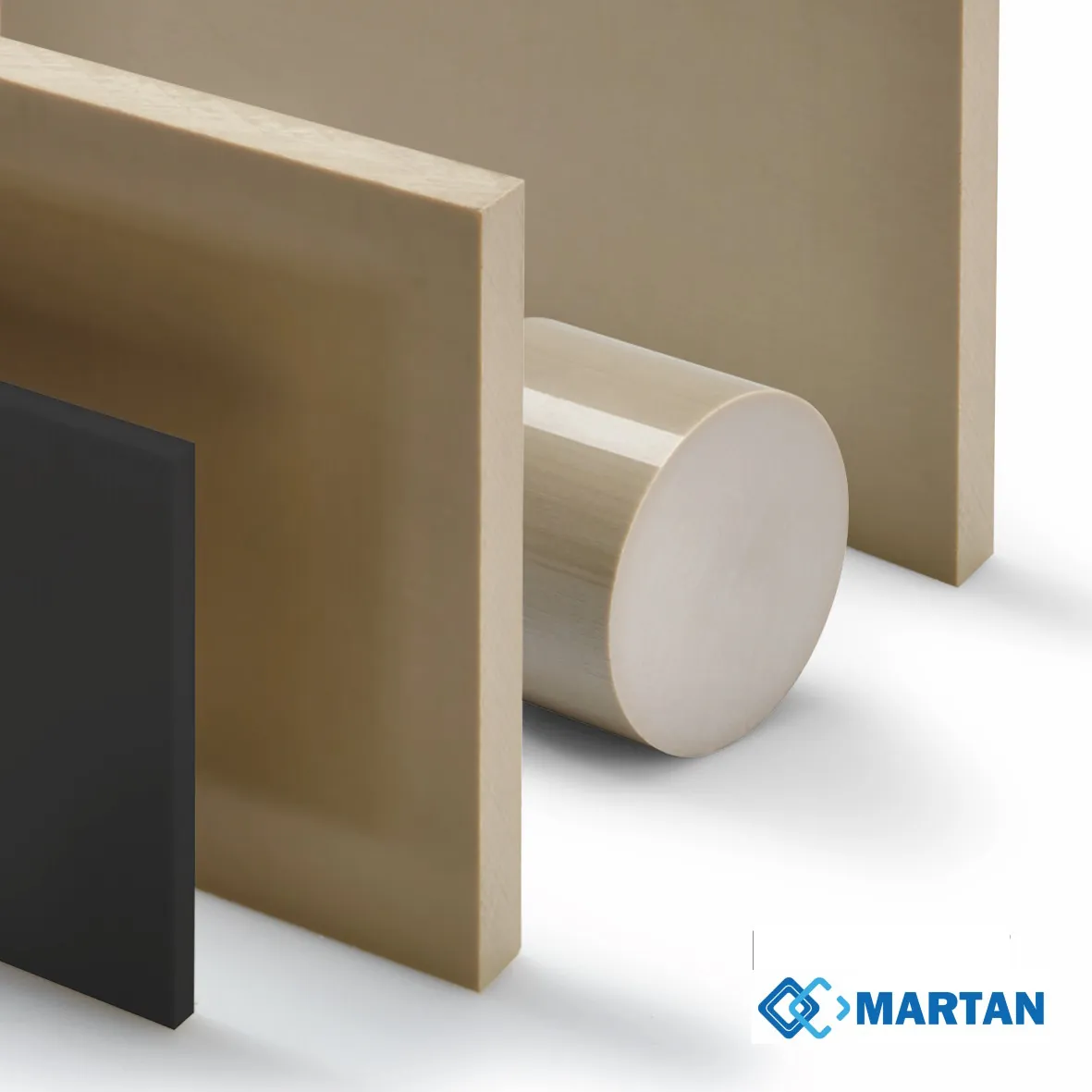
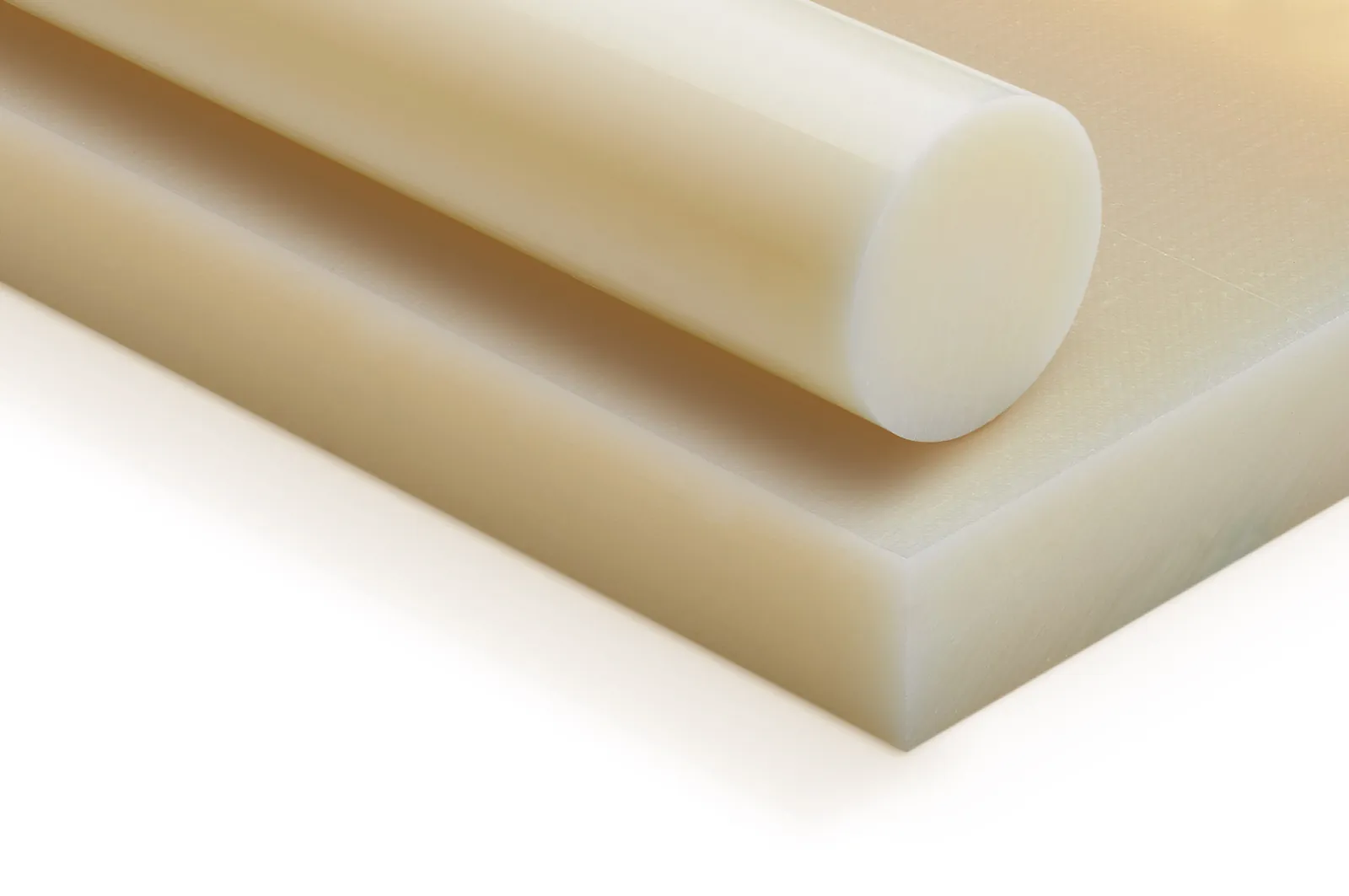
Depending on the material and application, engineering plastics are provided as sheets, rods, tubes, profiles or other plastic semi-finished products.
Individual components to drawing can then be produced from these semi-finished products. Especially for small and medium quantities or components with demanding geometries, machining offers a flexible way to precisely manufacture engineering plastic parts.
Martan Plastics supports you in selecting suitable plastics as well as in implementing individual semi-finished products and finished parts for industrial applications.
Frequently asked questions about engineering plastics
What is meant by engineering plastics?
Engineering plastics are materials with properties that qualify them for technical and structural applications. Depending on the plastic, they offer, for example, high strength, rigidity, wear resistance, dimensional stability or temperature resistance.
Which plastics are classed as engineering plastics?
Frequently used engineering plastics include, among others, polyamide (PA), polyoxymethylene (POM) and polycarbonate (PC). In addition, there are particularly high-performance plastics such as PEEK, PPS or PEI.
What is the difference between engineering plastics and standard plastics?
Engineering plastics generally have better mechanical, thermal or functional properties and are therefore particularly suitable for loaded components. Standard plastics, by contrast, are frequently used for less demanding applications.
How are engineering plastics produced?
First, polymers are built up from suitable starting materials. The plastics can then be modified with additives, fibres or fillers and processed, for example, by extrusion or injection moulding.
Which engineering plastics are suitable for mechanical engineering?
Frequently used materials include, for example, PA and POM. Where thermal, chemical or mechanical requirements are very high, high-performance plastics such as PEEK may be an option. The selection depends on load, temperature, media contact, friction and the required dimensional stability.
Can engineering plastics be CNC machined?
Many engineering plastics can be machined very well. Processes such as CNC milling and CNC turning allow individual plastic parts with complex geometries and tight tolerances to be produced.