Which high-performance plastics are suitable for extreme temperatures?
Discover the best high-performance plastics for extreme temperatures. Learn more about their properties and possible applications.
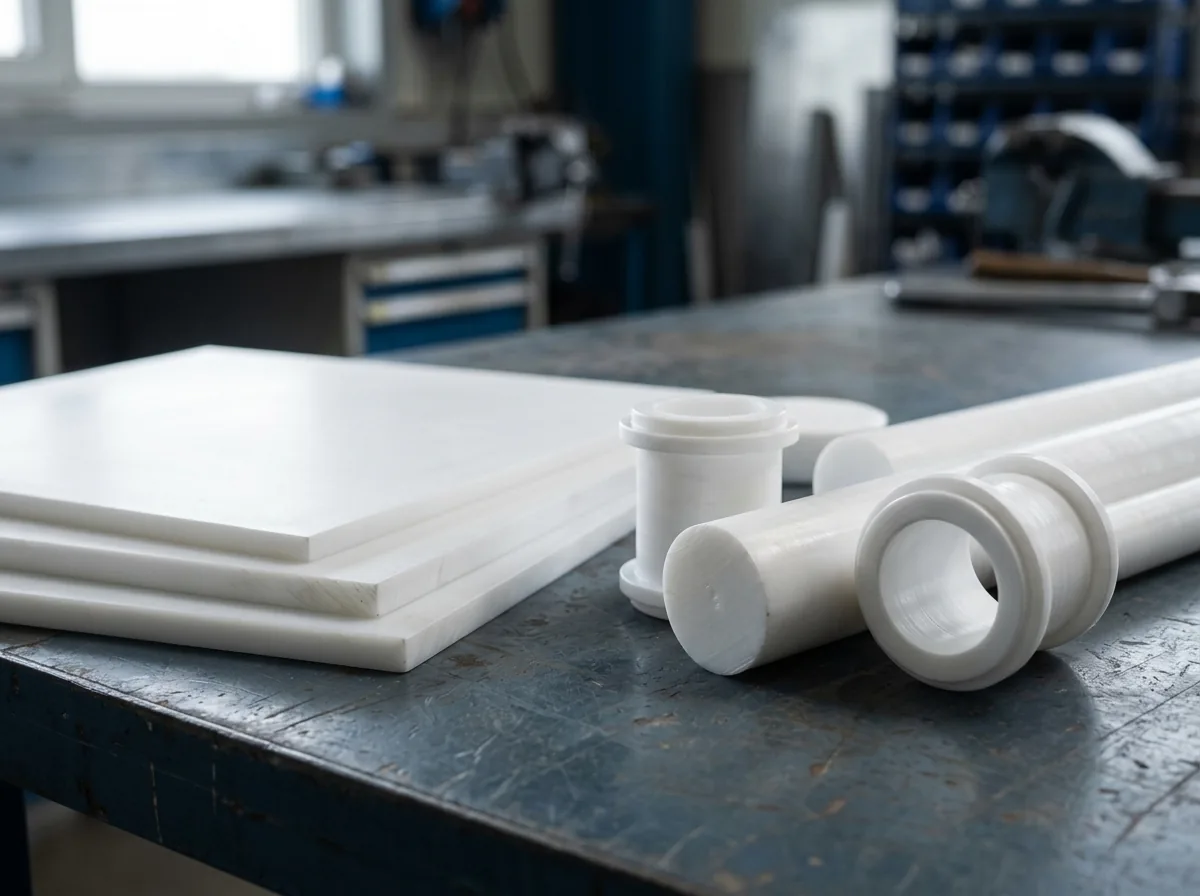
High-performance plastics are plastics for technically particularly demanding operating conditions. Compared with standard plastics and many engineering plastics, they are characterised by greater temperature resistance and, depending on the material, by particularly high mechanical strength, chemical resistance, wear resistance or electrical insulation properties. Typical high-performance plastics are PEEK, PPS, PEI, PPSU, PSU, PES, PAI, polyimide and PTFE.
Many of these materials are suitable for continuous service temperatures above 150 °C and are therefore also referred to as high-temperature plastics. Which high-performance plastic is suitable, however, depends on the actual continuous service temperature, short-term temperature peaks and the other loads on the component.
High-performance plastics are indispensable for applications that must withstand extreme temperatures. They are used in aerospace, medical technology, the automotive industry and many other high-technology sectors where conventional materials fail. Particularly in environments with temperatures far above 200 °C, materials must not only be heat-resistant but also mechanically resilient and chemically resistant. But which high-performance plastics offer the best resistance to heat and what specific advantages do they bring?
Which heat-resistant plastics are there?
Heat-resistant plastics are used wherever conventional engineering plastics reach their thermal limits. Depending on the material, they withstand continuous temperatures of over 150 °C and sometimes even up to 300 °C or more. Such materials are often referred to as high-temperature plastics or high-performance plastics and are used, among other things, in mechanical engineering, aerospace, medical technology and the electrical industry.
The best-known heat-resistant plastics include PEEK (polyetheretherketone), PTFE (polytetrafluoroethylene), PPS (polyphenylene sulphide) and PEI (polyetherimide). They are characterised not only by high temperature resistance but, depending on the material, also offer further advantages such as high chemical resistance, good sliding properties or excellent mechanical strength.
Which temperature-resistant plastic is the best choice always depends on the respective application. What matters is not only the maximum service temperature but also factors such as the duration of thermal exposure, mechanical stress, contact with chemicals or the required approvals, for example for the food or medical technology sector.
While some heat-resistant plastics withstand temperatures of around 150 to 200 °C continuously, high-performance plastics such as PEEK or polyimide (PI) are also suitable for applications in the range of 250 to over 300 °C. For an economical and long-lasting solution, the material should therefore always be selected on the basis of the actual operating conditions.
What does temperature resistance mean for plastics?
The temperature resistance of a plastic describes the temperature up to which a material permanently retains its mechanical properties and its shape. What matters here is not only the maximum temperature but also the duration of thermal exposure. A plastic can withstand significantly higher temperatures in the short term than in continuous use.
Several characteristic values play an important role in assessing temperature resistance:
- Continuous service temperature: temperature range in which a plastic can be used over a long period without its properties deteriorating significantly.
- Short-term temperature: maximum temperature to which a material can be exposed for a short time, for example during brief load peaks or during a manufacturing process.
- Glass transition temperature (Tg): from this temperature onwards, the material behaviour of many plastics changes. The material becomes softer and increasingly loses rigidity.
- Melting temperature (Tm): in the case of semi-crystalline plastics, the melting process begins above this temperature. The material loses its solid form and is no longer suitable for structural applications.
When selecting a temperature-resistant plastic, these characteristic values should always be considered together. In addition to temperature, mechanical loads, chemical media, moisture and the duration of use also influence the actual service life of the component. A high-performance plastic is therefore not automatically the best choice for every high-temperature application, but must be selected to suit the respective operating conditions.
Which high-performance plastic is suitable for which temperature?
| Temperature | Recommendation |
|---|---|
| up to 150 °C | engineering plastics sufficient |
| up to 220 °C | PEI |
| up to 260 °C | PTFE |
| up to 300 °C | PEEK |
| over 300 °C | PI |
Important properties
The temperature resistance of a plastic determines the heat up to which it retains its mechanical and chemical properties. This is defined by the glass transition temperature (Tg) or the thermal continuous service temperature. In addition to heat resistance, chemical resistance and mechanical stability are also decisive. High-performance plastics are characterised by high strength, low creep tendency and resistance to solvents. In addition, they are often lighter than metals and therefore offer an optimum weight-to-strength ratio.
Influence of temperature on material properties
Plastics behave differently under high temperatures than at room temperature. Above a certain temperature, deformation, stress cracks or general material fatigue can occur. In addition, the electrical insulation property of many polymers changes as temperature rises. Particularly in electrical engineering and aviation, it is crucial that plastics retain their functionality even under thermal load.
High-performance plastics for extreme temperatures
Below is an overview of the most capable high-temperature plastics:
- PTFE (polytetrafluoroethylene): temperature-resistant up to 260 °C, chemically resistant, low coefficient of friction. This material is often used for seals, bearings and in the chemical industry, as it does not react with aggressive chemicals even at high temperatures.
- PEEK (polyetheretherketone): temperature-resistant up to 300 °C, high mechanical strength, resistant to radiation and chemicals. Thanks to its combination of mechanical stability and thermal resistance, it is used in aerospace, medical technology and the automotive industry.
- PI (polyimide): resistant up to 400 °C, exceptionally high thermal stability, high wear resistance. It is used for high-temperature seals, electronic components and applications in space travel, as it remains stable even in vacuum environments.
- PPS (polyphenylene sulphide): temperature-resistant up to 230 °C, high rigidity, chemically resistant. Due to its high strength and electrical insulation properties, it is used for pump housings, electrical components and in automotive engineering.
- PEI (polyetherimide): temperature-stable up to 217 °C, good electrical insulation properties, high mechanical strength. It is used above all in medical technology, electronics and aviation, as it is easy to process and at the same time very resistant.
Comparison table of high-performance plastics
| Plastic | Max. temperature (°C) | Mechanical strength | Chemical resistance | Main applications |
|---|---|---|---|---|
| PTFE | 260 | Medium | Very high | Chemicals, seals, bearings |
| PEEK | 300 | Very high | High | Aviation, automotive, medical technology |
| PI | 400 | Very high | High | Space travel, electronics, high-temperature applications |
| PPS | 230 | High | Very high | Automotive engineering, pump housings, electrical industry |
| PEI | 217 | High | Medium | Medical technology, electronics, aviation |
Further aspects in material selection
In addition to temperature resistance, other factors play a role in choosing the right high-performance plastic:
- Mechanical load capacity: depending on the application, plastics must not only be heat-resistant but also able to withstand extreme mechanical loads. Particularly in rotating or moving parts, such as bearings or sliding guides, high wear resistance is required.
- Chemical resistance: high-temperature plastics are often used in the chemical industry, where they must withstand aggressive substances. PTFE and PPS are particularly resistant here.
- Electrical insulation: in electrical engineering and high-frequency technology, plastics must exhibit good insulation properties even under thermal load. Here PEI and PI offer decisive advantages.
- Machinability: depending on the manufacturing method, the choice of plastic can vary greatly. While PTFE is often produced by machining, PEEK and PPS can be injection-moulded well.
Conclusion
The choice of the right high-performance plastic depends on the specific requirements. Whether mechanical load, extreme temperatures or chemical resistance – there is an optimum solution for every challenge. PEEK, PI and PTFE are among the most capable materials for high temperatures and are used in many critical applications. Through the combination of temperature resistance, stability and chemical resistance, they are increasingly replacing conventional materials such as metals and ceramics.