Plastic sheets
PTFE sheet – cut to size
PTFE sheets cut to size Our PTFE sheets offer outstanding chemical resistance and sliding properties – ideal for industrial applications that demand the…
Description
PTFE sheets cut to size
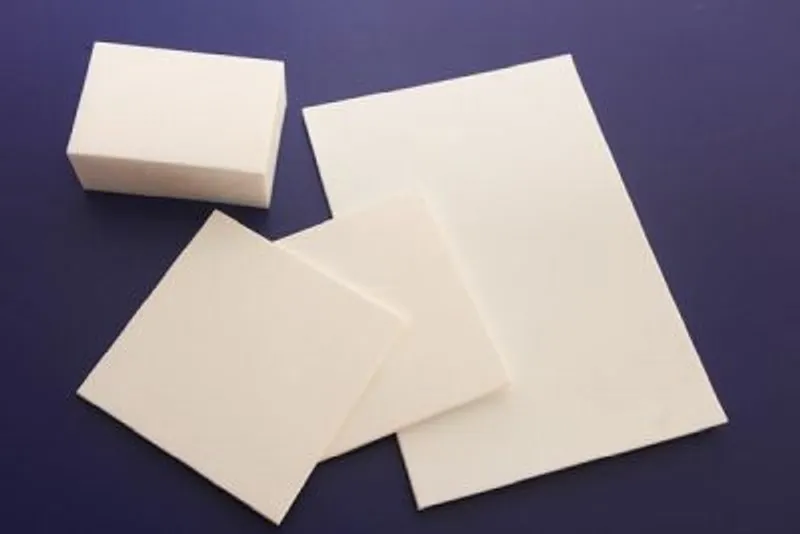
Our PTFE sheets offer outstanding chemical resistance and sliding properties – ideal for industrial applications that demand the highest precision and reliability. We offer precisely fitting PTFE cut pieces to size that are perfectly tailored to your requirements.
You can order Teflon sheets from us in the following dimensions: width from 20 mm to 1000 mm and length from 20 mm to 1000 mm. In addition, a selection of sheet thicknesses from 1 mm to 50 mm is available to you.
PTFE plastic (with the chemical name polytetrafluoroethylene, generally referred to as Teflon®) is a semi-crystalline fluoropolymer with many unique properties. This fluoropolymer offers exceptionally high thermal stability and chemical resistance as well as a high melting point (-200 to +260 °C, briefly also up to 300 °C).
PTFE sheets also have excellent sliding properties, very good electrical resistance and form a non-stick surface. In contrast to other plastic, however, they exhibit only low mechanical strength and a high specific density.
To improve the mechanical properties, PTFE plastics can be reinforced with additives such as glass fibres, carbon or bronze. Due to their structure, polytetrafluoroethylene is frequently formed into semi-finished products using compaction processes and then further processed with cutting/machining tools.
PTFE sheets in various sizesWe supply you with PTFE (Teflon®) semi-finished products such as
- PTFE sheets
- PTFE rods
- PTFE blocks
- PTFE films
- PTFE tubes
- PTFE tapes
Of course, in addition to the Teflon sheet, we also offer the cutting to size of other materials, such as: POM-C cut pieces or PA6 cut pieces
What is PTFE?
PTFE (polytetrafluoroethylene) is a synthetic plastic that is widely used due to its outstanding chemical resistance and sliding properties. PTFE sheets are thin, rectangular pieces of Teflon that are used in many industrial applications. PTFE, better known under the brand name Teflon®, is frequently used in the form of sheets, films, rods and other semi-finished products. Particularly noteworthy are the exceptional temperature resistance (-200 °C to +260 °C) and the chemical inertness, which make PTFE an ideal material for demanding areas of application.
PTFE sheets are flat, rectangular cut pieces that are used in numerous areas. Due to their outstanding electrical insulation properties, they are often used in electrical and electronic applications. In industry, PTFE sheets serve as seals, plain bearings and insulators and are used in chemical laboratories as supports for apparatus. They are also used in medical technology, food processing and many other areas in which high chemical resistance and sliding properties are crucial.
Manufacture of PTFE
PTFE sheets are produced by various processes such as extrusion, pressing or film lamination.
Compaction and machining processes
PTFE sheets are frequently produced by compacting and subsequently machining semi-finished products. The starting material, a PTFE raw powder, is first formed under high pressure. This compaction process ensures that the material acquires its characteristic structure and is compacted homogeneously. This is followed by machining, in which the semi-finished products are brought into the desired shape. This process ensures that the PTFE sheets have precise dimensions and a high surface quality. Machining can be carried out by milling, turning or sawing and allows flexible adaptation to the requirements of the respective application.
Extrusion and pressing processes
Another process for producing PTFE sheets is extrusion. Here, the PTFE material is pressed through a die to produce continuous sheets or profiles. This process is particularly suitable for larger production volumes and uniform material thicknesses. In addition, there is the pressing process, in which the PTFE powder is placed in a mould and compacted under high pressure. This process is often used for thicker sheets, as it allows better control over the material properties. After pressing, the sheets are thermally post-treated to achieve optimum strength and stability. By combining these processes, PTFE sheets with different properties can be produced for special applications.
The history behind Teflon®
The discovery of Teflon® as a non-stick coating dates back to 1954. The French chemist Marc Grègoire was originally experimenting with it in order to coat his fishing line when his wife Colette came up with the idea of also using the plastic for pots and pans. The non-stick coating means that food no longer sticks to the cooking surface, which made Teflon a popular material in the domestic kitchen.
Semi-finished products and versatile areas of application
PTFE is produced as what is known as a semi-finished product, which means that it is available in intermediate forms such as sheets, hollow rods, panels or films that can be further processed to produce various end products. PTFE sheets are available in sizes from at least 20 mm × 20 mm up to a maximum of 1000 mm × 2000 mm. These semi-finished products are suitable for many further processing steps and are in great demand in industry.
An important aspect of PTFE is the fact that, in their normal state, the sheets are difficult to glue or paint, as they have a very repellent surface. For special order requirements, however, the sheets can be pre-treated in such a way that gluing or painting becomes possible. In addition, PTFE can be combined with materials such as bronze or stainless steel in order to improve the mechanical properties, in particular compressive strength and wear resistance. These combinations significantly expand the possible uses of PTFE, so that it can be used as a sheet, tube, hollow rod or film in a wide variety of applications.
PTFE machiningPTFE machining
PTFE sheets are easy to machine and can be adapted to various requirements. Common machining methods include sawing, milling, drilling and grinding. Thanks to the low friction and the outstanding sliding properties, PTFE sheets can be further processed easily and precisely.
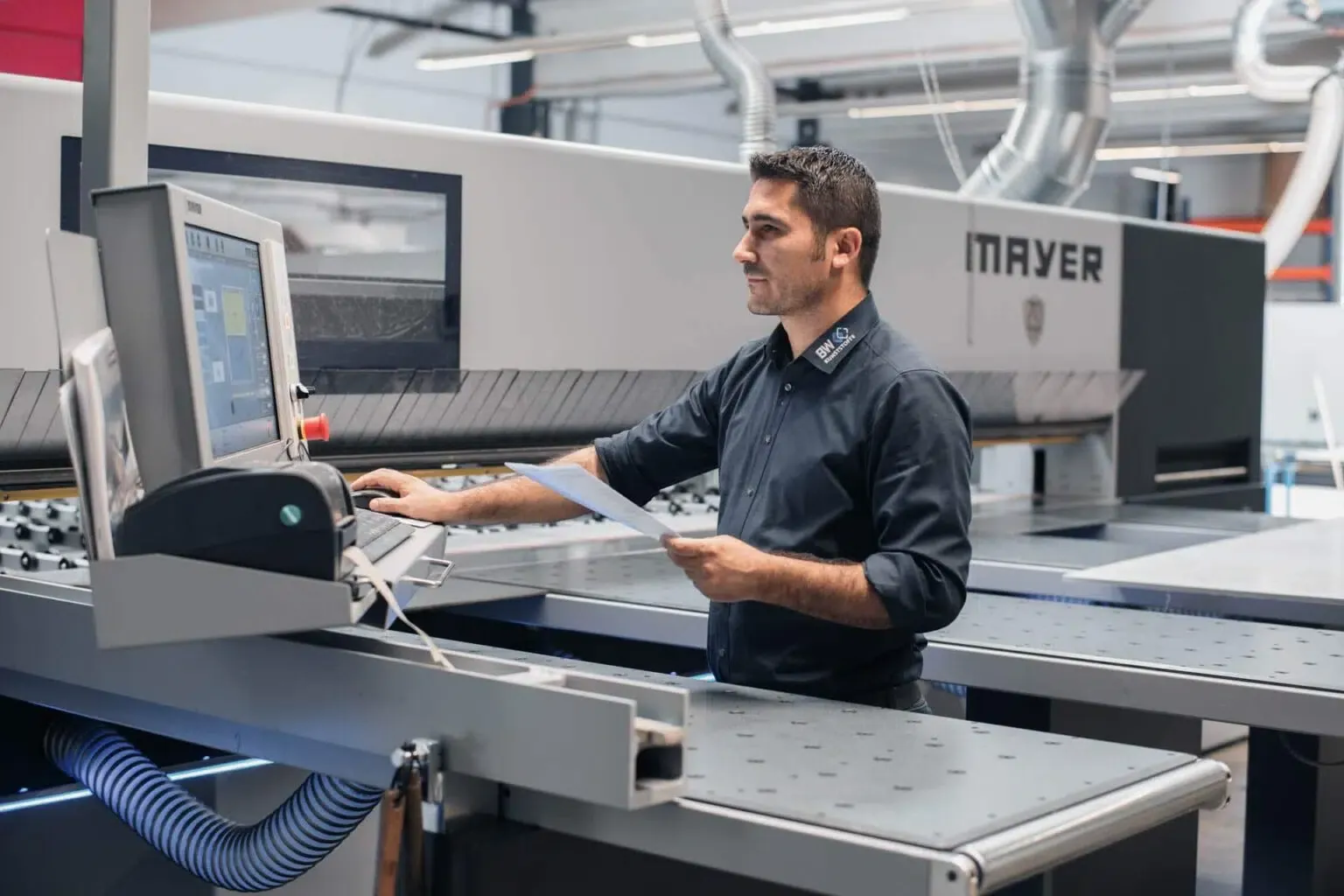
This ease of machining makes PTFE a versatile material that is used in many industrial applications. Special tools are generally not required, which makes machining particularly efficient. Of course, we also offer plastic machining with professional options, such as: laser cutting, CNC machining, or waterjet cutting.
Properties
PTFE (Teflon®) materials have the following properties
- very high chemical resistance
- very good temperature resistance (-200 to +260 °C, briefly also up to 300 °C)
- very low coefficient of friction
- extremely low surface tension
- high coefficient of thermal expansion
- relatively low strength/stiffness
- low dielectric constant
- flame resistance
Applications
Since the plastic is resistant to chemicals and only difficult to ignite, PTFE is used in laboratories. It is heat-resistant and weather-resistant.
The plastic can be recycled and reused. The plastic is also used in other areas, such as in industry, among other things as a plain bearing, since the plastic has low friction. Also in chemical plant construction, among other things to line inner walls that come into contact with chemicals. In the food industry, the plastic is found there among other things as a cutting board as well as a coating for pans, pots and baking moulds.
In electrical engineering, here the plastic is found in use as insulation for cables and seals. In the automotive industry, PTFE is used among other things in the form of sealing rings. In medical technology, the plastic is used here as an implant, as well as for devices and instruments, since these can be cleaned and sterilised well. In high-frequency technology , here PTFE is used as an insulating material.
In the construction industry, because PTFE is difficult to ignite, the plastic is used to line façades and roofs. In the military, among other things as projectiles.
FAQ on PTFE sheets (Teflon® cut pieces)
1. What are PTFE sheets and what are they used for?
PTFE sheets, also known as Teflon® cut pieces, are synthetic plastic sheets made of polytetrafluoroethylene. Due to their outstanding chemical resistance, high temperature resistance and excellent sliding properties, PTFE sheets are used in many industrial areas, among other things as plain bearings, insulators or seals.
2. What sizes and thicknesses of PTFE sheets are available?
We offer Teflon sheets in various dimensions. The width and length of the PTFE sheets range from 20 mm to 1000 mm, while the thickness can vary between 1 mm and 50 mm. Thanks to our modern technology, we can supply precisely fitting cut pieces to size for your individual requirements.
3. What special properties do PTFE sheets have?
PTFE plastic is characterised by exceptional chemical resistance, high temperature resistance (-200 to +260 °C, briefly even up to 300 °C) as well as outstanding sliding properties. Teflon sheets have a non-stick surface and are also excellent electrical insulators, which makes them ideal for applications in electrical engineering.
4. Can PTFE sheets also be glued or painted?
As standard, PTFE sheets are difficult to glue or paint due to their repellent surface. However, on request we can specially prepare the surface to enable gluing or painting. This option must be stated separately when ordering.
5. In which industries are PTFE sheets used?
Teflon sheets are used in many industries, including the food industry, medical technology and chemical plant construction. In the food industry, they serve among other things as cutting boards, while in the chemical industry they are used for lining plant components that come into contact with aggressive chemicals. PTFE sheets are also valued in the automotive and electrical engineering industries as well as in high-frequency technology because of their insulating and low-friction properties.
6. How are PTFE sheets produced?
PTFE sheets are frequently manufactured by compacting and subsequently machining semi-finished products. There are also other manufacturing processes such as extrusion and pressing. Polytetrafluoroethylene can also be reinforced with additives such as glass fibre, carbon or bronze in order to further improve the mechanical properties.
7. What distinguishes PTFE from other plastics?
In contrast to other plastics, PTFE sheets have a very low mechanical strength, but in return an extremely high chemical resistance and temperature resistance. Teflon® is also known for its non-stick properties, which makes it indispensable in many industrial and household applications.
8. How can PTFE sheets be further processed?
PTFE sheets can easily be further processed with conventional tools. They can be sawn, drilled, milled or ground in order to meet individual requirements. The processing of Teflon sheets is unproblematic, as no special tools are required.
9. Can PTFE be recycled?
Yes, PTFE plastic is recyclable. It can be reused, which makes it interesting for sustainable industrial applications. Particularly in industries that value environmental friendliness and reusability, Teflon is a popular choice.
10. What variants of PTFE sheets are there?
In addition to PTFE in its pure form (virgin), we also offer variants with additives, such as PTFE+25% glass, PTFE+25% carbon/graphite or PTFE with bronze. These special variants improve the mechanical properties of the sheets and make them even more versatile for industrial applications.
11. What material types of PTFE are there?
Standard material types
| Type | Description |
|---|---|
| PTFE natural (virgin) | Pure polytetrafluoroethylene without additives |
| PTFE-MOD. (TFM® 1600/1700) | Modified PTFE, improved mechanical properties |
| PTFE+25% GLASS | PTFE reinforced with 25% glass fibre for increased strength |
| PTFE+25% GLASS MOD. (TFM® 4105) | Modified PTFE with 25% glass fibre, optimised for specific applications |
| PTFE+GLASS+MOS² | PTFE with glass fibre and molybdenum disulphide for improved wear resistance |
| PTFE+25% CARBON/GRAPHITE | PTFE with 25% carbon/graphite, for increased electrical conductivity and wear resistance |
| PTFE+15% GRAPHITE | PTFE reinforced with 15% graphite for special requirements regarding friction and wear properties |
| PTFE+40% or 60% BRONZE | PTFE with bronze content for increased compressive load capacity and improved thermal conductivity |
Special material types
| Type | Description |
| PTFE+PEEK | PTFE with PEEK for improved mechanical properties |
| PTFE turquoise | Colour-marked PTFE for specific applications |
| PTFE-1.2% or 2% CSC conductive/FDA | PTFE with electrical conductivity, suitable for FDA applications |
| PTFE+10% or 15% GLASS | PTFE with glass fibre for increased mechanical strength |
| PTFE+CARBONFIBRE | PTFE with carbon fibre for high strength and low friction |
| PTFE+15% CERAMIC | PTFE with ceramic content to improve strength and wear resistance |
| PTFE+50% INOX | PTFE with stainless steel particles for increased strength and thermal conductivity |
| PTFE+WOLLASTONITE | PTFE with wollastonite to improve abrasion resistance |
| PTFE+POLYIMIDE | PTFE with polyimide for special high-performance properties |
Technical data
| Property | Value |
| Density | 2.10 - 2.30 g/cm³ |
| Temperature resistance | -200 to +260 °C (briefly up to 300 °C) |
| Coefficient of friction | Very low |
| Chemical resistance | Outstanding |
| Dielectric constant | 2.1 (at 1 MHz) |
| Tensile strength | 10 - 40 MPa |
| Elongation at break | 200 - 500 % |
| Flame resistance | Non-flammable |
| Thermal conductivity | 0.25 W/(m·K) |
These technical data illustrate the exceptional properties of PTFE sheets, which make them a popular material in numerous industrial applications.