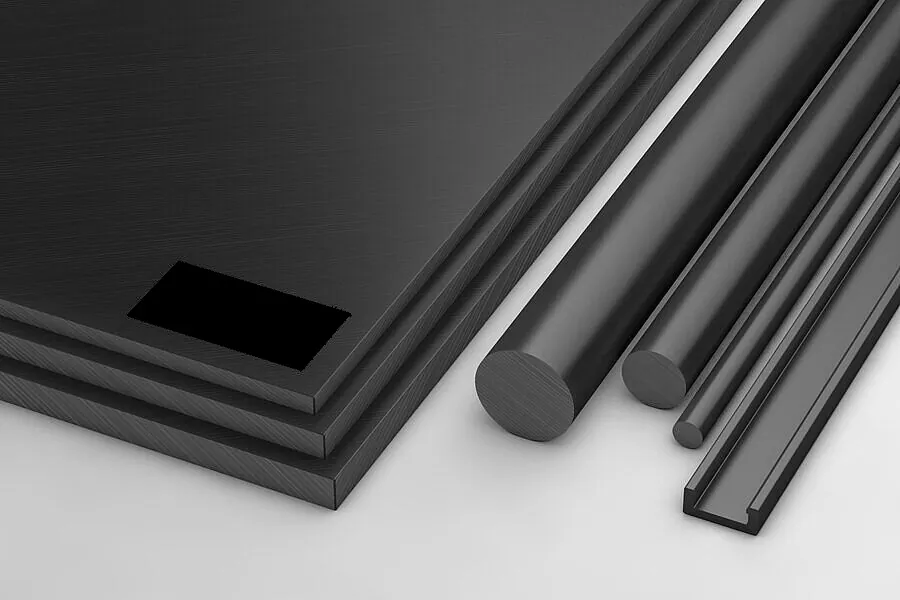
Tribological properties of engineering plastics
Tribological properties of plastics explained: friction, wear, materials, influencing factors and plastic-steel friction pairings.
Tribology describes the interaction of friction, wear and lubrication between surfaces that move relative to one another. Tribological properties of plastics are therefore particularly relevant for plain bearings, guides, gears, rollers and other moving components.
The tribological behaviour does not depend on the plastic alone. The mating material, surface roughness, load, speed, temperature and lubrication also influence friction and wear. Engineering plastics can offer advantages over metallic materials through low friction, high wear resistance and, in some cases, self-lubricating properties.
For designers, therefore, it is not only the selection of a suitable plastic that matters, but consideration of the entire tribological system.
What does "tribological" mean?
Tribological means that properties or processes are considered which are related to friction, wear and lubrication between surfaces in contact with one another.
For plastics, this includes, for example, the coefficient of friction, the wear behaviour and the behaviour towards a particular mating material. A low coefficient of friction alone therefore does not automatically mean that a plastic is suitable for every sliding or wear application.
Which plastics have good tribological properties?
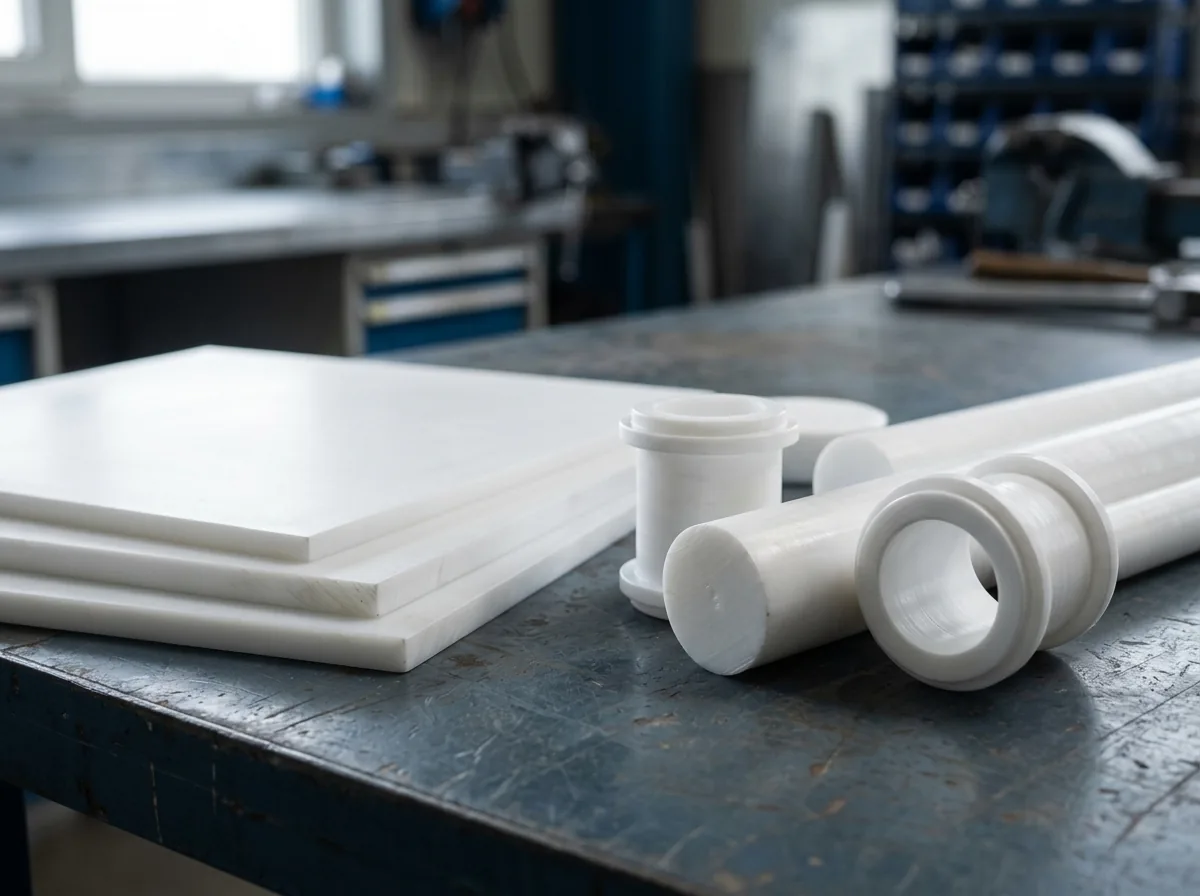
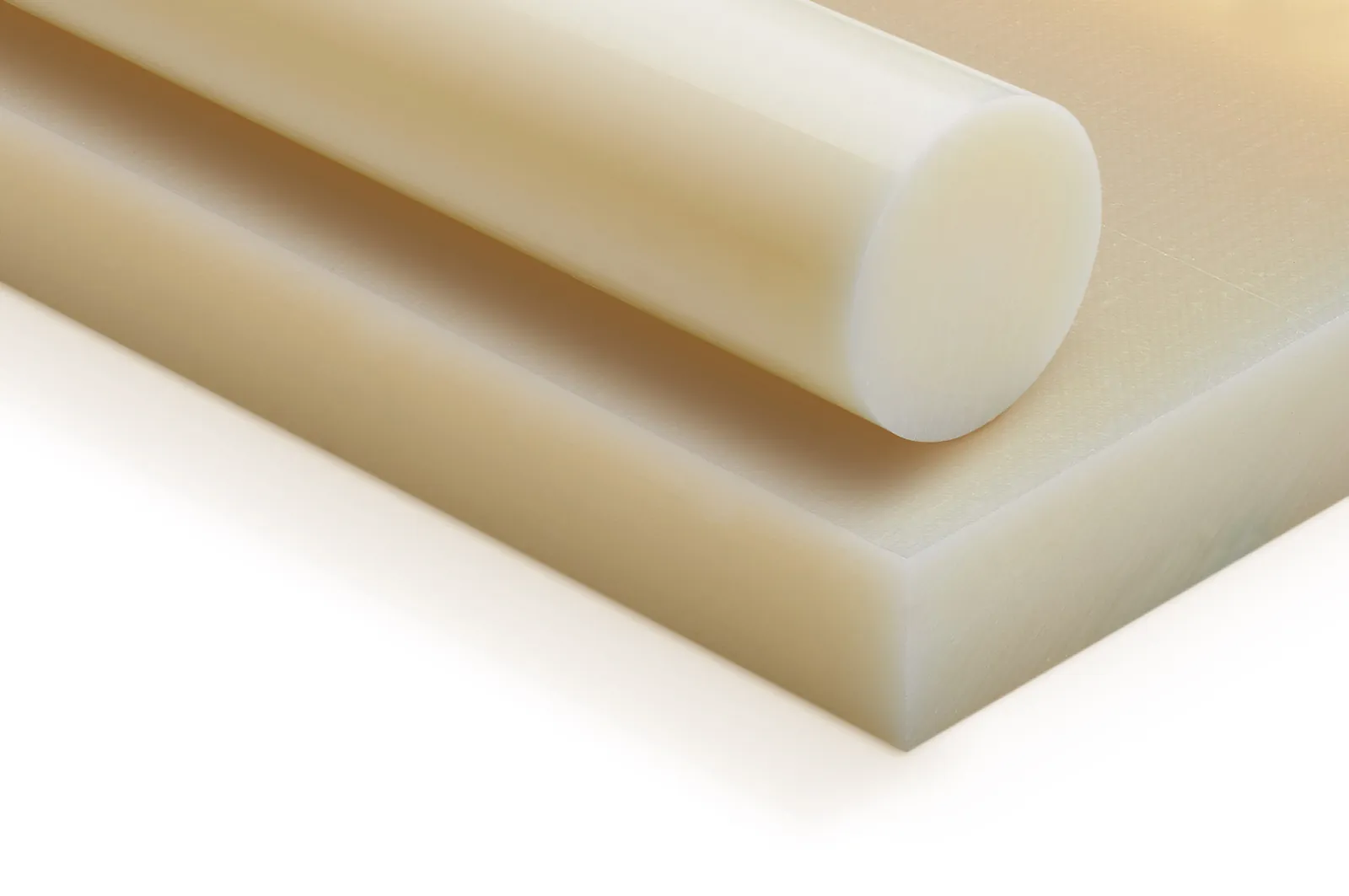
Engineering plastics are characterised by a unique combination of properties that predestine them for tribological applications. These include mechanical load capacity, chemical resistance, thermal stability, wear resistance and good sliding properties. Common materials include PE (polyethylene), POM (polyoxymethylene), PTFE (polytetrafluoroethylene), PA (polyamide) and PEEK.
PE offers very low friction and is self-lubricating, while POM stands out for its high hardness and dimensional stability.
PTFE impresses with extremely low friction and chemical inertness, PA with high strength and good wear resistance, although moisture absorption influences the friction behaviour.
PEEK, in turn, is highly temperature-resistant, very abrasion-resistant and chemically resistant, which is why it is used in high-tech applications such as aerospace or medical technology.
These plastics are often combined with reinforcements or fillers such as glass fibres, carbon or PTFE in order to control specific tribological properties in a targeted way, for instance to reduce friction, minimise wear or increase load-bearing capacity. This allows tailor-made solutions to be developed for different industrial requirements.
| Plastic | Friction property | Wear resistance | Temperature resistance | Typical applications |
|---|---|---|---|---|
| PE | Very low | High | Up to 80°C | Plain bearings, rollers, conveyor technology, packaging machines |
| POM | Low | High | Up to 120°C | Gears, guides, bearings, precision mechanics |
| PTFE | Extremely low | Medium | Up to 260°C | Seals, valves, pumps, chemical plant |
| PA | Medium | High | Up to 120°C | Bearings, gears, guides, vehicle technology |
| PEEK | Low | Very high | Up to 250°C | High-tech components, medical technology, aviation |
Advantages of engineering plastics in tribological applications
- Self-lubricating properties considerably reduce maintenance effort.
- Low friction minimises energy loss, heat generation and noise.
- High corrosion and chemical resistance is suitable for damp or aggressive environments.
- Lightweight construction reduces the weight of components and lowers mass inertia.
- Thermal stability ensures reliable function over a broad temperature range.
- Adaptable tribological properties through material additives and fillers.
- High cost-effectiveness and long service life of the components.
Tribological characteristics in detail
The tribological properties of plastics are determined by several characteristics which together define their suitability for industrial applications. The coefficient of friction describes how easily a material slides over another surface and is decisive for energy consumption and heat generation in moving components. The wear rate indicates how quickly material is removed under load, with lower values ensuring a longer service life.
The load limit determines the maximum surface pressure a material can withstand before it deforms plastically or fails. The temperature resistance indicates the temperatures up to which the plastic reliably retains its tribological properties, while moisture absorption, particularly in polyamides, influences friction, wear and dimensional stability.
It is important that friction and wear values should not be considered in isolation. Tribological characteristics depend on the respective friction pairing and the test conditions. A plastic can, for example, behave differently against steel than against a second plastic. Surface pressure, sliding speed, surface condition, temperature and existing lubrication also change the result.
Together, these characteristics enable precise selection of the material that meets both the mechanical requirements and the environmental conditions, in order to ensure optimum performance and service life.
Industrial applications in detail
Plain bearings and bushes
Engineering plastics such as POM, PA and PTFE are used in plain bearings and bushes, which are employed in a wide range of industrial applications, including conveyor systems, packaging machines, automation lines and bearings in the mechanical engineering industry.
Their self-lubricating properties enable maintenance-free operation over long periods, while low friction minimises energy consumption and heat generation. Even under extreme environmental conditions, such as high humidity or chemical exposure, these materials retain their performance. This leads to a longer service life of the components and reduces maintenance effort, thereby saving costs.
Gears, guides and transmissions
Plastic gears made from POM or glass-fibre-reinforced PA are used in precise mechanical systems, such as those found in conveyor technology, robotics, measurement and control technology and in industrial transmissions. These materials enable low-noise operation, which is particularly advantageous in sensitive machinery and plant.
Sliding guides made from these plastics provide precise guidance, even under high dynamic loads or changing loads, while at the same time reducing the need for additional lubrication. This stabilises machine performance and considerably extends the service life of the drive elements.
Seals, valves and pump systems
PTFE is particularly suitable for components such as valves, seals and pump systems that are operated in chemically aggressive environments or at high temperatures. The chemical resistance and the very low friction ensure that the components work reliably, even under difficult operating conditions.
In the chemical industry, food and beverage production and the pharmaceutical industry, the use of PTFE enables a long service life of the systems with minimal maintenance effort. In addition, these properties help to ensure process quality, since friction and material wear are kept controlled and consistently low.
Medical technology and food industry
Plastics such as PEEK and special PA types meet the high requirements of the medical technology and food industry. They are used for pump parts, sliding surfaces, seals and mechanical components that must be cleaned or sterilised regularly. The materials are low-wear, hygienic and chemically inert, which ensures safe use in sensitive environments.
Their temperature resistance allows operation under the most varied conditions, while the good wear resistance maximises the service life of the components. This results in a combination of high reliability and low maintenance intensity.
Automotive and mechanical engineering
In automotive engineering, tribologically optimised plastics are used for window regulators, door mechanisms, manual transmissions or bearings that must withstand high dynamic loads in vehicles. In mechanical engineering, these plastics improve the service life of linear guides, roller conveyors and conveyor systems, as they distribute loads evenly and reduce friction.
Their adaptability enables use under changing loads and speeds. The materials also help to reduce noise and vibration, which increases the quality and precision of the machines.
Future prospects and innovations
The tribology of engineering plastics is facing a phase of intensive innovation. New nano-reinforced materials, bio-based plastics and combined composite materials open up possibilities for controlling friction, wear and load capacity even more precisely. Modern digital simulations make it possible to optimise components tribologically before production and to match the material choice precisely to the intended operating conditions.
In combination with intelligent lubricants, surface coatings and additive manufacturing technologies, tailor-made solutions are emerging for high-tech applications in aerospace, medical technology, robotics and industrial automation. These developments promise not only an increased service life and lower wear, but also a reduction of friction losses, energy savings and lower maintenance costs, which considerably increases the economic and ecological benefit.
In conclusion
Engineering plastics possess a unique combination of low friction, high wear resistance, chemical and thermal resistance as well as flexible adaptability through fillers and reinforcements. These properties make them ideal materials for a wide range of industrial applications, from plain bearings and gears to seals and pump systems through to high-tech components in medical technology and the automotive industry.
Through modern material modifications, intelligent manufacturing technologies and targeted use in designs, plastics can increasingly be used as lightweight and high-performance alternatives to metals. They contribute significantly to increasing efficiency, extending service life and reducing maintenance costs in industrial systems and will play an even greater role in future in highly loaded and specialised applications.
FAQ
Which plastics are particularly low-wear? POM, PTFE, glass-fibre-reinforced PA and PEEK are characterised by very low abrasion rates and are suitable for high-performance applications.
Can engineering plastics be used without lubrication? Yes, many plastics have self-lubricating properties, which considerably reduces maintenance effort.
How do fillers influence tribology? Fillers such as glass fibres, carbon or PTFE reduce friction, increase load-bearing capacity and reduce wear.
For which temperatures are engineering plastics suitable? PEEK and PTFE are highly temperature-resistant, POM and PA are suitable for moderate temperatures up to approx. 120 °C, glass-fibre-reinforced types can withstand higher loads.
What role does moisture absorption play? Particularly in polyamides, moisture changes the mechanical and tribological properties, which must be taken into account when selecting the material.