Polyphthalamide
PPA (polyphthalamide) - high mechanical strength, heat resistance & chemical resistance. Applications, processing & advantages.
PPA plastic combines high heat resistance with mechanical strength, low moisture absorption and good chemical resistance. Polyphthalamide is therefore used primarily for precision components that must function reliably even at elevated temperatures, under mechanical load or in contact with fuels, oils and industrial chemicals.
Martan Plastics supports you in selecting suitable PPA types and in manufacturing plastic components suited to the application. Depending on material grade, geometry and quantity, PPA can be processed by injection moulding or manufactured into individual components as a semi-finished product by precise plastic machining.
What is PPA?
Polyphthalamide, PPA for short, refers to a group of semi-crystalline, aromatic polyamides. Unlike classic engineering polyamides, the polymer structure contains a higher proportion of aromatic building blocks. As a result, PPA exhibits higher thermal stability, lower moisture absorption and better dimensional stability than many aliphatic polyamides.
PPA is one of the thermoplastic high-performance materials. The material can be heated and processed several times, but its high melting and processing temperatures require a precisely matched process control.
Depending on the polymer structure, reinforcement and modification, PPA materials differ significantly. In addition to unreinforced grades, glass-fibre-reinforced, mineral-filled, flame-retardant and friction-optimised types are available in particular. The specific material selection should therefore always be based on the requirements of the later component.
Properties of PPA plastic
High strength and stiffness
PPA has high mechanical strength and stiffness. With suitable material types, these properties are retained comparatively well even at elevated service temperatures. Glass-fibre-reinforced PPA grades achieve even higher stiffness and are therefore suitable for load-bearing, thin-walled or dimensionally critical structural parts.
However, the reinforcement also influences processing behaviour, shrinkage, surface quality and the mechanical properties in different load directions. Fibre orientation and the later load direction must therefore be taken into account in component design.
High heat resistance
PPA is used for components that are permanently exposed to elevated temperatures or briefly to high temperature peaks. However, the actually permissible service temperature depends on the specific PPA grade, the duration of load, the mechanical stress and the surrounding media.
General limit values are therefore not sufficient for material selection. Decisive factors include heat resistance, long-term temperature resistance, component geometry and the mechanical load occurring under temperature.
Lower moisture absorption than classic polyamides
Polyamides generally absorb moisture from their environment. However, PPA usually absorbs significantly less water than common materials such as PA6 or PA66. As a result, dimensions, stiffness and strength change to a lesser extent with fluctuating humidity.
This property is particularly important for connectors, sensor housings, precision parts and components with tight tolerances. Nevertheless, PPA is not completely independent of moisture. The expected water absorption must still be taken into account in demanding designs.
Good dimensional and creep resistance
PPA exhibits a low tendency to creep and can retain its shape comparatively well even under prolonged mechanical load. Reinforced grades offer particularly high dimensional stability.
The material is therefore suitable for components in which screw forces, contact pressures or structural preloads must be maintained over a longer period. Examples include housings, brackets, valve components, connectors and load-bearing functional parts.
Chemical and fuel resistance
PPA is resistant to numerous fuels, lubricants, oils, greases and industrial chemicals. The material is therefore frequently used in media-carrying systems and in the vicinity of engines, gearboxes and industrial plants.
Resistance can vary depending on concentration, temperature, exposure time and mechanical stress. Before use in aggressive media, it should therefore always be checked whether the intended PPA grade is suitable under the specific operating conditions. This applies in particular to strong acids, strong alkalis, hot aqueous media and chemically demanding cleaning processes.
Wear and friction behaviour
Suitable PPA types offer good abrasion and wear resistance. Friction and wear can be further influenced by fillers or special modifications. For bearings, guides, gears or moving functional parts, however, load, speed, counterface partner, temperature and lubrication must be assessed together.
PPA is not automatically the best solution for every sliding or wear application. Depending on the requirement profile, for example PEEK, PPS, POM or tribologically modified plastics may be more suitable.
Electrical properties
PPA has good electrical insulation properties and, with suitable grades, can maintain these even under elevated temperature and humidity. Flame-retardant types are therefore used, among other things, for connectors, switches, coil formers and electronic housings.
For electrical applications, in addition to temperature resistance, dielectric strength, tracking resistance, flammability and the required material approvals must be checked.
PPA types and possible modifications
The term PPA does not describe a single, uniform material grade. Various material types are available for different requirements:
- Unreinforced PPA: offers higher toughness and often better surface quality than heavily filled types.
- Glass-fibre-reinforced PPA: achieves particularly high stiffness, strength and heat resistance.
- Mineral-filled PPA: can enable lower deformation, more uniform shrinkage and higher dimensional stability.
- Flame-retardant PPA: is used for electrical and electronic components with defined fire protection requirements.
- Tribologically modified PPA: is designed for reduced friction and improved wear resistance.
- Impact-modified PPA: is suitable for components subject to impact loads or dynamic stress.
Fillers and additives improve certain properties but can worsen others. Glass fibres, for example, increase strength and stiffness but also lead to greater tool wear and can cause direction-dependent shrinkage.
Technical properties at a glance
| Property | Assessment for PPA | Significance for the application |
|---|---|---|
| Mechanical strength | high to very high | Suitable for loaded structural and functional parts |
| Stiffness | high, very high with fibre reinforcement | Enables dimensionally stable and thin-walled designs |
| Heat resistance | high | Suitable for components in thermally loaded environments |
| Moisture absorption | lower than many classic polyamides | Improves dimensional accuracy and property retention under moisture |
| Chemical resistance | good to very good, depending on the medium | Suitable for contact with many fuels, oils and chemicals |
| Creep resistance | high | Advantageous under long-term mechanical load |
| Electrical insulation | good | Suitable for electrical and electronic components |
| Processing requirements | demanding | Drying and controlled processing temperatures required |
Specific characteristic values can differ considerably depending on the manufacturer, PPA base polymer, reinforcement content and conditioning. The data of the intended material type must therefore always be used for component design.
Processing of PPA
PPA in injection moulding
PPA is predominantly processed by the injection moulding process. The process enables the economical production of complex components, thin wall thicknesses, integrated functional elements and larger series.
Due to the high processing temperatures, the mould, machine and process control must be suitable for the respective PPA type. Important influencing factors are:
- sufficient and material-appropriate pre-drying
- controlled material and mould temperatures
- suitable injection speed and holding pressure control
- consideration of shrinkage and possible warpage
- suitable gate and venting concepts
- attention to fibre orientation with reinforced grades
Insufficient drying can lead to material degradation, surface defects and reduced mechanical properties. The permissible residual moisture and the required drying conditions depend on the specifications of the material manufacturer.
Extrusion and production of semi-finished products
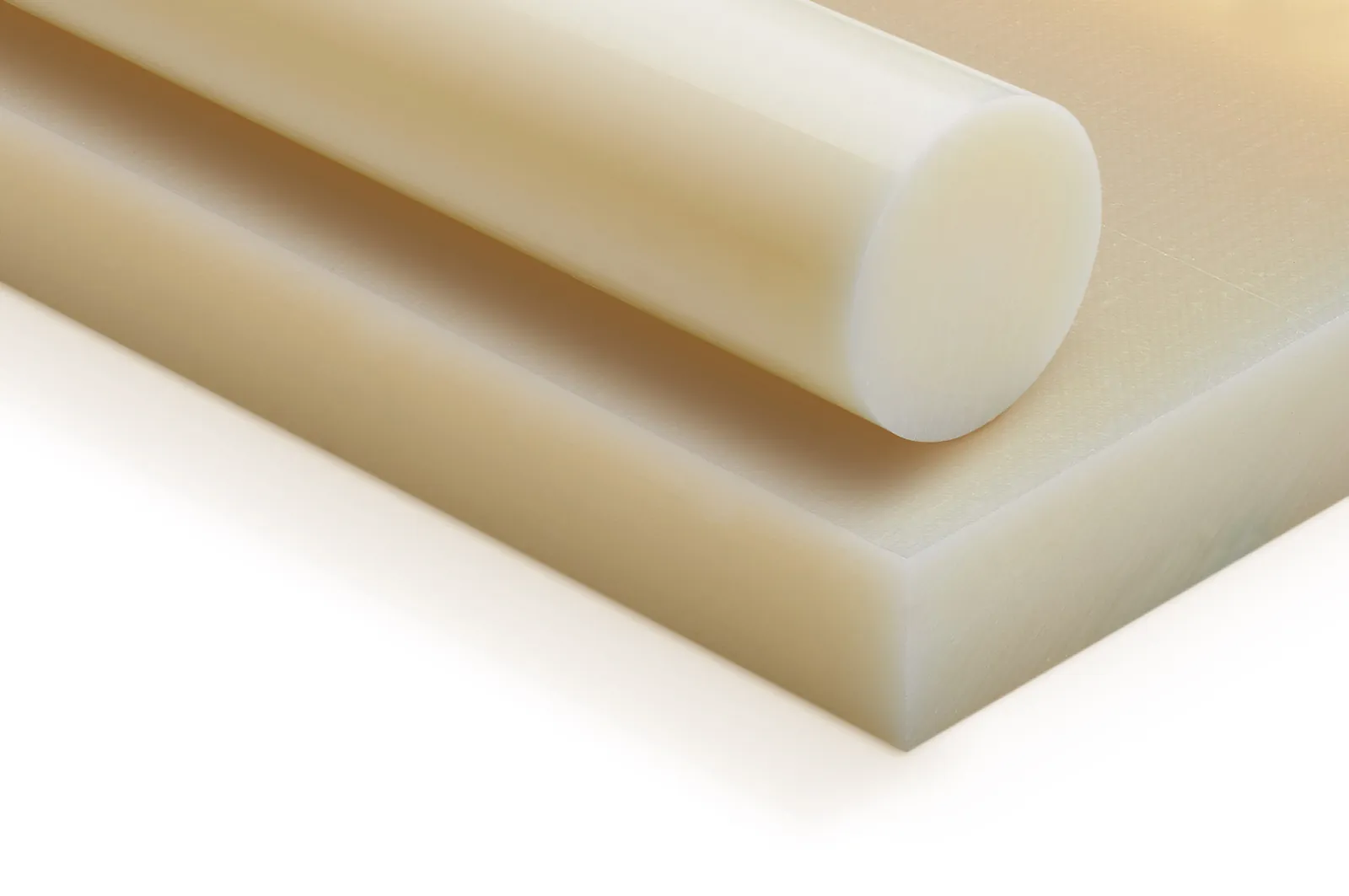
Certain PPA grades can be processed into profiles or semi-finished products by extrusion. However, the range of extruded PPA sheets, rods and tubes is usually more limited than for common engineering plastics.
When selecting a semi-finished product, its manufacturing process, dimensions, internal stresses and reinforcement direction must be taken into account. These factors can influence behaviour during subsequent machining and in the finished component.
Machining PPA and manufacturing components to size
CNC milling
Sheets, blocks or preformed PPA semi-finished products can be processed by CNC milling into housings, brackets, insulating components and complex precision parts. Heat generation, clamping forces and possible internal stresses must be controlled.
With glass-fibre-reinforced PPA, increased tool wear must be expected. Sharp, wear-resistant tools and matched cutting parameters contribute to clean edges and reproducible tolerances.
CNC turning
Rotationally symmetrical components such as bushes, rings, spacers, valve components or insulating parts can be produced by CNC turning. Material-appropriate clamping of the workpiece is important so that thin-walled or precise components are not deformed during machining.
Drilling, sawing and finishing
PPA can also be drilled, sawn, ground and, depending on the material grade, finished. When drilling deep or small holes, chips must be reliably removed and local overheating avoided.
Complex precision parts may require multi-stage machining or intermediate stress relief. The decisive factors are the component dimensions, tolerances, wall thicknesses and the condition of the semi-finished product used.
Bonding and welding
Bonding PPA is generally possible, but the material surface and thermal requirements place increased demands on the adhesive and pre-treatment. Depending on the application, cleaning, mechanical activation, plasma or corona treatment and suitable primers may be required.
Thermal joining processes are also an option. The suitability of hot-plate, vibration, ultrasonic or laser welding depends on the specific PPA grade, the fillers, the component geometry and the required joint strength.
Typical application areas of PPA plastic
Vehicle construction and automotive engineering
In vehicle construction, PPA is used for components exposed to heat, fuels, oils or mechanical loads. Typical applications are:
- components of air intake and charge air systems
- connectors and sensor holders
- thermostat and pump housings
- valves and media-carrying functional parts
- brackets and structurally loaded components
- components in the engine and gearbox environment
By using suitable PPA types, metal components can be replaced in certain applications, weight reduced and several functions combined in one injection-moulded part.
Electronics and electrical engineering
In electronics and electrical engineering, PPA is used in particular for thermally loaded and dimensionally critical components. These include high-performance connectors, switches, coil formers, sensor carriers, insulators and housing parts.
Suitable PPA types can withstand the temperatures occurring during soldering or later operation. For specific electronic applications, however, the required flame retardancy, electrical characteristic values, moisture resistance and process conditions must be checked.
Mechanical and plant engineering
In mechanical and plant engineering, PPA is suitable for loaded functional parts in which strength, dimensional accuracy, chemical resistance and low weight are to be combined.
Possible components are guides, bearing components, gears, valve parts, pump components, brackets, insulating parts and housings. Whether PPA is suitable for a specific wear application should be checked on the basis of the real load, temperature and friction conditions.
Aerospace
In aerospace, PPA can be used for lightweight, temperature-resistant and electrically insulating components. Possible applications include connectors, brackets, housings and functional structural parts.
Materials for aerospace applications must often meet additional requirements for traceability, fire behaviour, smoke gas development and documentation. Not every commercially available PPA grade is automatically approved for these areas of application.
Oil, gas and energy technology
Resistance to many fuels, lubricants and industrial chemicals also makes PPA interesting for selected applications in the oil and gas industry. These include electrical components, sensor parts, brackets and functional parts close to media.
Before material approval, temperature, pressure, medium, concentration and exposure time must be considered together. For permanently hot, hydrolytically demanding or safety-critical applications, other high-performance plastics may be required.
PPA compared with other high-performance plastics
PPA or PA66?
PPA generally offers higher heat resistance, lower moisture absorption and better dimensional stability than PA66. PA66, on the other hand, is more widespread and often more economical for less demanding temperature and dimensional accuracy requirements.
PPA is particularly interesting when the performance limits of classic polyamides are reached, but an even more cost-intensive high-performance plastic is not required.
PPA or PPS?
PPS plastic has very low moisture absorption, high chemical resistance and excellent dimensional stability. Depending on the grade, PPA often offers advantages in toughness, joining technology and mechanical load capacity.
Which material is more suitable depends in particular on temperature, chemical contact, impact stress, electrical requirements and component geometry.
PPA or PEEK?
PEEK plastic achieves higher thermal performance and a very broad chemical resistance. The material is used when PPA or PPS no longer reliably meet the requirements.
PPA, by contrast, can be a more economical solution when high strength, heat resistance and low moisture absorption are required, but the extreme performance of PEEK is not needed.
PPA or LCP?
LCP plastic is particularly suitable for very thin-walled, delicate injection-moulded parts and precision electronic components. The material exhibits very good flow behaviour and low shrinkage, but has a strongly direction-dependent property profile.
PPA is often advantageous when higher toughness, mechanical load capacity and more robust joining properties are required.
Advantages and limits of PPA
Advantages
- high mechanical strength and stiffness
- high heat resistance
- good dimensional stability
- lower moisture absorption than many standard polyamides
- good resistance to numerous fuels, oils and chemicals
- high creep resistance
- good electrical insulation properties
- available as reinforced, flame-retardant and functionally modified grade
- suitable for complex injection-moulded parts and selected precision components
Limits
- higher material and processing costs than standard polyamides
- demanding drying and process control
- properties differ greatly between individual PPA types
- possible warpage and anisotropic behaviour with fibre reinforcement
- increased tool wear with glass-fibre-filled grades
- not resistant to every chemical medium and every hydrothermal load
- more limited availability of semi-finished products than for common engineering plastics
When is PPA the right material?
PPA is a suitable choice in particular when a component must meet several of the following requirements:
- high mechanical load at elevated temperature
- tight tolerances despite fluctuating humidity
- contact with fuels, oils or industrial chemicals
- high stiffness with low component wall thickness
- long-term load without strong creep deformation
- electrical insulation under thermal stress
- weight reduction compared with metallic components
For a robust material decision, temperature, load duration, medium, mechanical load, tolerances, fire protection requirements, quantity and manufacturing process should be considered together. The designation "PPA" alone is not sufficient for selection.
PPA components to drawing or CAD data
Martan Plastics supports you in selecting suitable PPA grades and in implementing individual plastic components. Depending on the starting material and project requirement, prototypes, individual parts, small series or series components can be manufactured.
The following information is particularly helpful for the technical assessment:
- component drawing or CAD data
- dimensions and required tolerances
- maximum continuous and peak temperature
- mechanical loads and load duration
- contact media and their concentration
- ambient humidity and possible water contact
- electrical and fire protection requirements
- desired quantity
- required test certificates or approvals
On this basis, it can be assessed whether PPA is suitable for the application, which material variant is required and which manufacturing process is technically and economically sensible.
Frequently asked questions about PPA plastic
What does the abbreviation PPA stand for?
PPA stands for polyphthalamide. This is a group of semi-crystalline, aromatic high-performance polyamides.
Is PPA a thermoplastic?
Yes. PPA is a thermoplastic plastic and can be melted by heating and processed, for example, by injection moulding.
How temperature-resistant is PPA?
The permissible service temperature depends strongly on the specific PPA grade, the load duration, the mechanical load and the surrounding media. General maximum temperatures should therefore not be used without reference to a specific data sheet.
Does PPA absorb water?
Yes. As a polyamide, PPA also absorbs moisture. However, water absorption is usually lower than with classic polyamides such as PA6 or PA66. As a result, dimensions and mechanical properties remain more stable under the influence of moisture.
Can PPA replace metal?
PPA can replace metal in certain components, in particular when low weight, corrosion resistance, electrical insulation or economical series production are important. Whether a metal replacement is possible must be checked on the basis of the mechanical, thermal and structural requirements.
Can PPA be milled and turned?
Yes. Suitable PPA semi-finished products can be milled, turned, drilled and otherwise machined. With reinforced grades, wear-resistant tools and adapted machining parameters are required.
What is the difference between PPA and PA66?
PPA is generally more temperature-resistant, more dimensionally stable and less moisture-sensitive than PA66. PA66, by contrast, is sufficient for numerous less demanding applications and is often more cost-effective.
Is PPA better than PEEK?
Not fundamentally. PEEK is more capable thermally and chemically, but usually significantly more cost-intensive. PPA can be an economical alternative if its property profile fully meets the specific requirements.
Which PPA grade is required for my component?
This depends, among other things, on temperature, mechanical load, moisture, contact media, fire protection requirements and manufacturing process. For a reliable selection, the application and the component design should be assessed together.