Polyketone
PK (polyketone) stands out for its high impact strength and low moisture absorption. Applications, processing and advantages.
PK plastic, also referred to as polyketone, is a semi-crystalline thermoplastic material with high impact strength, good mechanical load capacity and excellent resistance to numerous chemicals. The material is particularly interesting for components that are exposed to friction, wear, fuels, oils or moisture.
Due to its low water absorption, the dimensions of PK components remain comparatively stable even under changing ambient conditions. The material is therefore suitable for, among other things, gears, bearings, guides, pump components, housings and components in fluid systems. Martan Plastics supports you in selecting suitable engineering plastics as well as in the production of precision plastic components for industrial applications.
What is PK plastic?
The abbreviation PK stands for polyketone. This is usually an aliphatic, semi-crystalline polymer whose molecular structure contains ketone groups. The material is also offered under the abbreviation POK and belongs to the group of engineering thermoplastics.
PK combines high toughness with good strength, low moisture absorption and pronounced chemical resistance. Its tribological properties make the material particularly interesting for moving components. With a suitable choice of material, PK can therefore represent an alternative to POM, PA or PBT.
The specific properties depend on the respective PK grade. In addition to unreinforced materials, variants are available that include glass-fibre-reinforced, friction-modified, flame-retardant and approved for certain media contact.
Properties of PK at a glance
| Property | Classification | Benefit for technical applications |
|---|---|---|
| Material group | Semi-crystalline thermoplastic | Good mechanical and chemical load capacity |
| Mechanical properties | High toughness and good strength | Suitable for dynamically and impact-loaded components |
| Wear behaviour | Good abrasion and friction properties | Interesting for gears, bearings and guides |
| Moisture absorption | Low | High dimensional stability under changing humidity |
| Chemical resistance | Very good against numerous media | Suitable for fuel, oil and fluid systems |
| Hydrolysis resistance | Good to very good | Advantage in contact with hot water or moisture |
| Melting point | Typically around 220 °C | Processing with thermoplastic methods possible |
| Continuous service temperature | Depending on grade, often around 100 to 120 °C | Suitable for many mechanical industrial applications |
| Short-term temperature load | Depending on grade, around 140 to 150 °C | Can absorb short-term temperature peaks |
The temperature ranges stated serve only as a general classification. Load duration, mechanical stress, medium, component geometry and material modification can significantly influence the permissible service temperature.
Mechanical properties and impact strength
PK has a high toughness and can absorb mechanical and impact loads well. The material combines strength with a comparatively high elongation capacity. As a result, under dynamic load it breaks less brittlely than some other engineering thermoplastics.
This property is advantageous, for example, in gears, housings, snap connections, fastening elements and functional components. Even at low temperatures, PK can exhibit a load-bearing property profile depending on the material grade.
For applications with particularly high requirements for stiffness and dimensional stability, glass-fibre-reinforced PK compounds are available. However, it must be taken into account that reinforcing fibres can change the wear behaviour, surface quality and machinability.
Wear resistance and friction behaviour
One of the most important properties of polyketone is its good tribological behaviour. PK can achieve low wear during sliding or rolling movements and is therefore suitable for components that are permanently in contact with one another or with metallic counterfaces.
Typical applications are:
- Gears and gearbox components
- Plain bearings and bearing bushes
- Guide rails and sliding elements
- Rollers and running components
- Thrust washers
- Moving pump and valve components
The actual friction and wear behaviour depends heavily on the material pairing, surface roughness, speed, surface pressure, temperature and lubrication. For heavily stressed sliding components, therefore, it is not the base material alone that should be selected, but a PK grade developed for the application.
Chemical resistance of polyketone
PK plastic exhibits high resistance to numerous fuels, hydrocarbons, oils, greases, salt solutions as well as weak acids and bases. This makes the material interesting for components used in fuel systems, pumps, valves or industrial fluid systems.
Hydrolysis resistance is also markedly pronounced in many PK grades. Compared with more moisture-sensitive polyamides, the dimensions and mechanical properties often change less when water is absorbed.
Nevertheless, a blanket statement about resistance is not possible. Before use, the following factors in particular must be checked:
- Type and concentration of the medium
- Temperature of the medium
- Duration of contact
- Simultaneous mechanical load
- Stress state of the component
- Specific PK grade and additives contained
For components in the oil and gas industry or other chemically stressed areas, an application-related test based on the manufacturer's data is therefore recommended.
Low water absorption and high dimensional stability
PK absorbs only small amounts of water. As a result, the dimensions of the material change comparatively little under the influence of moisture. This is particularly important for precision components with tight tolerances, defined bearing clearances or exact toothings.
The low moisture absorption is an important difference from polyamides. Depending on the grade and ambient conditions, PA can absorb significantly more moisture. This influences not only the dimensions but also the strength, stiffness and toughness of the material.
PK is therefore suitable for applications in which uniform dimensional stability is required even under fluctuating humidity or with temporary water contact.
Temperature resistance of PK
The melting point of many aliphatic PK grades is around 220 °C. However, this must not be taken as a direct indication of the permissible continuous service temperature of a finished component.
Depending on the grade, unreinforced PK materials can often be used continuously at temperatures of around 100 to 120 °C. Short-term values of around 140 to 150 °C may be possible. Reinforcements, additives, mechanical loads and contact with chemicals can change the permissible limits.
For permanently higher service temperatures, materials such as PPS or PEEK may be more suitable. Whether these are technically or economically necessary should be decided on the basis of the actual operating conditions.
Electrical properties
Unmodified PK generally has electrically insulating properties. The material can therefore be used for housings, connectors, switch components and other functional components in the electrical industry.
For electrical applications, however, the specific dielectric strength, surface and volume resistance, tracking behaviour and possible flame-retardant requirements must be checked. Not every PK grade is automatically suitable for safety-relevant electrical components or a specific UL 94 classification.
Processing PK plastic
Injection moulding
PK can be processed in injection moulding with suitable machines and correctly set process parameters. The rapid crystallisation can enable short cycle times. At the same time, mould temperature, melt temperature, injection speed and holding pressure must be carefully matched to the specific material grade.
Injection moulding is particularly suitable for complex moulded parts, gears, housings, connectors and larger series. For a dimensionally accurate component, in particular the material-dependent shrinkage, wall thickness distribution, gate design and possible fibre orientation must be taken into account.
Extrusion
Depending on the available material grade, PK can be processed into profiles or semi-finished products by extrusion. The process control must be matched to the narrow processing window and the crystallisation of the material.
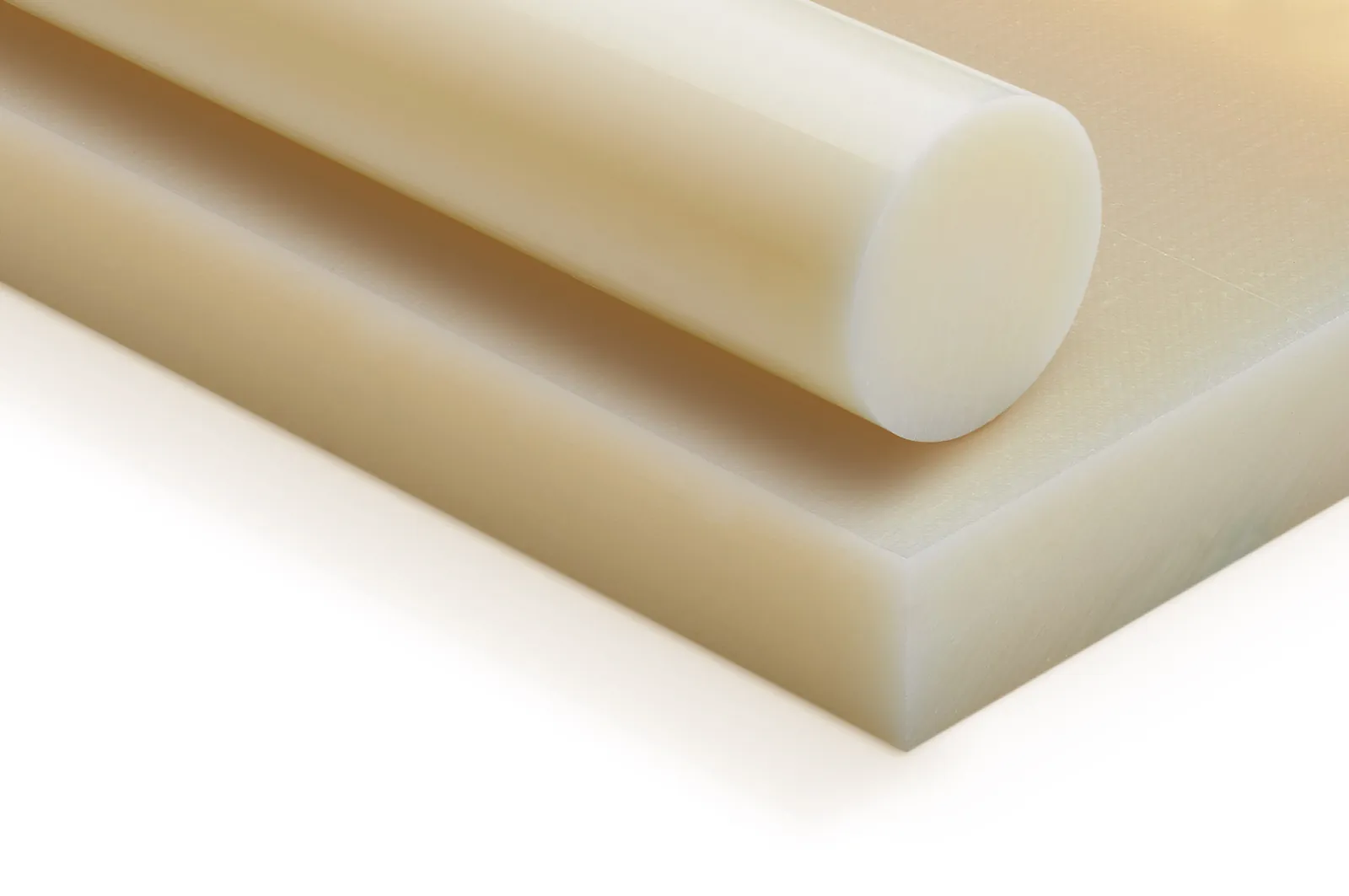
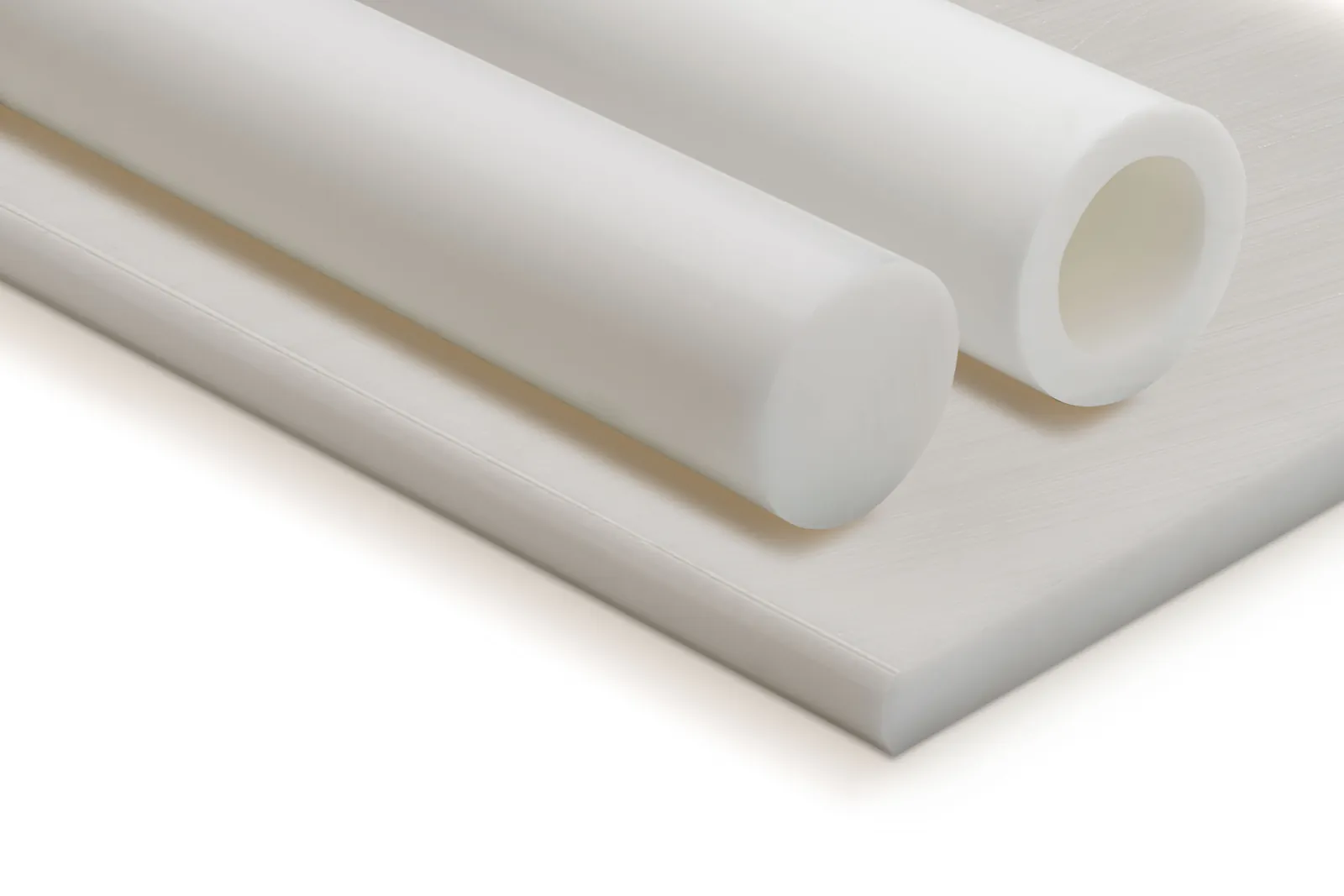
Whether sheets, rods or other plastic semi-finished products made of PK are available depends on the manufacturer, the dimension and the required material modification.
CNC machining
PK semi-finished products can be processed into precision finished parts by machining methods. Martan Plastics takes on application-appropriate plastic machining for prototypes, individual parts and series.
Possible methods include, among others:
- CNC milling
- CNC turning
- Drilling and thread production
- Sawing and cutting to size
- Deburring and finishing
For high dimensional accuracy, sharp tools, suitable cutting values, reliable heat dissipation and a low-stress machining strategy are required. A blanket statement that special tools are necessarily required due to particular hardness is not sensible. What is decisive is the material grade, reinforcement, component geometry and tolerance requirements.
Bonding, welding and joining PK
Components made of polyketone can, depending on their geometry and material grade, be joined by mechanical fastening elements or suitable welding methods. Possible methods include, for example, infrared, laser or other thermal joining methods, provided the material and component design are matched to them.
When bonding, pre-treatment of the surface may be required. The choice of adhesive must be based on the specific PK grade, the mechanical load, the media used and the operating temperature. Before series application, adhesive tests under realistic operating conditions are recommended.
PK compared with POM, PA and PBT
| Comparison | Possible advantages of PK | Points to be checked |
|---|---|---|
| PK or POM | Often higher impact strength as well as very good chemical and hydrolysis resistance | POM is widely used, very easy to machine and available as a semi-finished product in many dimensions |
| PK or PA | Lower water absorption and therefore often better dimensional stability | PA is available in very many modifications and can be more economical under certain loads |
| PK or PBT | Good toughness, wear resistance and hydrolysis resistance | PBT is particularly established in the electrical industry and available in numerous flame-retardant grades |
| PK or PEEK | Often more economical for moderate temperatures | PEEK offers significantly higher temperature resistance and a broader high-performance profile |
A material comparison should not be made on the basis of individual characteristic values alone. What is decisive is the interaction of temperature, load, wear, medium, tolerance, approval, availability and manufacturing method.
Application areas of PK plastic
Vehicle construction and automotive engineering
In vehicle construction, PK can be used for fuel- and oil-resistant components, gears, pump components, connectors, line components and functional housings. The combination of chemical resistance, impact strength and low moisture absorption is particularly interesting for media-carrying systems.
Mechanical and plant engineering
In mechanical and plant engineering, polyketone is suitable for wear-stressed gears, bearing bushes, guide elements, rollers and other moving components. Due to its dimensional stability, the material can also be used for precision functional parts with recurring movement sequences.
Pumps, valves and fluid systems
The resistance to many fuels, oils, greases and aqueous media makes PK interesting for pump impellers, valve parts, housings, couplings and components in fluid circuits. Before use, compatibility with the specific medium and the operating temperature must be checked.
Electrical engineering and electronics
In the electronics industry, PK can be used for connectors, switch parts, coil formers, housings and mechanically stressed insulating components. For flame-retardant or safety-relevant applications, a correspondingly tested and approved material grade is required.
Gears and drive technology
Due to its wear resistance, toughness and low moisture absorption, PK is suitable for precision gears and gearbox components. The material can support smooth running and remains comparatively dimensionally stable even under changing ambient humidity.
The design must take into account, among other things, torque, speed, temperature, counter-running partner, lubrication, tooth geometry and intended service life.
Advantages of polyketone
- High impact strength for dynamically loaded components
- Good wear and sliding properties for bearings, guides and gears
- Very good chemical resistance to numerous fuels, oils and industrial media
- Good hydrolysis resistance in contact with moisture and water
- Low water absorption for high dimensional stability
- Good processability in injection moulding and, depending on the delivery form, by CNC machining
- Various material modifications for special mechanical, tribological or electrical requirements
Limits and disadvantages of PK
PK is not automatically the best solution for every application. The following limitations should be taken into account when selecting the material:
- The continuous service temperature is significantly below that of PEEK, PPS or PAI.
- Semi-finished products and special dimensions may not be as widely available as with POM or PA.
- The properties differ considerably between unreinforced, reinforced and modified grades.
- For demanding bonded joints, surface pre-treatment may be required.
- Media resistance and temperature limits must be checked on the basis of the specific material grade.
- For food contact, drinking water, medical or electrical safety applications, application-specific approvals are required.
When is PK the right material?
PK is particularly interesting when a component must simultaneously be mechanically load-bearing, impact-resistant, wear-resistant and resistant to moisture or chemicals. The material can represent a sensible alternative to POM or PA if their water absorption, hydrolysis resistance or media compatibility is not sufficient for the application.
Before selection, at least the following requirements should be defined:
- Continuous and peak temperature
- Static and dynamic load
- Contact media and their concentration
- Sliding speed and surface pressure
- Desired service life
- Tolerances and dimensional stability
- Electrical or fire protection requirements
- Required approvals
- Quantity and intended manufacturing method
PK components from Martan Plastics
Martan Plastics supports you in selecting suitable PK materials and alternative engineering plastics. Depending on the material grade, dimension and component requirement, we manufacture precision plastic parts to drawing, sample or technical specifications.
By combining material advice, procurement and modern plastic processing, you receive a solution that is matched to load, medium, temperature and production quantity. This applies to prototypes and individual parts as well as to small and series production.
Frequently asked questions about PK plastic
What does the abbreviation PK stand for?
PK stands for polyketone. The material is sometimes also referred to as polyketone or by the abbreviation POK. It is a semi-crystalline engineering thermoplastic.
Is PK a high-performance plastic?
PK is often classified as an engineering plastic or high-performance thermoplastic. Compared with classic high-temperature plastics such as PEEK, PAI or PPS, however, the material has a lower continuous service temperature. Its particular strengths lie in toughness, chemical resistance, hydrolysis resistance and wear resistance.
How temperature-resistant is PK?
The permissible service temperature depends on the specific material grade and the load. Typical continuous service temperatures are often around 100 to 120 °C. Short-term values of around 140 to 150 °C may be possible depending on the PK grade.
Is PK chemically resistant?
PK is resistant to numerous fuels, hydrocarbons, oils, greases, salt solutions as well as weak acids and bases. Nevertheless, suitability must be checked for the specific medium, its concentration and the operating temperature.
What is the difference between PK and POM?
Both materials are suitable for precision mechanical components and tribological applications. PK often offers advantages in impact strength, hydrolysis resistance and certain chemical loads. POM, by contrast, is particularly widespread, very easy to machine and available as a semi-finished product in numerous dimensions.
What is the difference between PK and PA?
PK usually absorbs significantly less water than PA. As a result, the dimensions and mechanical properties often remain more stable under the influence of moisture. However, polyamide is available in a particularly large selection of grades, reinforcements and modifications.
Can PK plastic be milled and turned?
Yes, PK semi-finished products can generally be milled, turned, drilled and cut to size. For precision components, tool geometry, cutting values, heat generation, stress state and material modification must be taken into account.
Is PK suitable for gears?
Due to its wear resistance, toughness and low moisture absorption, PK is well suited for gears. Whether the material is suitable for a specific gearbox depends on torque, speed, temperature, lubrication, counter-running partner and desired service life.