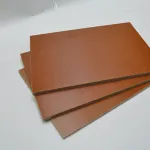
This image was created with artificial intelligence – marked under Art. 50 of the AI Act, Regulation (EU) 2024/1689. It is a placeholder until the company's photos arrive.
Plastic machining
Milled parts, turned parts and cut pieces. Precise machining, fast implementation and custom one-off production. Enquire now.
Plastic machining
Plastic milled parts | Plastic turned parts
BW KUNSTSTOFFE E.K.
OUR STRENGTHS
Our strengths lie in the manufacture of and trade in plastic semi-finished products, finished plastic parts and rubber goods. Our many years of experience in this field are valued by our customers, who are at home in the most diverse industries throughout Germany and Europe. Our modern machine park and our comprehensively trained team of experts make us a reliable partner, not only for standard orders, but also a competent problem solver for more complex tasks. Our competent team advises you on the selection of the right materials, possible techniques and tolerances.
To services provided by BW Kunststoffe e.K.
EXAMPLES FROM PLASTIC MACHINING
Plastic machining
Plastic special parts
Rubber seals
Plastic special parts
Plastic machining
Rubber seals
Plastic special parts
Plastic machining
Rubber seals
Plastic machining comprises the precise production of technical components by machining processes such as milling and turning. It enables the manufacture of complex geometries, tight tolerances and individual solutions for industry, mechanical engineering, medical technology and many other applications.
We manufacture high-quality plastic parts exactly to your specifications – from individual pieces to series production. The basis is your technical drawings, CAD data or sample parts, which we turn into precise components using modern CNC machines.
Overview of plastic machining processes
Machining of plastics comprises several processes that are used depending on the component geometry and requirements. These include in particular CNC milling and turning, but also drilling, sawing or thread cutting.
Milling produces complex geometries, contours and pockets, while turning is used for rotationally symmetrical components. Supplementary machining steps such as drilling or countersinking ensure the final functionality.
The choice of the right process has a decisive influence on the cost, quality and feasibility of a component.
Milled parts made of plastic
The production of milled parts takes place on high-performance CNC machining centres that ensure high dimensional accuracy and clean surfaces. Milling plays to its strengths particularly with complex geometries, recesses or multi-sided machining.
We process all common thermoplastics, including POM, PA, PE, PET, PVC as well as high-performance plastics such as PEEK. Every material brings specific properties that must be taken into account during machining and later application.
Milled parts made of plastic are used above all when precise contours, hole patterns or individual component geometries are required. Typical applications are found in mechanical and plant engineering, in electrical engineering or in the food industry.
Thanks to our manufacturing capabilities, both individual parts and larger series can be produced economically. Quality remains constant, regardless of the quantity.
Milling or turning – which process makes sense?
| Criterion | Milling | Turning |
|---|---|---|
| Geometry | complex, multi-sided | round, rotationally symmetrical |
| Typical parts | sheets, contours, housings | bushes, shafts, sleeves |
| Flexibility | very high | medium |
| Cost-effectiveness | for complex parts | for series and round parts |
The decision between milling and turning depends heavily on the geometry of the component. Milling is suitable for complex shapes, sheet machining and components with different planes. Turning, on the other hand, is ideal for round, rotationally symmetrical parts with uniform diameters.
The decision between milling and turning depends heavily on the geometry of the component. Milling is suitable for complex shapes, sheet machining and components with different planes. Turning, on the other hand, is ideal for round, rotationally symmetrical parts with uniform diameters.
In many projects, both processes are combined in order to unite economic and technical advantages.
Turned parts made of plastic
For rotationally symmetrical components, turning offers a particularly efficient solution. Our CNC lathes enable precise production of diameters between 5 and 300 mm.
Turned parts are characterised by exact fits, uniform surfaces and high repeat accuracy. Especially with components such as bushes, sleeves, rollers or shafts, this process is particularly economical.
In turning too, we process various engineering plastics, matched to the respective application. Factors such as load, temperature or chemical influences are incorporated into the material selection.
Having plastic milled and having plastic turned
If you want to have plastic milled or turned, the focus is usually on specific components: drawing parts, prototypes or series components. Clean data, a suitable material selection and an economical design are decisive.
Typical search queries such as "have plastic milled", "have plastic turned", "CNC plastic machining" or "plastic parts to drawing" aim precisely at these services. We implement these requirements precisely – from simple geometries to complex components.
Industries and applications
- Mechanical engineering: guides, sliding sheets, covers
- Plant engineering: functional components, cladding, spacers
- Food technology: hygienic, chemical-resistant components
- Electrical engineering: insulating parts and carrier components
- Medical technology: precise and durable components
- Conveyor technology: rollers, slide rails, wear parts
- Vehicle construction: lightweight and corrosion-resistant components
In addition, individually manufactured plastic parts are used in many other areas, wherever weight, durability and cost-effectiveness play a role.
Material selection and properties
The choice of the right plastic has a decisive influence on the function and service life of a component. Depending on the type, engineering plastics offer different advantages such as high strength, good sliding properties or chemical resistance.
POM, for example, is suitable for precise mechanical engineering components with good sliding properties, while PE is often used in food or chemical technology due to its chemical resistance. PA impresses with its toughness and wear resistance, while PEEK is used for demanding high-temperature applications.
We support you in selecting the right material and take both technical requirements and economic aspects into account.
Manufacturing to drawing or sample
Implementation is carried out exactly to your specifications. You can provide us with technical drawings, CAD data or sample parts. On this basis, we check feasibility, optimise the design if necessary and ensure economical production.
Particularly with complex components, the advantage of close coordination in advance becomes apparent, in order to optimally align material, machining strategy and tolerances with one another.
Individual parts, prototypes and series
Our production is designed for different requirements. Individual parts are often needed in development or for special solutions, while prototypes serve validation and testing. Small series enable flexible supply before series production is established.
Larger quantities can also be produced efficiently without compromising on quality.
Tolerances and quality assurance
Tolerances play a central role in plastic machining. Materials react differently to temperature, stress and machining, which is why experience and precision are decisive.
Typical tolerances are – depending on the material and the component geometry – in the range of a few tenths of a millimetre. Factors such as material expansion, moisture absorption or internal stresses must be taken into account.
These properties should already be planned for in the design in order to avoid subsequent fit problems.
We manufacture to defined tolerance specifications and carefully inspect every component. In this way we ensure that function, fit accuracy and quality are permanently guaranteed.
Typical mistakes in plastic machining
- Unsuitable material selection for temperature, load or media contact
- Tolerances that are too tight without taking expansion and moisture absorption into account
- Failure to take distortion and internal stresses into account
- Unsuitable wall thicknesses and missing design radii
- Sharp edges without deburring or chamfers
- Unsuitable joining concepts (e.g. press fits with soft materials)
- Lack of coordination between design and production
- Ignored machining direction with fibre-reinforced plastics
- Insufficient surface requirements defined in the drawing
- Missing functional testing under real operating conditions
Early coordination considerably reduces these risks and leads to economical, functionally reliable components.
Advantages of plastic compared with metal
- Low weight with simultaneously sufficient strength
- High corrosion and chemical resistance
- Good sliding and wear properties
- Electrical insulating capability
- Lower noise and vibration development
- Economical production with complex geometries
- No post-treatment such as painting or coating required
- High design freedom in form and function
- Good resistance to moisture and many media
- Reduced maintenance effort in many applications
How your enquiry proceeds
- You send us your drawing, CAD data or a description
- We check feasibility, material and production strategy
- You receive a clear and comprehensible quotation
- After approval we start production
- Delivery takes place on schedule
Enquiry and implementation
With us you receive a structured and fast implementation of your requirements. From the first enquiry through technical coordination to the finished delivery, we reliably accompany your project.
Typical projects range from simple cut pieces to complex drawing parts with high requirements for precision and material.
Send us your drawing or description and receive a free and non-binding quotation for your milled or turned plastic parts at short notice.
With us you receive a structured and fast implementation of your requirements. From the first enquiry through technical coordination to the finished delivery, we reliably accompany your project.
Send us your enquiry and receive a free and non-binding quotation for your milled or turned plastic parts at short notice.
FAQ on plastic machining
Which data is needed for production? Ideally CAD data such as STEP or DXF as well as technical drawings with dimensions.
Are small quantities also possible? Yes, we manufacture both individual parts and series.
Which tolerances are possible? The achievable tolerances depend on the material and component and are agreed individually.
Can high-performance plastics also be machined? Yes, we also process demanding materials such as PEEK for special applications.
How quickly do I receive a quotation? As a rule, you receive a quotation within a short time, depending on complexity and data situation.
Which file formats can be processed? Common formats such as STEP, DXF, DWG or PDF can be processed without difficulty.
Are short-notice deliveries also possible? Yes, depending on the project scope, short-notice production can also be realised.
Which quantities are economically sensible? Both individual parts and series are possible. The economically optimal solution depends on the component and material.
Can existing components be reproduced? Yes, even without a drawing, sample parts can be analysed and reproduced.
Do you advise on design? Yes, we support the optimisation of components with regard to production, material and costs.
These plastics we machine for you
STANDARD PLASTICS
» PE 300 (natural, black, green, ) » PE 500(natural, black, green) » PE 1000 (natural, black, green) » PP (polypropylene) » PVC (polyvinyl chloride) » PPE (polyPhenyleneEther) » ABS (acryButadieneStyrene) » PE1000 REG (PE 1000 REG) » PE1000 AST (PE 1000 AST) » PE 500 ELS (PE 500 ELS) » PE100 natural » Acrylic glass(PMMA), » Polycarbonate(PC) » Foam sheets » Multiwall sheets » Composite sheets » Corrugated sheets » Honeycomb sheet
ENGINEERING PLASTICS
» PA6 G, PA 6.6, PA 12, PA 6 G » POM-C (polyoxymethylene) » PET(polyethylene terephthalate) » PBT, PBT GF (polyButhyleneTerephthalate) » PCTFE (polyChlorTriFluorEthylene) » ECTFE ((ethyleneChlorTriFluorEthylene) » ETFE (ethyleneTetraFluorEthylene) » POM sheets (cut pieces) » PA sheets (PA 6.6, PA G natural) » Rods (rod sections)
THERMOSETS
» HP 2061 (paper-based laminates) » HGW2082 (cotton fabric-based laminate) » HGW 2372 (epoxy resin laminates) » HGM 2471 (polyester resin) » HGW 2282.5 (melamine resin laminates) » Silicone resin laminates, high-temperature laminates, special materials and much more. » Hard fabric(HGW) PF CC 201 (HGW 2082) EP GC 201 (HGW 2372) EP GC 202 (HGW 2372.1) Hard paper(HP) PF CP 201 (HP 2061) PF CP 202 (HP 2061.5) EP GC 203 (HGW 2372.4) Resitex, Vetronit, Carta-M, Umabord, Ferrozel, Celeron, Etronit, Novotex
HIGH-PERFORMANCE PLASTICS
» PEEK natural (PEEK GF30) » PTFE (polyTetraFluorEthylene) » PVDF (polyVinylDieneFluoride) »PCTFE(polyChlorTriFluorEthylene) »ECTFE(ethyleneChlorTriFluorEthylene) » ETFE (ethyleneTetraFluorEthylene) »PTFE (PTFE white (virginal) »PTFE GF 25 (PTFE+25% GLASS MOD. (alternatively TFM® 4105 ) ) » PTFE GF30 » PTFE-MOD. » PTFE+25% » PTFE+25% GLASS MOD. » PTFE+GLASS+MOS » PTFE+25% CARBON/GRAPHITE » PTFE+15%
REQUEST YOUR NON-BINDING QUOTATION NOW
Submit individual enquiry
Industries we supply
Mechanical & plant engineering
Conveyor technology
Food industry
Automotive industry
Packaging industry
Medical / laboratory technology
Vehicle technology
Water technology
Aerospace industry
Rail technology
Shopfitting
Aviation industry
Mechanical & plant engineering
Conveyor technology
Food industry
Automotive industry
Packaging industry
Medical / laboratory technology
Vehicle technology
Water technology
Aerospace industry
Rail technology
Shopfitting
Aviation industry
Contact us