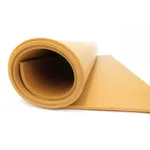
This image was created with artificial intelligence – marked under Art. 50 of the AI Act, Regulation (EU) 2024/1689. It is a placeholder until the company's photos arrive.
Rubber tiles for balcony, terrace & playground
Discover the advantages of rubber tiles for balconies, terraces and playgrounds: slip-resistant, shock-absorbing, easy to maintain and weather-resistant.
Rubber tiles have developed into a popular alternative for various areas of application in recent years. Whether on the balcony, the terrace or as a fall protection surface on playgrounds – the elastic tiles combine safety, comfort and durability.
While classic floor coverings such as wood, stone or concrete primarily rely on appearance and hardness, rubber tiles impress with practical properties: they are slip-resistant, shock-absorbing, weather-resistant and at the same time easy to lay. This makes them particularly interesting for areas that are used regularly and in which people walk around barefoot a lot or children play.
Here the material ensures a pleasant walking feel, increased safety and a clear reduction in the risk of injury. In addition, thanks to their modern designs, rubber tiles have long ceased to look merely functional and now also blend harmoniously into the overall appearance of a balcony, terrace or garden.
Advantages of rubber tiles
- Shock absorption: Reduces the risk of injury in falls and is easy on the joints.
- Slip resistance: Provides a secure grip even when wet and on smooth surfaces.
- Robustness: Weather-resistant against sun, rain, frost and snow.
- Easy care: Easy to clean with water or a mild cleaning agent.
- Sustainability: Often made from recycled rubber granulate, conserving resources.
- Impact sound reduction: Reduces noise on balconies and indoors.
- Visual variety: Available in various colours and designs.
Places of use for rubber tiles
Balcony
On balconies, rubber tiles provide a pleasant, foot-friendly surface that impresses both visually and functionally. They reduce impact sound and create a quieter living environment – an important advantage in apartment buildings.
Thanks to their elasticity, they compensate for small unevenness in the floor, which is particularly helpful in older buildings. They are also warm underfoot, which is pleasant when walking barefoot, especially in summer. The varied designs make it possible to design the balcony individually – from plain, neutral colours to modern patterns. You can also find more on this topic in our guide to rubber mats for workshop, garage and industry.
Terrace
On terraces, rubber tiles play to their full strengths. They offer not only safety but also a high degree of resistance to moisture and temperature fluctuations. While wooden terraces have to be treated regularly, rubber tiles are virtually maintenance-free.
They can be used flexibly, whether as a continuous floor covering or in combination with other materials such as stone or wood. They can also be easily extended if the terrace is enlarged later. Their surface remains slip-resistant even when wet, which makes them an ideal solution for families with children. You can find tips for other robust coverings in our article on rubber sheets outdoors.
Playground
On playgrounds, rubber tiles are an indispensable element when it comes to safety. They are specifically laid under play equipment such as swings, slides and climbing frames in order to cushion falls and minimise the risk of serious injuries.
Their shock-absorbing properties often comply with the applicable fall protection standards, which means they offer tested safety. They can also be combined in different colours, so that not only a functional but also a visually appealing play area is created. Creative patterns and play surfaces also stimulate children's imagination. You can also read further information in our article on fall protection mats for playgrounds.
Further possible uses
In addition to the classic areas of balcony, terrace and playground, rubber tiles are also used in numerous other environments. In gyms and home training rooms, they provide a joint-friendly, hard-wearing surface that also protects sports equipment from damage.
In basement rooms, they prevent moisture damage and offer an easy-care alternative to classic concrete or tile floors. In garages, they improve slip resistance and reduce noise when vehicles are moved. They are also a popular choice in workshops or commercial areas, as they combine safety and comfort.
Comparison of places of use
| Place of use | Advantages | Special features |
|---|---|---|
| Balcony | Impact sound reduction, warm underfoot, variety of designs | Ideal for apartment buildings and barefoot areas |
| Terrace | Weather-resistant, easy-care, slip-resistant | Low-maintenance alternative to wood and stone |
| Playground | Shock-absorbing, colourful, complies with fall protection standards | Reduces the risk of injury for children |
Installation of rubber tiles
Laying rubber tiles is straightforward and requires no special expertise. Many products are designed so that they can simply be connected to one another using a plug-in or click system. On firm surfaces such as concrete, asphalt or paving, it is often enough to lay the tiles loose. This has the advantage that they can be lifted or replaced again at any time.
For heavily used areas, such as public playgrounds or frequently used terraces, additional fixing with a special rubber adhesive is recommended. This prevents the tiles from slipping or coming loose under intensive use.
Another advantage: damaged tiles can be removed and replaced individually without the entire floor having to be renewed.
Care and service life
Rubber tiles are known for their long service life. Depending on use, high-quality products last several decades without losing any of their functionality. As they remain dimensionally stable, do not splinter and are insensitive to mould and algae growth, they are extremely suitable for permanent outdoor use.
The maintenance effort is minimal: usually it is enough to sweep the surface regularly and hose it down with water if necessary. In the case of heavier soiling, for example from soil or leaves, they can easily be cleaned with a pressure washer or mild cleaning agents. In contrast to wood or stone, rubber tiles do not require elaborate care measures such as oiling or sealing.
Costs and economic efficiency
The costs of rubber tiles vary depending on material thickness, surface structure and purpose. For simple models, for example used on balconies, the prices are usually very favourable.
High-quality fall protection tiles with tested certification for playgrounds are more expensive, but meet important safety standards. Despite the higher purchase costs, the investment pays off in the long term: rubber tiles are extremely durable and reduce ongoing follow-up costs that could arise with other coverings, for example through repairs, care or accidents.
Individual tiles can also be replaced, which further increases economic efficiency. Anyone who values quality should check when buying whether the tiles have certification (e.g. for fall protection) and were made from sustainable materials.
In summary
Rubber tiles are a safe, durable and versatile flooring solution for balcony, terrace and playground. They combine comfort, sustainability and safety in one product that impresses both visually and functionally.
Thanks to their simple installation, their ease of care and their resistance to weather influences, they are just as suitable for private households as for public facilities. Anyone looking for a flexible, robust and at the same time comfortable floor covering will find rubber tiles an excellent choice.
With the right thickness and composition, they can impress in the long term both in everyday use and under intensive continuous use. This makes them an investment that significantly increases safety and quality of life.
Frequently asked questions
Are rubber tiles frost-resistant? Yes, high-quality rubber tiles are frost- and UV-resistant and can be used outdoors all year round.
Can you lay rubber tiles yourself? Yes, laying them is easy. Many models have a click or plug-in system that is also easy for laypeople to handle.
Are rubber tiles also suitable for indoor areas? Absolutely. They are ideal for fitness rooms, workshops or basement rooms, as they are easy-care, robust and easy on the joints.
How thick should rubber tiles be on playgrounds? The thickness depends on the fall height of the play equipment. As a rule of thumb: the higher the equipment, the thicker the tiles should be in order to ensure sufficient fall protection.
Are rubber tiles environmentally friendly? Many manufacturers rely on recycled materials and resource-conserving production processes. This makes rubber tiles a sustainable choice for environmentally conscious builders.
Our rubber sheets
For industry and trade, we offer a wide variety of rubber sheets.
SBR rubber sheet
Our high-quality SBR rubber sheet (styrene-butadiene rubber) is the solution for numerous industrial and commercial applications. This rubber sheet is made from first-class styrene-butadiene rubber and stands out thanks to its excellent physical properties.
EPDM rubber sheet
Discover the versatility and reliability of our EPDM rubber sheet, which is made from ethylene propylene diene monomer (EPDM). This high-quality elastomer solution has been specially developed to meet the most demanding industrial and commercial applications.
NBR rubber sheet
The NBR rubber sheet is a high-quality industrial product that has been specially developed for applications requiring excellent resistance to oils, greases and various chemicals.
Viton rubber sheet
The Viton rubber sheet is a high-quality technical product that is used for a wide range of industrial applications. Made from fluoro rubber (FKM), it offers outstanding properties that make it the ideal choice for extreme conditions.
FKM rubber sheet
The FKM rubber sheet is a high-quality technical product that is ideal for use in demanding industrial applications. Made from fluoro rubber (FKM), it stands out thanks to a wide range of outstanding properties that make it the optimal choice for extreme operating conditions.
Silicone rubber sheet
The silicone rubber sheet is a first-class technical product that has been specially developed for applications placing high demands on temperature resistance and flexibility.
PUR rubber sheet
The PUR rubber sheet, made from high-quality polyurethane, is a technically advanced product that has been developed for applications placing the highest demands on abrasion resistance and mechanical load capacity.
Neoprene rubber sheet
The neoprene rubber sheet, made from high-quality chloroprene rubber (CR), is a versatile technical product that is ideal for a wide range of industrial and commercial applications.