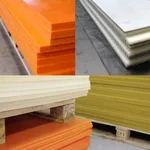
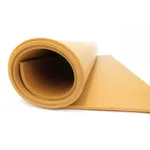
This image was created with artificial intelligence – marked under Art. 50 of the AI Act, Regulation (EU) 2024/1689. It is a placeholder until the company's photos arrive.
Rubber mats for workshops, garages and industry
Benefits, areas of application, types, buying criteria, comparison table and care. The right mat for workshop, garage or industry.
Rubber mats are no longer just a simple floor covering, but have established themselves in the workshop, garage and industry as a multifunctional solution. They protect sensitive surfaces from wear, improve occupational safety and significantly increase comfort at the workplace.
Their possible uses range from simple floor coverings in private garages through ergonomic workplace mats to highly specialised industrial versions. Whether as a non-slip mat, as protection against mechanical loads, chemicals or as ergonomic support during standing activities – rubber mats offer a wide range of advantages.
Anyone planning a purchase should know the different types, areas of application and quality features in order to be able to make an informed decision.
Advantages of rubber mats
The positive properties of rubber mats make them an economical and practical investment:
- Slip resistance: Structures such as grooves or studs ensure a secure footing, even with moisture or oil.
- Sound insulation: Rubber mats reduce impact sound and machine noise, which is a plus, especially in production halls.
- Floor protection: The substrate is protected from scratches, impacts and liquids.
- Ergonomics: Special anti-fatigue mats relieve muscles and joints and prevent health problems.
- Weather resistance: Many mats are suitable for indoor and outdoor use and withstand moisture, cold and temperature fluctuations.
Typical areas of application
Rubber mats are extremely versatile and can be used in different areas. In the workshop they are indispensable, as they reliably protect the floor from oils, chemicals or flying sparks and at the same time minimise the risk of slipping. Especially when working with heavy tools or machines, they significantly reduce the risk of accidents.
In the garage, rubber mats protect the floor from de-icing salt, moisture and tyre abrasion. They also prevent liquids such as oil or petrol from penetrating the concrete floor. They also create a more pleasant surface when working on the car or carrying out maintenance work. Rubber mats by the metre are particularly practical, as they can be cut to size individually.
In industry, they are a decisive factor for occupational safety and ergonomics. Here they are used on production lines, at assembly stations or in production halls. Depending on the requirement, they are chemical-resistant, shock-absorbing or flame-retardant. Robust workplace mats that specifically prevent fatigue are particularly popular here.
In addition, there are also possible uses in sports halls, gyms or in the private sector, where rubber mats protect equipment, reduce noise and enable safe training.
Types of rubber mats
Roll goods (by the metre)
Roll goods are particularly suitable for covering larger areas. They can be flexibly cut to size and are easy to lay. Especially in garages or longer corridors, they provide even floor protection and can be cut precisely to fit the respective area.
Thanks to their easy handling, they are also very popular for private use. Roll goods are available in different thicknesses, widths and surface structures, so that they can be adapted to various requirements.
Rubber sheets
These particularly robust and thick mats are often used in areas with high point loads, for example under machines or vehicles. They are characterised by their high resistance and durability. Rubber sheets are particularly suitable where heavy loads act on a small area, as they reliably protect the substrate.
They are also available in different sizes and can be cut or combined as required to cover large areas.
Rubber granulate mats
Made from recycled material, rubber granulate mats impress with their high shock absorption and resistance. They are particularly suitable for heavily frequented zones, workshops or sports areas where equipment or machines place loads on the floor. Thanks to their resilient structure, they absorb impacts and noise very effectively.
Another advantage: many rubber granulate mats are water-permeable, which means they can also be used outdoors, for example on terraces, balconies or playgrounds.
Anti-fatigue mats
These special mats are intended for workplaces where employees have to stand for long periods. Their resilient structure reduces the strain on muscles and joints and contributes to greater comfort and productivity.
They generally consist of particularly elastic rubber compounds that distribute body weight evenly and thus prevent fatigue. Anti-fatigue mats are available in different versions – from simple standard solutions to professional models with additional slip protection or oil resistance for industry.
Rubber mats with a special surface structure
Mats with grooves, studs or a chequered plate look offer increased slip resistance and are particularly easy to clean. They are used in areas where liquids may occur, such as workshops, car washes or food production.
Thanks to the structured surface, water or oil can drain off better, which significantly increases safety. At the same time, these mats contribute to a clean appearance, as dirt is less noticeable and can be removed more easily.
Comparison of the types of rubber mats
| Type | Typical thickness | Areas of application | Advantages | Price level |
|---|---|---|---|---|
| Roll goods (by the metre) | 3–10 mm | Garage, corridors, large areas | Flexible, easy to cut to size | Inexpensive |
| Rubber sheets | 8–20 mm | Workshops, industry, under machines | Very robust, durable | Medium |
| Rubber granulate mats | 10–40 mm | Sport, outdoor area, workshops | Shock-absorbing, water-permeable | Medium |
| Anti-fatigue mats | 8–15 mm | Industry, assembly stations, work areas | Ergonomic, easy on the joints | Medium-High |
| Structured mats | 3–10 mm | Workshops, car washes, food | Non-slip, easy to clean | Medium |
Purchase criteria for rubber mats
When buying rubber mats, several factors should be taken into account in order to find the right solution. Material quality is particularly important. High-quality elastomers are abrasion-resistant, durable and can withstand the high loads in a workshop or industry. Depending on the area of application, it is advisable to choose oil- and chemical-resistant variants.
A further criterion is the thickness and density of the mat. While thinner versions between 3 and 6 mm are sufficient for garages or private workshops, mats with a thickness of 10 to 15 mm should be used in industrial environments. Safety also plays a decisive role: structures or special surfaces ensure slip resistance, even with liquids.
The dimensions and the cut should also be taken into account. Standard sizes and roll goods are widespread, but for particularly precise applications a custom-made product is worthwhile. Finally, fire protection can play a role in certain fields of application. Flame-retardant rubber mats that comply with standards such as DIN 4102 or EN 13501-1 are mandatory in many branches of industry.
Care and service life
Caring for rubber mats is straightforward, but contributes significantly to their service life. As a rule, cleaning with water and mild cleaning agents is sufficient. Aggressive chemicals should be avoided so as not to damage the material. For workshops or industrial applications, mats with a closed surface are suitable, as these absorb less dirt, oil or chemicals.
Regular cleaning prevents the penetration of liquids, reduces material fatigue and keeps the surface non-slip. Under intensive use, rubber mats should be checked at regular intervals in order to detect damage or excessive wear at an early stage. Timely replacement is not only sensible for hygiene reasons, but also contributes considerably to occupational safety.
Costs and economic efficiency
The costs of rubber mats depend heavily on material thickness, size, version and specialisation. Simple roll goods for private garages are already available at low prices, while anti-fatigue mats or heavy-duty industrial variants can be considerably more expensive.
However, especially in working environments, the investment in high-quality rubber mats pays off in the long term. They reduce the risk of workplace accidents, protect expensive floor surfaces, extend the service life of equipment and can even increase productivity, as employees can work for longer without discomfort thanks to ergonomic mats.
The higher initial investment therefore pays for itself over the years through saved costs for repairs, maintenance or sick leave.
In conclusion
In the workshop, garage and industry, rubber mats are far more than a simple floor covering – they are an essential contribution to safety, comfort and durability. Their diverse advantages range from protecting the floor through improving ergonomics to complying with safety standards.
Anyone who pays attention to criteria such as material quality, load-bearing capacity, surface structure and ease of care when buying will get a solution that is not only durable, but also pays off economically. With the right choice, rubber mats are an investment that quickly creates added value in almost any environment and significantly improves working conditions.
FAQ
What thickness should rubber mats have? For private garages, 3–6 mm is sufficient, for workshops 6–10 mm and for industrial applications from 10 mm.
Are rubber mats suitable for outdoor use? Yes, many variants are weather-resistant and can also be used outdoors.
Which mats are recommended for standing activities? Anti-fatigue mats are specially developed to relieve joints and muscles.
Can I cut rubber mats myself? Yes, most mats can be individually adapted with a sharp cutter.
Are rubber mats flame-retardant? Not all of them. For industrial areas, you should look for special versions tested to standards.
How long do rubber mats last? The service life depends on the place of use and the load. In private garages they can last many years; in heavily frequented industrial environments they should be checked regularly.
Which rubber mats are suitable for vehicles? For garages or workshops, oil- and chemical-resistant mats are sensible, as they protect the floor from liquids and abrasion.
Our rubber sheets
For industry and trade we offer a wide variety of rubber sheets.
SBR rubber sheet
Our high-quality SBR rubber sheet (styrene-butadiene rubber) is the solution for numerous industrial and commercial applications. This rubber sheet is made from first-class styrene-butadiene rubber and is characterised by its outstanding physical properties.
EPDM rubber sheet
Discover the versatility and reliability of our EPDM rubber sheet, which is made from ethylene propylene diene monomer (EPDM). This high-quality elastomer solution has been specially developed to meet the most demanding industrial and commercial applications.
NBR rubber sheet
The NBR rubber sheet is a high-quality industrial product that has been specially developed for applications requiring excellent resistance to oils, greases and various chemicals.
Viton rubber sheet
The Viton rubber sheet is a high-quality technical product that is used for a wide range of industrial applications. Made from fluoro rubber (FKM), it offers outstanding properties that make it the ideal choice for extreme conditions.
FKM rubber sheet
The FKM rubber sheet is a high-quality technical product that is ideal for use in demanding industrial applications. Made from fluoro rubber (FKM), it is characterised by a large number of outstanding properties that make it the optimum choice for extreme operating conditions.
Silicone rubber sheet
The silicone rubber sheet is a first-class technical product that has been specially developed for applications placing high demands on temperature resistance and flexibility.
PUR rubber sheet
The PUR rubber sheet, made from high-quality polyurethane, is a technically advanced product that has been developed for applications placing the highest demands on abrasion resistance and mechanical load-bearing capacity.
Neoprene rubber sheet
The neoprene rubber sheet, made from high-quality chloroprene rubber (CR), is a versatile technical product that is ideal for a wide range of industrial and commercial applications.