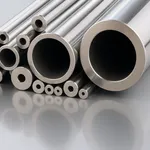
This image was created with artificial intelligence – marked under Art. 50 of the AI Act, Regulation (EU) 2024/1689. It is a placeholder until the company's photos arrive.
CNC machining – precision cut pieces for engineering applications
CNC machining explained: advantages, tolerances and applications for aluminium sheets. Find out more and request accurate CNC cut pieces online.
What exactly does CNC machining mean?
CNC stands for "Computerized Numerical Control" and describes the computer-aided control of machines for the production of highly precise components. In contrast to manual processes, machining with CNC is carried out via pre-programmed motion sequences that are exactly repeatable. Milling, drilling, turning or engraving can thus be carried out with the highest accuracy and consistent quality.
Advantages of CNC machining compared with conventional processes
In direct comparison with conventional manufacturing processes, CNC machining offers considerable advantages. One of the most important aspects is the high repeat accuracy: once a component has been correctly programmed, it can be manufactured any number of times with consistent quality – a decisive factor for series production. At the same time, precision is significantly higher: tolerances in the range of hundredths or even thousandths of a millimetre can be reliably maintained. Even complex geometries that would be difficult or possible only with great effort manually can be realised without difficulty thanks to CNC technology.
In addition, automation reduces sources of human error, increases efficiency and lowers unit costs in the long term. A further advantage lies in the flexibility of material choice – from soft plastics through non-ferrous metals to high-strength aluminium alloys, a wide range can be machined economically. Overall, CNC machining is a future-proof, precise and economical solution for many industrial applications.
Suitable materials for CNC machining
CNC machining is particularly versatile when it comes to material selection. In the aluminium sector, the following alloys are used among others:
- EN AW-5083: Very good corrosion resistance, weldable, good machinability
- EN AW-6082: High strength, good millability, versatile
- EN AW-7075: Very high strength, ideal for heavily loaded components
Plastics such as POM, PTFE or PA6 are also frequently machined by CNC.
Typical applications in the industrial environment
CNC-manufactured parts are found in virtually all technical sectors:
Mechanical engineering
Components for plant, fixtures and special-purpose machines are frequently manufactured from CNC-milled aluminium sheets. High load capacity, exact dimensions and good further processability are decisive.
Vehicle construction
In automotive and commercial vehicle construction, CNC machining is used for panelling, fastenings and functional components. Aluminium sheets are particularly in demand here.
Electrical engineering
Front panels, housings or cable glands must be manufactured to millimetre accuracy in order to ensure fit accuracy during assembly.
Medical technology
Here the focus is on biocompatible materials and the highest tolerance requirements. CNC machining fulfils both requirements.
Tolerances, machining accuracy and surface quality
The achievable accuracy depends on the machine, tool and material. In practice, tolerances of ±0.1 mm are easily possible with aluminium sheets. High-quality CNC systems also achieve ±0.01 mm. The surfaces can be milled, ground or polished as required.
CNC machining of aluminium sheets – what matters?
Aluminium sheets can be CNC-machined particularly well. The following are important:
- Selection of the suitable alloy (depending on strength and corrosion requirement)
- Chip removal and cooling during milling
- Secure sheet clamping and vibration-free machining
- Suitable tools for soft to high-strength aluminium types
Dimensionally accurate cut pieces through milling, drilling and engraving
CNC technology enables the complete machining of sheet material in a single operation:
- Contour machining (e.g. round, angular or free forms)
- Hole patterns and tapped holes according to CAD template
- Recesses, cut-outs, engravings
- Fits for connecting elements or assembly
Depending on the project, you will receive dimensionally accurate cut pieces at aluplattenzuschnitt.de, exactly to your specifications.
Economic efficiency and manufacturing costs
The costs for CNC machining are made up of the following factors:
- Material (e.g. aluminium sheet EN AW-5083, 10 mm)
- Machining time (depending on complexity and scope)
- Set-up costs (setting up the machine)
- Data preparation (CAD/CAM)
For simple geometries, the costs are very predictable. For complex milled parts, prior consultation is worthwhile.
When is CNC worthwhile?
CNC machining is always the right choice when precision, repeat accuracy and economical manufacturing matter. Especially for aluminium cut pieces, CNC offers clear advantages over manual processes. Thanks to modern milling machines, you can obtain complex components from a single source on request – accurately fitting, machined and ready for assembly.
Use the right CNC process: get advice on the optimum machining or configure your aluminium sheet directly with the right cut and process.
FAQ
Which tolerances are usual for CNC cut pieces? Tolerances of ±0.1 mm are usual, and tighter on request.
Which file formats does the supplier require? CAD data such as DXF, DWG or STEP are ideal. For simple cut pieces, a technical sketch is also sufficient.
Which sheet thicknesses can be machined? Depending on the machine, aluminium sheets up to 50 mm and beyond can be machined.
Which surface qualities are possible? Milled, finished or with specific post-treatment such as anodising or painting.