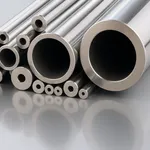
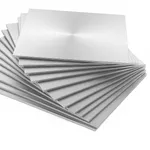
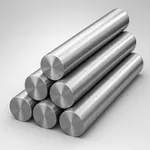
This image was created with artificial intelligence – marked under Art. 50 of the AI Act, Regulation (EU) 2024/1689. It is a placeholder until the company's photos arrive.
Which aluminium alloy is the right one: EN AW-5083, 5754 or 7075?
Which aluminium alloy suits your project? Compare EN AW-5083, 5754 and 7075 in a direct overview.
The choice of the right aluminium alloy is crucial for the performance and durability of a component. EN AW-5083, 5754 and 7075 are among the most commonly used alloys in the industrial sector. But which one is suitable for which application?
EN AW-5083: properties and typical applications
EN AW-5083 is an aluminium-magnesium alloy characterised by excellent corrosion resistance, particularly against seawater and industrial atmospheres. It offers medium strength, can be welded very well, but can only be machined to a limited extent. Typical applications are found in shipbuilding, vehicle construction, in chemical plants and in pressure vessels, where corrosion resistance and structural integrity are required.
EN AW-5754: properties and typical applications
EN AW-5754 is also an aluminium-magnesium alloy, but with a somewhat lower strength than EN AW-5083. This alloy is characterised by excellent formability and very good corrosion resistance, particularly in maritime environments. It is preferably used in vehicle body construction, in construction, in the food industry and in tank construction, where ease of processing and resistance to environmental influences are the main priorities.
EN AW-7075: properties and typical applications
EN AW-7075 is an aluminium-zinc alloy and is one of the highest-strength aluminium alloys of all. It offers very high strength, good machinability, but only limited weldability and lower corrosion resistance. EN AW-7075 is mainly used in aerospace engineering, in motorsport, for highly stressed structural components as well as in tool and mould making, where the utmost mechanical load capacity is required.
Comparison table: EN AW-5083 vs. 5754 vs. 7075
| Criterion | EN AW-5083 | EN AW-5754 | EN AW-7075 |
|---|---|---|---|
| Strength | Medium | Medium to low | Very high |
| Corrosion resistance | Very high | Very high | Low |
| Weldability | Very good | Very good | Limited |
| Machinability | Limited | Good | Very good |
| Price level | Medium | Low | High |
Decision aid: which alloy suits which application?
- Focus on corrosion resistance: EN AW-5083 or EN AW-5754 are the first choice. 5083 additionally offers higher strength.
- Focus on easy forming: EN AW-5754 is particularly suitable for complex geometries thanks to its excellent formability.
- Focus on maximum strength: EN AW-7075 is ideal when extreme load capacity at low weight matters, for example in the aircraft or racing sector.
- Focus on weldability: EN AW-5083 and 5754 offer excellent weldability. 7075 should be avoided due to the risk of cracking during welding.
Conclusion
The choice between EN AW-5083, 5754 and 7075 depends decisively on the area of application. Anyone looking for a combination of high corrosion resistance and medium strength is well advised to choose EN AW-5083. For applications requiring good formability and lower costs, EN AW-5754 is recommended. For highly stressed components where strength is more important than corrosion protection, EN AW-7075 represents the best choice.