Ballistic environment: where plastics make sense – and where they do not
Where are plastics useful in a ballistic environment – and where not? Overview of polycarbonate for protective sheets and UHMW-PE for impact zones, including clear material limits.
Plastics perform important functions in the ballistic environment, yet their areas of application differ clearly from classic armour materials. While metal and composite systems provide penetration resistance, plastics score in zones where impact toughness, weight advantages, transparency or energy absorption are required.
Polycarbonate for protective screens and UHMW-PE (PE‑1000) for impact and shock areas play a central role here.
The role plastics actually play in the ballistic environment
In the defence sector, plastics are used where they offer functional advantages: transparent splinter protection, lightweight structural coverings, energy-absorbing zones or anti-slip surfaces. They are not a replacement for armour materials, but complement them in a targeted way. Plastics reduce mass, bind splinters and enable constructions that would not be feasible with metallic materials.
Further fundamentals on material assessment can be found in the guide to mechanical load capacity and high-performance plastics.
Polycarbonate for ballistic protective screens
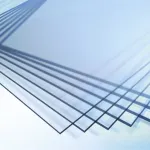
Polycarbonate is the most important plastic in transparent ballistic protection. Its exceptional impact toughness and high optical clarity enable protective screens for vehicles, observation areas or perimeter systems. Polycarbonate is often used in combination with glass in order to combine splinter binding, energy distribution and optical properties.
Typical properties:
- extreme impact resistance
- high transparency
- splinter binding in composite laminates
- good cold and weather resistance
Areas of application:
- ballistic vehicle windows
- transparent protective walls
- viewing modules for unmanned systems
Material details can be found under Polycarbonate. Suitable products and sheet solutions are available under Discs.
UHMW-PE (PE‑1000) for impact, anti-slip and protection zones
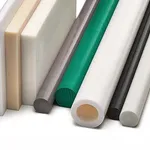
UHMW‑PE (PE‑1000) has an extremely high impact toughness and excellent sliding properties. In the ballistic environment it is used above all where shock-absorbing, abrasion-resistant or anti-slip surfaces are required. The material deforms in a controlled manner under load and absorbs kinetic energy efficiently.
Typical properties:
- very high impact resistance
- outstanding abrasion and sliding values
- lightweight energy absorption
- insensitive to moisture and weather
Areas of application:
- interior linings in vehicles
- shock and impact zones
- anti-slip surfaces
- protective coverings for sensitive modules
Further information: PE‑1000.
Where plastics reach their limits in the ballistic environment
Despite their advantages, plastics do not replace armour materials. They are supplementary materials – not primary protective bodies. Limits exist in:
- lack of penetration resistance against high calibre
- limited temperature stability (particularly under direct heat or flame exposure)
- lower structural rigidity compared with metal or fibre composites
- deformation under extreme heat
Further technical background on temperature behaviour and the influence of weather can be found in the guides to temperature resistance and weather resistance.
Comparison: where plastics make sense – and where they do not
| Material | Application advantages | Limitations |
|---|---|---|
| Polycarbonate | transparent protection, splinter binding, high impact toughness | requires laminate composites for higher protection classes |
| UHMW‑PE (PE‑1000) | energy absorption, high abrasion resistance, anti‑slip | no transparency, limited rigidity |
| Other plastics | lightweight coverings, interior linings | not suitable for core ballistic functions |
Typical applications in military vehicles and unmanned systems
Plastics are used for:
- transparent viewing protection modules
- splinter binding zones
- shock absorber and impact areas
- lightweight interior constructions
- protective coverings for sensitive components
They complement metallic and ceramic protection systems, improve ergonomics and weight balance and increase functional safety.
Plastics are a supplement – not armour
In the ballistic environment, plastics fulfil clearly defined tasks. Polycarbonate provides transparent protection and splinter binding, while UHMW‑PE takes on shock-absorbing and anti-slip functions. However, they are not suitable for penetration resistance or structural armour. As a supplement in a composite system, they make an important contribution to the safety and functionality of military applications.