Plastic rods
PE 1000 rod – cut to size
PE 1000 (PE-UHMW) MAPE1000® rods Rods made from PE 1000 (ultra-high molecular weight polyethylene), also known as PE-UHMW or MAPE1000®, are distinguished by…
Colour
Description
PE 1000 (PE-UHMW) MAPE1000® rods
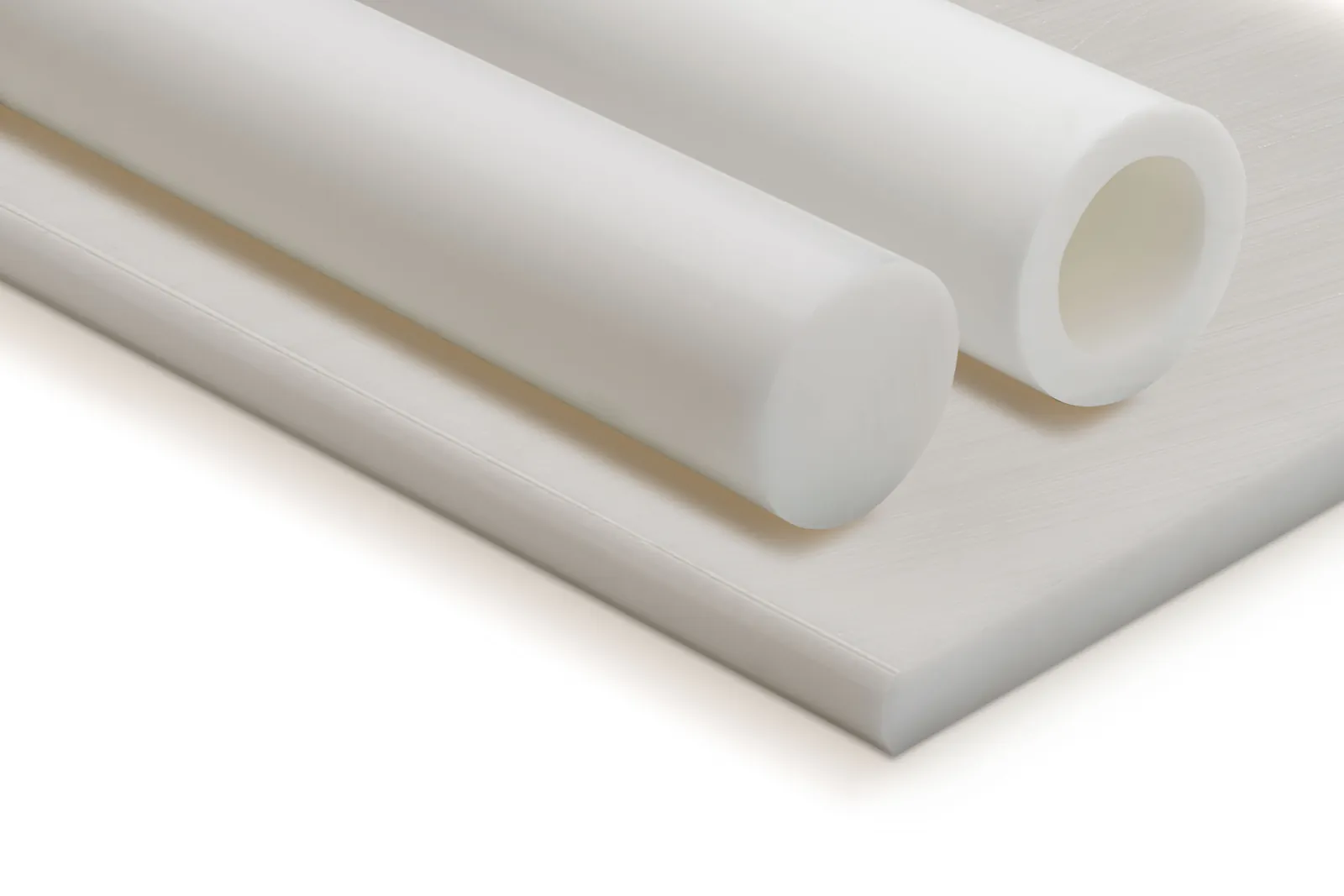
Rods made from PE 1000 (ultra-high molecular weight polyethylene), also known as PE-UHMW or MAPE1000®, are distinguished by their outstanding material properties.
The ultra-high molecular weight polyethylene is particularly abrasion-resistant and has high toughness, making it extremely resistant to mechanical stress. Compared with standard polyethylene such as PE 300, PE 1000 offers improved chemical resistance and reduced stress cracking, which makes it particularly suitable for demanding applications.
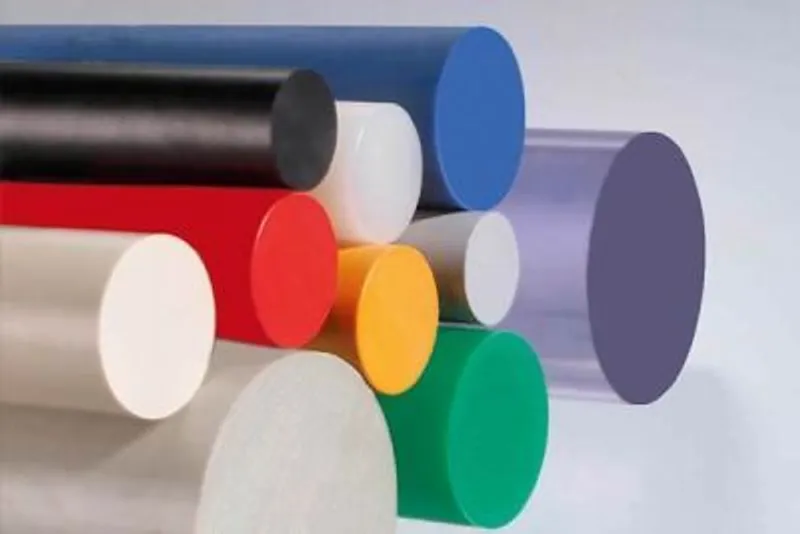
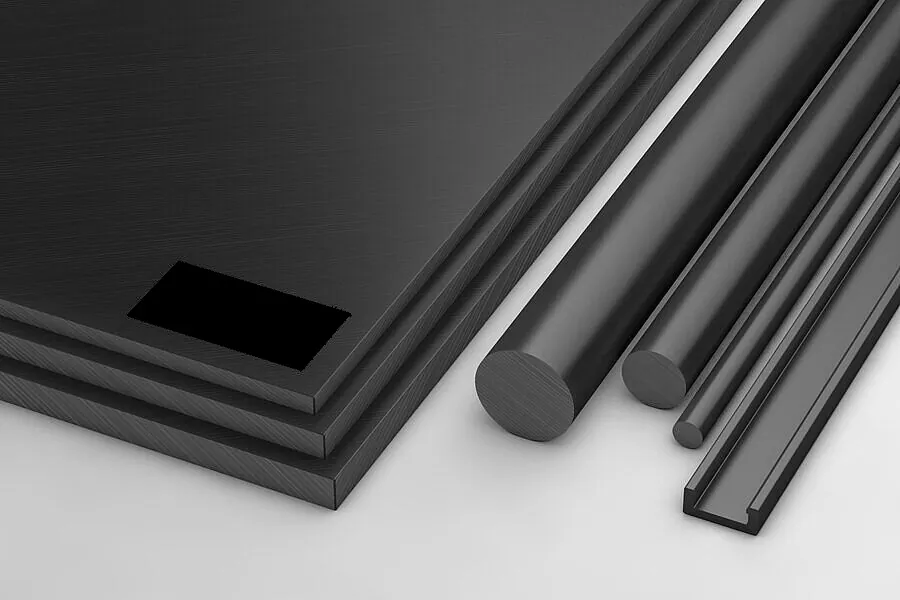
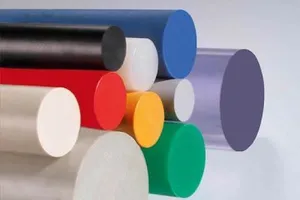
PE 1000 rods are available in various diameters and colours and can be cut to size individually as required. Thanks to their outstanding properties, these versatile plastic rods are ideal for numerous industrial and technical applications, particularly in areas where high load-bearing capacity and durability are required.
Thanks to the combination of physical robustness and chemical resistance, PE 1000 offers a high degree of flexibility that proves advantageous in many areas.
Machining and advantages of PE 1000 rods
Machining of PE 1000 rods
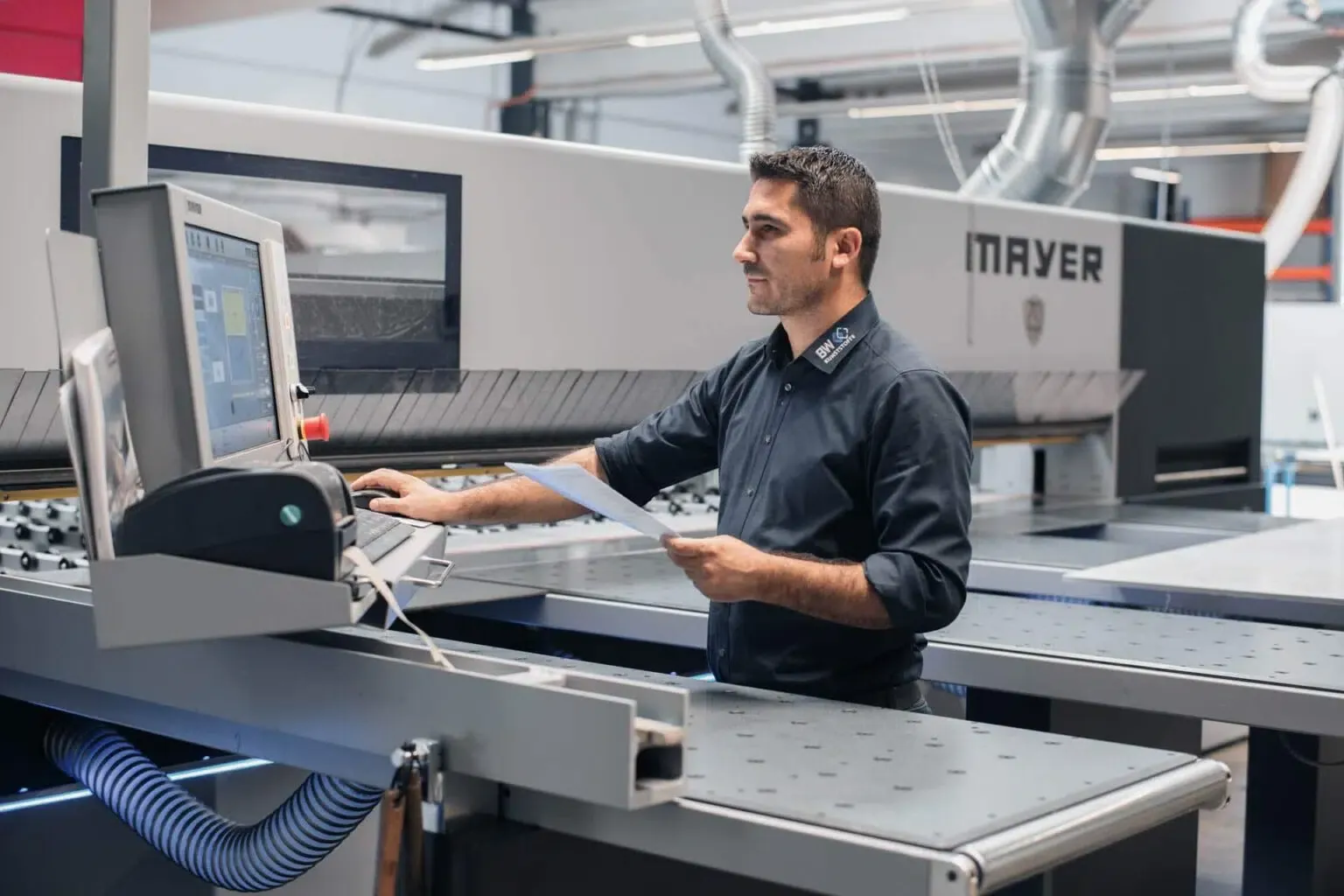
PE 1000 rods can be machined well with standard tools. The material can be sawn, turned, milled and welded without the formation of cracks or chipping. Thanks to their high toughness and abrasion resistance, PE 1000 is ideal for components exposed to dynamic stress. In addition, processes such as waterjet cutting and laser beam cutting are possible, allowing complex shapes and precise cut pieces to be produced.
The material can also be thermally formed and processed well, which is an advantage for projects with special geometric requirements. Welding is also possible, allowing assemblies and components that require particularly high stability to be joined. The excellent machinability of PE 1000 offers a broad range of applications, from small precision parts to large structural elements. Thanks to its dimensional stability, the components remain resistant even under changing conditions and heavy mechanical load.
Thermal processing and welding properties
The thermal forming of PE 1000 makes it possible to create tailored solutions for special requirements. The plastic can be easily heated and brought into the desired shape, which is particularly helpful in the production of protective cladding and precisely fitting built-in parts. Welding is also an effective method of joining various PE 1000 components and thereby creating particularly stable structures. This method is widely used in mechanical and plant engineering, especially where high stability and reliability are required.
Properties
- High abrasion and wear resistance: PE 1000 is distinguished by exceptional resistance to mechanical abrasion and wear, making it ideal for applications that require lasting performance. Even under intensive conditions, the material remains resistant over a long period.
- High impact strength: The material remains break-resistant even under dynamic stress, which guarantees high mechanical stability. This property makes it particularly valuable for applications in which sudden impacts or loads can occur.
- Low coefficient of sliding friction: Thanks to its self-lubricating properties, PE 1000 is outstandingly suitable for applications where low friction is required, such as guide and plain bearings. This reduces wear on the components and ensures a longer service life.
- High resistance to corrosion and chemicals: PE 1000 is resistant to many acids, alkalis and chemicals, making it ideal for use in aggressive chemical environments. This is particularly important in the chemical industry, where materials are often exposed to severe corrosion.
- Virtually no water absorption: The low water absorption of the material ensures that the mechanical properties remain constant even in damp environments, making it an excellent material for applications in damp environments. As a result, the material's dimensional and performance stability is maintained even at high humidity levels.
- Use at low temperatures: PE 1000 remains capable of performing even at extremely low temperatures down to -200 °C, making it suitable for cryogenic applications. This makes the material ideal for applications involving very cold conditions, such as in refrigeration technology.
- Physiologically safe: The material is approved for food contact (in accordance with BfR, EU, FDA) and can therefore be used without concern in the food industry. It is outstandingly suitable for direct contact with food and is therefore ideal for applications such as conveyor technology, chopping boards and machine components.
Applications
Mechanical and plant engineering
PE 1000 rods are a preferred choice in mechanical engineering, particularly for components exposed to heavy mechanical stress. Typical applications are plain bearings, chain guides, machine guards and covers. The outstanding sliding properties and high abrasion resistance make PE 1000 an ideal material for parts that are constantly in motion. In dynamic environments in which continuously high loads occur, PE 1000 demonstrates its superior performance, as it remains stable even under adverse conditions.
The ability not to warp or break even under high loads makes PE 1000 indispensable in mechanical engineering. It ensures reliable operation of machines and reduces wear as well as maintenance costs. Typical applications in mechanical engineering include grinding plates, sealing rings, and wear strips, which are used in demanding production environments.
Food industry
As PE 1000 is physiologically safe, it is widely used in the food industry. Due to its high abrasion resistance and low friction, PE 1000 is ideal for guide rails, sliding surfaces and wear parts in systems that are in direct contact with food. The low water absorption contributes to hygienic safety and prevents the ingress of moisture. This is particularly important in the production of conveyor belts, filling systems and packaging systems that require high hygiene standards.
In addition to its mechanical advantages, PE 1000 is also extremely easy to clean, making it the ideal choice for applications in which strict hygiene conditions must be met. Its resistance to cleaning agents and its smooth surface prevent the accumulation of dirt and bacteria, thereby ensuring safe food processing.
Chemical industry
The high chemical resistance of PE 1000 makes it ideal for use in the chemical industry. It is often used for the production of tanks, seals, **valves
Technical data
- Diameter: 20 to 200 mm (other diameters on request)
- Colours: natural, green, black, blue, yellow
- Types: compression-moulded, peeled, planed, electrically conductive, antistatic
- Processing: drilling, turning, milling, cold forming, screwing, punching, welding, waterjet cutting, laser beam cutting, riveting, sawing, cutting
- Trade names: MAPE1000®, SIMONA® PE-1000, Polystone® M, GEHR PE-UHMW®, TECAFINE PE10
The versatile processing options of PE 1000 make it possible to integrate the material into a wide variety of complex shapes and applications. The available diameters and colours ensure that individual requirements can be optimally met.