Plastic rods
Rundstab HGW 2088
Fabric-reinforced rods HGW 2088 (PF CC 42) Material description and composition Fabric-reinforced rods of type HGW 2088 (to DIN 7735) consist of a cotton…
- Manufacturer & wholesaler
- ISO 9001 & 14001 certified
- Fast delivery across Germany
- Personal technical advice
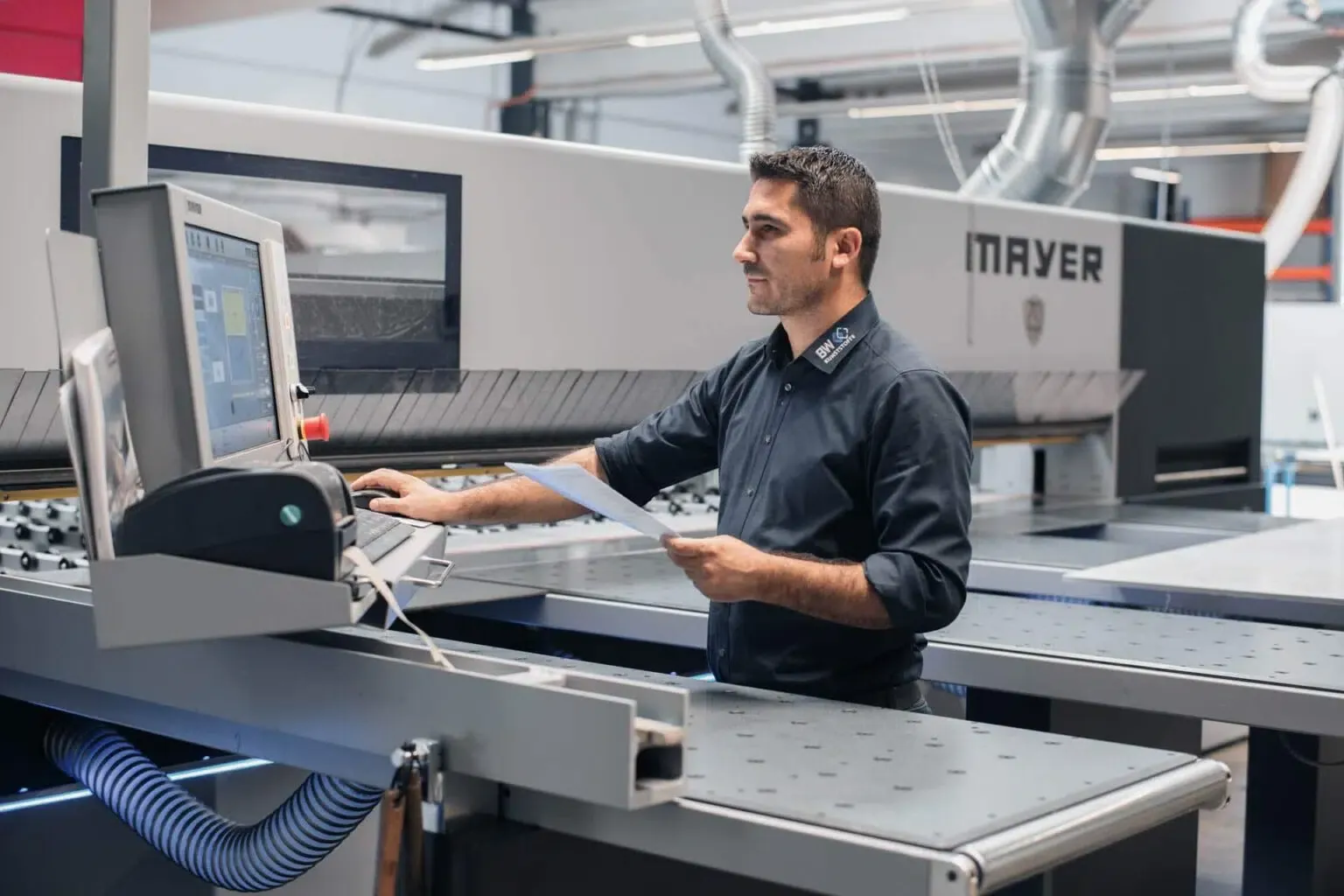
goCAD configurator
Custom milled part? Configurator with CAD upload
Upload your CAD drawing (STEP or DXF), choose material, dimensions and tolerances — you get the price at once and can order directly. For complex geometries beyond the standard cut.
Description
Fabric-reinforced rods HGW 2088 (PF CC 42)
Material description and composition
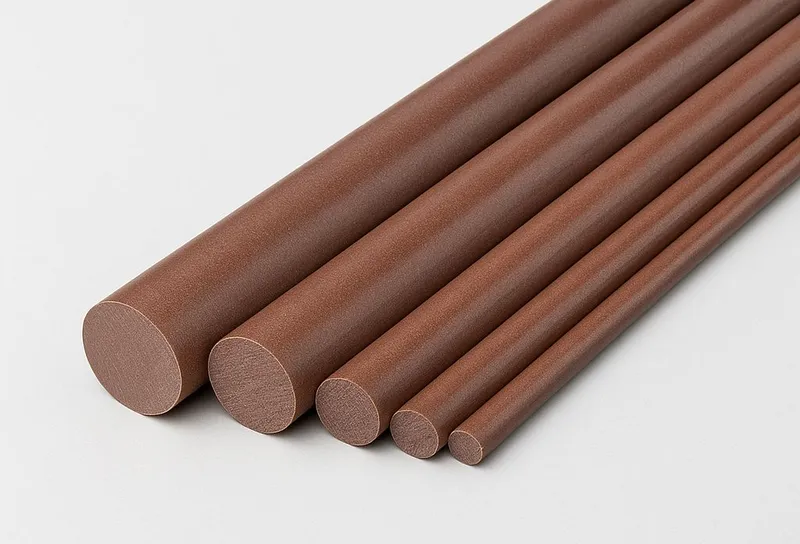
Fabric-reinforced rods of type HGW 2088 (to DIN 7735) consist of a cotton fabric that is impregnated with phenolic resin (PF) and pressed under pressure into a solid, homogeneous material. The international designation PF CC 42 describes the same material type to IEC 60893.
This combination of cotton fabric and thermosetting resin produces a material with high mechanical strength, good wear resistance and excellent electrical insulating properties. Thanks to the layered structure, the material remains dimensionally stable even under heavy load.
Fabric-reinforced rods are also characterised by good machinability and a balanced property profile, which makes them a proven engineering material in mechanical and electrical engineering.
Machining of fabric-reinforced rods
Fabric-reinforced material can be turned, milled, drilled and ground with conventional machine tools. Due to the dense, fibre-reinforced structure, a sharp cutting edge with carbide or diamond coating is recommended in order to achieve a clean cut edge.
When drilling and thread cutting, low cutting speeds and adapted feed rates should be selected in order to prevent fraying of the layers. The surface can subsequently be painted or finely ground. Bonding with epoxy resin or phenolic resin systems is also possible if the surfaces are degreased beforehand.
Machining produces fine dust, which should be removed with an extraction system. A coolant supply is generally not required.
Comparison and alternatives
Compared with paper-reinforced laminate (HP 2061), fabric-reinforced material offers significantly higher strength and wear resistance. Compared with epoxy resin laminates (EP GC 203), it shows better toughness and a more economical price structure, albeit with slightly lower temperature resistance.
Fabric-reinforced material HGW 2088 / PF CC 42 is therefore the ideal compromise between mechanical performance, electrical insulation and cost efficiency.
Sustainability and recyclability
Fabric-reinforced material is a thermosetting composite that cannot be remelted. Nevertheless, the material is characterised by a long service life, low maintenance requirements and good resource efficiency. At the end of its life, thermal recovery usually takes place in energy generation, as the phenolic resin has a high calorific value.
Compared with metallic materials, fabric-reinforced material saves energy already during production, as the processing temperatures are significantly lower.
Decision aid: When is fabric-reinforced material HGW 2088 worthwhile?
The use of HGW 2088 is recommended whenever mechanical load capacity, electrical insulating capability and low weight are required simultaneously. Typical examples are machine components, insulating sheets or friction elements that are intended to be both dimensionally stable and damping.
Compared with alternatives such as aluminium or epoxy resin, fabric-reinforced material offers a particularly good cost-benefit balance. The material is also excellently suited to small series and individual cut pieces.
Proven material for high stress
Fabric-reinforced rods HGW 2088 (PF CC 42) are a versatile material for technical applications in which robustness, insulating capability and economical processing are the focus. The combination of cotton fabric and phenolic resin makes the material a proven standard in industry, electrical engineering and mechanical engineering.
FAQ
What is the difference between fabric-reinforced material and paper-reinforced laminate?
Fabric-reinforced material is based on cotton fabric, whereas paper-reinforced laminate sheets are based on cellulose paper. As a result, fabric-reinforced material is significantly more mechanically loadable.
Is fabric-reinforced material electrically conductive?
No, fabric-reinforced material is a very good electrical insulator and is therefore used extensively in electrical engineering.
How can fabric-reinforced material be machined?
With conventional machine tools by turning, milling, drilling or grinding. Sharp cutting edges and adapted cutting parameters are important.
What temperature can HGW 2088 withstand?
Continuously up to about 120 °C, briefly also higher values, as long as no permanent structural change occurs.
Properties
Fabric-reinforced material HGW 2088 combines high tensile and flexural strength with a simultaneously low density. The impact strength is significantly above that of paper-reinforced laminate or glass-fibre-reinforced laminates. Even with changing air humidity, the material retains its shape and dimensional stability.
Key values at a glance:
-
Density: approx. 1.35 g/cm³
-
Tensile strength: approx. 100 MPa
-
Flexural strength: up to 160 MPa
-
Temperature resistance: up to 120 °C continuous operation
-
Electrical dielectric strength: > 8 kV/mm
-
Coefficient of sliding friction: low, resulting in good running properties
Thanks to this combination, fabric-reinforced material is particularly suitable for mechanically stressed components that must also provide electrical insulation.
Applications
-
Electrical insulating elements
-
Supporting and load-bearing parts in switchgear
-
Plain bearing bushes and gears
-
Terminals, rollers and coil cores
-
Components with high mechanical load
-
Tool holders and clamping devices
Fabric-reinforced rods are frequently used where metal parts are to be replaced by lighter and electrically non-conductive materials.
Technical data
-
DIN 7735: HGW 2088
-
IEC 60893: PF CC 42
-
Delivery forms: rods, sheets, cut pieces, turned parts
-
Standard colours: brown to dark brown
-
Diameter: from approx. 8 mm to 100 mm
-
Lengths: standard 1,000 mm, special sizes on request
All products are manufactured to tight tolerances and can be supplied on request in customer-specific dimensions or cut forms.
Specifications
- Shape
- rod
- Colour
- no colour specified
- Available sizes
- 11