Engineering plastics in the food industry | Food-safe materials
Engineering plastics are also needed in the food industry. Find out here exactly what they are important for.
The food industry faces constant challenges, whether in relation to packaging, storage or transport. In recent years, an innovative solution has increasingly gained ground – engineering plastics. These highly developed materials not only revolutionise the processing of food, but are also increasingly conquering kitchens worldwide. Here you can find out more about the diverse possibilities that plastics offer the food industry.
The versatility in the food industry:
This material is characterised by its exceptional mechanical, thermal and chemical properties. This versatility makes it an ideal companion in food processing. From packaging to preparation, they offer numerous possible applications.
Packaging technology
Modern food packaging must fulfil a multitude of requirements – from keeping food fresh to being environmentally friendly.
Engineering plastics offer an optimal solution here. They enable the production of lightweight, flexible yet robust packaging that ensures the protection of food.
For films, bags or carrier bags, for example, polyethylene is used, and for bottles, trays or packaging for tablets, polyvinyl chloride.
Food contact materials
In the food industry, the choice of materials that come into contact with food is of the greatest importance.
Plastics such as polyamide and polypropylene are FDA-approved materials that are characterised by high resistance to acids and bases.
This ensures that the safety and quality of food are not compromised.
Food-compliant plastics at a glance
Food-compliant plastics play an important role in the food industry. They are used wherever components, machine parts or plastic sheets have direct or indirect contact with food. The materials used must meet strict requirements with regard to hygiene, resistance and legal regulations.
A food-safe plastic is characterised by the fact that it does not release any substances harmful to health into food. The basis for this includes EU Regulation 10/2011 as well as other national and international regulations for materials with food contact.
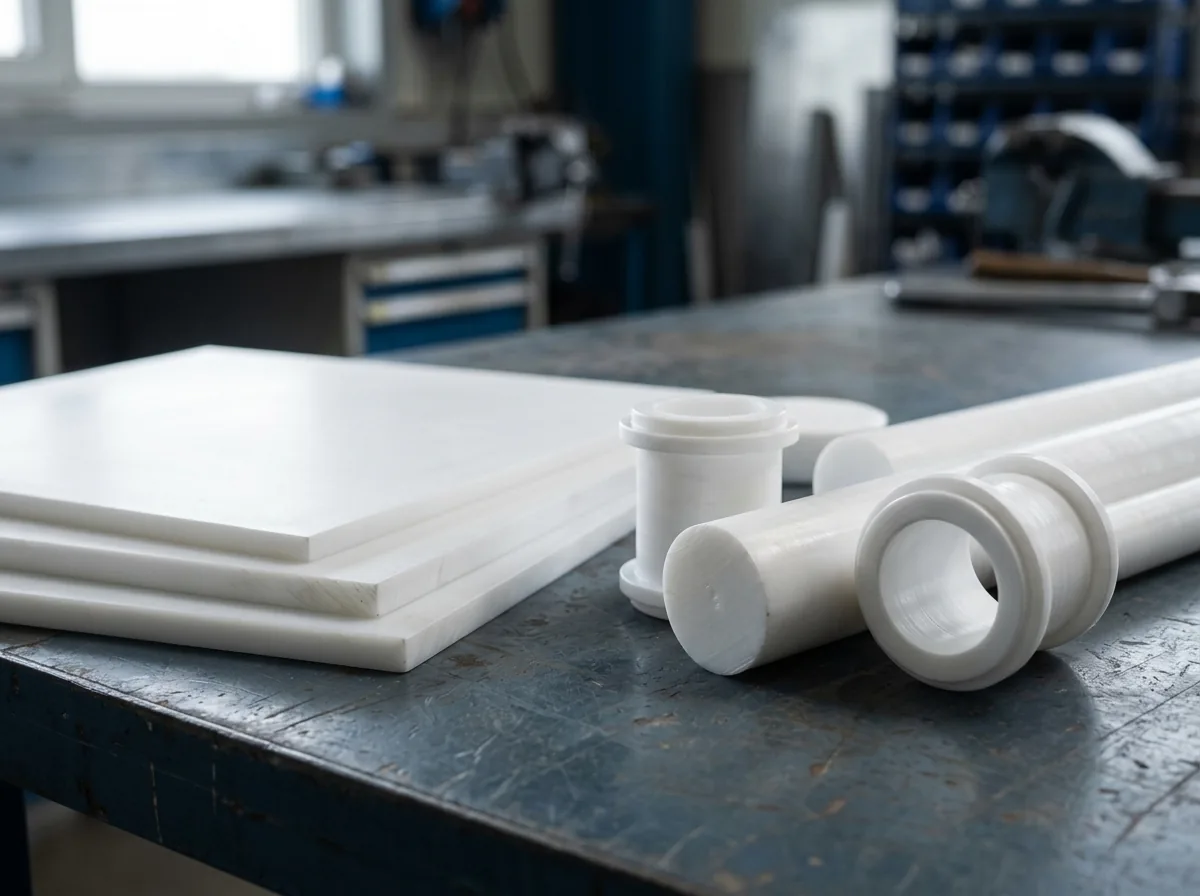
The most commonly used food-compliant plastics include polyethylene (PE), polypropylene (PP), polyethylene terephthalate (PET), POM-C and PTFE. These materials impress with their good cleanability, high chemical resistance and long service life even under demanding operating conditions.
Food-approved plastics are regularly used in particular in conveyor systems, filling systems, packaging machines, cutting and processing systems as well as in food containers. The choice of the suitable material depends on factors such as temperature, mechanical load, cleaning procedures and the respective food contact.
Companies benefit from durable, corrosion-free and hygienic materials that at the same time represent an economical alternative to many metal components.
| Plastic | Food contact | Typical application |
|---|---|---|
| PE1000 | Yes | Cutting boards, conveyor technology |
| POM-C | Yes | Gears, plain bearings |
| PET | Yes | Packaging systems |
| PP | Yes | Containers, filling technology |
| PTFE | Yes | Seals |
The plastic kitchen: plastics in the preparation of food
In addition to their role in packaging technology, plastics have also influenced the way we prepare and enjoy food. The plastic kitchen is an emerging trend movement that is being taken up by top chefs and food technologists alike.
Cooking utensils
Traditional kitchen utensils made of wood or metal are increasingly being replaced by plastics.
These materials not only offer greater resistance to heat and chemicals, but also enable innovative designs and ergonomic shapes that make preparing food easier. These are also made from polyamide.
Kitchen machines
Modern kitchen machines, from blenders to food presses, rely on engineering plastics for their construction.
These materials enable lightweight, durable and high-performance appliances that make the culinary process more efficient.
Challenges and opportunities
Despite the numerous advantages they offer in the food industry, they also face challenges. The debate about the environmental impact and recyclability of plastics is omnipresent. It is important to develop sustainable approaches and research materials that minimise the environmental impact.
Sustainable engineering plastics
Researchers and engineers are working intensively on developing sustainable alternatives to conventional plastics.
Bioplastics and recyclable materials could pave the way for a more environmentally friendly plastic culinary world.
Of course, there are already some environmentally friendly plastics, e.g. polyolefins, polyethylene and polypropylene.
How is acrylic glass used in the food industry?
Acrylic glass (PMMA) is used in the food industry above all where transparency, hygiene and an attractive appearance are required. Due to its high light transmission, the material is excellently suited for viewing windows, protective covers and machine cladding in production and packaging systems.
In many operations, acrylic glass sheets are used as hygiene protection between work areas or as transparent covers. Employees can monitor processes at any time while at the same time effective protection against contamination is ensured.
Acrylic glass also plays an important role in the packaging industry. The material is used, for example, for viewing windows on packaging machines, protective hoods, control stations and presentation systems. Thanks to its smooth surface, acrylic glass is easy to clean and meets high requirements for cleanliness and ease of maintenance.
For applications with direct food contact, however, other food-compliant plastics such as polyethylene (PE), polypropylene (PP) or PET are often preferred. Acrylic glass is predominantly used for transparent components where visual inspection, product protection and process monitoring are the focus.
Conscious consumption
The food industry and consumers must make a conscious decision to use plastics and at the same time explore ways to reduce plastic waste. This could be achieved through innovative recycling methods and the use of reusable packaging.
Here are a few examples of recycling:
Mechanical recycling:
- Shredding and processing: Plastics are collected, shredded and cleaned. The resulting granulate can then be reused in plastic production.
Extrusion: The molten plastic is pressed through a die and formed into a strand, which is then cut into small pellets.
Chemical recycling:
- Pyrolysis: Here, the plastic is broken down at high temperatures in the absence of oxygen. The resulting gases can serve as raw materials for the production of new plastics.
Depolymerisation: This method involves reversing the polymerisation process by breaking down large plastic molecules into their original monomers.
Biological recycling (biodegradation):
- Biodegradable plastics: Some plastics are designed to decompose into natural substances under the influence of microorganisms.
Upcycling:
- Reuse: In some cases, the plastics can be reused directly without having to go through the process of recycling granulate.
Energy recovery:
- Incineration: Plastics can be incinerated in specialised facilities to generate energy. However, this should be considered as a last option, as incineration can increase the environmental impact.
Recovery of additives:
- Extraction of additives: Some recycling processes focus on recovering the valuable additives from the plastics.
More on plastic recycling here.
In summary:
The plastic culinary world is undoubtedly a fascinating aspect of the modern food industry. Engineering plastics have not only changed the way food is packaged, but also expanded the possibilities of preparation in the kitchen. The challenge now is to shape these innovations sustainably and minimise the environmental impact. Through conscious consumption, research and the development of sustainable materials, we can create a future in which plastics enrich the food industry in an innovative and environmentally friendly way.
Frequently asked questions about plastics in the food industry
What are food-compliant plastics?
Food-compliant plastics are materials that are approved for contact with food. They meet legal requirements and do not release any substances harmful to health into food under normal conditions of use.
Which plastic is food-safe?
The commonly used food-safe plastics include polyethylene (PE), polypropylene (PP), PET, POM-C and PTFE. However, the actual suitability depends on the respective material quality and the existing approvals.
Is polyethylene suitable for the food industry?
Yes. Polyethylene is one of the most commonly used plastics in the food industry. PE300, PE500 and PE1000 in particular are used for cutting boards, conveyor technology, guides and various machine components.
How is acrylic glass used in the food industry?
Acrylic glass is used above all for viewing windows, protective covers, machine cladding and hygiene protection walls. The high transparency enables simple process monitoring in production and packaging systems.
Which plastic sheets are suitable for the food sector?
PE, PP, PET, PTFE and POM-C sheets are often used for the food sector. The selection depends on temperature, load, cleaning procedures and the requirements of the respective application.