Radiation-resistant plastics
Which plastics are radiation-resistant? More about PEEK, PI, PSU, PE and resistance to gamma, X-ray and electron radiation.
Radiation-resistant plastics are used wherever components are permanently or repeatedly exposed to gamma, X-ray, electron or neutron radiation. The radiation resistance of a plastic does not depend on the polymer alone. The type of radiation, absorbed dose, dose rate, temperature, oxygen influence and mechanical load also determine how long a material retains its properties.
High-performance plastics such as PEEK and polyimide (PI) in particular have a high resistance to high-energy radiation. Other plastics react much more sensitively or are only suitable for certain types of radiation. For material selection, therefore, it should always be considered which radiation the finished component is actually exposed to.
Fundamentals: effect of radiation on plastics
Ionising radiation can alter the molecular structure of plastics. Depending on the material and the load, molecular chains can be split or newly cross-linked. As a result, mechanical, electrical, optical or chemical properties can change.
The term radiation resistance therefore does not describe a single fixed material value. A plastic can, for example, be very resistant to X-ray radiation, yet age much faster under a different type of radiation or under additional thermal and mechanical loads.
For practical material selection, the following factors in particular should therefore be taken into account:
- type of radiation
- total absorbed radiation dose
- dose rate
- duration and frequency of irradiation
- ambient temperature
- oxygen or ambient medium
- mechanical load on the component
Which plastics are suitable for X-ray radiation?
In applications involving X-ray radiation, plastics are used, for example, in medical devices, analysis systems, testing equipment, electrical insulators or technical components. A distinction must be made between two different requirements.
An X-ray-resistant plastic should retain its mechanical, electrical or geometric properties for as long as possible despite repeated irradiation. An X-ray-detectable plastic, by contrast, pursues a different goal: suitable fillers or modifications are used to make the component visible on an X-ray image.
For high loads from X-ray and other high-energy radiation, high-performance plastics such as PEEK and polyimide are particularly suitable. PEEK combines its radiation resistance with high temperature resistance, mechanical strength and good chemical resistance.
Typical areas of application
- Medical technology: components in radiation therapy and X-ray devices, diagnostic systems and components that are exposed to repeated sterilisation processes using gamma, electron or X-ray radiation.
- Nuclear technology: insulators, holders, seals and structural components in radiation-exposed areas.
- Electronics and electrical engineering: insulating and dimensionally stable components in devices and systems with increased radiation exposure.
- Aerospace: lightweight high-performance components that must simultaneously withstand thermal, mechanical and radiation-related loads.
- Research and testing technology: components for analysis devices, particle accelerators, detector systems and other radiation-exposed facilities.
Suitable plastics for radiation-resistant applications
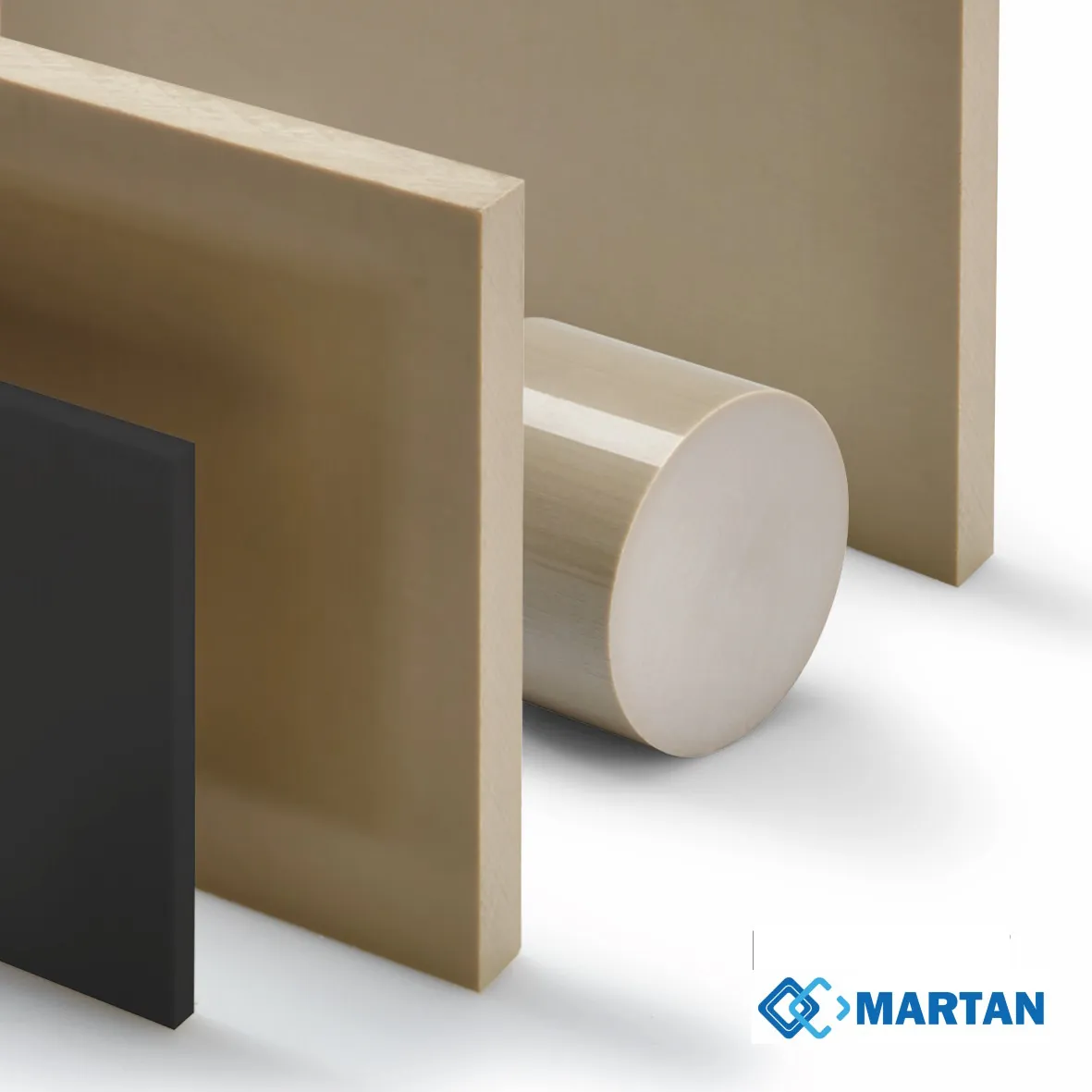
Polyetheretherketone (PEEK)
PEEK is one of the particularly radiation-resistant high-performance thermoplastics. The material combines high mechanical strength with excellent temperature and chemical resistance and at the same time has a high resistance to high-energy radiation.
Particularly under gamma and X-ray radiation, PEEK can retain its technical properties across comparatively high radiation doses. The material is therefore used, among other things, in medical technology, electronics, aerospace and nuclear technology applications.
Typical components are insulators, seals, bearing components, fastening elements or structural parts in radiation-exposed assemblies.
If, in addition to radiation resistance, high temperature, chemical and mechanical load capacity are also required, PEEK plastic is often one of the first materials that should be considered in material selection.
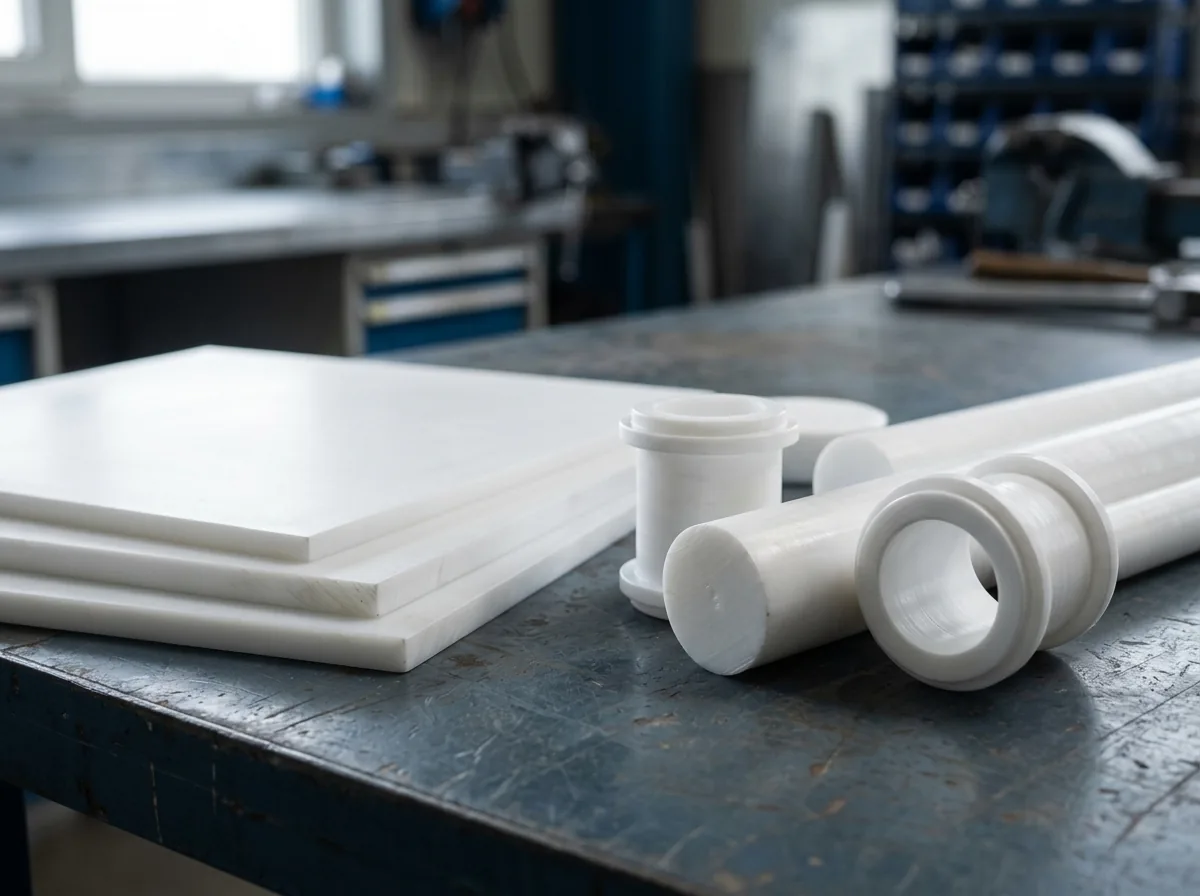
Polytetrafluoroethylene (PTFE)
PTFE has excellent chemical resistance, very low friction values and a wide temperature application range. However, the material is significantly more sensitive to high-energy ionising radiation than, for example, PEEK or polyimide.
As the radiation dose increases, PTFE can lose mechanical load capacity and become brittle due to chain scission. For components permanently exposed to high radiation, it should therefore be checked whether a more radiation-resistant high-performance plastic can be used.
PTFE nevertheless remains of interest when chemical resistance, sliding properties or temperature application are the main priorities and radiation exposure is correspondingly limited.
Polyimides (PI)
Polyimides are among the particularly temperature- and radiation-resistant high-performance plastics. Their molecular structure enables high resistance to high-energy radiation, which is why they are used in particular in demanding electrical and thermal applications.
Depending on the material type, polyimides are suitable, among other things, for insulators, bearings, guides and other components where high temperature resistance must be combined with good radiation resistance.
High-density polyethylene (HDPE)
HDPE occupies a special role among radiation-resistant plastics. The material is used less because of a generally exceptionally high resistance to all types of radiation, but in particular because of its good properties in the shielding or moderation of neutron radiation.
Its high hydrogen content supports the slowing down of fast neutrons. Modified polyethylenes, for example with boron-containing additives, are therefore also used for special shielding applications.
The function of HDPE thus differs significantly from high-performance plastics such as PEEK or PI, where the primary focus is on maintaining material properties under ionising radiation.
Polysulfones (PSU) and polyethersulfones (PES)
PSU and PES combine good thermal properties with high dimensional stability and comparatively good resistance to various sterilisation and radiation loads.
As a result, these materials are used, among other things, in medical technology, electrical engineering and technical components where, in addition to radiation resistance, dimensional stability and electrical properties are also important.
Comparison of radiation-resistant plastics
| Plastic | Radiation resistance | Particularly suitable for |
|---|---|---|
| PEEK | very high | gamma, X-ray and electron radiation, demanding technical components |
| PI | high to very high | electronics, aerospace, high-temperature applications |
| PSU/PES | medium to high | medical technology, technical components |
| PE/HDPE | application-dependent | in particular neutron moderation and shielding |
| PC | limited to medium | housings and transparent components under moderate load |
| PTFE | comparatively low | applications with low radiation dose and high requirements for chemical and sliding properties |
The information serves for preliminary material selection. For the actual radiation resistance of a plastic component, the type of radiation, dose, dose rate, temperature, component geometry and ambient conditions must be considered together.
Xenon tests on plastics: what is tested?
The search term "xenon tests plastics" is often used in connection with radiation resistance, but describes a different form of material testing.
In a xenon test or xenon arc test, plastics are exposed to artificial light and defined climatic conditions. This allows in particular ageing and weathering effects caused by daylight, UV components, temperature and moisture to be investigated.
For plastics, DIN EN ISO 4892-2 is particularly relevant here.
A xenon test therefore primarily assesses the light and weather resistance of a plastic. It is not to be equated with a test of resistance to ionising gamma, electron or X-ray radiation.
If your application is mainly outdoors, you will find supplementary information on UV-resistant plastics.
What should be considered when selecting a radiation-resistant plastic?
- Which type of radiation occurs? Gamma, X-ray, electron and neutron radiation affect polymers differently.
- What total dose must the component withstand? For service life, the cumulative absorbed radiation dose is often more important than a short-term load.
- Which properties must be retained? Depending on the application, tensile strength, elongation, electrical insulation, dimensional stability or transparency may be relevant.
- What additional loads occur? Temperature, chemicals, moisture, oxygen and mechanical loads can additionally influence ageing.
- Is a semi-finished product or a finished component required? In addition to the polymer, material quality, modification, component geometry and processing must also be taken into account.
For demanding applications, material selection should therefore always be based on the specific operating conditions. Information on the chemical resistance of plastics also helps with material selection when aggressive media occur in addition to radiation.
Advantages of plastics over metals
- low weight combined with high technical performance
- good electrical insulation properties
- high corrosion and chemical resistance of many materials
- good machinability and design freedom
- depending on the material, low friction and good tribological properties
Particularly in radiation-exposed applications, these properties can help to design components that are lighter, electrically insulating and corrosion-resistant. Whether plastic is the better solution compared with metal, however, depends on the specific load and the required properties.
Challenges and limits
Radiation-resistant plastics are also not infinitely loadable. As the total dose increases, for example strength, elongation at break, colour, electrical properties or dimensional stability can change.
For material selection, it is also important to distinguish the types of radiation from one another, since gamma, X-ray, electron and neutron radiation place different demands on the material. UV radiation, by contrast, is non-ionising radiation and should be considered separately with regard to material ageing and weathering.
For safety-critical applications, material data, test conditions and real operating conditions should therefore be carefully compared with one another. A general classification as "radiation-resistant" does not replace an application-specific assessment.
Future prospects
The requirements for radiation-resistant plastics are increasing with new applications in medical technology, aerospace, energy and research technology. At the same time, polymer materials and compounds are being specifically further developed in order to combine radiation resistance with high temperature resistance, low weight or special electrical properties.
For designers, this opens up additional possibilities to replace metallic components with high-performance plastics or to further develop existing applications technically.
In summary
The radiation resistance of plastics is particularly important in medical technology, nuclear technology, electronics and aerospace. High-performance plastics such as PEEK and polyimide can achieve high technical performance even under high-energy gamma, X-ray or electron radiation.
Which material is suitable, however, always depends on the type of radiation, total dose, temperature, ambient conditions and the required component properties. While PEEK, for example, is of interest for particularly demanding radiation-exposed components, polyethylene is used, among other things, for applications in the field of neutron shielding.
A blanket classification as "radiation-resistant" or "not radiation-resistant" is therefore not sufficient for technical material selection. The decisive factor is always the specific load profile of the application.
Frequently asked questions about radiation-resistant plastics
Which plastics have high radiation resistance?
PEEK and polyimides are among the plastics with particularly high resistance to high-energy radiation. Depending on the type of radiation, PSU, PES or other high-performance plastics may also be suitable.
Which plastic is resistant to X-ray radiation?
PEEK is often used for components that are regularly exposed to X-ray radiation. Polyimides and various high-performance plastics can also have good resistance. The specific suitability depends on the radiation dose, temperature and the required mechanical properties.
What does radiation resistance mean for plastics?
Radiation resistance describes how well a plastic retains its relevant properties under the influence of radiation. Strength, elongation at break, dimensional stability, electrical properties or optical changes can be assessed, for example.
Are X-ray-resistant and X-ray-detectable plastics the same?
No. An X-ray-resistant plastic should be damaged as little as possible by the radiation. In an X-ray-detectable plastic, by contrast, the material is specifically modified so that a component can be detected on an X-ray image.
What is tested in xenon tests of plastics?
Xenon tests simulate the effect of daylight or weathering on plastics. Light, UV components, temperature and moisture are taken into account, among other things. They are not used to assess resistance to ionising gamma or X-ray radiation.
Is PTFE radiation-resistant?
PTFE is comparatively sensitive to ionising radiation. As the radiation dose increases, the mechanical properties can change significantly. For applications exposed to high radiation, materials such as PEEK or polyimide are often better suited.