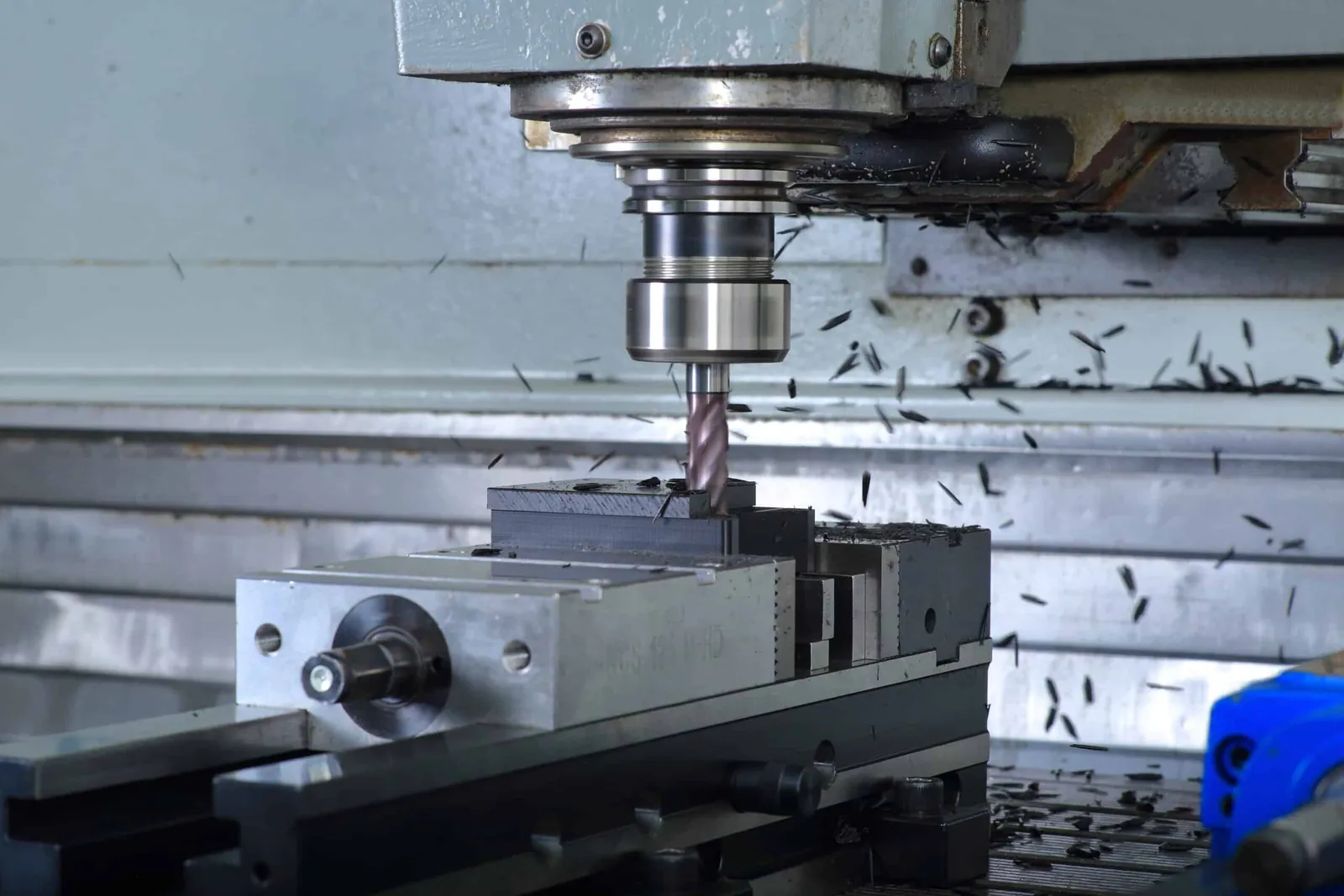
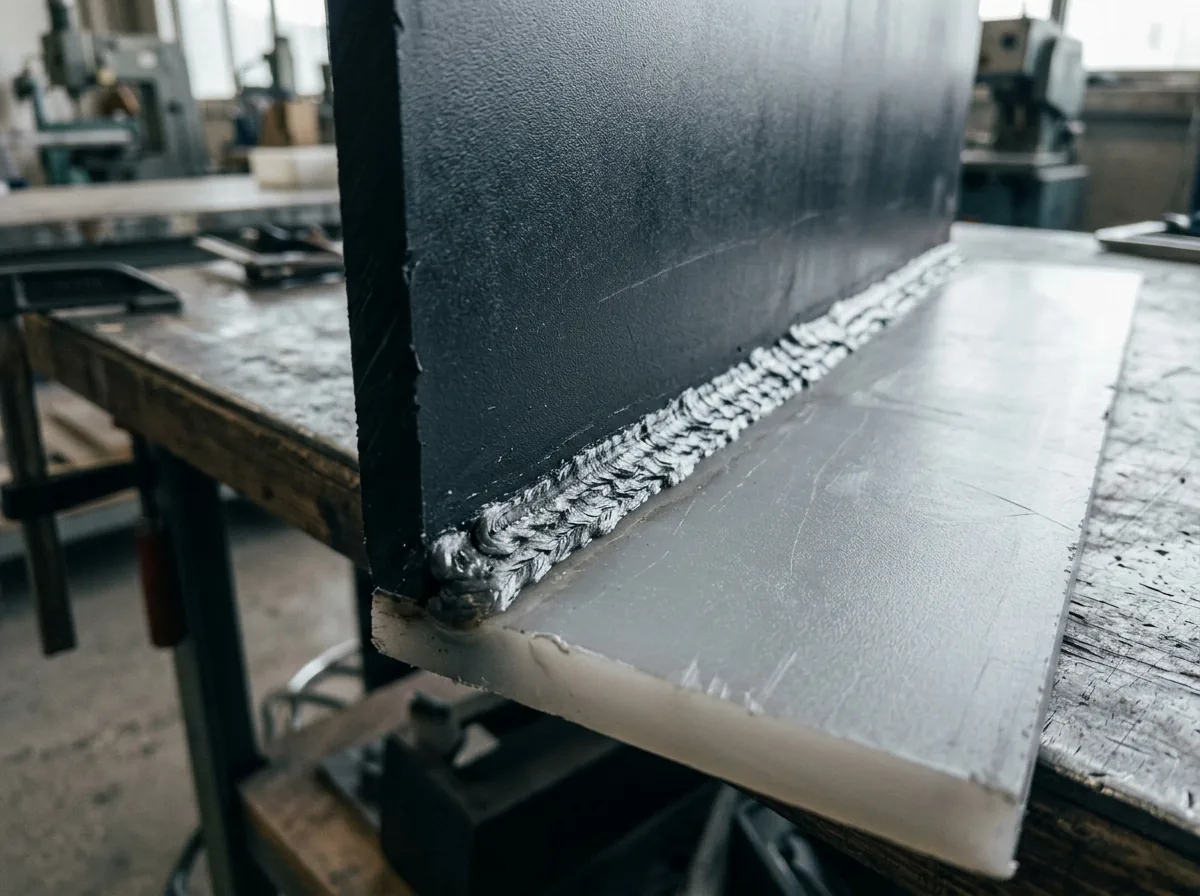
 This image was created with artificial intelligence – marked under Art. 50 of the AI Act, Regulation (EU) 2024/1689. It is a placeholder until the company's photos arrive.
Privacy screen, machine cladding or cover? – How to use plastic sheets correctly
Which plastic sheet is suitable for what? Discover materials for privacy screens, machine cladding & covers – with tips on fire protection, appearance & installation.
Whether it is an opaque privacy screen on a fence, hygienic machine cladding or a robust protective sheet in production – plastic sheets meet the most diverse requirements indoors and outdoors. They are light, durable, easy to machine and available in many variants.
However: not every sheet suits every application. This article shows which materials are suitable for which purpose – and what to look out for when selecting them. Alongside the material properties, we also consider visual aspects, fire behaviour, processing tips and provide you with a well-founded decision-making aid.
Plastic sheets in use – the most important applications
Plastic sheets are used today in virtually all industries – from private gardening to high-end industrial cladding. They combine functionality, cost-effectiveness and design flexibility. But where are standard sheets sufficient and where are engineering plastics needed? Their areas of application can be roughly divided into three categories:
- Privacy screening and design outdoors (e.g. garden, balcony, façade)
- Protection and safety on machines and systems (cladding, guards, enclosures)
- Technical covers (wall panels, partition walls, protective surfaces)
Choosing the right material is essential here, because operating conditions such as UV radiation, cleaning, chemicals or mechanical loads affect each material differently.
Privacy screening with plastic sheets: robust, opaque, weather-resistant
Outdoors, plastic sheets score with their weather resistance, ease of care and diverse appearance. Compared with wood, they do not rot and require no regular maintenance. Unlike glass, they are more shatter-resistant and lighter. For privacy screening applications, the following criteria matter:
- UV resistance, so that the material remains permanently colour-fast and functional
- Translucency or opacity: depending on the desired degree of privacy
- Weather and temperature resistance: especially for free-standing constructions
- Combinability with substructures (e.g. metal frames)
Particularly suitable are PE-HD with UV stabilisation, rigid PVC, polycarbonate with UV layer and acrylic glass in a matt or satin-translucent finish.
Machine cladding: safety, cleanability, assembly
In manufacturing and industry, plastic sheets perform important safety functions. They shield moving parts, hot areas or sensitive technology. At the same time, they must meet requirements in hygiene, fire protection and ergonomics:
- Impact resistance under high stress (e.g. from tools, flying parts, vibrations)
- Smooth-surface cleaning, including with aggressive agents
- Repeated temperature changes without distortion
- Safe and quick assembly using drilled holes, clamping profiles or plug-in systems
Here PE-HD, POM-C for high-precision applications, PVC-U for cost-sensitive projects and polycarbonate where transparency is required prove their worth.
Technical covers: which requirements are decisive?
Plastic sheets protect machines, walls or installations from mechanical loads, dust, chemicals or UV radiation. They frequently serve as:
- Wall cladding in production or storage halls
- Machine covers or guards
- Housing parts for control cabinets or controllers
- Partition walls and protective screens in sensitive areas
Depending on the requirement, the following are important:
- Dimensional stability under temperature and mechanical load
- Mounting options (screwing, bonding, plugging)
- Resistance to chemicals and cleaning agents
- Appearance in visible areas
Design and surface: what has what effect?
Especially in visible areas or with transparent solutions, the aesthetic effect matters. The following variants are available:
- Smooth, matt, glossy: depending on the desired surface effect
- Structured or grained: offers more grip, less reflection
- Clear, opaque or translucent: for transparent applications or visual screening
- Coloured throughout or with decor: adapted to CI or architecture
There are also variants with scratch-resistant coating, antistatic properties or UV-blocking layers.
Which material for which purpose?
Here is an overview of relevant plastics:
PE-HD / PE 1000
- Very robust, chemical-resistant, impact-resistant even in frost
- UV-stabilised variants for privacy screening outdoors
- Application: slide rails, privacy screen walls, cladding, impact protection
PVC-U (rigid)
- Good dimensional accuracy, flame-retardant (B1), cost-effective
- Easy to print on and bond
- Application: wall cladding, advertising surfaces, covers, privacy screening
POM-C
- Very dimensionally stable, low water absorption, high precision
- For components with tight tolerances or high stress
- Application: machine interior parts, guide elements, technical cladding
Polycarbonate (PC)
- Almost unbreakable, high temperature tolerance, transparent
- Ideal for protective screens, guards, mobile shields
- Also available in flame-retardant variants (B1)
Acrylic glass (PMMA)
- UV-stable, elegant glass look, high transparency
- Weather-resistant, but more brittle than PC
- Application: privacy screening, guidance systems, high-quality design covers
Comparison table of plastic sheets for typical applications
| Application | Suitable materials | Most important properties |
|---|---|---|
| Privacy screening (outdoor) | PE-HD UV, PVC-U, PMMA, PC | UV-resistant, opaque/transparent, weather-resistant |
| Machine cladding | PE-HD, POM-C, PVC-U, PC | impact-resistant, chemical-resistant, hygienic |
| Technical cover | PE-HD, PVC-U, POM-C, PMMA | robust, dimensionally stable, easy to mount |
| Transparent protective screens | PC, PMMA | crystal-clear, shatter-resistant, UV-stable |
| Wall cladding indoors | PVC-U, PE-HD | easy to clean, stable, cost-efficient |
Fire protection: which sheets are flame-retardant?
Depending on the place of use, different statutory requirements apply to fire classification. Examples:
- PVC-U: B1 (flame-retardant), widely used in trade fair and shop fitting
- PC: depending on type B1 to B2, flame-retardant variants available
- PE-HD / POM-C: B2 (normally flammable), only permitted to a limited extent in sensitive areas
Look out for standards such as DIN 4102, EN 13501-1, or for manufacturer certificates. For public spaces, escape routes or vehicle interiors, the relevant evidence is mandatory.
Sheet formats & thicknesses at a glance
Plastic sheets are available in numerous formats and thicknesses. A selection:
| Material | Typical sheet size | Available thicknesses |
|---|---|---|
| PE-HD | 2,000 × 1,000 mm / 3,000 × 1,500 mm | 2–50 mm (depending on type) |
| PVC-U | 2,000 × 1,000 mm / 3,000 × 1,500 mm | 1–20 mm |
| PMMA | 2,000 × 1,000 mm / 3,050 × 2,050 mm | 2–20 mm |
| PC | 2,050 × 1,250 mm / special formats | 2–12 mm (solid), up to 16 mm (multiwall sheets) |
| POM-C | 1,000 × 500 mm / 2,000 × 1,000 mm | 5–50 mm |
Special formats or cut pieces to size are easily possible with many manufacturers.
Tips on processing, fastening & care
- Drilling & sawing: plastic sheets can be machined well with suitable tools (e.g. carbide saw blade, HSS drill bit). A slower cutting speed prevents heat build-up.
- Fastening: screws with plastic washers, oversized holes and room for expansion. Alternatively: bonding (e.g. PVC with Tangit, PMMA with Acrifix).
- Care: cleaning with water, washing-up liquid and soft cloths. No solvents or abrasive sponges on sensitive surfaces.
Decision-making aid: which plastic sheet suits your project?
| Purpose | Recommended material | Why? |
|---|---|---|
| Robust privacy screening (outdoor) | PE-HD UV-stabilised | opaque, durable, easy to care for |
| Design privacy screening | PMMA | crystal-clear, UV-stable, visually high-quality |
| Machine cladding technical | POM-C or PVC-U | dimensionally stable, chemical-resistant |
| Mobile protective screen | Polycarbonate (PC) | almost unbreakable, transparent |
| Inexpensive wall cladding | PVC-U | light, B1-classified, easy to mount |
With the right choice of material, functional, durable and visually appealing solutions can be realised. Plastic sheets offer an enormous range here – provided that the specific requirements are consistently taken into account during planning.