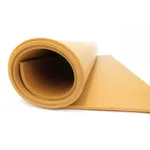
This image was created with artificial intelligence – marked under Art. 50 of the AI Act, Regulation (EU) 2024/1689. It is a placeholder until the company's photos arrive.
Playground safety mats
Playground fall protection mats made of rubber for maximum safety. Slip-resistant, durable and compliant with standards. Find the right solution now.
School playgrounds are heavily frequented areas with high loads and an increased risk of accidents. A suitable flooring therefore plays a central role in the safety of children and young people.
School playground impact protection mats made of rubber offer a reliable solution here: they reduce the risk of injury, are durable and meet the requirements of public facilities.
A targeted selection of the right solution is worthwhile even at the planning stage – both from a safety and an economic point of view.
Check suitable solutions now and enquire directly.
Requirements for flooring on school playgrounds
Flooring on school playgrounds must do considerably more than classic outdoor surfaces. In addition to daily use by many pupils, safety aspects are the main focus. A high level of shock absorption reduces the impact energy of falls and actively contributes to injury prevention. At the same time, a slip-resistant surface is required so that a secure footing is guaranteed even in rain, moisture or soiling.
In addition, materials must be permanently weather-resistant. Temperature fluctuations, UV radiation and precipitation must barely affect the function and structure of the flooring over many years. Mechanical load-bearing capacity is equally important, since school playgrounds are used intensively every day – both through walking movements and through point loads at play equipment.
A further aspect is maintenance during ongoing operation. Flooring should be easy to clean and should not require complex maintenance intervals. Overall, this creates a system that permanently combines safety, function and economic efficiency.
Unsuitable flooring quickly leads to increased maintenance effort or safety risks.
Why impact protection mats made of rubber are the right solution
Rubber mats were developed specifically for safety-relevant areas. They absorb impact energy and ensure a stable footing.
Advantages at a glance:
- High shock absorption for effective impact protection
- Slip-resistant surface even when wet
- Year-round usability outdoors
- Robust structure for permanent load
- Modular expandability for area extensions
Compared with loose materials such as sand or bark mulch, rubber mats offer a significantly more consistent protective effect.
Areas of application on the school playground
Impact protection mats are used in various areas, depending on use and risk.
Typical applications:
- Under climbing frames and play towers
- In the area of swings and slides
- On movement and sports areas
- As a slip-resistant surface on walkways
Differentiated planning according to use ensures optimum safety and cost control.
Costs and price factors
The costs of school playground impact protection mats vary depending on the design and project scope. A flat-rate figure is therefore only possible as a guide.
Typical price ranges are between about 30 and 90 euros per square metre, depending on material and thickness. Thinner mats for low fall heights are at the lower end, while thicker variants for higher safety requirements cost correspondingly more.
The main factors influencing the price are the required material thickness, the total area, the type of substrate and the effort for cutting to size and installation. Individual solutions or complex areas additionally increase the planning and material effort.
Compared with loose materials such as sand, higher initial costs arise. Over the service life, however, these are offset by lower maintenance effort and longer durability.
Comparison with other flooring
When selecting a suitable flooring, a direct comparison of various solutions is worthwhile.
Rubber mats offer consistent shock absorption and remain dimensionally stable even under intensive use. By comparison, loose materials such as sand or bark mulch lose their protective effect over time and must be refilled regularly.
Plastic tiles are also an option, but often do not achieve the same elasticity as rubber. In-situ EPDM surfaces offer a high-quality, seamless solution, but are considerably more complex to produce and less flexible for later adjustments.
Rubber mats therefore represent a balanced solution of safety, flexibility and economic efficiency.
Materials and variants
Depending on the area of application, different variants are available.
| Variant | Properties | Area of application |
|---|---|---|
| Rubber granulate | Elastic, shock-absorbing | Play equipment, impact protection areas |
| Solid rubber | Very robust, dimensionally stable | heavily loaded areas |
| Sheet material | Modular, easy to replace | School playgrounds, paths |
| Roll material | Continuous, few joints | large areas |
Individual cut pieces allow precise adaptation to existing areas.
Standards and regulations
Clear safety requirements apply to school playgrounds. Particularly relevant is DIN EN 1177, which regulates impact protection for playground surfaces.
Important points:
- Assignment of the fall height to the material thickness
- Verification of the shock-absorbing properties
- Documentation for public facilities
Professional selection ensures that all requirements are met.
Installation in practice
Professional installation is decisive for the function and service life of impact protection mats. The process generally follows clear steps.
First, the substrate is prepared. It must be load-bearing, level and clean. Then, depending on the requirement, a base layer is built up to provide stability and drainage.
In the next step, the mats are laid to fit precisely. Care must be taken to ensure even alignment and clean transitions. Finally, the edges are secured to prevent slipping or bulging.
Careful execution ensures that the protective effect is permanently maintained.
Installation and substrate
The effect of impact protection mats depends largely on the substrate. Even high-quality materials only achieve their full protective effect if the build-up is carried out professionally. Depending on the area of application, loosely laid systems or bonded solutions are used, with the decision depending on use, load and the desired durability.
A load-bearing, level substrate forms the basis for even load distribution. Unevenness or settlement lead to material stress in the long term and increase wear. In addition, drainage plays a central role. Functioning drainage prevents waterlogging and ensures that the surface can quickly be used again even in rain.
Clean edge terminations stabilise the area and prevent individual elements from slipping. Especially with modular systems, precise execution is decisive for long-term function.
Errors in preparation frequently lead to premature wear and impair safety.
Economic efficiency and service life
At first glance, impact protection mats appear more cost-intensive than loose materials. However, considering purchase costs alone falls short. Over the entire service life, clear economic advantages emerge.
Maintenance effort remains low, since no regular refilling or levelling work is required. At the same time, high-quality rubber mats retain their shape and function over many years, meaning that replacement investments become necessary far less often. Downtimes due to repairs or rework are also significantly reduced.
For public facilities, this creates a plannable cost structure with clearly calculable life cycles. Investments can be secured in the long term, while at the same time a consistently high safety level is guaranteed.
Planning and selection of the right impact protection mats
The selection of suitable impact protection mats is always based on the specific usage situation. The starting point is the maximum fall height of the play equipment used, as this directly determines the required material thickness. The higher the fall height, the greater the shock-absorbing effect of the flooring must be.
Typical guide for selection:
| Fall height | recommended thickness |
|---|---|
| up to 1.0 m | approx. 30 mm |
| up to 1.5 m | approx. 40–50 mm |
| up to 2.0 m | approx. 60–80 mm |
| over 2.0 m | individual design |
In addition, the area size and the intensity of use play an important role. Heavily frequented areas require more robust solutions, while lighter systems can also be used in less loaded zones. Design aspects such as colour scheme or surface structure can also be integrated into the planning.
Precise coordination of all factors prevents oversizing and ensures an economically optimised solution that is both functional and viable in the long term.
Target groups and use in practice
School playground impact protection mats are used in various contexts. Typical users are schools, municipal authorities, planning offices and architects who implement safe and durable solutions for outdoor areas.
Especially in the public sector, aspects such as maintenance effort, service life and budget planning are in focus alongside safety. The selection of the right system is therefore usually made in close coordination between planning and operation.
Practical examples and typical mistakes
In practice, similar problems repeatedly emerge. Especially with school playgrounds, challenges arise from high use, changing weather and different requirements depending on the area.
Typical mistakes:
- Wrong material thickness chosen
- Substrate not sufficiently prepared
- Use incorrectly assessed
In many projects, it becomes apparent that especially the combination of incorrect planning and inadequate substructure leads to premature wear. Municipalities and schools therefore increasingly pay attention to durable solutions that convince both in safety terms and economically.
These points frequently lead to increased wear or insufficient impact protection.
In conclusion: combining safety, function and economic efficiency
School playground impact protection mats made of rubber combine safety requirements with a durable and economically stable solution. They create a resilient basis for daily operation and at the same time reduce risks in the sensitive environment of schools and public facilities.
The combination of tested shock absorption, robust material structure and plannable service life creates a flooring that convinces in the long term. The decisive factor here is the clean coordination of material, build-up and use.
Thoughtful planning ensures that safety requirements are met without causing unnecessary costs. This creates a solution that is both functional and economically viable and proves itself in use over many years.
Frequently asked questions about school playground impact protection mats
What thickness should impact protection mats have on the school playground?
The thickness depends on the fall height of the play equipment. For smaller equipment, 30 to 50 mm is usually sufficient; for higher fall heights, thicker mats are required.
Are school playground rubber mats usable all year round?
Yes, high-quality rubber mats are weather-resistant and can be used permanently both in heat and in frost.
How long do impact protection mats last in the school playground area?
With professional installation, they achieve a service life of many years, even under intensive use.
Do impact protection mats need to be maintained regularly?
The maintenance effort is low. Regular visual inspection and cleaning is usually sufficient.
Can existing areas be extended with impact protection mats?
Yes, modular systems allow easy extension or adaptation of existing school playground areas.
Are impact protection mats mandatory for schools?
Clear requirements under DIN EN 1177 apply under play equipment, which provide for suitable impact protection.
What is better: rubber mats or loose materials?
Rubber mats offer a consistent protective effect, are easy to maintain and avoid material loss through displacement or weather.
Our rubber sheets
For industry and trade, we offer a wide range of rubber sheets.
SBR rubber sheet
Our high-quality SBR rubber sheet (styrene-butadiene rubber) is the solution for numerous industrial and commercial applications. This rubber sheet is manufactured from first-class styrene-butadiene rubber and stands out thanks to its excellent physical properties.
EPDM rubber sheet
Discover the versatility and reliability of our EPDM rubber sheet, which is made from ethylene propylene diene monomer (EPDM). This high-quality elastomer solution has been specially developed to meet the most demanding industrial and commercial applications.
NBR rubber sheet
The NBR rubber sheet is a high-quality industrial product that has been specially developed for applications requiring excellent resistance to oils, greases and various chemicals.
Viton rubber sheet
The Viton rubber sheet is a high-quality technical product that is used for a wide range of industrial applications. Made from fluoro rubber (FKM), it offers outstanding properties that make it the ideal choice for extreme conditions.
FKM rubber sheet
The FKM rubber sheet is a high-quality technical product that is ideal for use in demanding industrial applications. Manufactured from fluoro rubber (FKM), it stands out thanks to a wide range of outstanding properties that make it the optimum choice for extreme operating conditions.
Silicone rubber sheet
The silicone rubber sheet is a first-class technical product that has been specially developed for applications placing high demands on temperature resistance and flexibility.
PUR rubber sheet
The PUR rubber sheet, manufactured from high-quality polyurethane, is a technically advanced product that has been developed for applications placing the highest demands on abrasion resistance and mechanical load-bearing capacity.
Neoprene rubber sheet
The neoprene rubber sheet, manufactured from high-quality chloroprene rubber (CR), is a versatile technical product that is ideal for a wide range of industrial and commercial applications.