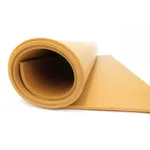
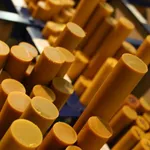
This image was created with artificial intelligence – marked under Art. 50 of the AI Act, Regulation (EU) 2024/1689. It is a placeholder until the company's photos arrive.
Anti-slip protection for wooden stairs outdoors – options & installation
Effective anti-slip solutions for outdoor wooden stairs. Materials, installation & care – for greater safety in all weathers.
Wooden outdoor stairs are particularly prone to slipping hazards. Rain, snow, leaves or algae growth quickly make the surface slippery. Even a thin layer of moisture can significantly reduce slip resistance – with an increased risk of falls. An effective anti-slip solution not only provides greater safety, but also extends the service life of the wooden surface, as it is better protected against the effects of the weather.
It also helps to preserve the value of the entire staircase, as the steps wear less. Particularly on frequently used outdoor stairs, such as at front entrances, garden areas or terraces, a permanently functioning anti-slip solution is not just a comfort factor, but above all a safety factor – for residents, guests and delivery drivers.
Typical hazards and problems
Wooden outdoor stairs are exposed to changing weather conditions all year round. Wetness and moisture from rain, dew or snow quickly make the surface slippery and unsafe. Algae and moss growth further intensifies this effect, as a slimy coating forms that further reduces grip. Leaves, soil and dirt also contribute to the risk of slipping, especially when they are wet. In the winter months, the risk of frost and ice is added: even a thin layer of ice can make the steps as slippery as glass.
This combination of natural weather influences and organic deposits makes it essential to equip wooden outdoor stairs permanently with a suitable anti-slip solution in order to avoid accidents and ensure safety for all users.
Suitable materials and products for anti-slip protection
For wooden outdoor stairs, there are various ways to make the surface slip-resistant.
Rubber strips or mats
Slip-resistant rubber strips offer a durable and weather-resistant solution. They are screwed or glued onto the steps and provide good grip – even when wet.
Anti-slip tapes
Tapes with a rough surface are easy to install. They adhere well to clean, dry wood, but are less durable than rubber solutions and must be renewed regularly.
Metal profiles or checker plates
Aluminium or steel profiles with a textured pattern offer very good grip and are extremely robust. They are particularly suitable for heavily frequented stairs.
Anti-slip coatings
Liquid coatings with mixed-in quartz sand or granules can be applied like paint. They are visually unobtrusive and provide uniform slip resistance.
Installation instructions for common variants
Installing rubber strips
- Clean the steps thoroughly and allow them to dry.
- Cut the strips to size.
- Fix in place with stainless steel screws or attach with weather-resistant adhesive.
- Finish the edges neatly to avoid tripping hazards.
Applying anti-slip tapes
- Clean and degrease the wooden surface.
- Cut the tape to the appropriate length.
- Peel off the protective film and press the tape down firmly.
- Full adhesion is reached after 24 hours.
Fixing metal profiles
- Cut the profile to length.
- Pre-drill and screw in place with stainless steel screws.
- If required, insert rubber pads to dampen noise.
Care and maintenance
An anti-slip solution will only last a long time if it is maintained regularly. Remove leaves and dirt promptly, clean the surface depending on the material with a mild cleaning agent and check screw fixings or adhesive bonds.
For wooden stairs, it is also advisable to treat the wood itself at regular intervals to protect it from rot and the weather. Depending on the material, there are different maintenance intervals: rubber strips should be checked once a year for a secure fit, metal profiles usually only require a visual inspection and occasional removal of dirt, while tapes should be replaced at the first signs of wear.
Check at least twice a year – ideally in spring and autumn – whether any parts have come loose or the covering is worn. This allows you to remedy damage at an early stage and maintain full slip resistance in the long term.
Cost and service life compared
| Solution | Cost per step | Durability | Maintenance effort |
|---|---|---|---|
| Rubber strips | Medium | 5–10 years | Low |
| Anti-slip tapes | Low | 1–2 years | High |
| Metal profiles | High | 10+ years | Very low |
| Anti-slip coating | Medium | 3–5 years | Medium |
Conclusion and recommendations
For a durable and weather-resistant solution, rubber strips or metal profiles are suitable. These variants are more expensive to purchase, but save costs in the long term thanks to their long service life and low maintenance effort. Anyone who wants an unobtrusive appearance is well advised to choose an anti-slip coating, as it blends harmoniously into the overall look.
Tapes are more suitable for short-term or temporary measures, for example during the transitional period or for stairs that are rarely used. In addition, it is advisable to compare the appearance, installation effort and maintenance intervals before deciding, in order to find the optimal solution for the respective use.
Frequently asked questions
How do I prevent slipping on a wooden staircase in winter? With robust rubber strips or metal profiles that provide grip even on ice, as well as regular clearing of snow and ice.
Can I install anti-slip protection myself? Yes, most solutions can be fitted yourself with simple tools.
How often do I need to replace anti-slip tape? Depending on exposure to the weather, approximately every 12–24 months.
Does a coating damage the wood? No, high-quality coatings additionally protect the wood against moisture.
Which solution is the cheapest? Anti-slip tape is the cheapest to purchase, but offers the shortest service life.
How do I make my wooden staircase slip-resistant? With suitable materials such as rubber strips, metal profiles or slip-resistant coatings that are firmly mounted on the steps.
Our rubber sheets
For industry and trade, we offer a wide range of rubber sheets.
SBR rubber sheet
Our high-quality SBR rubber sheet (styrene-butadiene rubber) is the solution for numerous industrial and commercial applications. This rubber sheet is made from first-class styrene-butadiene rubber and stands out thanks to its excellent physical properties.
EPDM rubber sheet
Discover the versatility and reliability of our EPDM rubber sheet, which is made from ethylene propylene diene monomer (EPDM). This high-quality elastomer solution has been specially developed to meet the most demanding industrial and commercial applications.
NBR rubber sheet
The NBR rubber sheet is a high-quality industrial product that has been specially developed for applications requiring excellent resistance to oils, greases and various chemicals.
Viton rubber sheet
The Viton rubber sheet is a high-quality technical product used for a wide range of industrial applications. Made from fluoro rubber (FKM), it offers outstanding properties that make it the ideal choice for extreme conditions.
FKM rubber sheet
The FKM rubber sheet is a high-quality technical product that is ideal for use in demanding industrial applications. Made from fluoro rubber (FKM), it stands out thanks to a wide range of outstanding properties that make it the optimal choice for extreme operating conditions.
Silicone rubber sheet
The silicone rubber sheet is a first-class technical product that has been specially developed for applications placing high demands on temperature resistance and flexibility.
PUR rubber sheet
The PUR rubber sheet, made from high-quality polyurethane, is a technically advanced product that has been developed for applications placing the highest demands on abrasion resistance and mechanical load capacity.
Neoprene rubber sheet
The neoprene rubber sheet, made from high-quality chloroprene rubber (CR), is a versatile technical product that is ideal for a wide range of industrial and commercial applications.