Polyimide
Polyimide is a high-temperature-resistant high-performance plastic. Properties, temperatures, polyimide sheets, semi-finished products and applications.
Polyimide, or PI for short, is one of the most high-performance high-temperature plastics. The material combines a very high thermal load capacity with good mechanical stability, high electrical insulating effect and low creep tendency. This makes PI suitable for components where conventional engineering plastics are no longer sufficient due to high temperatures, electrical voltage or demanding ambient conditions.
Typical areas of application are found in electronics, semiconductor technology, aerospace, vacuum applications as well as mechanical and plant engineering. Martan Plastics supplies polyimide semi-finished products and manufactures precise components from them to drawing, sample or technical specifications.
What is polyimide?
Polyimides are polymers whose molecular structure contains characteristic imide groups. Their predominantly aromatic structure gives them exceptionally high thermal stability. Depending on the starting material, manufacturing process and modification, the properties of different PI types can differ significantly.
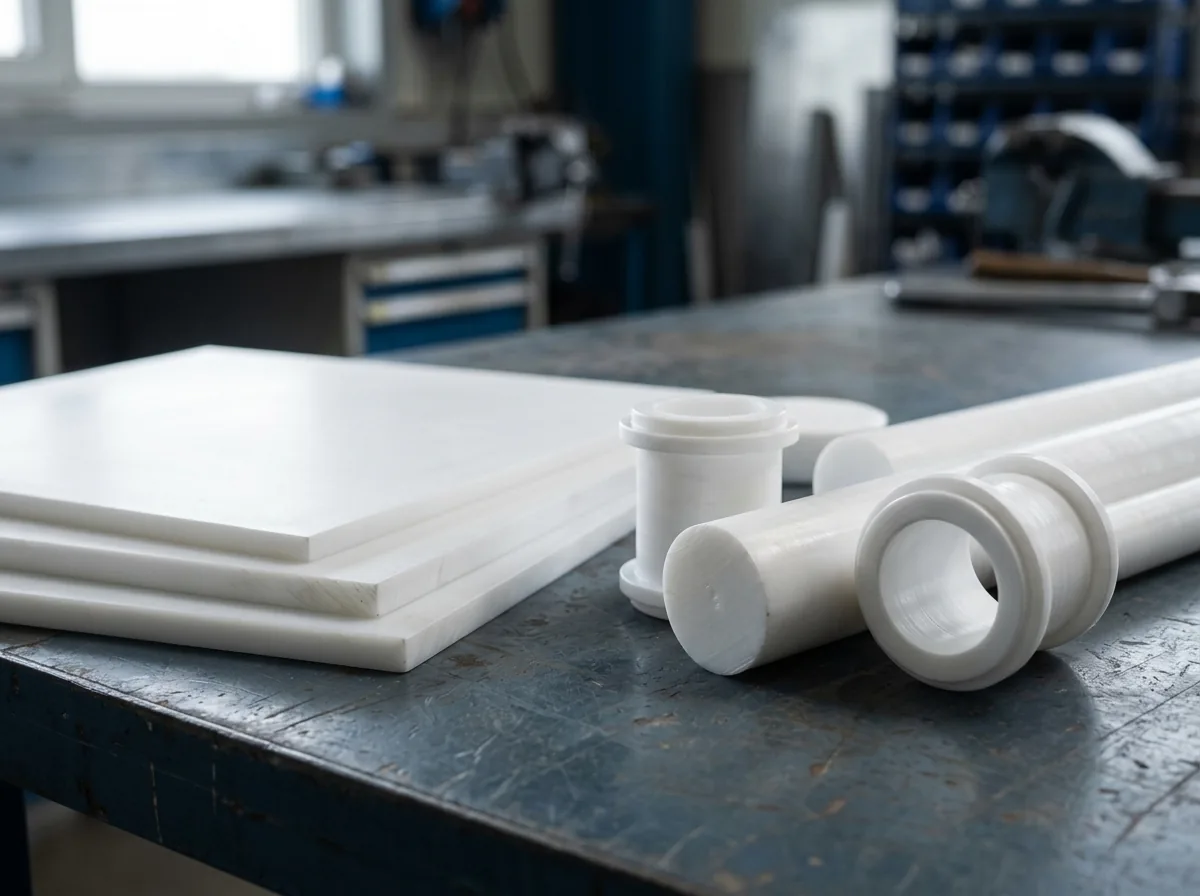
In the industrial sector, polyimide is used among other things as a semi-finished product, film, coating, moulded part or machined precision component. For machining production, sintered or otherwise compacted PI semi-finished products are available in particular.
Common designations are:
- polyimide
- PI plastic
- PI high-performance plastic
- PI high-temperature plastic
- polyimide semi-finished product
- polyimide sheet
- polyimide rod
Properties of polyimide at a glance
The exact expression of the properties depends on the respective PI type, possible fillers and the operating conditions. Polyimide is characterised in particular by:
- very high continuous service temperature
- even higher thermal load capacity for short periods
- high strength and rigidity at elevated temperatures
- low creep tendency under permanent load
- good dimensional and shape stability
- very good electrical insulation properties
- high dielectric strength
- good wear and sliding properties with suitable modification
- low outgassing with appropriately qualified material types
- good resistance to many oils, greases and technical media
- flame-retardant behaviour of many PI grades
Polyimide is chosen above all when several demanding properties are required at the same time. These include, for example, high temperatures, electrical insulation, dimensional accuracy and mechanical load capacity.
Temperature resistance of polyimide
High temperature resistance is one of the most important advantages of PI. Suitable polyimide types can, depending on the manufacturer, composition and load, be used permanently in temperature ranges of around 250 to 300 °C. For short periods, higher temperatures may also be permissible with certain grades.
However, a general maximum value is not sufficient for material selection. The decisive factors include:
- duration and frequency of temperature exposure
- mechanical load at elevated temperature
- ambient medium and oxygen influence
- component geometry and wall thickness
- permissible dimensional change
- PI type used and fillers contained
With prolonged thermal exposure, a distinction must also be made between pure shape retention and the permanent retention of mechanical or electrical properties. The permissible service temperature should therefore always be assessed on the basis of the specific material data sheet and the actual application.
Temperature comparison of selected plastics
| Material | Typical thermal application range | Characteristic strength |
|---|---|---|
| POM | up to about 100 °C | Dimensional accuracy and good machinability |
| PA | often up to about 100–120 °C | Toughness and wear resistance |
| PEEK | depending on type up to about 250 °C | Mechanical and chemical load capacity |
| PAI | depending on type up to about 250 °C | High strength and low creep tendency |
| Polyimide | depending on type about 250–300 °C | Very high thermal stability and electrical insulation |
The values given serve as initial guidance. The actually permissible temperature can deviate depending on grade, type of load and required service life.
Mechanical properties of PI
Polyimide retains its mechanical properties even at temperatures at which many other plastics already lose considerable rigidity and strength. Particularly relevant are the low creep tendency and the good shape stability under permanent heat exposure.
This makes PI suitable for precise components in which dimensions and functional surfaces may change only slightly during operation. Typical examples are spacers, bushes, holders, insulating parts and components for testing or handling systems.
Typical technical characteristics
| Property | Typical guidance range |
|---|---|
| Density | about 1.3–1.6 g/cm³ |
| Tensile strength | often about 70–160 MPa |
| Modulus of elasticity | often about 2,500–5,000 MPa |
| Continuous service temperature | depending on type about 250–300 °C |
| Thermal conductivity | usually low, depending on fillers |
| Electrical insulation | very good with unfilled and suitable PI types |
The values differ in some cases considerably between unfilled, reinforced and tribologically modified variants. For the design of a component, the characteristic values of the specific grade offered are therefore decisive.
Electrical properties of polyimide
Many polyimide types have a high dielectric strength and stable dielectric properties over a broad temperature range. PI is therefore often used as an electrical insulating material.
Typical applications in the electrical industry and electronics are:
- insulating bushes
- coil formers and coil insulation
- spacers
- electrically insulating holders
- components for high-temperature plug-in systems
- carriers for soldering and reflow processes
- insulation components for sensors
- components for power electronics
For electrically loaded components, in addition to dielectric strength, creepage distances, surface resistance, moisture, component thickness and operating temperature must also be taken into account.
Polyimide in electronics and semiconductor technology
In the electronics and semiconductor industry, several requirements often coincide: high process temperatures, tight tolerances, electrical insulation and the lowest possible contamination of the production environment.
Suitable PI grades can be used among other things for the following components:
- wafer handling components
- test sockets and test adapters
- insulating plates
- reflow carriers
- holders and receptacles
- spacers
- vacuum components
- components for testing and measuring systems
Polyimide is particularly suitable when the components must remain dimensionally accurate during recurring thermal cycles. For applications in semiconductor manufacturing or cleanroom technology, however, application-specific material qualification is required.
Outgassing and use in vacuum
Certain polyimide grades exhibit low outgassing behaviour and can therefore be suitable for vacuum or aerospace applications. However, this property must not be applied across the board to every polyimide semi-finished product.
Outgassing and material purity are influenced among other things by:
- the specific polymer formulation
- fillers and additives contained
- residual moisture
- manufacturing process
- machining and cleaning condition
- temperature and duration of vacuum exposure
For quality-critical vacuum, cleanroom or aerospace applications, batch-related evidence or the relevant manufacturer data should therefore be checked.
Chemical resistance of polyimide
PI has good resistance to numerous oils, greases, fuels and technical liquids. However, chemical resistance depends strongly on the specific grade, the medium, the concentration, the temperature and the duration of exposure.
Individual polyimide types can be sensitive to strong acids, alkalis, hot water, steam or certain solvents. General resistance to acids and alkalis should therefore not be assumed.
For applications with media contact, testing based on the following information is recommended:
- exact designation of the medium
- concentration
- operating temperature
- contact time
- mechanical load during contact
- permissible change in dimension, weight or strength
Take moisture absorption into account
Depending on the grade, polyimide can absorb moisture. This can affect weight, dimensions, electrical characteristics and behaviour during rapid heating or in vacuum.
With particularly tight tolerances or sensitive electrical applications, storage, conditioning and, if necessary, defined drying should be included in the component design.
Wear and sliding properties
Specially modified PI grades are available for moving components. Fillers such as graphite or PTFE can be used to influence the coefficient of friction, wear behaviour and dry-running properties in a targeted manner.
Such materials can be used, for example, for the following applications:
- plain bearings
- bearing cages
- thrust washers
- guide rings
- sealing and sliding elements
- wear-stressed bushes
The selection of a tribological PI grade depends on surface pressure, speed, temperature, mating partner, lubrication and ambient medium.
Unfilled and modified PI grades
Polyimide is available in different material versions. The modification must be based on the later function of the component.
| PI version | Typical properties | Possible applications |
|---|---|---|
| Unfilled PI | Good electrical insulation, high purity and thermal stability | Insulating parts, spacers, electronic components |
| Graphite-modified PI | Improved friction and wear behaviour | Plain bearings, bushes and guides |
| PTFE-modified PI | Reduced coefficient of friction and improved sliding properties | Dry-running sliding and sealing elements |
| Fibre-reinforced PI | Higher rigidity and lower thermal expansion | Dimensionally accurate structural and precision components |
Fillers can change other properties. An electrically insulating unfilled grade, for example, cannot simply be replaced by a graphite-containing version.
Delivery forms of polyimide
Depending on the grade available, PI can be obtained and further processed in various delivery forms:
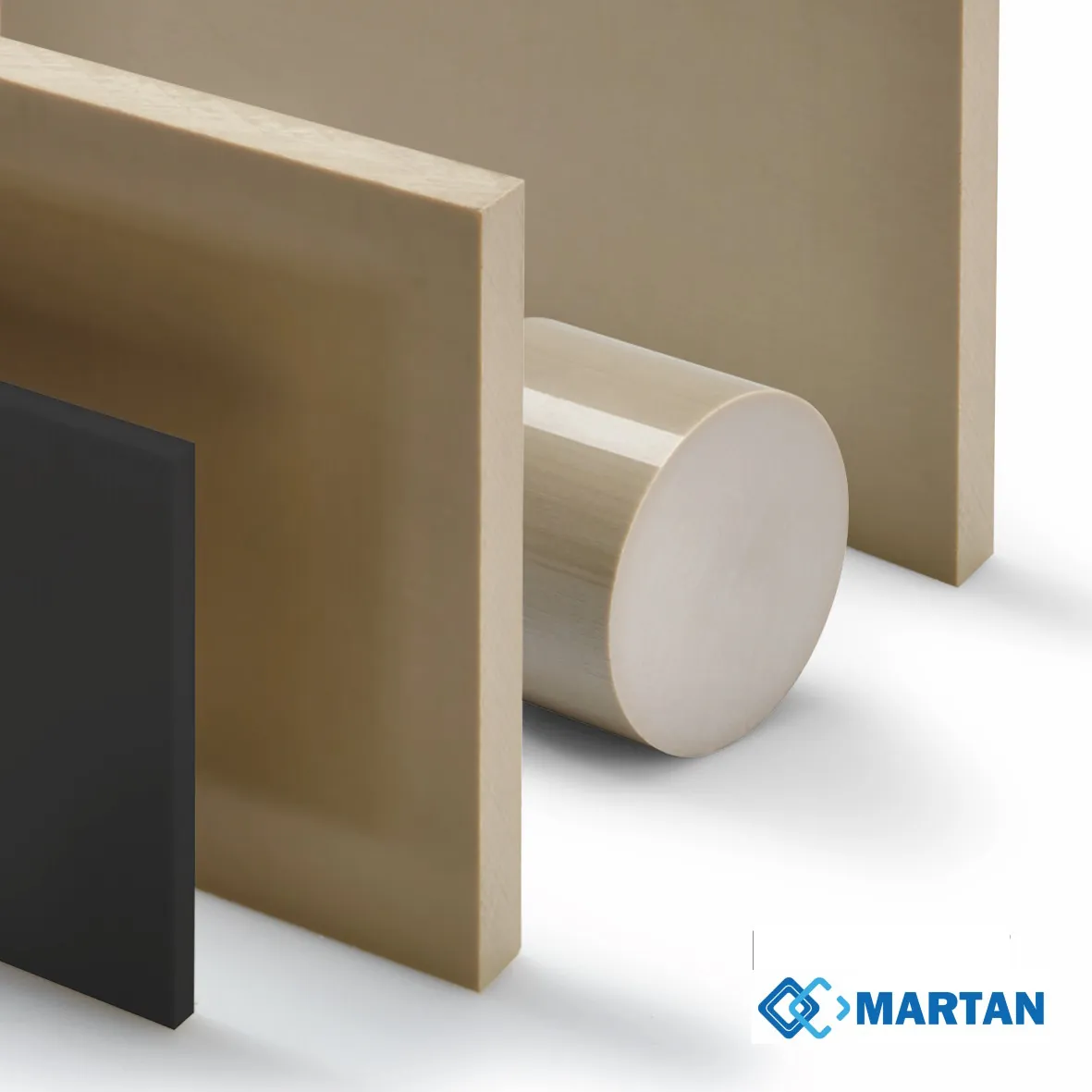
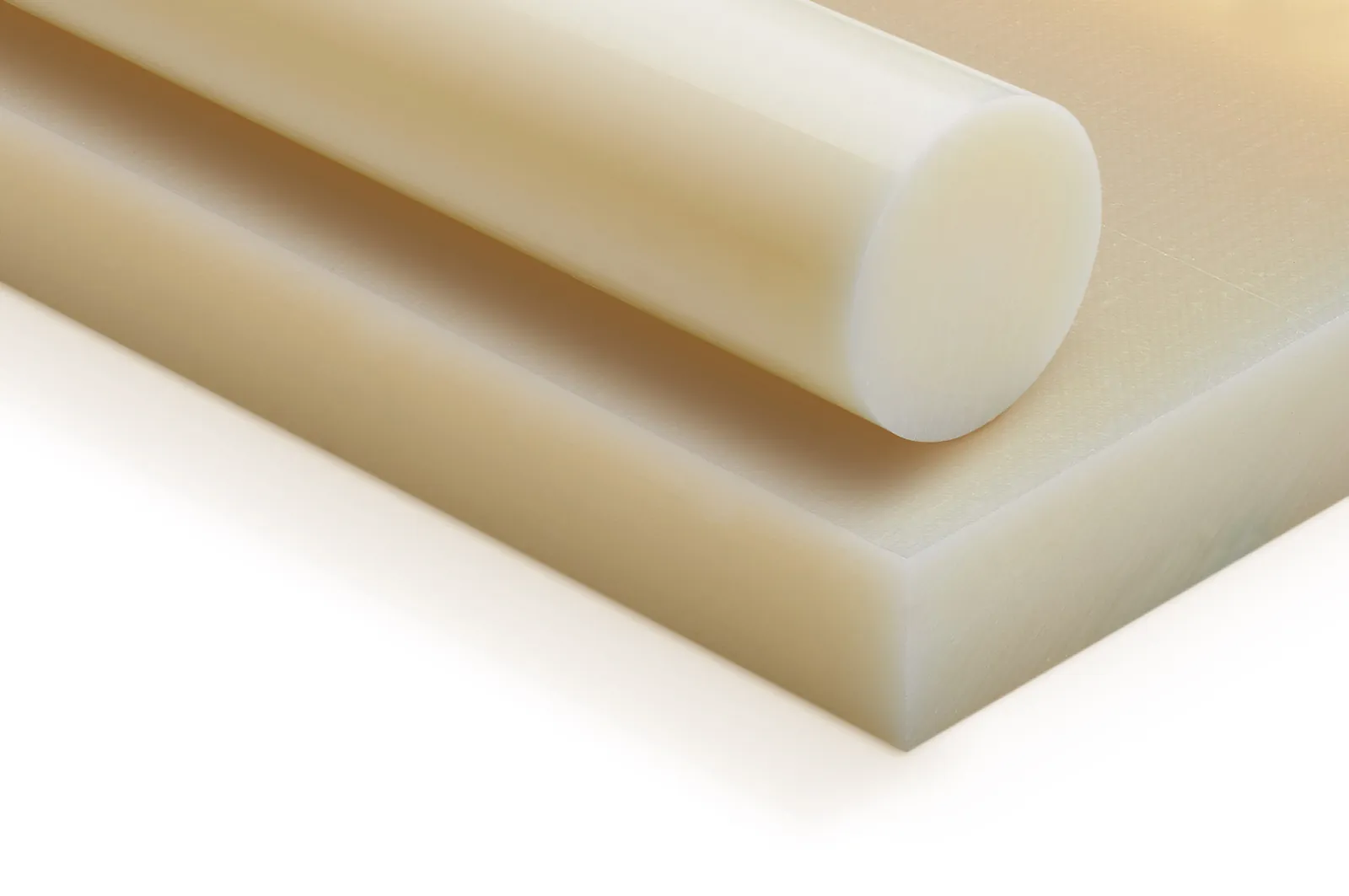
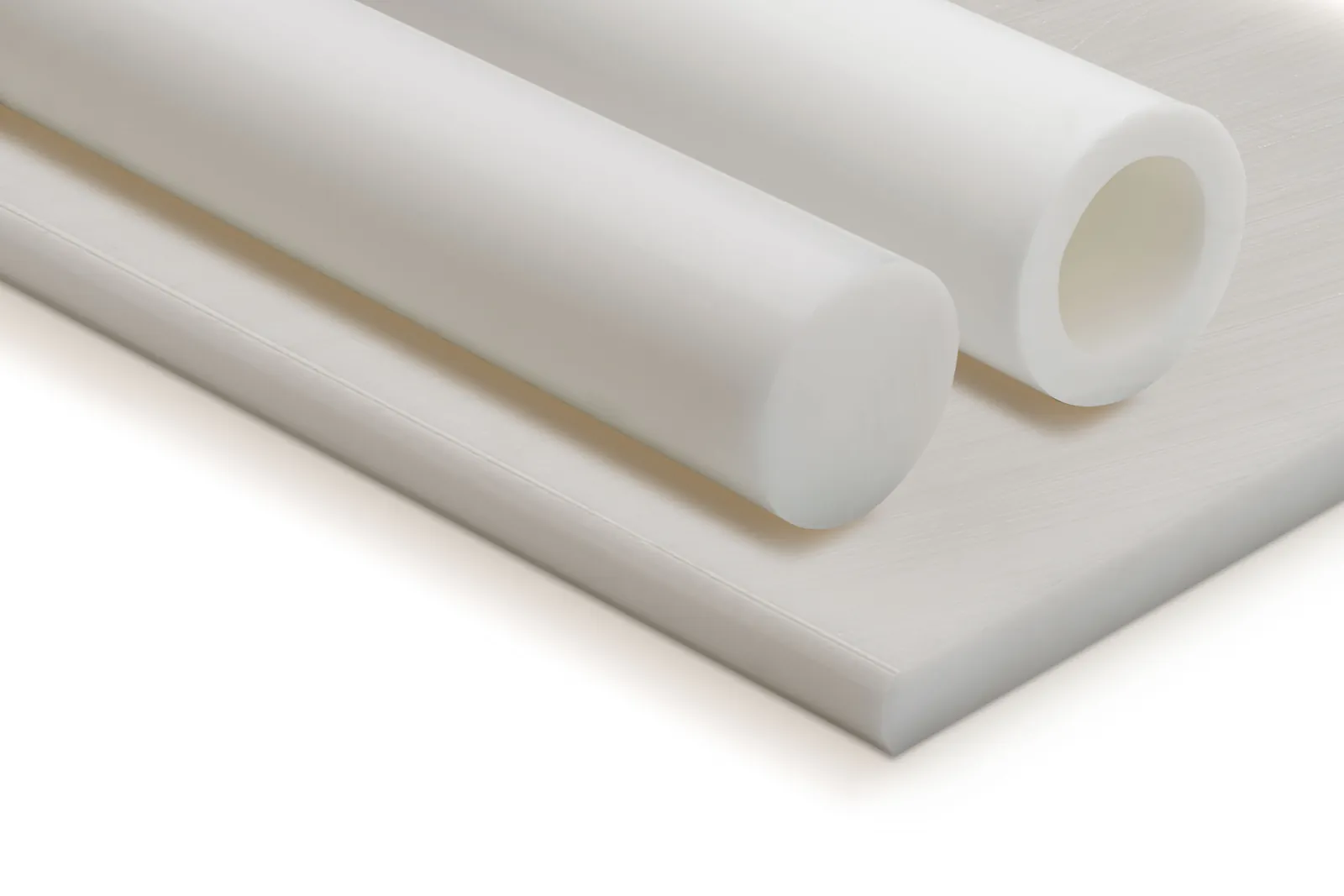
- polyimide sheets
- polyimide rods
- polyimide tubes
- polyimide films
- blanks and cut pieces
- customer-specific manufactured components
Martan Plastics supports you in selecting suitable plastic semi-finished products and manufacturing application-specific components.
Machining polyimide
PI semi-finished products can be machined. Because of the high material value and the requirements for dimensional accuracy, surfaces and component function, a material-appropriate manufacturing strategy is particularly important.
Within the scope of plastic machining, the following processes are possible among others:
- CNC milling of complex contours, pockets and functional surfaces
- CNC turning of bushes, rings, rollers and rotationally symmetrical parts
- drilling and reaming of fits and through-holes
- production of threads and fastening geometries
- cutting of sheets and blanks
- manufacturing to drawing, CAD data or sample
What must be considered during machining?
For dimensionally accurate PI components, sharp tools, controlled cutting conditions and low-stress machining are important among other things. Excessive heat input and unsuitable clamping forces can cause dimensional deviations or damage.
With particularly tight tolerances, the following measures may additionally be required:
- pre-machining and subsequent intermediate storage
- machining in several passes
- defined temperature and humidity conditions
- coordinated measuring conditions
- consideration of later operating temperatures
Typical components made from polyimide
- Insulating bushes: for electrically and thermally loaded connection points
- Spacers: for precise assemblies at high temperatures
- Plain bearings: for thermally loaded or low-lubrication applications
- Guide rings: for moving components and positioning systems
- Wafer handling components: for processes in semiconductor manufacturing
- Test sockets: for electronic high-temperature tests
- Sensor carriers: for thermally loaded measuring systems
- Reflow carriers: for recurring soldering processes
- Insulating plates: for electronics and power electronics
- Sealing and sliding elements: for demanding temperature ranges
Industries and areas of application
Electronics and electrical industry
PI is used for electrically insulating, dimensionally accurate and temperature-resistant components. These include test receptacles, carriers, insulating bushes and components for power electronics.
Semiconductor and cleanroom technology
Suitable material types are suitable for handling components, spacers, test components and vacuum components. The specific grade must be selected on the basis of the purity and outgassing requirements.
Aerospace
In aerospace, low weight, thermal stability and controlled outgassing behaviour are decisive. Polyimide can be used for insulation, bearing and precision components, provided the required evidence is available.
Mechanical and plant engineering
In mechanical and plant engineering, PI is suitable among other things for bearings, bushes, guides and insulation components in systems subject to high thermal loads.
Medical technology and laboratory technology
Polyimide can be used for precision components in analytical, laboratory or medical technology devices. However, biocompatibility, sterilizability and regulatory suitability are not given by the material designation PI alone, but must be demonstrated for the specific grade.
Automotive and testing technology
Typical possible applications are sensor receptacles, insulating parts and components for test benches, engine environments or thermally loaded electrical systems.
Polyimide, PEEK or PAI?
PI is not automatically the best choice for every high-temperature application. Polyimide, PEEK and PAI are often compared with one another. However, the materials have different focal points.
| Criterion | Polyimide | PEEK | PAI |
|---|---|---|---|
| Temperature resistance | Very high | High | Very high |
| Electrical insulation | Very good with suitable types | Good to very good | Good to very good |
| Mechanical load capacity | High | Very high | Very high |
| Chemical resistance | Strongly dependent on type and media | Very good in many media | Strongly application-dependent |
| Moisture absorption | To be taken into account | Relatively low | To be taken into account |
| Typical focal point | High temperature and insulation | Mechanics, chemistry and temperature | Precision and mechanical load |
PAI is often suitable for highly loaded precision parts with high strength and low creep tendency. PEEK is frequently a good choice when, in addition to high temperature resistance, particularly broad chemical resistance or high toughness is required.
Polyimide plays to its strengths in particular at very high temperatures, electrical insulation and special vacuum or tribology requirements.
When is PI the right material choice?
Polyimide is particularly suitable when:
- permanently very high temperatures occur
- the component must provide electrical insulation
- dimensional accuracy is also required under heat
- a low creep tendency is required
- conventional engineering plastics are thermally overstretched
- a tribologically modified high-temperature material is required
- a qualified PI type is available for vacuum or cleanroom applications
When should another plastic be considered?
An alternative material may be more sensible if the very high temperature resistance of PI is not required. Also with permanent contact with aggressive chemicals, hot water or steam, another high-performance plastic may be better suited.
Before selection, at least the following operating data should be known:
- minimum and maximum temperature
- duration of thermal exposure
- static and dynamic loads
- electrical requirements
- contact media
- wear and friction conditions
- permissible dimensional changes
- cleanroom or outgassing requirements
- desired quantity and component geometry
Have polyimide components manufactured to drawing
Martan Plastics supports industrial customers from material selection through to the finished PI component. On the basis of your drawing, CAD data, a sample or a technical requirement profile, individual parts, prototypes and series components can be manufactured.
For a reliable assessment, information on temperature, load, medium, tolerances, electrical requirements and quantity is particularly helpful. This allows an assessment of which PI grade and which machining process are suitable for your application.
Frequently asked questions about polyimide
What does the abbreviation PI mean?
PI is the standard short designation for polyimide. This material group covers various polymers with imide groups in their molecular structure.
How temperature-resistant is polyimide?
Depending on the PI type, permanent service temperatures of approximately 250 to 300 °C are possible. For short periods, individual grades can withstand higher temperatures. The specific data sheet, the load and the required service life are decisive.
Is polyimide a thermoplastic?
Polyimide designates a material family and not just a single uniform plastic. There are different polyimide systems and processing forms. Many PI grades used for machinable semi-finished products are produced via special pressing and sintering processes and cannot simply be melted and reshaped like classic standard thermoplastics.
Is PI electrically insulating?
Unfilled and appropriately formulated polyimide types have very good electrical insulation properties. However, conductive or graphite-containing modifications can behave significantly differently.
Is polyimide chemical-resistant?
PI is resistant to many oils, greases and technical media. However, resistance to acids, alkalis, hot water, steam and solvents must be tested for the specific medium and the respective grade.
Is polyimide suitable for cleanrooms?
Certain PI types can be suitable for cleanroom or vacuum applications due to low outgassing and good thermal stability. However, the required purity, particle or outgassing values must be demonstrated in relation to the material and application.
Can polyimide be machined?
Yes. PI semi-finished products can be milled, turned, drilled and processed into precise components among other things. Because of the material value and the high requirements for dimensional accuracy, material-appropriate machining is decisive.
What is the difference between polyimide and PEEK?
With suitable grades, polyimide offers advantages at very high temperatures and in electrical insulation. PEEK often has broader chemical resistance, low moisture absorption and very good mechanical properties. The better choice depends on the specific application.
Which components are manufactured from PI?
Typical components are insulating bushes, spacers, plain bearings, guide rings, test receptacles, wafer handling components, sensor carriers and thermally loaded precision parts.