PEEK history – development, milestones, industrial significance
How did the high-performance plastic PEEK come about? A comprehensive look at development, milestones and industrial significance – clearly explained for technical decision-makers.
PEEK (polyetheretherketone) is today one of the most important high-performance plastics. Its exceptional mechanical, thermal and chemical properties are the result of targeted material development that began as early as the 1970s. The history of PEEK shows how a specialised engineering polymer became an indispensable material for demanding industries. In addition, articles such as PEEK vs. PPS vs. PSU place the material in the context of other high-performance plastics.
The early years of high-performance plastics
The foundation for PEEK emerged at a time when chemical research was increasingly looking for polymers that could withstand extreme temperatures and aggressive media. Aromatic polymer chains were regarded as particularly stable. These developments led to the so-called polyaryletherketones (PAEK) – a material family to which PEEK belongs as its highest-performance representative.
Even in the early years, it became apparent that the special molecular structure of PEEK enables high strength, stiffness and temperature stability. This combination was unique at the time and laid the foundation for its later industrial success.
The development of PEEK
PEEK was first synthesised at the end of the 1970s and introduced industrially at the beginning of the 1980s. Its linear polymer structure with ketone- and ether-containing building blocks enables exceptionally high thermal load capacity. At the same time, the material exhibits remarkable dimensional stability as well as excellent resistance to media.
These properties quickly made PEEK attractive for industries that needed materials going far beyond the performance of classic thermoplastics. Aerospace engineering, the oil and gas industry and mechanical engineering were among the first sectors to use PEEK in safety-critical applications.
Milestones of the PEEK industry
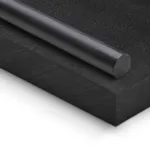
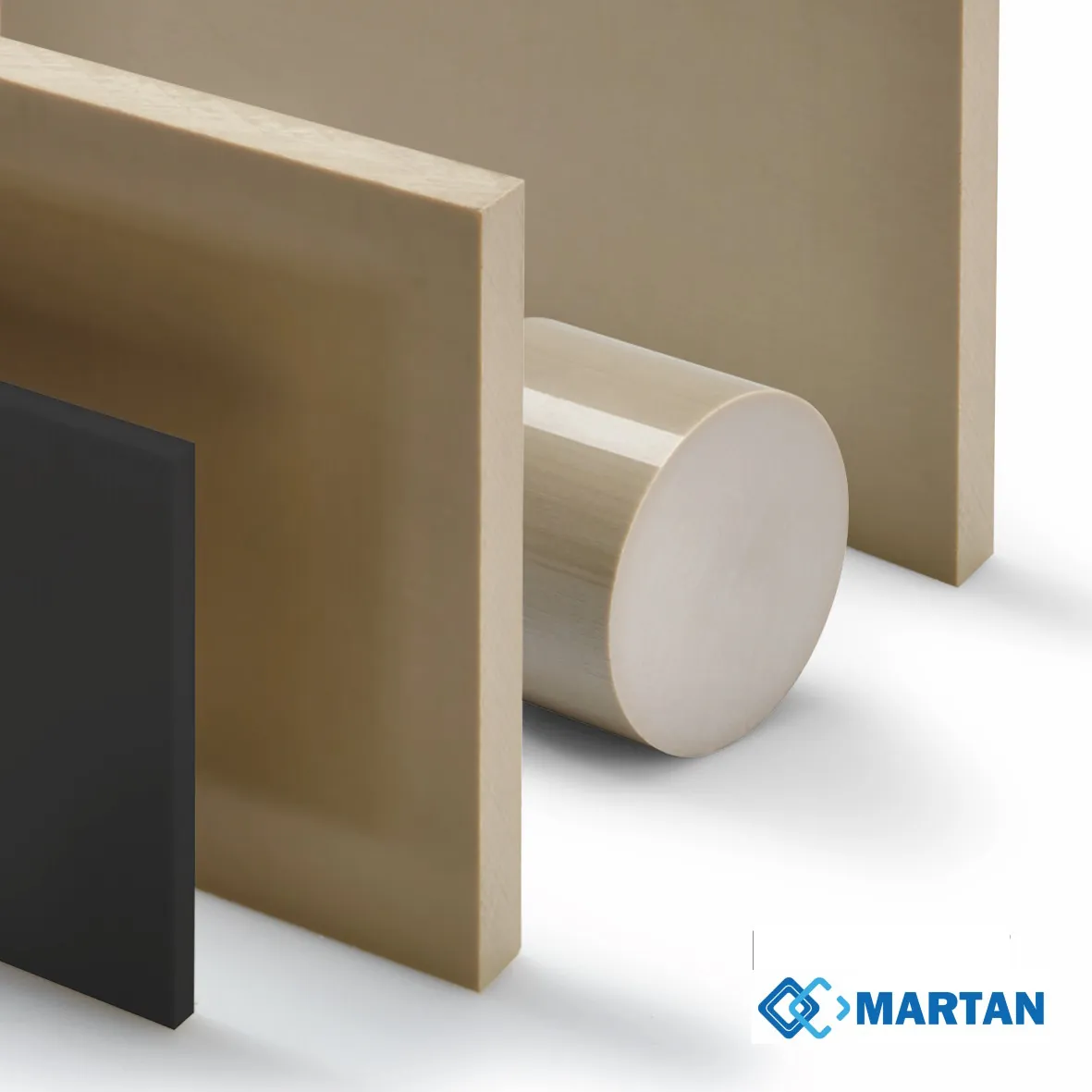
With growing industrial demand, the production of PEEK semi-finished products such as thermoplastic plastic semi-finished products began, including sheets, rods, films and tubes. These semi-finished products made it possible to produce precise milled parts and turned parts that withstand extreme conditions.
The development of modern extrusion technologies contributed significantly to making PEEK available in economically relevant quantities. Another milestone was the further development of CNC machining. Thanks to high stiffness and low thermal expansion, PEEK can be machined very precisely. This made the material increasingly interesting for finished parts in medical technology, electronics and vehicle engineering.
PEEK as a semi-finished product: influence of its development history
The history of the material shows that PEEK was conceived from the outset as a solution for extreme conditions. The production of semi-finished products followed this claim. Extruded PEEK sheets and rods today form the basis for numerous components and parts. Particularly thin PEEK sheets, which were formerly difficult to produce technically, are gaining increasing importance – for example in microstructured applications or precise covering and insulation tasks.
The development of PEEK granules for injection moulding also played an important role in the industrialisation of the material. It enabled the production of series parts without losing the material's typical high-performance properties.
Role of PEEK in modern industries
Today PEEK is used in numerous sectors. Mechanical engineering companies value its high wear resistance, medical technology manufacturers its biocompatibility, and aerospace uses the material because of its low weight and temperature resistance. In the defence industry, PEEK is likewise a relevant material due to its stability, media resistance and dimensional stability.
The history of PEEK shows that the material did not attain such importance by chance. Its development has always been closely linked to industrial requirements – and precisely this practical relevance ensures that PEEK is valued to this day as a reliable high-performance material.
Future: where is PEEK heading?
Modern research focuses on improved compounds, higher impact strength, optimised processing properties and a better ecological balance. Recyclability is also gaining in importance. At the same time, demand for specialised semi-finished products for high-precision applications is rising.
It is foreseeable that PEEK will continue to play a key role in high-performance industries in the future. The continuous further development of granules, extrusion processes and manufacturing methods will strengthen the material's position in the long term.
FAQ
Since when has PEEK existed? PEEK was developed at the end of the 1970s and first produced industrially at the beginning of the 1980s.
Why is PEEK such an important material? Because it withstands high temperatures, strong mechanical loads and aggressive media – properties that are indispensable in many industries.
Which sectors use PEEK today? Among others, mechanical engineering, medical technology, aerospace, electronics and safety-relevant applications in defence.
How has the production of PEEK semi-finished products developed? With progress in extrusion technology and CNC machining, sheets, rods and thin formats could be produced with high precision.