PA6, POM-C or PE-HD? The most common engineering plastics compared
PA6, POM-C and PE-HD compared: properties, applications, costs & food safety. Find the right plastic for your design.
When designing technical components such as guides, bearings or protective covers, engineers are often faced with the question: Which material is the right one? The choice particularly often comes down to PA6, POM-C and PE-HD – three proven plastics with different strengths and weaknesses.
This comparison provides you with a well-founded decision-making aid – with technical data, practical tips and concrete recommendations for typical applications.
Why these three materials in particular are so widespread
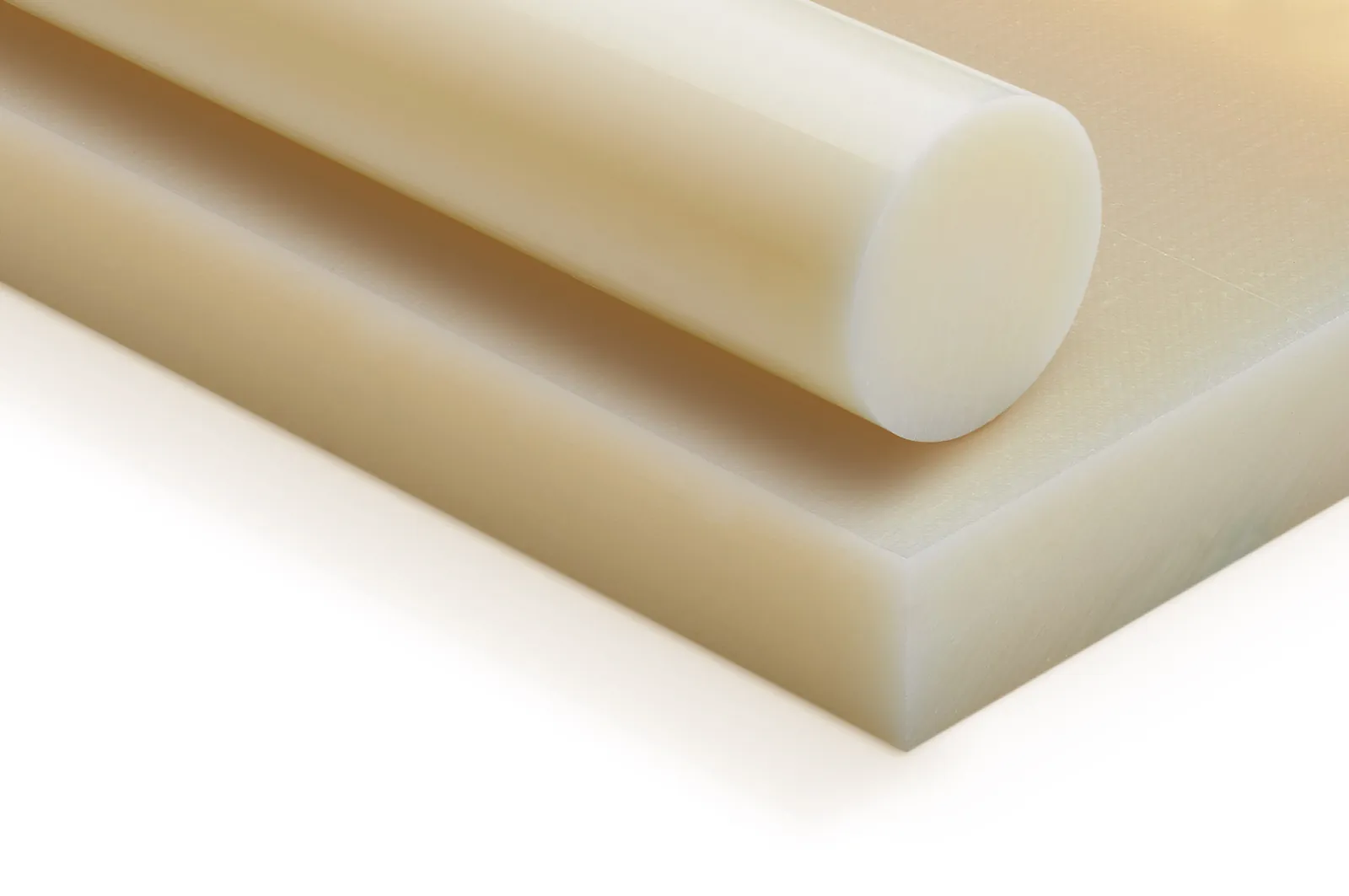
PA6, POM-C and PE-HD are among the most widely used engineering plastics in mechanical engineering, design and plant construction. All three materials can be machined well, are available as semi-finished products and offer an attractive price-performance ratio.
Their popularity is based on their versatility: from plain bearings to gears to wear-resistant covers, they are used in a wide variety of applications. Despite some similarities, however, there are clear differences in their mechanical and chemical properties.
Differences in mechanical properties
PA6 (polyamide 6) is characterised by high toughness, good impact strength and high mechanical load capacity. Particularly in the moist state, it retains its strength well. However, it has a strong tendency to absorb moisture, which can impair its dimensional stability.
POM-C (polyoxymethylene copolymer) offers very high dimensional accuracy and rigidity. It is less hygroscopic than PA6 and shows a balanced property profile of strength, toughness and dimensional stability.
PE-HD (high-density polyethylene) is softer compared to PA6 and POM-C, but extremely impact-resistant, even at low temperatures. It has low strength, but very good damping properties.
Machinability and dimensional stability
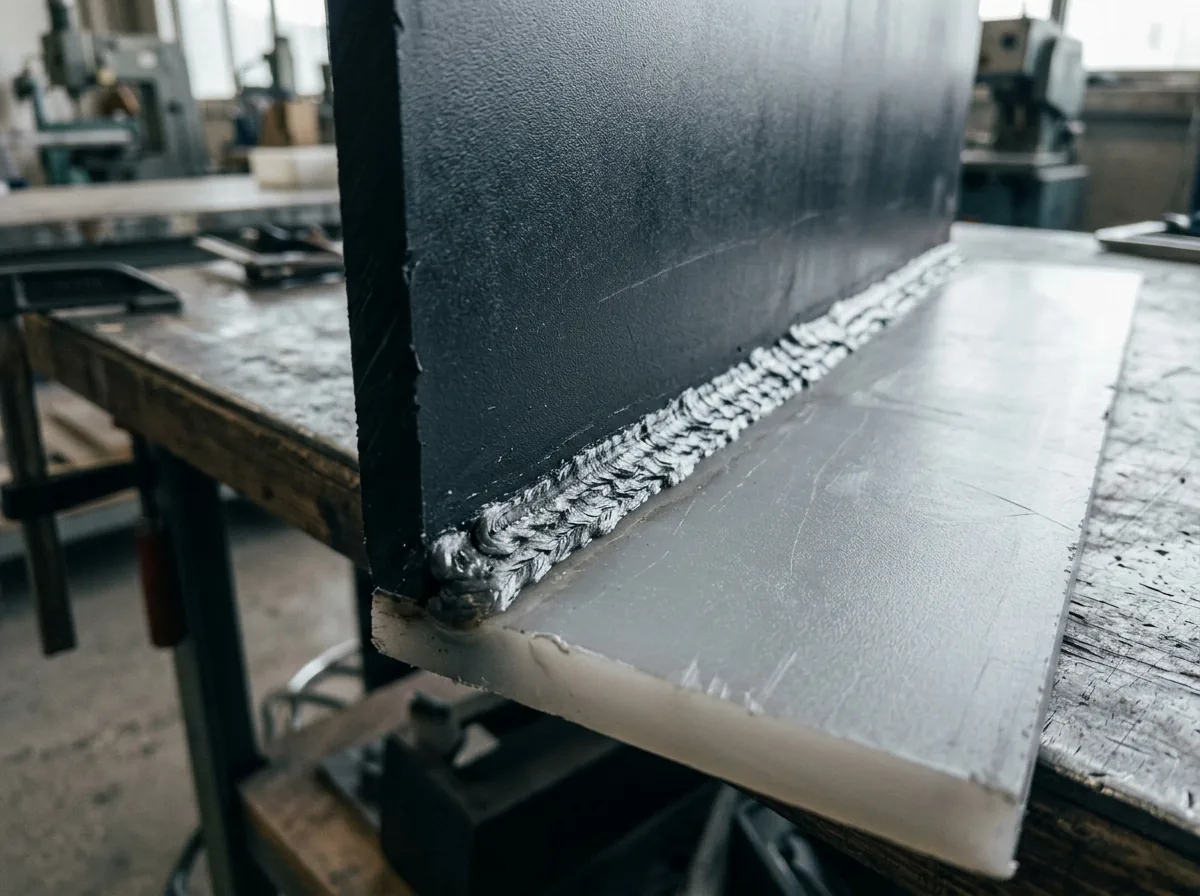
All three plastics can be machined well, e.g. turned, milled or drilled. PE-HD tends to form burrs the most, while POM-C has the best machining properties. With PA6, dimensional tolerances must also be observed during finishing due to water absorption. In thermal forming, PE-HD is the easiest to handle thanks to its low melting temperature.
Friction, wear and sliding properties
In sliding contact, PE-HD shows excellent friction behaviour, but is mechanically inferior under higher loads. POM-C combines good sliding properties with high wear resistance and is therefore the first choice for highly stressed plain bearings or gears. PA6 also offers good friction properties, but suffers from the influence of moisture, which can impair sliding behaviour.
Temperature and chemical resistance
- PA6 is temperature-resistant up to approx. 120 °C, but chemically susceptible to acids and oxidising substances.
- POM-C is also at approx. 100 °C, but is significantly more resistant to greases, oils and fuels.
- PE-HD is chemically resistant to many acids, alkalis and solvents, but can only be used permanently up to approx. 80 °C.
Moisture absorption and dimensional accuracy
In a humid environment, PA6 absorbs up to 3 % water, which can lead to dimensional changes of up to 2 %. For precise components, these effects must be taken into account. Preconditioning (e.g. by storing in a controlled climate) can help to bring the material into a stable state before final machining. Alternatively, larger tolerances can be used or POM-C can be chosen instead.
Typical applications in mechanical engineering
| Plastic | Typical applications |
|---|---|
| PA6 | Gears, plain bearings, rollers, technical components with dynamic loads |
| POM-C | Precision parts, bearings, valve components, chain guides, rollers |
| PE-HD | Cutting boards, linings, slide rails, wear plates, ejector strips |
Food suitability
All three materials are available in food-safe variants. PE-HD and POM-C more frequently meet the requirements of EU Regulation 10/2011 and the FDA for contact with food. PA6 can also be used, but requires careful examination of the formulation and approval.
Read here: Food-safe plastics in comparison
Cost consideration
- PE-HD is the most cost-effective material of the three, with simple processing and favourable semi-finished product costs.
- PA6 is in the medium price range, but may cause higher costs due to water absorption and finishing.
- POM-C is the most expensive, but in return offers the highest precision, dimensional accuracy and service life – which pays off in the long term for complex components.
Comparison table PA6 vs. POM-C vs. PE-HD
| Property | PA6 | POM-C | PE-HD |
|---|---|---|---|
| Tensile strength | high | very high | low |
| Impact strength | high | good | very high |
| Sliding properties | good | very good | excellent |
| Machinability | good | very good | medium |
| Water absorption | high | low | very low |
| Chemical resistance | medium | good | very good |
| Temperature resistance | up to 120 °C | up to 100 °C | up to 80 °C |
| Food conformity | possible | frequently available | frequently available |
| Price level | medium | high | low |
When is which material choice advisable?
- PA6 is ideal for mechanically highly stressed components where impact strength is required. In a humid environment, however, attention should be paid to water absorption.
- POM-C offers the best overall package when it comes to precision, rigidity and wear resistance. It is particularly suitable for moving parts with tight tolerances.
- PE-HD is recommended for high impact strength, low temperatures and simple processing. Perfect for low-wear sliding and protective applications.
Decision recommendation at a glance
| Application situation | Recommended material |
|---|---|
| High precision and dimensional accuracy | POM-C |
| High impact strength at low temperatures | PE-HD |
| Dynamically loaded components with good strength | PA6 |
| Contact with food | POM-C or PE-HD |
| Cost-sensitive use with simple machining | PE-HD |
| Humid environment or water influence | POM-C (instead of PA6) |
The decision for one of these materials ultimately depends on the specific application. In many cases, individual material advice is worthwhile in order to optimally balance function, service life and cost-effectiveness.