Polyamide extruded
Extruded polyamide is robust, wear-resistant and chemical-resistant – ideal for mechanical engineering, vehicle construction and industrial applications.
What is extruded polyamide?
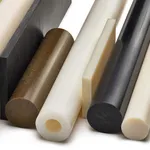
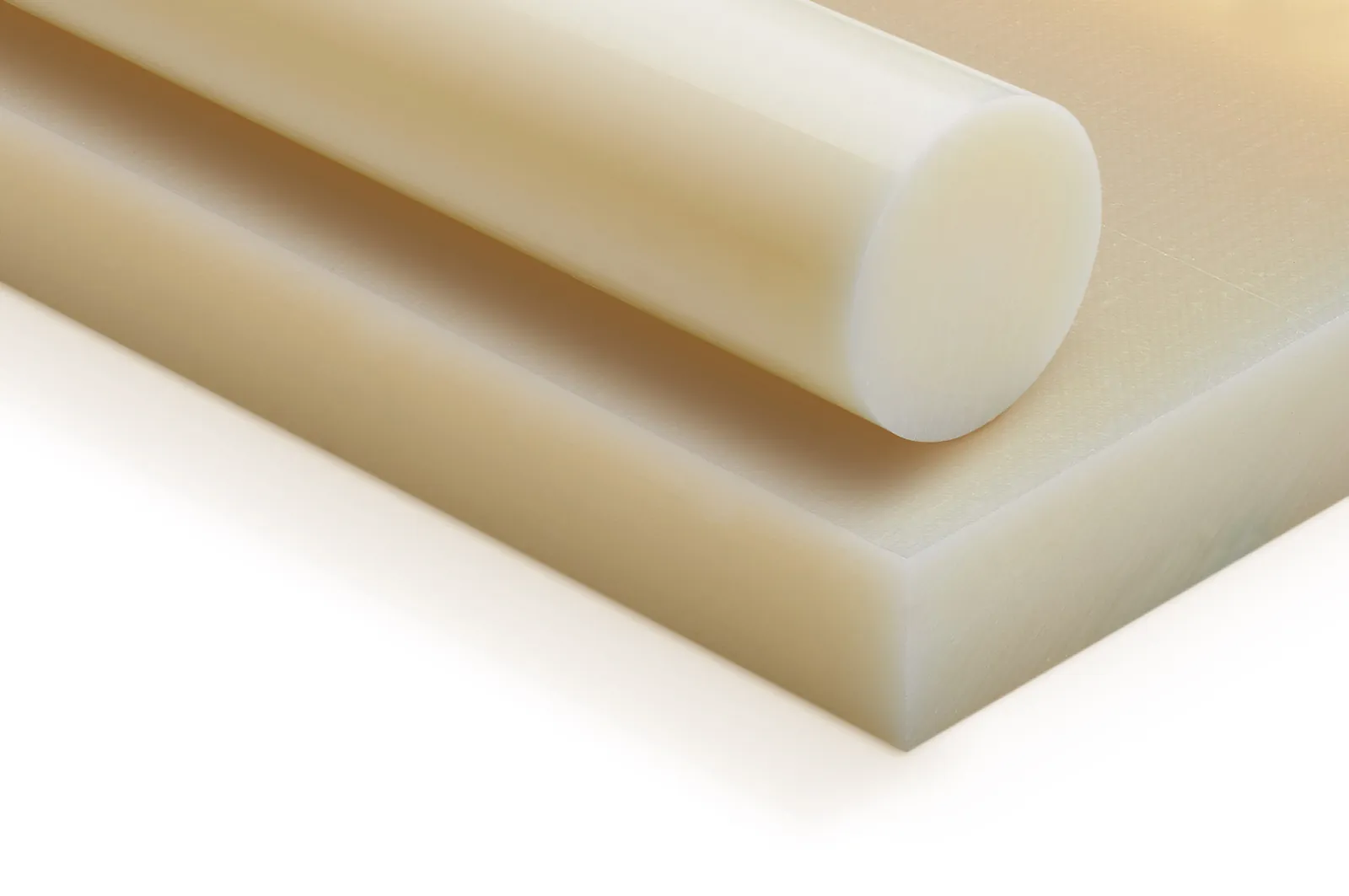
Extruded polyamide is a versatile engineering plastic that stands out above all for its high strength, good wear resistance and chemical resistance. As an extruded variant of polyamide (PA), this material is available in various forms such as sheets, rods and tubes, and is particularly suitable for mechanically stressed components.
Properties of extruded polyamide
Mechanical properties
Extruded polyamide has high strength and rigidity, combined with excellent toughness. These properties make it an ideal material for components that must withstand high loads.
Thermal stability
The material has a high heat deflection temperature and remains dimensionally stable even at temperatures up to around 100 °C. For short periods it can even be exposed to higher temperatures without significantly losing its mechanical properties.
Chemical resistance
Extruded polyamide is resistant to many oils, greases and solvents. However, it reacts sensitively to strong acids and bases as well as to moisture, which can lead to water absorption and thus to a certain change in dimensions.
Production of extruded polyamide
The extrusion process
Production takes place by means of the extrusion process, in which the polyamide granulate is melted and pressed through a die into the desired shape. The material is then slowly cooled and hardened in order to obtain its typical properties.
Differences from cast polyamide
Compared with cast polyamide (PA 6 G), the extruded variant has a somewhat higher density and strength, but a lower impact strength. Cast polyamide is poured into moulds and hardens slowly in the process, which gives it a more homogeneous structure and makes larger components possible.
Areas of application
Extruded polyamide is used in many industries, including:
Mechanical engineering and construction
Because of its high wear resistance and load-bearing capacity, extruded PA 6 is outstandingly suitable for plain bearings, gears, guide rails and rollers.
Automotive and vehicle construction
In vehicle construction, the material is used for interior components, bearing bushes and housings, as it is light, stable and durable.
Food and packaging industry
Extruded polyamide can be produced in a food-compliant way with special additives and is used for chopping boards, conveyor belts and other components in food processing.
Advantages of extruded polyamide over other plastics
- Outstanding mechanical load-bearing capacity
- High abrasion resistance
- Low weight with high stability
- Good electrical insulating properties
- Easy machining by turning, milling and drilling
Machining and processing
Extruded polyamide can be machined well mechanically. Common methods are:
Cutting, milling and turning
The material can be machined using conventional methods (CNC turning, CNC milling). Because of its tendency to generate heat, sharp tools and low cutting speeds should be used.
Bonding and joining options
Extruded polyamide is difficult to bond, but can be fixed well by welding or mechanical joining techniques such as screwing or press-fitting.
Conclusion
Extruded polyamide is a high-performance engineering plastic that is distinguished by its mechanical load-bearing capacity, abrasion resistance and versatility. Thanks to its easy machinability and wide range of applications, it is a popular choice for industrial applications. Whether in mechanical engineering, the automotive sector or food processing – extruded PA 6 offers a durable and economical solution for many technical challenges.