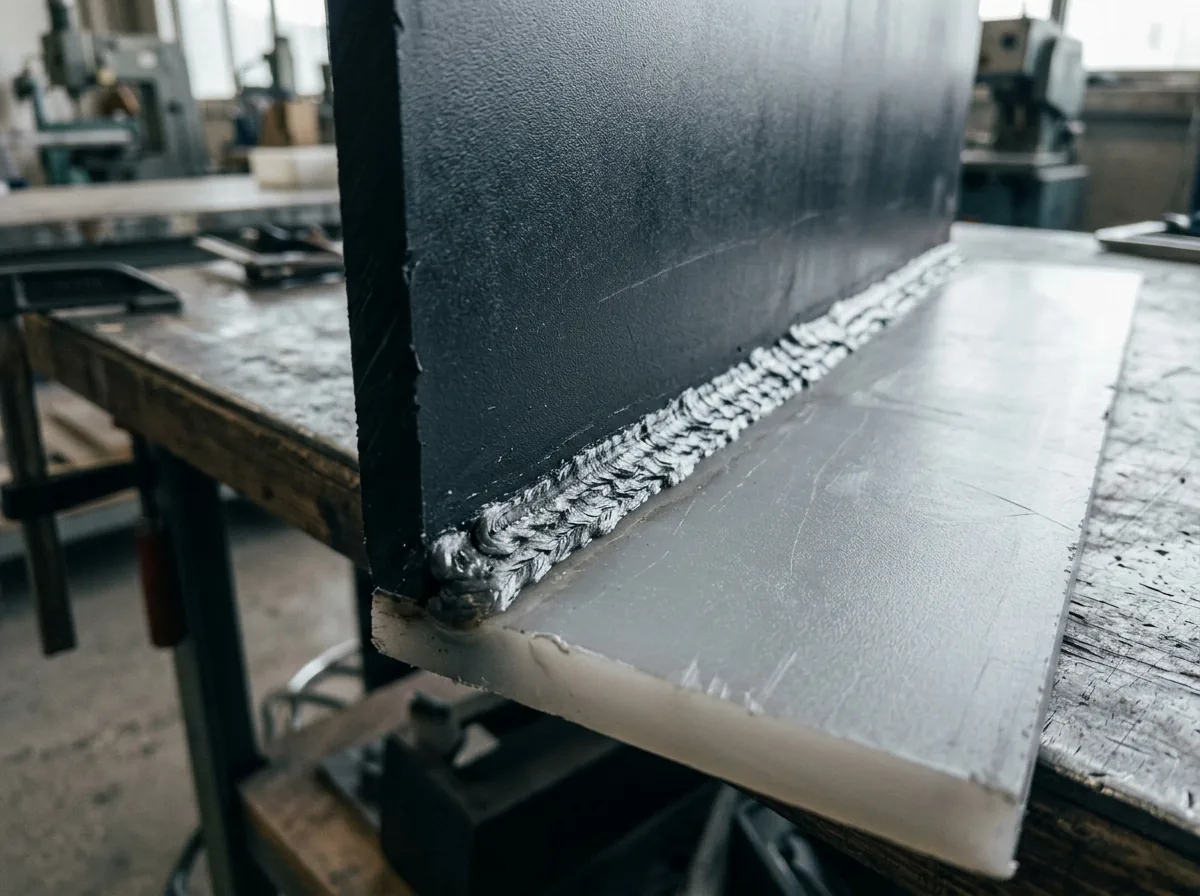
 This image was created with artificial intelligence – marked under Art. 50 of the AI Act, Regulation (EU) 2024/1689. It is a placeholder until the company's photos arrive.
What is HDPE? Properties, applications and sustainability
HDPE stands for High-Density Polyethylene, a thermoplastic material that is used in numerous industries due to its versatility and resilience.
This plastic is obtained from petroleum and is characterised by a high density and low flexibility, which gives it its characteristic stability. Thanks to its special properties, HDPE is an indispensable material in modern industry and also plays an important role in sustainable production.
The outstanding properties of HDPE
HDPE is known for its exceptional physical properties. It has a high density of 0.93 to 0.97 g/cm³, which makes it one of the more densely structured types of polyethylene. It is also resistant to many chemicals such as acids, alkalis and oil-based substances.
HDPE remains stable at temperatures from -40 °C to +80 °C and is impact-resistant as well as resistant to cracks. It displays remarkable durability, which makes it particularly suitable for applications that require long-term resilience. In addition to its chemical and mechanical resistance, HDPE is also water-repellent, which means it offers high efficiency in damp environments.
Key properties at a glance:
- High density and stability
- Chemical resistance
- Temperature resistance from -40 °C to +80 °C
- Water-repellent and durable
These properties make HDPE a preferred material in the packaging industry, in construction and in the consumer goods sector. It is frequently used where other materials would fail due to moisture, chemical exposure or mechanical requirements.
How is HDPE produced?
HDPE is produced by the polymerisation of ethylene, a chemical process in which small ethylene molecules are joined into long polymer chains. This process is often controlled by catalysts such as Ziegler-Natta or metallocene in order to achieve the desired molecular structure. Various processes such as the high-pressure process and catalytic processes are used. The high-pressure process produces a particularly dense structure, while catalytic processes allow more precise control over the physical properties of the material.
The most important production processes:
- High-pressure process: For a particularly dense structure.
- Catalytic processes: Precise control of the material properties.
Thanks to the flexibility in production, the properties of HDPE can be adapted to specific applications. This includes both the thickness and texture of the material and its chemical composition. Such adjustments allow versatile use of HDPE in a wide range of industries.
Diverse applications of HDPE
Thanks to its versatility, HDPE is used in a wide variety of applications. It is frequently used for packaging materials such as bottles and plastic bags, as it is particularly robust and reusable. In the construction industry, HDPE pipes are used because of their resistance to corrosion.
Geosynthetics made from HDPE serve as a barrier in landfills and other construction projects. HDPE is also used in everyday life, for example in durable wheelie bins or as a safe and non-toxic material for toys.
Key areas of application:
- Packaging industry: Bottles, bags
- Construction industry: Pipes, geosynthetics
- Everyday products: Toys, wheelie bins
HDPE is also used in agriculture, for example for irrigation pipes that must withstand extreme weather conditions. In the transport sector, it is used in the manufacture of pallets and container packaging, as it is impact-resistant and lightweight. Medical applications, such as sterile containers or surgical devices, also benefit from the hygienic and durable properties of the material.
The advantages of HDPE at a glance
The use of HDPE brings numerous advantages. HDPE products have a long service life, are lightweight and yet stable. In addition, HDPE is fully recyclable and thus helps to reduce waste. It is a sustainable choice, as the amount of material used can be reduced. HDPE is also non-toxic, which means it can be used safely in applications with direct contact with food or drinks.
A further advantage lies in the low production costs, which also makes HDPE interesting for cost-sensitive projects. Thanks to its versatility, it can be produced in different shapes and sizes, which further increases its adaptability. Its chemical stability significantly reduces the likelihood of material deterioration under extreme conditions.
Specifications of our HDPE sheets
Our HDPE sheets are the ideal choice for numerous applications that require robust and durable materials. They are characterised by high chemical resistance and impact resistance, which makes them versatile for both indoor and outdoor use. HDPE sheets are available in various thicknesses and formats, which allows individual adaptation to specific requirements.
Advantages of our HDPE sheets:
- UV-stabilised for a longer service life outdoors
- Hygienic and easy to clean
- High rigidity and easy machinability
Our HDPE sheets are particularly valued in the construction industry, in the manufacture of machine covers or in food processing. They are also temperature-resistant and retain their structural integrity even under extreme conditions.
With their high rigidity and at the same time easy machinability, they are ideal for cut pieces, drilling or other processing methods.
Technical specifications (example table):
| Property | Value |
|---|---|
| Density | 0.93 - 0.97 g/cm³ |
| Temperature resistance | -40 °C to +80 °C |
| UV stabilisation | Optionally available |
| Chemical resistance | High against acids and alkalis |
Why HDPE is indispensable
HDPE is a versatile and resilient plastic that is used in numerous industries. Its durability, recyclability and chemical resistance make it an indispensable material in modern industry. At the same time, HDPE offers a sustainable solution for many environmental problems, as it is recyclable and reusable.
With the right application and processing, HDPE can not only promote efficiency and cost-effectiveness, but also contribute to a more conscious use of resources.
