Modified plastics
Find out what modified plastics are, what properties they have and in which industries they are used.
Modified plastics are materials whose original properties have been specifically adapted to technical requirements. Through additives, fillers, reinforcing fibres or the combination of different polymers, it is possible, for example, to change strength, temperature resistance, wear behaviour, electrical properties or flame retardancy.
This produces material grades that can be designed for specific operating conditions. Modified plastics are used in particular where an unmodified standard plastic does not sufficiently meet the mechanical, thermal, chemical or electrical requirements of a component.
What are modified plastics?
In a modified plastic, the base polymer is fundamentally retained. However, its property profile is extended by selected additives or a targeted change in the material composition. Both standard plastics and engineering plastics and high-performance plastics such as PEEK can serve as the starting material.
The modification is tailored to the later application. A material can, for example, be reinforced with glass fibres for higher loads, be slide-modified for moving components, or be set to be electrically conductive for electronic applications.
Modified plastics are therefore not a single type of plastic. The term describes a large group of specially adjusted material grades with different base polymers and property profiles.
How are plastics modified?
The most common form of modification is the addition of additives, fillers or reinforcing fibres. The constituents are mixed evenly with the base polymer during compounding. The resulting material is called a compound.
Reinforcement with glass or carbon fibres
Glass fibres can significantly increase the strength, stiffness and dimensional stability of a plastic. At the same time, thermal expansion can be reduced. Glass-fibre-reinforced materials are therefore often used for load-bearing or dimensionally accurate components.
Carbon fibres enable high stiffness at comparatively low weight. Depending on the proportion and material system, they can also influence thermal conductivity and electrical conductivity. Such grades are used, among other things, in mechanical engineering, vehicle construction and in aerospace.
Fillers
Mineral fillers, glass beads, graphite or other particles can influence various properties. Depending on the filler used, it is possible to change, among other things, dimensional stability, compressive strength, thermal conductivity or friction behaviour.
Sliding and wear modification
Additives such as PTFE, graphite or special lubricants can reduce friction and wear. Slide-modified plastics are used for bearing bushes, guides, rollers, seals and other moving machine elements.
A typical example is modified PEEK grades in which additives are used to improve sliding and wear behaviour. Further information on a particularly low-friction base material can be found under PTFE plastic.
Electrical modification
Through conductive carbon blacks, carbon fibres or other additives, electrically insulating plastics can be set to be antistatic, electrostatically dissipative or electrically conductive. Such materials are used, for example, for components in which electrostatic charges must be dissipated in a controlled manner.
This is relevant, among other things, for components for electronics, semiconductor manufacturing, cleanroom technology and industrial electrical engineering.
Flame-retardant modification
Flame retardant additives can reduce the flammability of a plastic and change its fire behaviour. Which material grade is suitable depends on the required standard, the component thickness, the application and the other operating conditions.
Flame-retardant plastics are used in particular for housings, insulators, connectors and other components of the electrical industry.
Stabilisation against heat, light and ageing
Heat, UV and ageing stabilisers can protect plastics from premature degradation. They are particularly important for components that are permanently exposed to elevated temperatures, sunlight, weathering or changing ambient conditions.
Further modification options
Depending on the application, plastics can also be modified with regard to colour, impact strength, thermal conductivity, radiation resistance, hydrolysis resistance, processability or detectability. Polymer blends, in which different polymers are combined with one another, also enable specifically tailored property profiles.
Which properties can be changed?
A modification can improve individual properties or combine several requirements with one another. It should be noted that an improvement often influences other material properties. A higher fibre content can, for example, increase stiffness but at the same time reduce elongation at break and make machining more difficult.
| Desired property | Typical modification | Possible applications |
|---|---|---|
| Higher strength and stiffness | Glass fibres or carbon fibres | Supports, housings, structural parts |
| Lower friction and less wear | PTFE, graphite or sliding additives | Bearings, bushes, guides, rollers |
| Higher dimensional stability | Fibres or mineral fillers | Precision components and mounts |
| Electrical dissipative capacity | Conductive carbon black, carbon fibres or conductive additives | Electronics, cleanroom and semiconductor components |
| Improved fire behaviour | Flame retardant additives | Housings, insulators and connectors |
| Improved UV and weathering resistance | UV stabilisers and pigments | Components for outdoor use |
| Higher impact strength | Elastomers or impact modifiers | Covers, housings and protective components |
| Higher thermal conductivity | Thermally conductive fillers | Electronics housings and thermally stressed components |
Advantages of modified plastics
The main advantage lies in the application-specific adaptation of the material. Instead of adapting a component to the limits of a standard material, a plastic grade can be selected whose properties correspond to the actual operating conditions.
- Specifically adjustable properties: The material can be tailored to temperature, load, media contact, friction or electrical requirements.
- Higher load capacity: Reinforced plastics can absorb higher mechanical forces and remain more dimensionally stable.
- Longer service lives: Slide- and wear-modified grades can reduce the abrasion of moving components.
- Functional integration: A plastic component can combine mechanical, electrical, thermal and structural tasks with one another.
- Weight reduction: Modified plastics can replace heavier metallic components in suitable applications.
- Corrosion resistance: Plastics do not rust and, depending on the base polymer, can be resistant to numerous media.
- Economical production: Depending on geometry and quantity, components can be machined from semi-finished products, extruded or injection moulded.
Limits and possible disadvantages
A modification does not fundamentally improve a plastic in all areas. What matters is whether the changed properties suit the specific component.
Fibre-reinforced plastics, for example, can be stiffer and stronger, but often exhibit lower elongation at break. In addition, the properties can depend on the fibre orientation. During machining, glass and carbon fibres cause increased tool wear.
Further possible limitations are:
- higher material costs compared with unmodified standard grades,
- changed shrinkage and thermal expansion behaviour,
- direction-dependent mechanical properties,
- changed surface quality and machinability,
- limited weldability or bondability,
- possible effects of additives on approvals and conformities,
- more difficult recycling of complex material mixtures.
The selection should therefore not be made on the basis of a single characteristic value alone. Temperature, mechanical load, media contact, friction, component geometry, manufacturing process and required certifications must be considered together.
Modified plastics compared with standard plastics
Standard plastics have a defined property profile and are suitable for numerous applications with moderate requirements. Modified plastics are used when this profile must be specifically extended or changed.
| Criterion | Unmodified plastic | Modified plastic |
|---|---|---|
| Property profile | Determined by the base polymer | Tailored to specific requirements |
| Mechanical load capacity | Dependent on the unreinforced material | Specifically changeable through fibres or fillers |
| Sliding behaviour | Material-typical friction | Optimisable through sliding additives |
| Electrical properties | Often electrically insulating | Can be set to insulating, antistatic, dissipative or conductive |
| Fire behaviour | Dependent on the base polymer | Can be influenced by suitable additives |
| Costs | Generally lower | Higher depending on additives and manufacturing effort |
Typical materials and modifications
Many engineering plastics are available in unreinforced and modified variants. Which combination is suitable depends on the complete requirement profile.
PEEK compounds
PEEK can be modified with glass fibres, carbon fibres, PTFE or graphite, among other things. This allows stiffness, strength, dimensional stability, electrical properties as well as sliding and wear behaviour to be adjusted. Such materials are used for highly stressed components at elevated temperatures.
Modified POM
POM plastic already has high stiffness, good dimensional accuracy and favourable sliding properties. Through lubricants, fibres or electrically active additives, the material can be further adapted for bearing components, precision components and electrostatically sensitive applications.
Reinforced polyamide
Polyamides are often reinforced with glass fibres. This increases stiffness and strength, while the moisture absorption behaviour of the base polymer must still be taken into account in the design. Typical applications are gears, mounts, housings and stressed machine elements.
Modified high-temperature plastics
Materials such as PEI, PPS, PPSU, PSU, PAI or LCP are also available in specialised grades. The modification can, for example, be geared towards higher stiffness, improved electrical properties, lower wear or special requirements regarding purity and fire behaviour.
Application areas of modified plastics
Mechanical and plant engineering
In mechanical and plant engineering, modified plastics are used for bearing bushes, gears, guides, rollers, seals, grippers and structural functional parts. Slide-modified grades can reduce friction and lubrication requirements, while fibre-reinforced materials are used for dimensionally stable and mechanically loadable components.
Vehicle construction
In vehicle construction, modified plastics enable loadable components with low weight. Typical requirements are temperature resistance, impact strength, dimensional stability, media resistance and a defined fire behaviour.
Medical technology
For medical technology, plastics can be adapted with regard to sterilizability, wear behaviour, colour or radiopacity. Whether a specific material grade may be used depends on the application, the contact with the human body and the required certifications.
Electrical industry and electronics
In electrical and electronic applications, plastics are used as insulators, housings, connectors, component carriers and protective components. In addition to electrically insulating grades, antistatic, dissipative, conductive and flame-retardant variants are available.
Aerospace
In aerospace, low weight, high strength, temperature resistance and controlled fire behaviour are particularly important. Fibre-reinforced high-performance plastics can be used for mounts, insulating parts, bearing components and structural components.
Semiconductor and cleanroom technology
For semiconductor and cleanroom applications, modified plastics with defined electrical properties, high purity, low outgassing or improved wear resistance may be required. The material grade must be tailored to the respective process and the required cleanroom class.
Processing of modified plastics
Depending on the base polymer and the material grade, modified plastics can be extruded, injection moulded, pressed or additively manufactured, among other things. In addition, semi-finished products can be further processed into ready-to-install components by milling, turning, drilling or cutting.
For fibre- or mineral-filled materials, the tool selection, heat generation, clamping technology and machining parameters must be tailored to the material. Martan Plastics handles precision plastic machining and manufactures components to drawing, sample or CAD data.
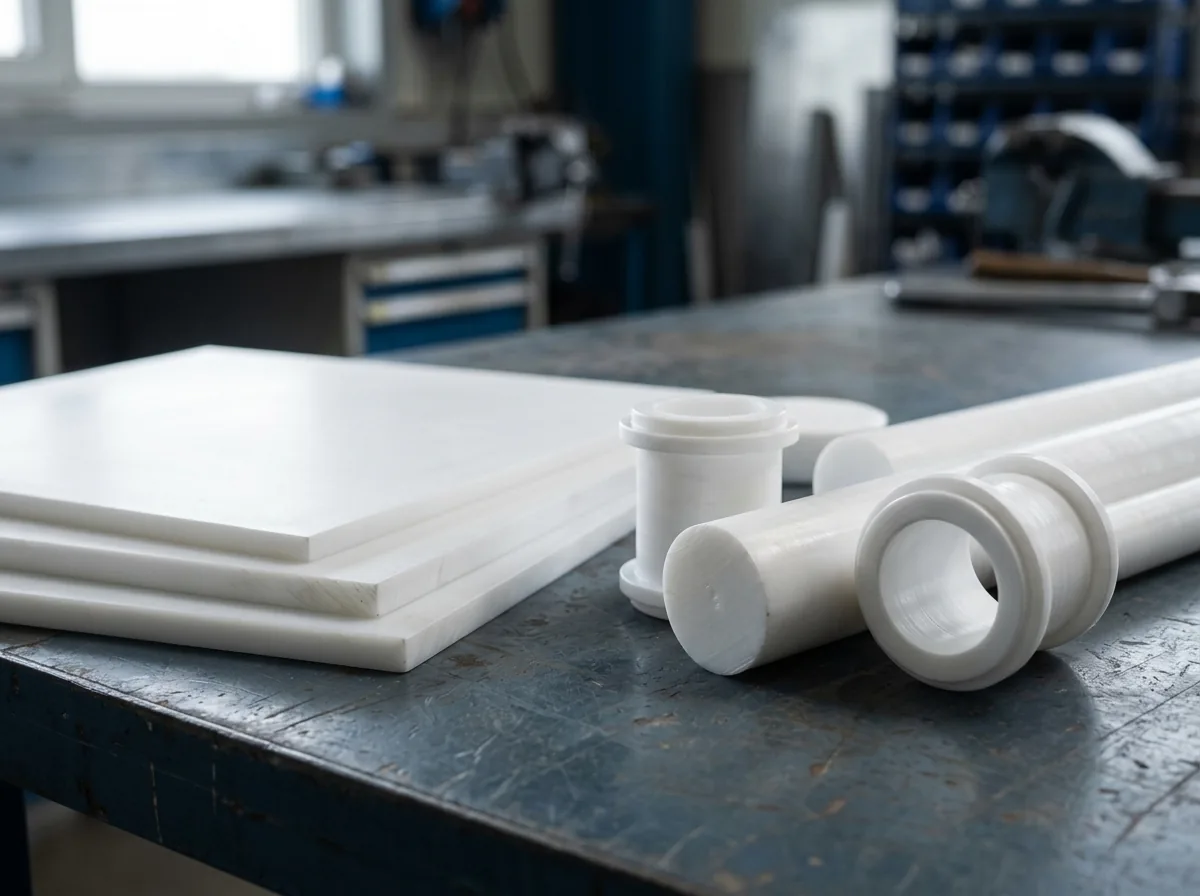
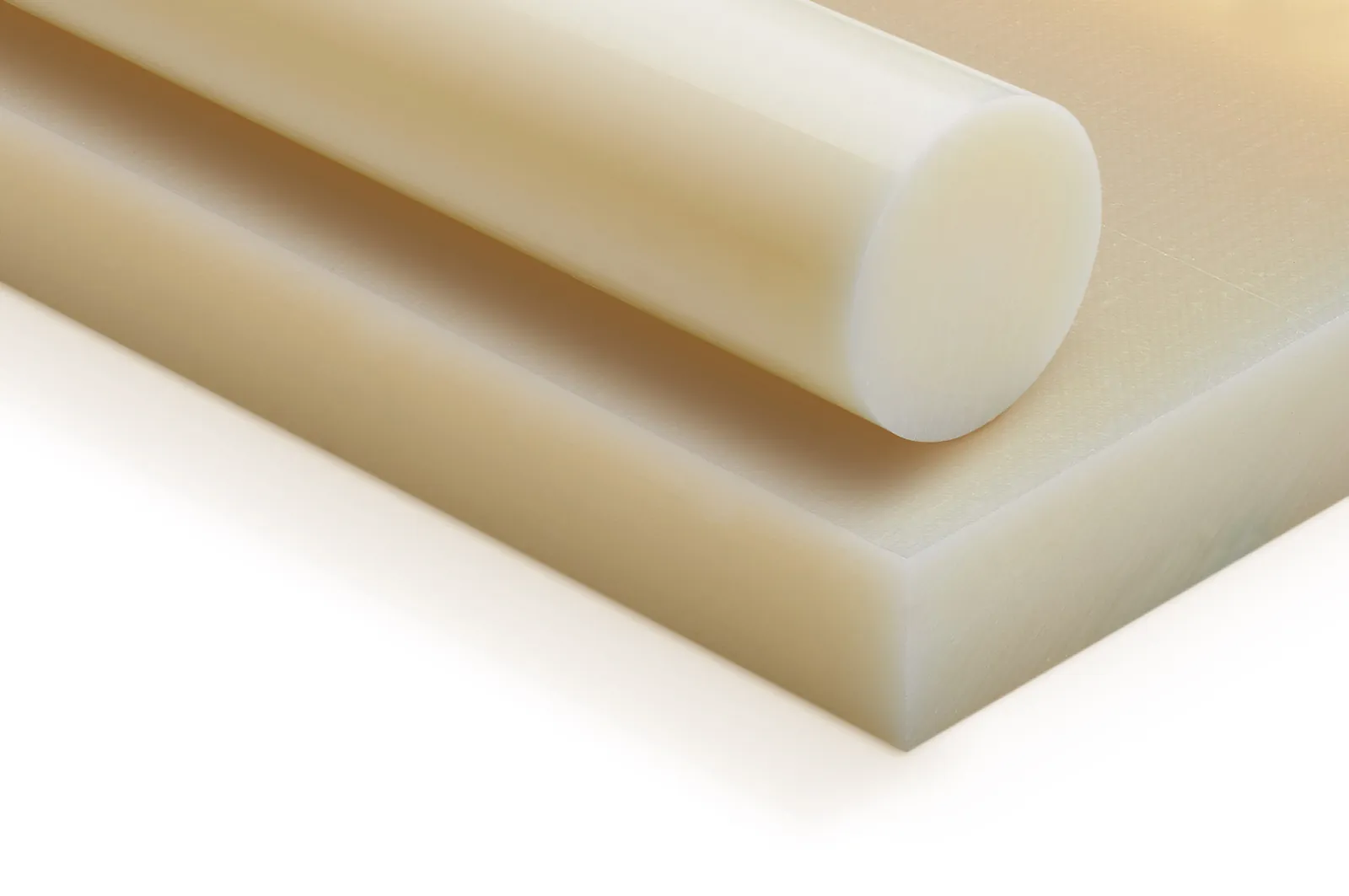
For further processing, modified plastics are available, depending on material and availability, as sheets, rods, tubes, profiles or individual cut pieces. An overview of possible starting forms can be found under plastic semi-finished products.
Selecting the suitable modified plastic
The designation "modified" is not sufficient for a reliable material selection. What matters is the base polymer, the type and quantity of additives and the conditions under which the component is used.
The following information should be available in particular for the material selection:
- service temperature and temperature profile,
- static and dynamic loads,
- contact with chemicals, cleaning agents or moisture,
- sliding speed, surface pressure and desired service life,
- required electrical properties,
- requirements for fire behaviour and smoke gas development,
- component dimensions and tolerances,
- manufacturing process and quantity,
- desired surface quality,
- required standards, approvals and conformities.
Higher strength, better conductivity or lower friction only make a material more suitable if its other properties also suit the application. The material selection should therefore always be made on the basis of the complete technical requirement profile.
Modified plastics as semi-finished product and finished part
Martan Plastics supplies engineering and high-performance plastics in various modified grades. Depending on the material, dimensions and availability, semi-finished products, cut pieces and precisely machined finished parts are possible.
For a targeted material recommendation, a technical drawing or CAD file as well as details on temperature, load, contact media, tolerances, quantity and required certifications are helpful. On this basis, it can be assessed which base polymer and which modification are technically and economically suitable for the component.