Mechanical engineering
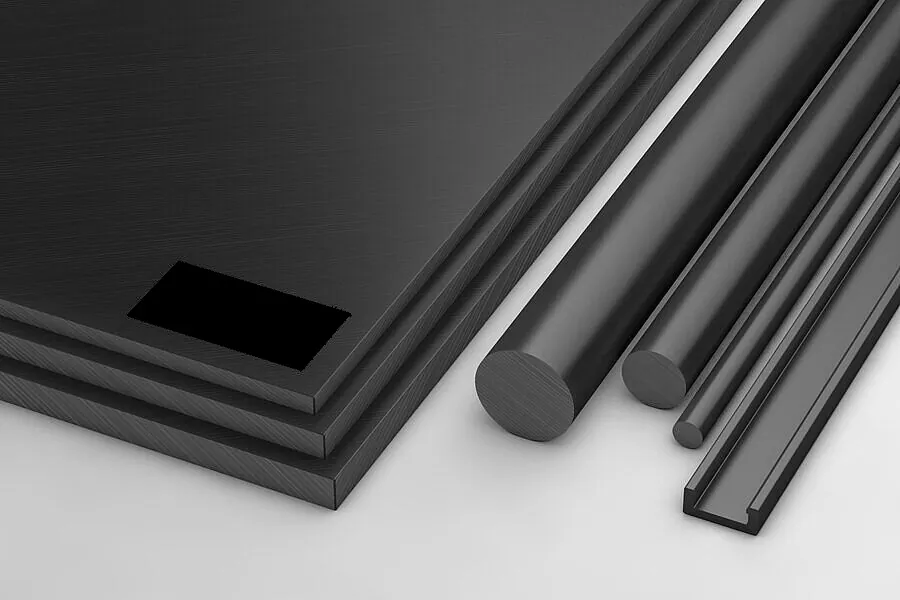
Plastic parts for mechanical engineering to drawing. Milled and turned parts, guides, rollers, bushes and wear parts made from POM, PA, PE, PTFE, PEEK and silicone.
Plastic parts for mechanical engineering
In mechanical engineering, technical plastic parts often perform load-bearing, guiding, sliding or protective functions. They are used, among other things, as bushes, guides, rollers, slide plates, covers, spacers and precision components. We manufacture plastic parts for mechanical engineering to drawing, CAD data or technical specifications as individual parts, prototypes, spare parts and in small-batch and series production.
Why engineering plastics are used in mechanical engineering
Engineering plastics offer properties that can be used specifically in many machines and systems.
Depending on the material, the following are possible:
- low friction
- high wear resistance
- good dimensional accuracy
- low component weight
- electrical insulation
- corrosion resistance
- chemical resistance
- good machinability
- noise reduction
- little or no additional lubrication
As a result, plastic parts can partly replace or complement metallic components.
However, the material selection should always be based on the specific load. Temperature, forces, speed, moisture, chemicals and required tolerances significantly influence suitability.
Typical plastic parts for machines and systems
The possible applications range from simple spacers to complex machined functional parts.
Typical plastic components in mechanical engineering are:
- guide rails
- slide guides
- slide plates
- bushes
- rollers
- spacer rings
- spacers
- stops
- gears
- mounting elements
- brackets
- mounting plates
- covers
- protective plates
- insulating parts
- seal housings
- fixture parts
- wear strips
- machine cladding
- customer-specific precision parts
Complex geometries can be manufactured as milled plastic parts. For rotationally symmetrical components such as bushes, rollers or spacer rings, turned plastic parts are suitable.
What requirements must plastic parts meet in mechanical engineering?
The requirements differ depending on the function of the respective component.
A slide guide, for example, requires different properties than a gear, a protective cover or a high-precision mounting.
Mechanical load capacity
Plastic parts can be exposed to tensile, compressive, bending or impact loads.
Both short-term load and permanent stress must be taken into account.
Plastics can behave differently under long-term load than metals. The material and component geometry should therefore be matched to the specific application.
Wear resistance
With moving components, wear plays a central role.
Guides, rollers, slide plates or bushes can be in permanent contact with other components.
Materials such as PE 1000, POM-C or PA 6 are often used when good sliding properties are to be combined with sufficient mechanical load capacity.
Dimensional accuracy
For precision components, dimensional stability and low deformation are particularly important.
Moisture, temperature and internal stresses can influence the dimensions of plastic parts.
With tight tolerances, a suitable material should therefore be selected specifically and the design should be laid out in a plastic-appropriate way.
Temperature resistance
Mechanical engineering components can be thermally stressed by motors, friction, process heat or ambient temperatures.
For higher temperatures, for example PEEK or PTFE come into question.
Chemical resistance
In machines and systems, plastic parts can come into contact with oils, greases, coolants, cleaning agents or other media.
Resistance should always be tested against the specific medium used, its concentration and temperature.
POM-C for precise mechanical engineering components
POM-C is one of the frequently used engineering plastics in mechanical engineering.
The material offers:
- good dimensional accuracy
- high strength
- low moisture absorption
- good sliding properties
- good machinability
- favourable friction behaviour
Typical applications are:
- bushes
- guides
- rollers
- gears
- brackets
- mounting elements
- precision components
POM-C is particularly suitable for components where comparatively tight tolerances and good mechanical stability are required.
POM-C sheets can also be used as starting material for milled mechanical engineering components.
PA 6 for mechanically loaded components
PA 6 offers high toughness and good mechanical properties.
Typical areas of application are:
- rollers
- bushes
- gears
- guides
- bearing parts
- mechanically stressed components
The moisture absorption of the material must be taken into account. This can influence the dimensions and mechanical properties.
With particularly tight tolerances, this effect must already be taken into account during design.
PA 6 sheets are also available for manufacturing.
PE 1000 for guides and wear parts
PE 1000 is used in particular for sliding and wear applications.
The material has good sliding properties and high abrasion resistance.
Typical components are:
- guide rails
- slide strips
- slide plates
- wear strips
- chain guides
- supports
- conveyor technology components
PE 1000 is particularly suitable for applications with continuous movement and friction.
PE 1000 sheets can be used as starting material.
PE 500 and PE 300
Depending on the load, PE 500 and PE 300 can also be used.
PE 500 offers good wear properties and can be used for mechanically stressed guide and slide components.
PE 300 is more suitable for structural components where wear and high mechanical load are less critical.
PE 300 sheets are also available for individual cut pieces and further processing.
PTFE for low-friction and chemically stressed components
PTFE has a very low coefficient of friction and high chemical resistance.
Typical applications are:
- sliding elements
- seal components
- guide elements
- insulating parts
- bearing points
- chemically stressed components
However, PTFE is significantly less rigid than POM-C or PEEK.
For precise and mechanically highly loaded components, it must therefore be checked whether the material is structurally suitable.
PTFE sheets, among other things, are available as semi-finished products.
PEEK for high technical requirements
PEEK is a high-performance plastic for particularly demanding applications.
The material offers, among other things:
- high temperature resistance
- high mechanical strength
- good dimensional stability
- good chemical resistance
- high wear resistance
PEEK is used, for example, for heavily loaded precision parts, bearing components, guides or functional parts.
Due to the higher material price, the material is usually used specifically where standard plastics are not technically sufficient.
PEEK sheets can be used for milled components.
Polycarbonate for transparent protective components
Polycarbonate combines transparency with high impact toughness.
Typical applications in mechanical engineering are:
- protective discs
- viewing windows
- machine covers
- transparent protective cladding
- housing parts
Polycarbonate sheets are also available for protective and viewing applications.
Polypropylene and PVC for structural applications
Polypropylene offers good chemical resistance and low moisture absorption.
Possible applications are:
- covers
- container components
- sheet constructions
- chemically stressed components
- protective parts
PVC can also be of interest for applications with chemical media.
The specific selection depends on temperature, load and the media used.
Silicone sheets for damping, sealing and temperature stress
Not every mechanical engineering application requires a rigid thermoplastic.
Silicone sheets can be used for elastic components.
Typical applications are:
- elastic interlayers
- seals
- supports
- protective layers
- damping elements
- temperature-stressed components
- flexible spacer elements
Silicone has high elasticity and can also be used at elevated temperatures.
For design decisions, hardness, temperature range, media contact and mechanical stress should be taken into account.
Further information on the material is provided by the Silicone page.
Which plastic is suitable for which mechanical engineering application?
| Application | Frequently suitable materials |
|---|---|
| Precision parts | POM-C, PEEK |
| Guides | PE 1000, POM-C, PA 6 |
| Slide plates | PE 1000, PTFE, POM-C |
| Bushes | POM-C, PA 6, PTFE |
| Rollers | POM-C, PA 6, PE 1000 |
| Wear parts | PE 1000, POM-C, PA 6 |
| High-temperature parts | PEEK, PTFE |
| Transparent protective parts | Polycarbonate |
| Chemically stressed parts | PTFE, PP, PEEK, PVC |
| Damping or elastic parts | Silicone |
The table serves as a guide. For the final material selection, all operating conditions must be taken into account.
Plastic parts for sliding and wear applications
A key area of application for engineering plastics is in moving machine parts.
Slide guides, wear strips, bushes and rollers can be equipped with low friction values by suitable plastics.
This can:
- reduce friction
- reduce lubrication requirements
- lower noise
- protect metallic counterfaces
- increase service life
- reduce weight
PE 1000 is often suitable for large-area sliding and wear parts.
POM-C, on the other hand, is particularly interesting when higher dimensional accuracy is also required.
Plastic parts for conveyor technology and drive technology
Engineering plastics are also used in conveyor and drive systems.
Typical components are:
- chain guides
- slide strips
- rollers
- gears
- spacer parts
- guide plates
- bearing components
- wear elements
The selection depends, among other things, on speed, pressure load, friction, temperature and contamination.
For applications within drive technology, the industry page Plastic parts for drive technology is also available.
Precision and tolerances for plastic parts
Plastics behave differently during machining and in use than metals.
Factors influencing dimensional accuracy are:
- temperature
- thermal expansion
- moisture absorption
- component size
- wall thicknesses
- internal stresses
- mechanical loads
- specific material grade
Tolerances should therefore not automatically be adopted from a metal design.
Particularly with fits, bearing points or precise guides, the design should be adapted to the selected plastic.
CNC milled parts for mechanical engineering
CNC plastic machining enables the manufacture of individual parts directly from semi-finished products.
With milled plastic parts, the following can be manufactured, among other things:
- mounting plates
- guide rails
- brackets
- mounting elements
- slide plates
- fixture parts
- housing parts
- complex functional parts
The following are possible, for example:
- pockets
- grooves
- holes
- threads
- contours
- cut-outs
- steps
- fit areas
A mould is not necessary for this.
As a result, machining is particularly suitable for individual parts, special solutions and smaller series.
Turned plastic parts for machines and systems
For rotationally symmetrical components, the manufacture of turned plastic parts is suitable.
Typical turned parts are:
- bushes
- rollers
- spacer rings
- sleeves
- guide rings
- bearing parts
- adapters
- connecting elements
Depending on the material and geometry, both simple and complex turned parts can be produced.
Bent and formed parts made of plastic
Not every component has to be machined from a solid semi-finished product.
For certain geometries, bent plastic parts can also be used.
Typical applications are:
- covers
- protective hoods
- angles
- cladding parts
- structural formed parts
For transparent applications, for example acrylic glass or polycarbonate can be used.
Waterjet-cut plastic parts
For certain sheet materials and geometries, waterjet cutting can also be used.
The process is particularly suitable for flat components and contours made of various plastic and elastomer materials.
Industrial 3D printing for prototypes and special parts
For development projects, industrial 3D printing can also be a useful addition.
The process is particularly suitable for:
- prototypes
- functional models
- complex geometries
- small quantities
- short-term design tests
Which manufacturing process is economically and technically sensible depends on the material, quantity, tolerances and component geometry.
Plastic sheets as starting material
Many mechanical engineering components are manufactured from plastic sheets.
Typical applications are:
- mounting plates
- slide plates
- guides
- protective plates
- covers
- machine cladding
- base plates
- fixture parts
The sheets can first be cut to size and then milled, drilled or otherwise further processed.
Plastic rods for turned parts and individual components
Plastic rods are a typical starting material for turned components.
Bushes, rollers, spacer rings and sleeves, for example, can be manufactured from rods.
Depending on the material, different diameters and properties are available.
An overview of further starting materials is provided by the Plastic semi-finished products section.
Reproducing plastic parts as spare parts
In mechanical engineering, components are often required that are no longer available from the original manufacturer or must be replaced at short notice.
Plastic parts can be reproduced based on existing drawings or technical data.
This is interesting, for example, for:
- older machines
- special systems
- small-series machines
- individual production systems
- spare parts that are no longer available
Design adjustments can also be taken into account as part of the reproduction.
Prototypes, individual parts and series
Machining of plastics is not only suitable for series.
Particularly with smaller quantities, it offers the advantage that no special mould is required.
The following are possible:
- individual parts
- prototypes
- spare parts
- small series
- series components
- variants
- special designs
This means components can be manufactured already during the development phase and later produced repeatedly using the same process.
What information is required for a manufacturing enquiry?
For a reliable review and calculation, technical data should be as complete as possible.
The following are helpful:
- technical drawing
- CAD file
- desired material
- quantity
- dimensions
- tolerances
- surface requirements
- service temperature
- mechanical load
- movement and friction
- media contact
- special requirements
If the material has not yet been determined, the operating conditions should be described as precisely as possible.
Further information on possible machining processes can be found under Plastic processing.
Frequently asked questions about plastic parts for mechanical engineering
Which plastics are frequently used in mechanical engineering?
POM-C, PA 6, PE 1000, PE 500, PTFE and PEEK are frequently used. Polycarbonate can be used for transparent protective parts. Silicone is suitable for elastic interlayers, seals and damping elements.
Which plastic is suitable for slide guides?
PE 1000 is often suitable for slide guides and wear strips. If higher dimensional accuracy and rigidity are also required, POM-C can be a suitable alternative.
Which plastic is suitable for precise machine parts?
POM-C is often used for precise components. With higher temperature, chemical or load requirements, PEEK can come into question.
Can plastic parts be manufactured to drawing?
Yes. Milled and turned parts can be manufactured based on technical drawings or CAD data. Individual parts, prototypes, spare parts and small-batch and series production are possible.
Can existing metal parts be replaced by plastic?
Partly. Whether a replacement is sensible depends on load, temperature, tolerances, friction and other operating conditions. The design should be adapted to the properties of the plastic if necessary.






