Plastic sheets vs. semi-finished products: differences & areas of application
Plastic sheets or semi-finished products? Differences, forms, materials and typical areas of application clearly explained.
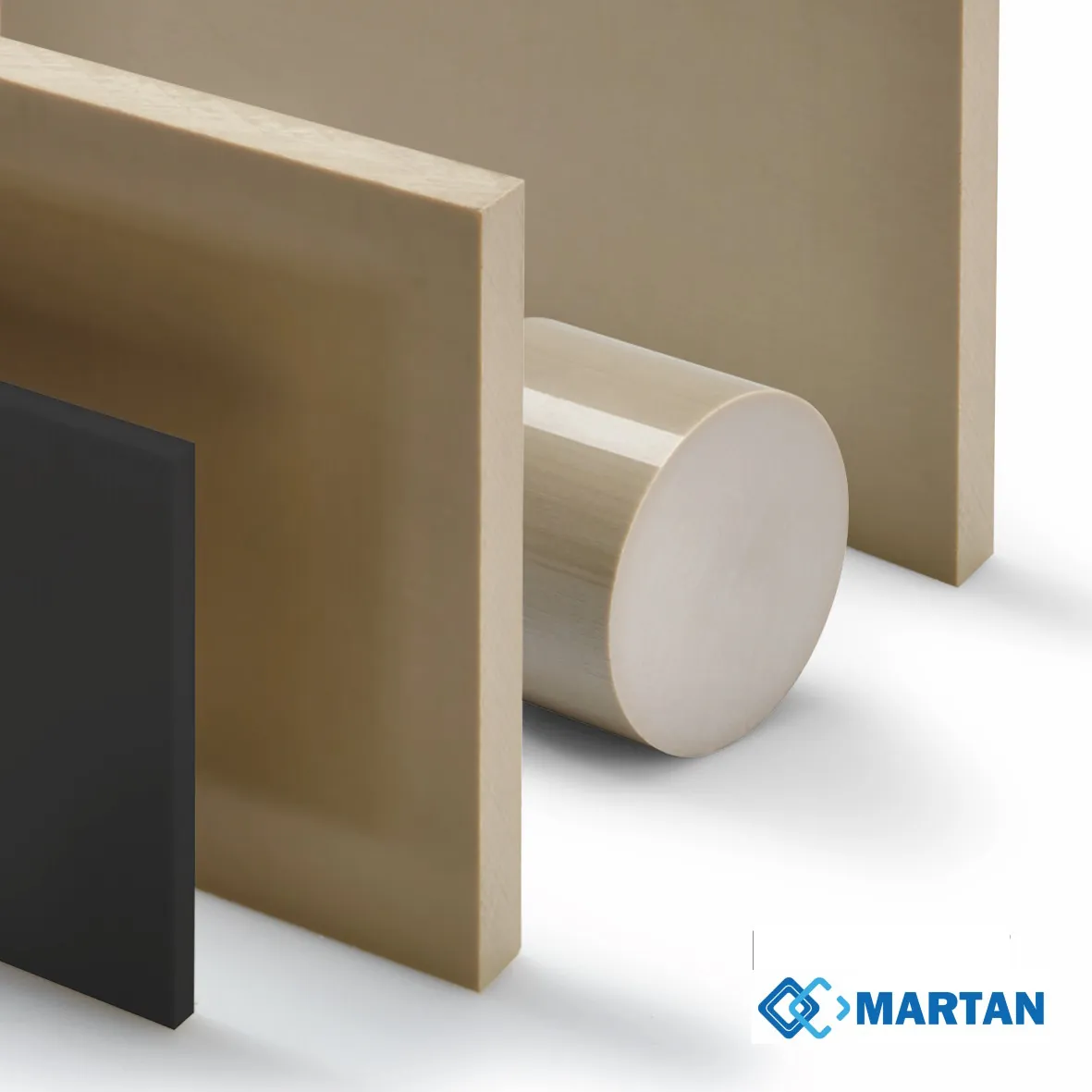
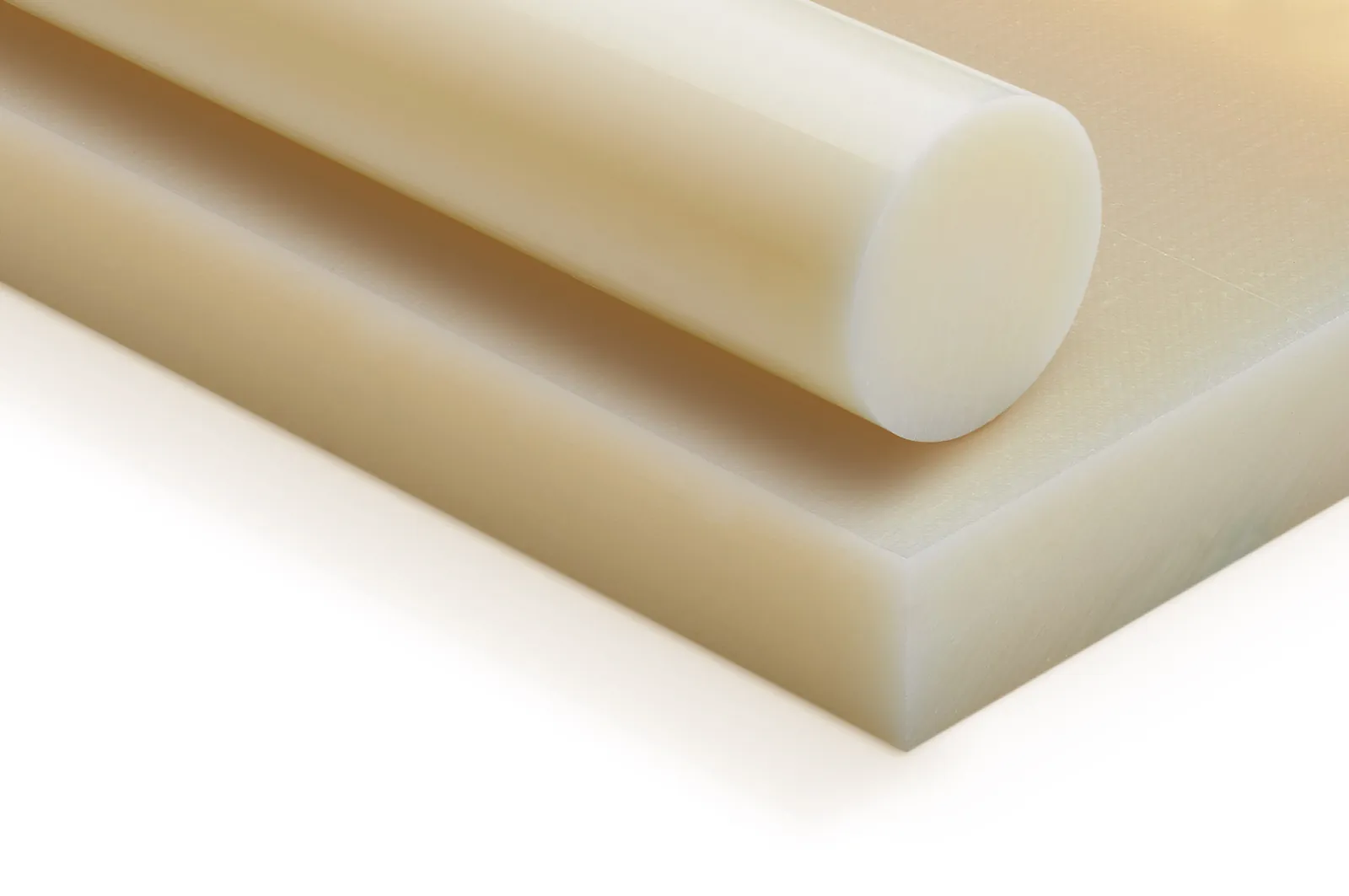
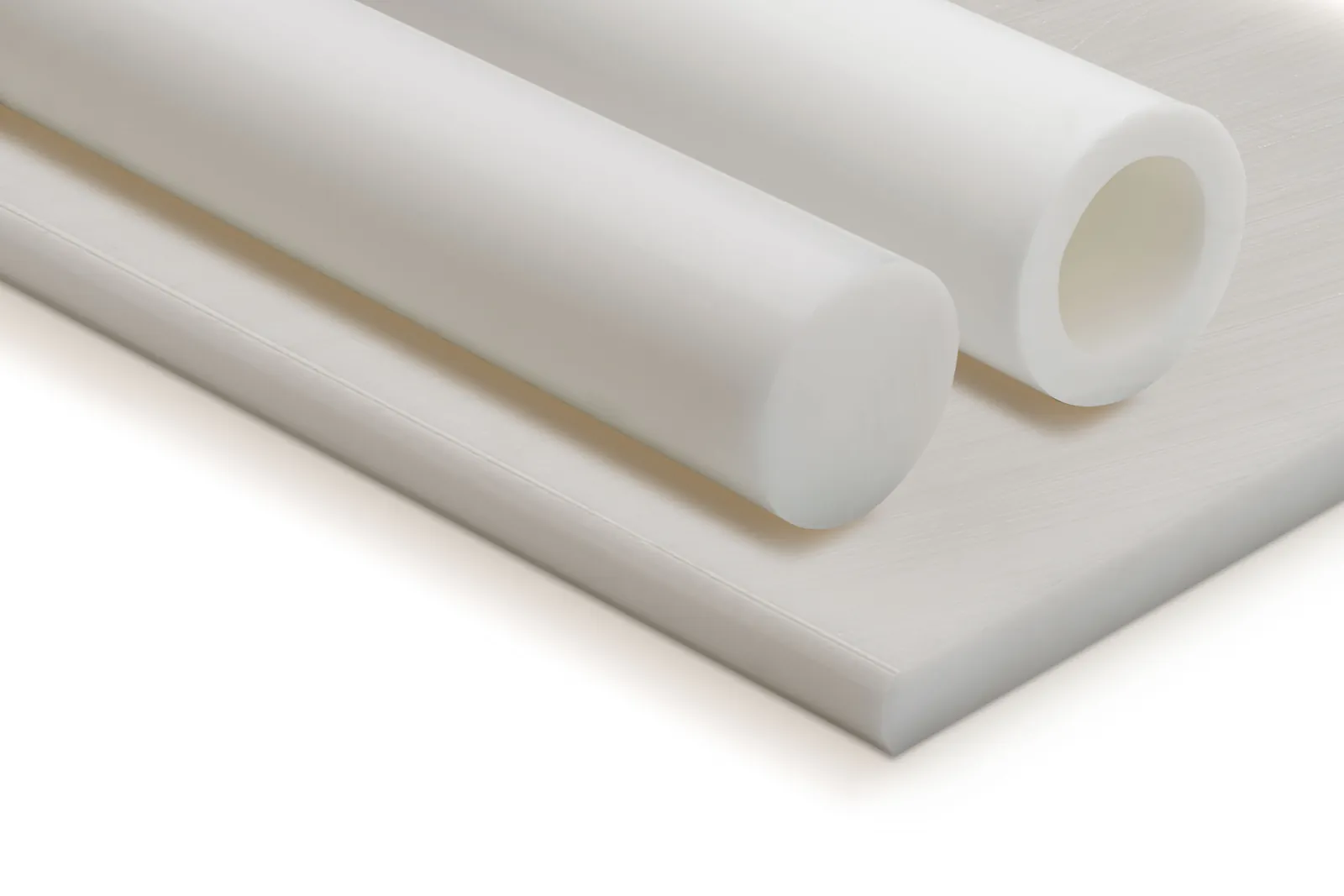
Plastic sheets and plastic semi-finished products are often regarded as different product groups. In fact, the classification is simpler: a plastic sheet is itself a plastic semi-finished product. The term plastic semi-finished product denotes the superordinate product group and includes, alongside sheets, for example rods, tubes, hollow bars and profiles.
Which semi-finished product form is suitable for your application depends above all on the later component geometry, the material and the intended manufacturing process. While plastic sheets are used in particular for flat components and milled parts, rods are suitable, for example, as the starting material for turned parts such as bushes, rollers or rings.
An overview of available forms and possible applications can be found under our plastic semi-finished products. Information on subsequent manufacturing is available in the plastic machining section.
What are plastic semi-finished products?
Plastic semi-finished products are pre-fabricated starting materials that are subsequently further processed into technical components, cut pieces or finished parts. They already have a defined basic shape, but are not yet a finished component.
Typical semi-finished products made of plastic are:
- Plastic sheets
- Rods
- Tubes and hollow bars
- Plastic profiles
- Blanks
- Cut pieces
Depending on the material and geometry, plastic semi-finished products can be machined, among other things, by sawing, drilling, CNC milling, CNC turning or other processes.
Thermoplastic plastic semi-finished products are available in numerous standard plastics, engineering plastics and high-performance plastics.
Are plastic sheets semi-finished products?
Yes,plastic sheetsare among the plastic semi-finished products. Plastic sheet denotes a specific delivery form, while plastic semi-finished product is the generic term.
A sheet has a flat geometry and is often used when flat or contoured components are to be manufactured from the starting material. Other semi-finished product forms are more economical for other component geometries.
An example: if a flat machine guide is to be milled, a plastic sheet can be a suitable starting form. For a bush or roller, on the other hand, a rod is often more sensible, because its starting geometry is already closer to the later component.
Plastic sheets and other semi-finished products in comparison
| Semi-finished product form | Typical geometry | Typical further processing | Examples of components |
|---|---|---|---|
| Plastic sheet | flat and planar | sawing, milling, drilling | covers, guides, supports, cladding |
| Rod | solid and round | turning, milling, drilling | bushes, rollers, rings, gears |
| Tube or hollow bar | round with internal contour | turning, sawing, milling | sleeves, bushes, structural components |
| Profile | defined cross-section | sawing, drilling, milling | guide elements, construction parts, special components |
The suitable semi-finished product form therefore does not depend on whether a sheet or a semi-finished product is required. The actual question is: which form of plastic semi-finished product best matches the later component?
When are plastic sheets suitable?
Plastic sheets are particularly suitable for components with a flat starting geometry. Both simple cut pieces and complex contours can be manufactured from them.
Typical applications are:
- machine cladding
- protective covers
- guide plates
- sliding elements
- work and table supports
- wear plates
- insulation parts
- housings and covers
- technical milled parts
For complex contours, plastic sheets can be precisely machined, for example by CNC milling. An overview of further manufacturing options can be found under plastic machining.
A sheet is particularly interesting when the later component is predominantly flat and as little material as possible is to be removed.
When are rods suitable?
Rods are a typical form of plastic semi-finished products for rotationally symmetrical components. Their round starting form reduces the necessary material removal for many turned parts.
Typical applications are:
- bushes
- rollers
- rings
- spacers
- plain bearings
- guides
- gears
- technical turned parts
Further processing is often carried out by CNC turning. Depending on the component geometry, additional milling or drilling operations may be required.
When are tubes or hollow bars sensible?
Tubes and hollow bars are also among the plastic semi-finished products and are suitable when the later component already has a central opening.
For a bush with a larger internal diameter, a hollow bar can be more economical than a solid rod, for example. Less material has to be removed and the starting geometry already corresponds more closely to the shape of the later component.
Typical applications are:
- sleeves
- bearing bushes
- spacer elements
- tube components
- structural components with a central bore
Which starting form is suitable depends on the required external and internal diameters, the component length, the tolerances and the desired plastic.
Which plastics are used as semi-finished products?
Thermoplastic plastic semi-finished products are available in numerous materials. The material selection should always be based on the loads of the later application.
Frequently used materials include, for example:
POM – polyoxymethylene
POM combines high strength and rigidity with good dimensional stability and good sliding properties. As a result, the engineering plastic is suitable for numerous precise machine elements such as gears, bearing bushes and guide elements.
PA – polyamide
Polyamide is often used for mechanically stressed components. Depending on the PA type, toughness, wear resistance and good damping properties are among the key considerations. PA semi-finished products are used, for example, for rollers, bearings, bushes and guide elements.
PTFE – polytetrafluoroethylene
PTFE is characterised in particular by its high chemical resistance, temperature resistance and very good sliding properties. The material is therefore often used for seals, sliding components and applications involving aggressive media.
PEEK – polyetheretherketone
PEEK is one of the high-performance plastics and is used when high mechanical, thermal or chemical requirements exist. Typical fields of application are found, among others, in mechanical engineering, in medical technology and in demanding industrial applications.
When selecting a material, you should not only consider the semi-finished product form. Temperature, mechanical load, wear, chemical contact, moisture, electrical requirements and other operating conditions can influence the material choice.
If you would like to compare different engineering plastics with one another, you will find further guidance in the article POM, PA or PEEK – which material for mechanical engineering?.
What are extruded plastic semi-finished products?
Many plastic semi-finished products are manufactured by extrusion. In this process, a plastic is prepared and continuously passed through a shaping tool.
In this way, for example, plastic profiles, tubes, rods and certain sheets can be manufactured. Extrusion is particularly suitable for products with a cross-section that remains constant along the length.
At Martan Plastics, the extrusion of plastics includes, among other things, the manufacture of profiles and semi-finished products for technical applications.
For special manufacturing processes, you will also find information on extrusion pressing.
Individual high-performance plastics also place special demands on the process. How this works for PEEK, for example, is explained in the article extruding PEEK.
Selecting plastic sheets and semi-finished products correctly
Several points should be considered together when selecting a suitable plastic semi-finished product.
1. Geometry of the later component
The starting form should match the later component geometry as closely as possible.
For a flat milled part, a plastic sheet is often suitable. For a turned part, a rod is usually more obvious. For components with a large internal diameter, a hollow bar can be a suitable starting form.
2. Mechanical load
Check which forces the component will be exposed to. These include, for example, compressive, tensile, impact or bending loads as well as friction and wear.
The requirements directly influence the choice of the suitable material. For precise mechanical components, POM can be interesting, for example, while high-performance plastics may be considered for particularly high loads.
3. Temperature
The permissible service temperature differs significantly between different plastics. Continuous heat exposure and short-term temperature peaks should therefore already be taken into account during material selection.
For applications with high thermal requirements, PEEK or other high-performance plastics can be considered, for example.
4. Contact with chemicals and media
Oils, cleaning agents, acids, alkalis or other media can influence the suitability of a plastic.
For applications with high requirements for chemical resistance, PTFE can be interesting, for example. However, the actual suitability must always be checked on the basis of the specific medium, the concentration, temperature and duration of exposure.
5. Manufacturing process
The planned further processing is also relevant. Depending on the material and geometry, plastic semi-finished products can be sawn, drilled, CNC-milled or CNC-turned, among other things.
A complete overview of possible processes is available in the plastic machining section.
6. Dimensions and tolerances
Sheet thickness, diameter, length and required tolerances influence which semi-finished product form and which starting dimension are sensible.
A starting size as close as possible to the component can reduce material consumption and machining effort. For rotationally symmetrical precision parts, machining by CNC turning is often suitable, for example, while complex flat contours can be produced by CNC milling.
Which semi-finished product form suits your application?
The suitable semi-finished product form can often already be narrowed down on the basis of the later component geometry:
- Flat components: plastic sheets
- Rotationally symmetrical components: rods
- Components with a central internal contour: tubes or hollow bars
- Components with a constant special cross-section: extruded profiles
The material is then selected on the basis of the mechanical, thermal and chemical requirements.
Martan Plastics supports you both in selecting suitable plastic semi-finished products and in the subsequent plastic machining.
Depending on the geometry, your components can be manufactured, for example, by CNC milling or CNC turning. For continuously manufactured plastic profiles and semi-finished products, you will find further information under extrusion.
Frequently asked questions about plastic sheets and plastic semi-finished products
What are plastic semi-finished products?
Plastic semi-finished products are pre-fabricated starting materials that are subsequently further processed into technical components. Typical delivery forms are sheets, rods, tubes, hollow bars and profiles.
Is a plastic sheet a semi-finished product?
Yes. A plastic sheet is a form of plastic semi-finished product. The term semi-finished product includes, alongside sheets, other delivery forms such as rods, tubes and profiles.
Which plastic semi-finished products are there?
Typical plastic semi-finished products include sheets, rods, tubes, hollow bars, profiles, blanks and cut pieces. Which form is suitable depends on the later component geometry and the intended machining.
What are technical plastic semi-finished products?
Technical plastic semi-finished products are pre-fabricated starting materials made of engineering plastics. These include, for example, semi-finished products made of POM or PA. For particularly demanding applications, high-performance plastics such as PEEK or PTFE can also be considered.
What are extruded semi-finished products?
Extruded semi-finished products are manufactured by extrusion. In this process, the plastic is passed through a shaping tool that produces the desired cross-section. Typical extruded products are, for example, profiles, tubes and rods.
When should a plastic sheet be used instead of a rod?
A plastic sheet is particularly suitable for flat components, cut pieces and milled parts. Rods, on the other hand, are particularly suitable as starting material for rotationally symmetrical components such as bushes, rollers or rings.
How can plastic semi-finished products be machined?
Depending on the plastic, semi-finished product form and component requirement, semi-finished products can be sawn, drilled, milled or turned, among other things. An overview of further processes can be found under plastic machining.
Which plastic semi-finished product is suitable for my application?
The selection depends on the component geometry, the required material, the mechanical and thermal loads, possible chemical contact, the desired tolerances and the intended manufacturing process.
An initial overview of suitable delivery forms is available under plastic semi-finished products. For specific finished parts and machining processes, you will find further information in the plastic machining section.