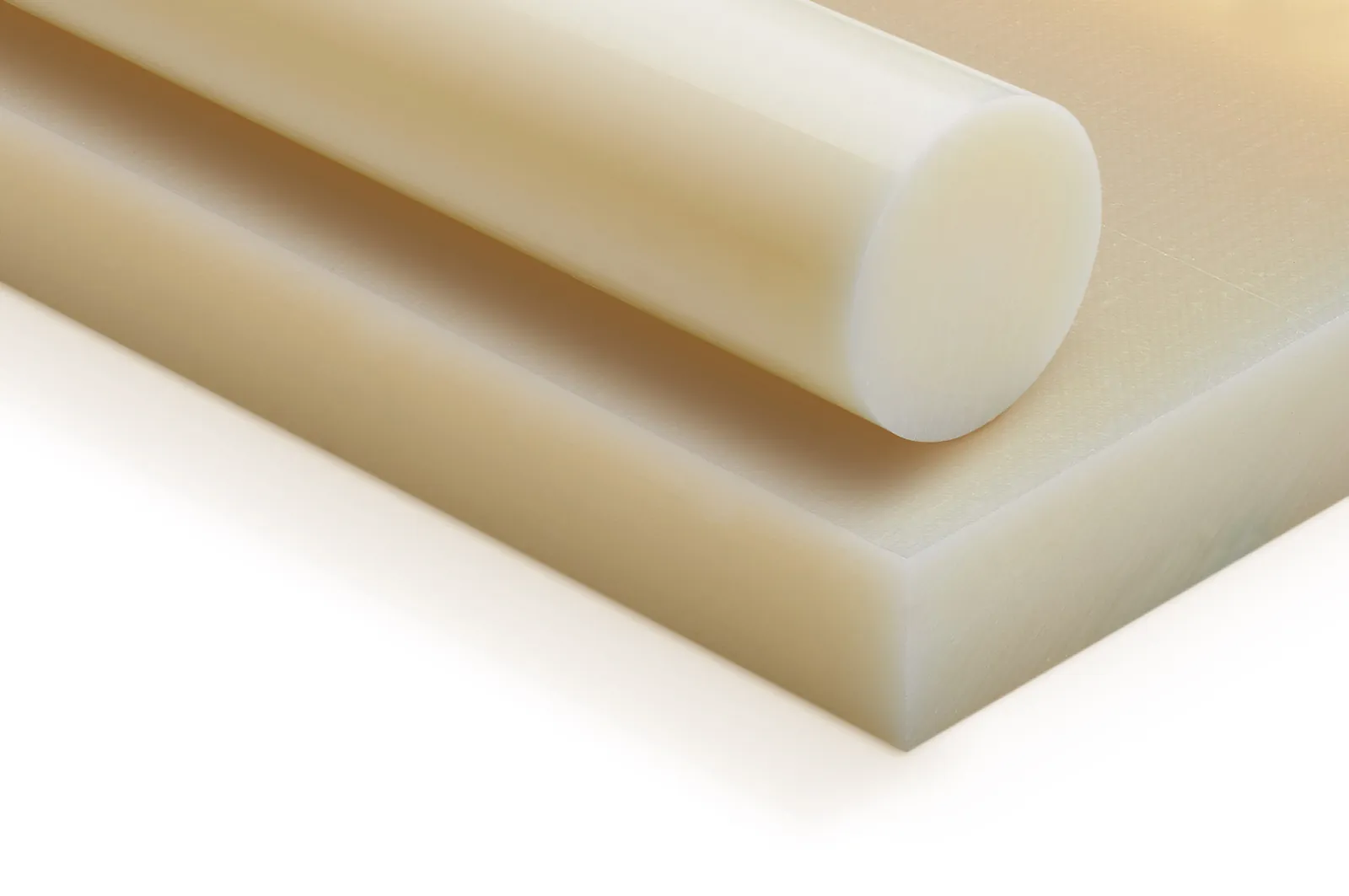
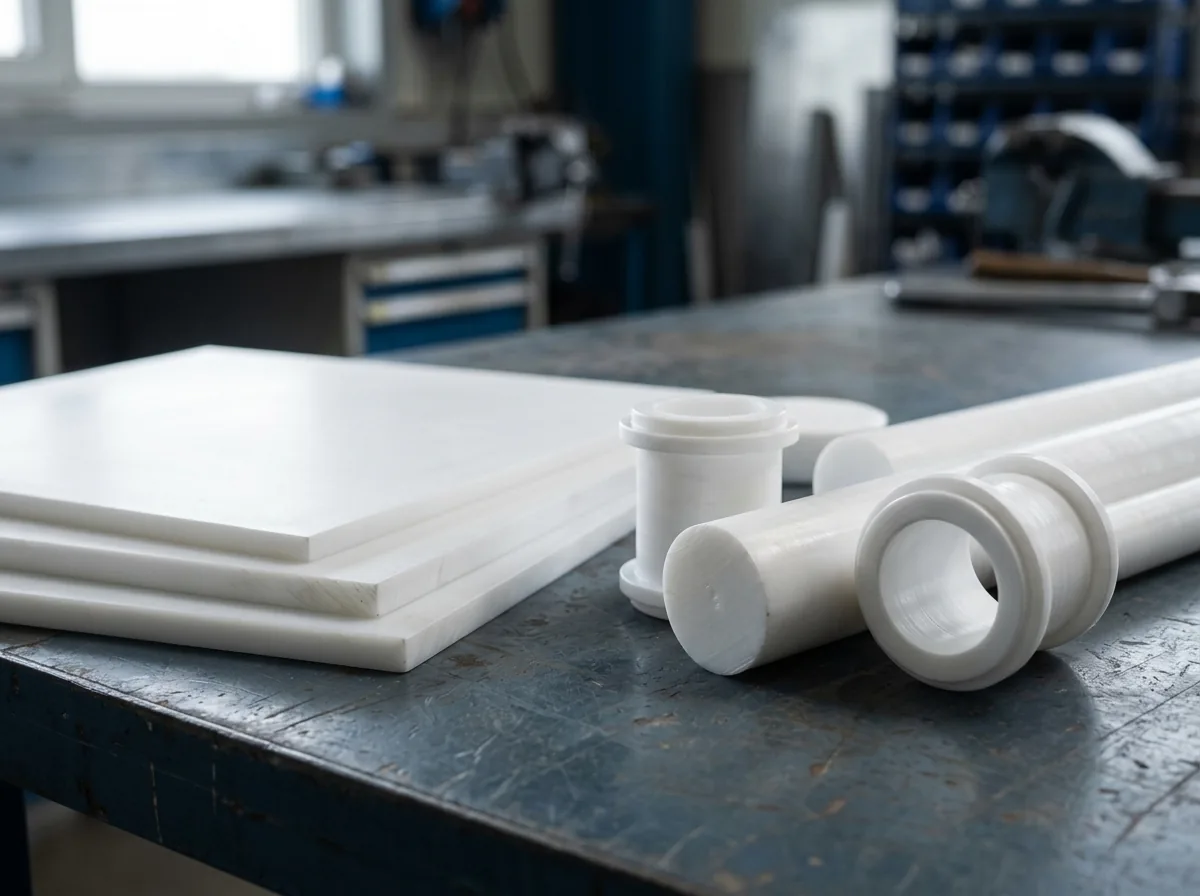
 This image was created with artificial intelligence – marked under Art. 50 of the AI Act, Regulation (EU) 2024/1689. It is a placeholder until the company's photos arrive.
Plastics for cryogenic applications
Which plastics are suitable for cryogenic applications? Find out which materials remain reliable at extreme temperatures.
Cryogenic applications, meaning use in extreme cold ranges below –150 °C, place extraordinary demands on materials. While metals often become brittle at very low temperatures, lose their ductility and thereby lose safety, certain plastics can function reliably even in such environments thanks to their molecular structure. Research has shown that polymers at deep cold can retain or even improve their properties depending on their chemical structure.
This makes them indispensable materials in key industries. Whether in aerospace, cryomedicine, the liquefied gas industry or in highly specialised research facilities: the right choice of material decides the functionality, service life and safety of entire systems.
With the growing importance of technologies such as hydrogen storage, superconducting magnets and cryogenic transport systems, the role of plastics is coming even more sharply into focus. The development, adaptation and optimisation of suitable polymers is therefore not only an engineering challenge, but also a driver of innovation in forward-looking industries.
Cryogenic applications place particular demands on plastics. At very low temperatures, the stiffness, toughness, thermal expansion and in some cases also the fracture behaviour of a material change significantly. Plastics for cryogenic applications must therefore not only be fundamentally temperature-resistant, but also retain their required mechanical and dimensional properties under the actual operating conditions.
Which materials are suitable depends among other things on the temperature range, mechanical load, medium, component geometry and temperature changes. In addition to material selection, material testing at cryogenic temperatures therefore plays an important role.
Requirements for plastics in cryogenic applications
At temperatures close to absolute zero, many material properties change fundamentally. Plastics used here must therefore meet particular criteria:
- Low-temperature resistance: The material must not become brittle, deform or develop cracks. Brittle fracture is one of the greatest dangers when the wrong material is chosen.
- Low thermal conductivity: A low thermal conductivity reduces energy losses, prevents condensation and helps to maintain stable conditions.
- Chemical resistance: Contact with liquid nitrogen, liquid helium or liquefied gases places high demands on resistance and long-term stability.
- Low outgassing: Especially in closed systems such as cryostats or magnet chambers, it is crucial that materials do not release disruptive gases.
- Mechanical stability: Components must remain reliably load-bearing even under extreme temperature differences, whether under pressure, tension or impact load.
- Electrical properties: In many applications, insulation or conductivity also plays an important role, for example in superconducting magnets.
Suitable plastics for cryogenic applications
PTFE (polytetrafluoroethylene)
PTFE is regarded as the reference material for use in the cold. Its extraordinary chemical resistance, very low friction and temperature tolerance make it versatile. Even below –200 °C, PTFE remains flexible and does not lose its toughness. It has an almost universal resistance to chemicals and is therefore also suitable in aggressive media.
A further advantage is its low coefficient of friction, which makes it possible to use PTFE in moving components such as bearings or sealing systems without cold welding occurring. In cryogenic engineering, PTFE is therefore preferably used for seals, tank linings, flexible hoses and sliding guides.
PEEK (polyetheretherketone)
PEEK combines high mechanical strength, good chemical resistance and temperature stability. It also retains its properties in the cryogenic range and remains dimensionally stable. PEEK is particularly interesting for components that cycle between extremely low and very high temperatures, as it withstands thermal stresses.
In addition, PEEK exhibits excellent dimensional stability and enables precise component geometries. Applications are found in pumps, valves, cryogenic drives and structural components in aerospace as well as in energy technology. Its good machinability also opens up many possible uses in tailor-made components.
Polyimide (PI)
Polyimides are characterised by their dimensional stability and excellent electrical insulating capability. They retain their properties across a wide temperature range and are hardly susceptible to material fatigue at low temperatures. Because of these characteristics, they are used in cryogenic engineering above all in the insulation of superconducting magnets, in high-voltage applications and in sealing systems.
Polyimides are also very resistant to radiation, which makes them particularly predestined for use in aerospace. Their versatility makes them indispensable in the combination of electrical insulation and mechanical load capacity for many research and aerospace applications.
UHMW-PE (ultra-high-molecular-weight polyethylene)
UHMW-PE scores with outstanding impact toughness even at extremely low temperatures. It has very low friction and is extremely wear-resistant. These properties predestine UHMW-PE for applications in bearings, sliding guides and conveyor systems that have to operate under cryogenic conditions.
It is also very light and resistant to abrasion, which extends the service life of components. A further advantage is its chemical resistance to many gases and liquids, as a result of which UHMW-PE is also used in tank linings and containers.
Epoxy resins (filled)
Filled epoxy resins, often reinforced with glass or carbon fibres, are the basis for many composite materials. They combine high mechanical strength with excellent thermal insulation and stability. In cryogenic applications, they are often used where structures must not only be stable but also light – for example in tank walls, support elements and mounts in aerospace.
Through the targeted choice of fillers, the properties of the resins can be adapted, for example with regard to stiffness, outgassing behaviour or thermal expansion. As a result, composite solutions can be developed that are optimised for specific cryogenic requirements.
Other relevant materials
In addition to the high-performance plastics mentioned, materials such as polycarbonate (PC) or special polyamides may also be considered. Although they are not permanently stable in all cryogenic media, they offer interesting possibilities in combination with additives or coatings.
Polycarbonate, for example, is used for transparent components such as sight glasses or housings that must remain impact-resistant even in the cold. Special polyamides are used in niche applications where a balanced ratio of strength, machinability and resistance is required.
What happens to plastics at cryogenic temperatures?
As temperature falls, the mobility of the polymer chains decreases in many plastics. As a result, stiffness and strength can increase, while at the same time toughness and elongation decrease. A plastic that is load-bearing at room temperature can therefore react significantly more brittlely at very low temperatures.
For cryogenic applications, the following properties in particular should be assessed:
- Impact toughness and fracture behaviour at low temperature
- Tensile and compressive strength
- Dimensional changes due to thermal shrinkage
- Coefficient of thermal expansion
- Creep and deformation behaviour
- Tightness and gas permeability
- Behaviour under repeated temperature changes
- Chemical resistance to the medium used
The mere specification of a minimum service temperature is therefore often not sufficient for material selection. Especially in the case of seals, valve seats, guides or precision components, it must be checked how the specific material behaves under the actual load.
Which plastics are suitable at low temperatures?
The term cold-flexible plastics does not describe a clearly defined group of materials. It refers to plastics that retain the toughness or functionality required for the component even at low or cryogenic temperatures.
For low-temperature applications, selected high-performance plastics and fluoropolymers in particular come into consideration. PTFE, for example, is frequently used for seals and sliding elements because of its wide temperature service range and high chemical resistance. Depending on the load, PEEK and other specially selected high-performance plastics may also be suitable.
The specific material grade is more important here than a general material designation. Fillers, reinforcements, processing and component geometry can considerably influence behaviour at low temperatures.
Comparison of the most important plastics
| Plastic | Temperature range | Properties | Typical applications |
|---|---|---|---|
| PTFE | up to approx. –200 °C | flexible, extremely chemically resistant, very low friction | seals, hoses, tank linings |
| PEEK | up to approx. –150 °C | high strength, dimensionally stable, chemical-resistant | pumps, valves, structural components |
| Polyimide (PI) | up to approx. –270 °C | dimensionally stable, electrically insulating, radiation-resistant | insulation, seals, aerospace |
| UHMW-PE | up to approx. –200 °C | very impact-tough, abrasion-resistant, light | bearings, sliding guides, containers |
| Epoxy resins (filled) | up to approx. –150 °C | high strength, good insulation, adaptable through fillers | tank structures, mounts, aerospace |
Typical fields of application
- Aerospace engineering: structural materials for rocket stages, insulation materials for tanks, bearings and lines.
- Cryomedicine: vials, containers, pipettes and transport containers for biological samples in liquid nitrogen or liquid helium.
- Liquefied gas industry: seals, valves, linings and insulating components for LNG (Liquefied Natural Gas) and LH2 (liquefied hydrogen).
- Research and laboratory: cryostats, superconducting magnets, sample holders and insulation structures in high-energy physics and materials research.
- Hydrogen technology: components for tanks, lines and safety devices in the storage and transport of hydrogen.
Challenges and limits
The development of plastics for extreme cold encounters diverse limits and technical hurdles. Many standard polymers lose their toughness at temperatures below –100 °C and tend towards brittle fracture. In a serious case, this can lead to critical failures that have not only costly repair consequences but also safety-relevant ones. A further problem lies in joining technology: adhesives, welded seams and also many bolted connections react sensitively to extreme temperature changes and lose their stability.
Added to this are ageing processes triggered by repeated temperature cycles (thermal shocks). These can produce cracking and microstructural damage that considerably shortens the service life of components. The question of cost also plays a role: high-performance polymers such as PEEK or polyimide are significantly more expensive than standard plastics, which makes their widespread use in price-driven industries more difficult.
Finally, in some areas there is still a lack of long-term experience, especially when it comes to combining cryogenic conditions with other loads such as radiation, pressure or vibration.
Future prospects
Materials research is working intensively on new solutions in order to expand the possible uses of plastics in cryogenic environments. A major trend is hybrid materials and nanocomposites, which through the targeted combination of different material classes can unite several properties in themselves – for example high toughness, low outgassing and chemical resistance.
Innovations are also emerging in the field of fibre composite technologies: by embedding special fibres, plastics can be made even lighter and at the same time more robust. Surface modifications, coatings and plasma treatments are intended in future to help minimise outgassing behaviour and further improve resistance to cryogenic media. Particularly exciting is the development of multifunctional materials that simultaneously act as insulating, load-bearing and chemically resistant.
With a view to the energy transition and the growing importance of hydrogen technologies, it is to be expected that cryogenically suitable plastics will become a key component in the coming years – not only in research but also in large-scale industrial application.
In conclusion
Plastics have established themselves in cryogenic engineering as indispensable materials. Their special properties make them in many cases a superior alternative to metals, which reach their limits at extreme temperatures. Materials such as PTFE, PEEK, polyimide or UHMW-PE today form the basis of numerous cryogenic systems, from medical applications through to aerospace.
But development does not stand still: with new polymer structures, fibre composites and nanostructured materials, it will be possible to develop even more capable, safer and longer-lasting components. The future of cryogenic engineering will depend heavily on these advances. For industry, research and aerospace, this opens up opportunities to make systems more efficient, lighter and more reliable – and thereby to pave the way into a new generation of applications at extreme temperatures.
FAQ
Which plastics are particularly well suited for liquid nitrogen applications? PTFE and UHMW-PE are particularly suitable because of their toughness and resistance to liquid nitrogen. PEEK is also used in safety-critical components.
Why are metals often problematic in cryogenic applications? Many metals become brittle at low temperatures and lose their elasticity. Plastics often remain load-bearing and flexible in such environments.
How does cryogenic cold affect the service life of plastics? The service life depends heavily on the type of plastic. High-performance plastics such as PEEK or polyimide show very good long-term resistance, while standard plastics can fail more quickly.
Are there transparent plastics for cryogenic applications? Yes, polycarbonate is frequently used for viewing windows or housings, as it remains impact-resistant even in the cold.
What role do composite materials play in cryogenic engineering? Filled epoxy resins and fibre composite materials combine stability, insulation and low weight. They are particularly important in aerospace and in cryogenic tank structures.
Which test methods ensure the quality of plastics in cryogenic engineering? Common methods include low-temperature tests in the cryostat, notched impact toughness tests as well as outgassing and chemical resistance tests.
Can additives improve the properties? Yes, through additives such as glass fibres, carbon fibres or nanoparticles, the mechanical, thermal and chemical properties can be specifically optimised.