Crane and lifting technology
Plastic solutions for crane and lifting technology: wear-resistant materials for sheaves, plain bearings, guides and custom components.
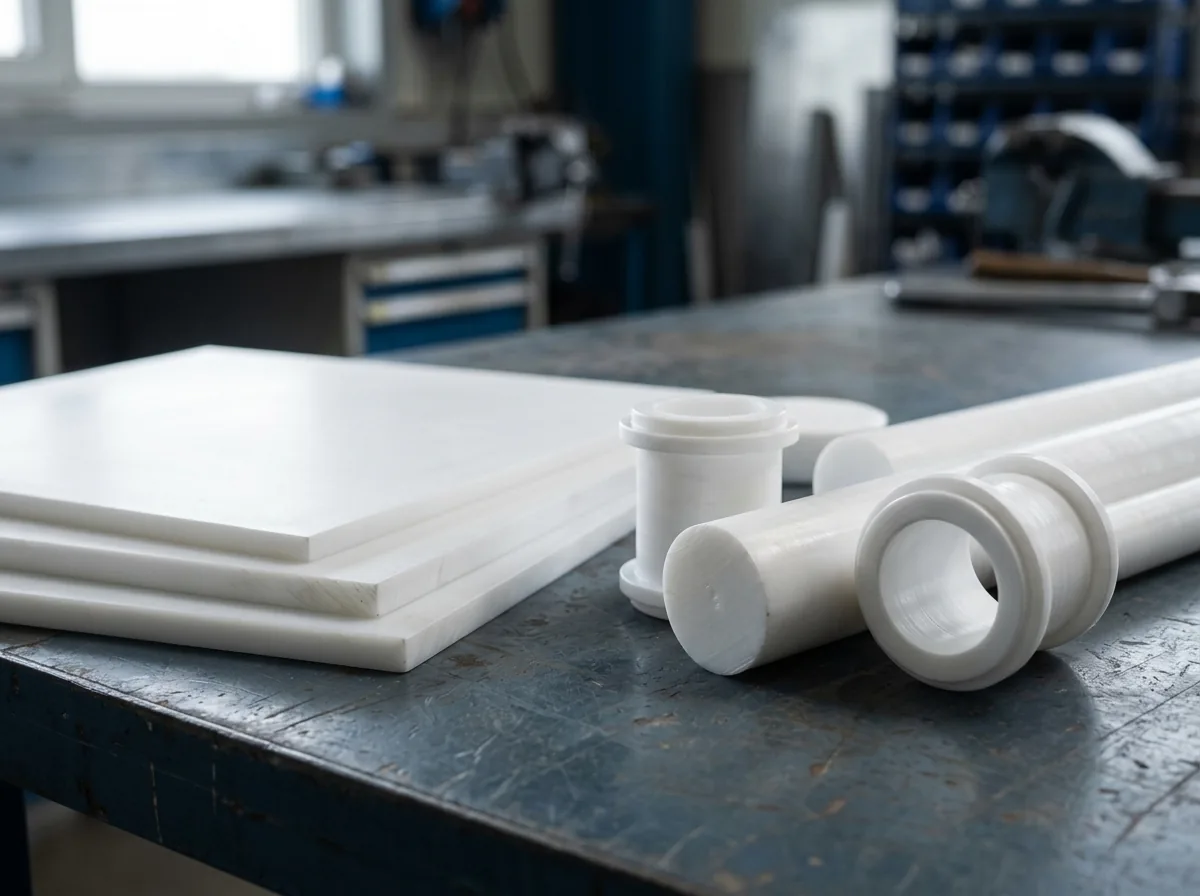
Crane and lifting systems must move heavy loads reliably while operating permanently, precisely and with low maintenance. Engineering plastics offer interesting possibilities for this: they combine low weight with good sliding and wear properties and are resistant to many corrosive influences.
Martan Plastics supports you in selecting suitable plastic materials and manufactures custom components for crane and lifting technology according to your technical requirements. Depending on the area of application, polyamide, POM, PE or PTFE may be considered, among others.
Lifting technology for special industrial requirements
Standard solutions are not always sufficient in industrial lifting technology. High mechanical loads, frequent movement cycles, moisture, dirt, aggressive media or special requirements for friction and wear can make an individually tailored material solution necessary.
Plastic components can be used, for example, in cranes, hoists, winches, trolleys, overhead cranes, conveyor systems or comparable constructions. Which material solution is suitable always depends on the actual operating conditions and the structural design of the component.
When selecting the material, we particularly take into account:
- mechanical load and surface pressure
- friction and wear
- speed and movement cycles
- temperature range
- moisture and weather
- contact with oils, greases or chemicals
- required dimensional accuracy
- desired service life
- component geometry and manufacturing tolerances
This allows the plastic solution to be precisely tailored to your specific industrial requirement.
Typical plastic components in crane and lifting technology
Engineering plastics are suitable for a variety of moving, guiding and wear-exposed components. Typical applications can include:
Sheaves and rope pulleys
Sheaves are permanently exposed to mechanical loads. Plastic can offer advantages here thanks to its low dead weight and good wear and damping properties.
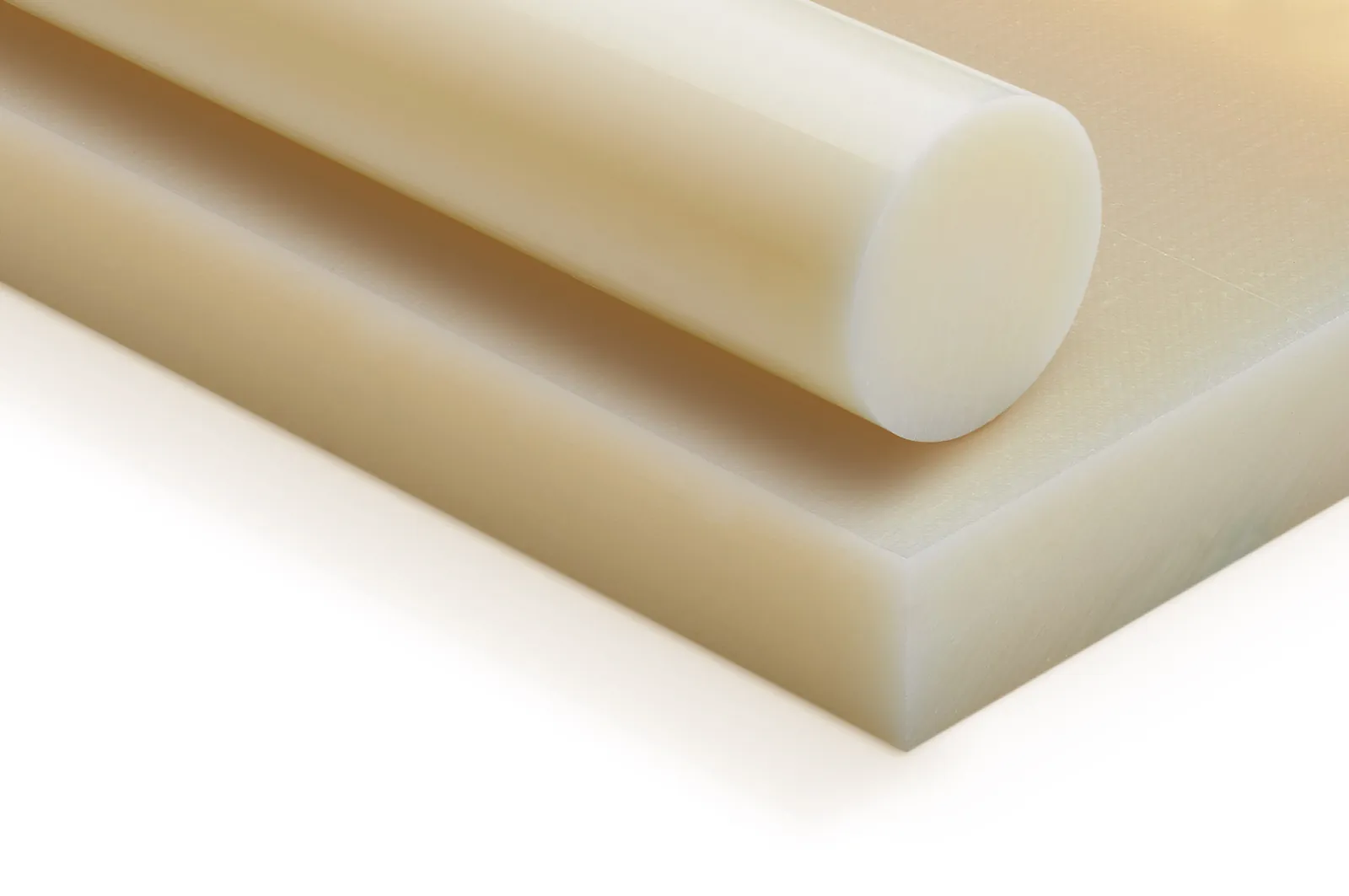
For heavily stressed sheaves and comparable components, polyamide (PA) may be considered, for example. Cast polyamide is also suitable for numerous mechanically stressed components due to its combination of strength, wear resistance and good sliding properties.
Plain bearings, slide strips and guide elements
Friction and wear occur on telescopic booms, guides and moving constructions. Suitable plastics can be used here as slide plates, slide strips, guides or bearing bushes.
POM plastic offers high rigidity and good dimensional stability and is therefore particularly suitable for precise mechanical components.
For sliding and wear-exposed applications, polyethylene (PE) can also be of interest. PE 1000 in particular offers good sliding and wear properties and absorbs only little moisture.
Bearing bushes and low-friction components
Where low friction or high chemical resistance is required, PTFE can be used. Typical applications are bearing, sliding and sealing elements.
However, the specific material selection is not made on the basis of the component designation alone. Load, temperature, counterface partner, speed and environmental influences must be considered together.
Advantages of plastic over metal in lifting systems
Replacing metallic components with engineering plastics can offer several advantages depending on the application.
Lower weight
Plastics generally have a significantly lower density than metallic materials. With moving components, a reduction in weight can simplify construction and assembly.
Good wear and sliding properties
Materials such as PA, POM or PE can offer good friction and wear properties in sliding and moving components. This makes them suitable, for example, for guides, sheaves and bearings.
Corrosion resistance
Plastics do not rust. This makes suitable materials particularly interesting for applications where moisture or corrosive ambient conditions occur.
Noise and vibration damping
Compared with metallic material pairings, plastics can reduce noise and vibrations. This is particularly advantageous with moving components and regularly recurring movement sequences.
Less need for lubrication
Depending on the material and application, good sliding properties can help to reduce the additional need for lubrication. However, whether a component can actually be operated without additional lubrication must be checked for the respective design.
Which plastic is suitable for crane and lifting technology?
A blanket material recommendation is not sensible for highly stressed components. The following overview provides initial guidance:
| Plastic | Typical properties | Possible applications |
|---|---|---|
| PA – polyamide | high mechanical load capacity, good wear and sliding properties | sheaves, rollers, gears, bearing bushes |
| Cast polyamide | high strength, wear resistance and damping | larger sheaves, guides and mechanically stressed components |
| POM | high rigidity and dimensional stability | precision guides, plain bearings, gears |
| PE | good sliding and wear properties, low water absorption | slide strips, guides, wear elements |
| PTFE | very low friction and high chemical resistance | plain bearings, seals and low-friction components |
For applications with exceptionally high thermal or mechanical requirements, various high-performance plastics are also available.
Custom plastic parts for cranes and hoists
Many components in crane and lifting technology must be precisely adapted to the existing construction. Martan Plastics manufactures custom plastic parts to drawing, sample or defined technical requirements.
Through our plastic machining, engineering plastics can be processed into precisely fitting components.
For complex contours, recesses and hole patterns, CNC milling of plastic is available. Rotationally symmetrical components such as bushes, sheaves or other turned parts can be manufactured by CNC turning.
This means that both individual special components and recurring production parts can be produced in accordance with your technical specifications.
Plastic solutions for lifting technology in different industrial environments
Lifting systems are used in very different industrial sectors. This also changes the requirements for the material.
In humid environments or water treatment plants, for example, moisture and chemical resistance play an important role. Further information on this can be found under plastics for drinking water and wastewater technology.
In lifting systems in an electrical environment, on the other hand, additional requirements may apply to the insulation behaviour or electrical properties of the material. Here you can find further information on plastics for the electrical industry.
Plastic components are also used in mechanical and plant engineering for bearings, guides, sheaves and numerous other mechanical applications.
What matters when selecting the material?
For a reliable material recommendation, as specific details about the application as possible should be available. Particularly helpful are:
- component drawing or dimensions
- static and dynamic load
- speed and movement sequence
- ambient temperature
- contact with water, oils or chemicals
- counterface partner for sliding components
- required tolerances
- quantity
- special requirements for wear, friction or weight
On this basis, it is possible to assess which plastic and which manufacturing process are suitable for your application.
Request plastic components for your crane and lifting technology
Do you need a sheave, slide guide, bearing bush or a custom plastic component for your crane or lifting application?
Send us your drawing or describe the technical requirements of your application. Martan Plastics supports you in selecting the material and in the production-oriented implementation of your component.
Request a plastic solution now
Frequently asked questions about plastics in crane and lifting technology
Which plastics are used in crane and lifting technology?
Depending on the application, polyamide, cast polyamide, POM, PE and PTFE may be considered, among others. Which material is suitable depends on load, friction, temperature, moisture and other operating conditions.
What advantages do plastic sheaves have over metal sheaves?
Plastic sheaves can offer advantages in particular through their lower weight as well as their wear, damping and corrosion properties. Whether plastic is technically sensible compared with a metal version must be assessed on the basis of the specific load and design.
Is plastic suitable for highly stressed lifting technology?
Suitable engineering plastics can also be used for mechanically heavily stressed components. The prerequisite is a material selection that takes into account loads, temperatures, wear, component geometry and ambient conditions.
Which plastic is suitable for slide guides on cranes?
For slide guides, PA, POM or PE may be considered, for example. The selection depends, among other things, on surface pressure, speed, wear, moisture and counterface partner.
Can Martan Plastics manufacture custom plastic parts to drawing?
Martan Plastics offers the machining of engineering plastics and the manufacture of precisely fitting components according to technical requirements. Depending on the geometry, CNC milling and CNC turning can be used, among other things.
What information is needed for a material recommendation?
A drawing or the component dimensions are helpful, as well as details on load, temperature, speed, ambient media, tolerances and quantity. This allows the material selection to be precisely tailored to the application.