What are high-performance plastics?
High-performance plastics are, strictly speaking, engineering plastics that stand out for their mechanical, electrical and thermal properties.
For many years, the company ptfe24.de has been offering you high-performance plastics for your business. Ptfe24.de has specialised in cutting plastic sheet cut pieces quickly, reliably and precisely for its customers.
Definition of high-performance plastics - at Wikipedia
High-performance plastics are a subgroup of thermoplastic plastics that differ from engineering plastics and standard plastics in particular through their temperature resistance, but also with regard to chemical resistance and mechanical properties.
Definition of high-performance plastics by AI, openai
High-performance plastics are plastics that exhibit particularly high mechanical strength, stiffness, hardness, chemical resistance, ageing resistance and/or temperature resistance. Due to their properties, they are used in many industrial applications in which other plastics are unable to meet the requirements. Examples of high-performance plastics are polyphenylene sulphide (PPS), polyetheretherketone (PEEK), polyamide-imide (PAI) and polyimide (PI). They are frequently used in aerospace, in the automotive industry, in electronics and in medical technology.
What are high-performance plastics?
High-performance plastics belong to the top class of plastics. High-performance plastics are, strictly speaking, engineering plastics which are distinguished by their mechanical, electrical and thermal properties. These plastics are dimensionally stable and can be used permanently at temperatures of over 150 °C. High-performance plastics are more expensive in production and in purchasing than conventional plastics, since high-performance plastics are, among other things, exposed and subjected to significantly higher temperatures than other plastics. New processing machines are often required in order to manufacture and further process high-performance plastics. High-performance plastics can often be off-putting because of the purchase price, but the use and also the durability make the high-performance plastic attractive and it finds its use in the most diverse industries. High-performance plastics are also known under the terms high-temperature plastics, high-temperature thermoplastics, high-performance thermoplastics and high-tech plastics.
Which plastic group do these belong to?
All plastics that can only be formed from a temperature of over 150 degrees belong to the group of thermoplastics. Thermoplastics are divided into semi-crystalline and amorphous. In semi-crystalline plastics, uniform molecular chains are formed; in amorphous plastics, the molecular chains are irregular.
Which plastics count as high-performance plastics?
High-performance plastics include polytetrafluoroethylene, PTFE for short, polyetheretherketone, PEEK for short, polyetheretherketone, PEK for short, perfluoroalkoxy polymers, PFA for short, polyvinylidene fluoride, PVDF for short, which are semi-crystalline and therefore opaque, as well as tough in processing and chemically resistant.
The plastic PTFE is also known to many under the trade name Teflon of the company DuPont.
The high-tech plastics also include polyphenylene sulphide, PPS for short, polyamide-imide, PAI for short, polysulphones, PPSU for short, polysulphone, PSU for short and polyethersulphone, PES for short, which are amorphous and therefore glass-like and transparent. It is hard in processing and is likewise chemically resistant.
What must you be able to do?
High-performance plastics are distinguished by being able to be exposed to high temperatures permanently while remaining dimensionally stable. They are used across a wide range of temperature ranges. They must be resistant to various chemicals. They are friction-coefficient and scratch-resistant.
What are they used for?
High-performance plastics find their use, among other things, as
- valves
- coils
- cladding of interior walls that are exposed to high temperatures.
- pipelines
- implants
- seals
- gearboxes
- bearings
- chemical pumps
- components
- precision components
In which industries are high-performance plastics required?
High-performance plastics are used in many industries, among others in
- aerospace
- cladding technology
- food industry
- medical technology
- automotive technology
- electrical engineering
- packaging industry
- mechanical engineering
- toy industry
- conveyor systems
- chemical industry
- beverage manufacturers
- textile industry
High-performance plastics impress with their field of application across a wide spectrum of temperatures. Some high-performance plastics are heat-resistant up to a temperature of 300 °C. Other plastics can be modified with additional substances so that they withstand temperatures of up to -200 °C without becoming brittle or cracked. High-performance plastics must, as the word already says, deliver high performance that other plastics cannot achieve through their molecular chains. The other plastics impress with other different requirements. These are distinguished as standard or engineering plastics.
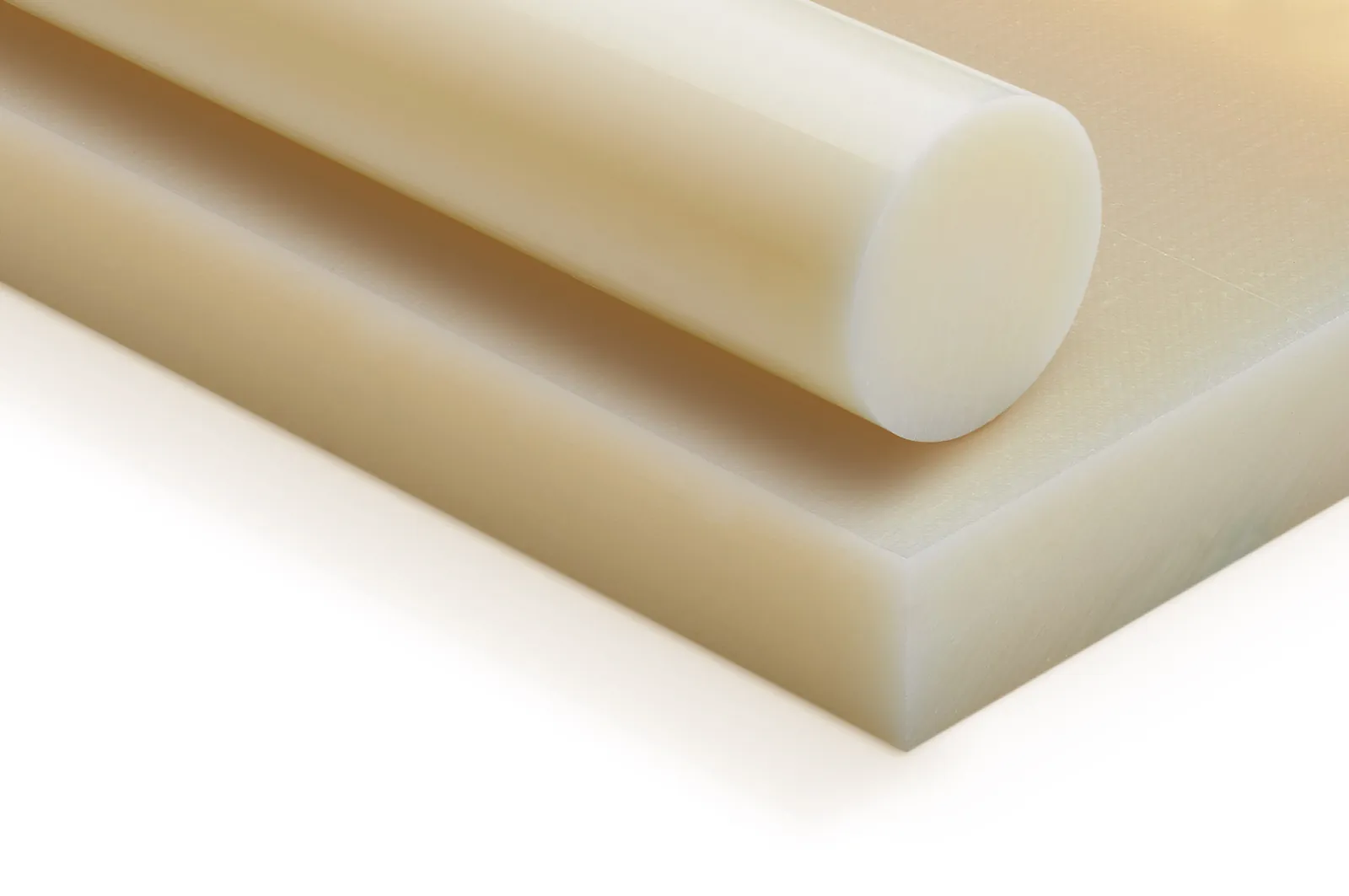
You can obtain high-performance plastics as semi-finished products in the forms of hollow rod, sheets, films, rods and panels. Semi-finished products are also called preformed raw materials which, together with other semi-finished products, produce a finished product.