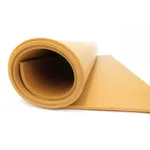
This image was created with artificial intelligence – marked under Art. 50 of the AI Act, Regulation (EU) 2024/1689. It is a placeholder until the company's photos arrive.
Selecting rubber mats for oil areas
Which rubber mats are suitable for oil areas? Differences between NBR, EPDM and SBR, tips on slip resistance, material thickness & industry.
Rubber mats in oil-contaminated work areas must meet significantly higher requirements than classic floor mats. In workshops, production halls or machine environments, oils, lubricants, cleaning agents and mechanical loads regularly act on the material. This creates high demands on resistance, slip resistance and durability.
The choice of the right rubber mat influences safety, cleaning, service life and daily use in industry. Particularly important are oil-resistant materials such as NBR, suitable surface structures and the right material thickness for the respective area of application.
Why oil areas place special requirements on rubber mats
In production halls, workshops, machine areas or maintenance zones, rubber mats frequently come into contact with oil, lubricants or chemical liquids. Under these conditions, standard mats often lose their dimensional stability, swell up or become slippery. This creates safety risks and a significantly reduced service life.
For oil-contaminated work areas, therefore, only materials that are permanently resistant to mineral oils, lubricants and industrial liquids should be used. At the same time, slip resistance, load-bearing capacity and ease of cleaning play an important role.
Suitable solutions can be found, for example, in oil-resistant rubber sheets, industrial rubber mats, anti-slip mats or cut-to-size rubber sheets for industrial areas of application.
Which rubber materials are suitable for oil areas
The selection of the right material determines how long a rubber mat functions reliably in oil-contaminated areas. Depending on the place of use, the requirements for oil resistance, temperature behaviour, load-bearing capacity and cleaning differ significantly.
| Material | Oil resistance | Typical areas of application | Special features |
|---|---|---|---|
| NBR | Very high | Workshop, mechanical engineering, production | High resistance to oil and fuels |
| SBR | Low | Warehouses, dry industrial surfaces | Inexpensive standard material |
| EPDM | Low with oil | Outdoor areas, moisture | Very good weather resistance |
| FKM | Very high | Chemical industry, high-temperature areas | High chemical and temperature resistance |
The material choice largely determines the resistance and service life of the rubber mat. Especially in industrial environments, the requirements differ greatly.
NBR – the standard for oil-resistant rubber mats
NBR is one of the most important materials for oil-containing areas. The material has a high resistance to mineral oils, lubricants, hydraulic oils, greases and fuels. This makes NBR rubber mats particularly suitable for workshops, machine areas, production facilities, industrial workplaces and maintenance zones. In addition, NBR offers high mechanical load-bearing capacity and a long service life with regular contact with oil.
SBR – suitable for dry areas
SBR rubber is frequently used as a cost-effective standard material. However, the material is only suitable to a limited extent for oil-containing environments. Oil can attack the material and lead to swelling or material damage in the long term. SBR is therefore more suitable for dry industrial areas, storage areas, simple floor applications or areas without permanent oil contact.
EPDM – strong against weather and water
EPDM has excellent properties against UV radiation, ozone, weather and water. The material is therefore frequently used for outdoor areas or damp environments. However, EPDM shows weaknesses with mineral oils, which is why NBR is usually used for classic oil areas in industry.
Which material thickness is sensible
The right material thickness depends heavily on load, substrate and area of application. Thinner mats are suitable for light applications or as a protective layer, while heavily loaded industrial surfaces require significantly more robust versions.
| Material thickness | Typical application |
|---|---|
| 3 mm | Light workbench coverings |
| 4–6 mm | Workshop and walkways |
| 8–10 mm | Production areas and machine environments |
| 12 mm and thicker | High mechanical load and heavy machines |
Especially with permanent contact with oil and heavy loads, a higher material thickness improves stability, service life and sure-footedness.
Slip resistance in oil-contaminated work areas
Oil significantly increases the risk of slipping. Rubber mats for oil areas should therefore always have a suitable surface structure.
The following have proven particularly effective:
| Structure | Advantages |
|---|---|
| Studded structure | Good sure-footedness |
| Ribbed structure | Improved grip with liquids |
| Drainage structure | Liquids can run off |
| Perforated mats | Less standing liquid |
In addition, mats should be sufficiently thick and dimensionally stable so that they lie securely on the floor even under high loads.
Which rubber mat is suitable for which oil type
Depending on the liquid, the requirements for the material differ considerably. While some oils have only minor effects on rubber, other substances attack the material in the long term.
| Liquid | Suitable material |
|---|---|
| Mineral oil | NBR |
| Hydraulic oil | NBR or FKM |
| Fuels | NBR or FKM |
| Cleaning chemicals | FKM depending on the medium |
| Water and moisture | EPDM |
Especially in industrial plants with changing media, the material selection should be matched exactly to the actual load.
Observe temperature and chemical resistance
Oil-resistant rubber mats are frequently used in areas where high temperatures or chemical loads also occur. Especially in production facilities, workshops or metalworking, permanently demanding ambient conditions often arise.
| Material | Typical temperature range |
|---|---|
| NBR | approx. -30 °C to +100 °C |
| EPDM | approx. -40 °C to +120 °C |
| FKM | approx. -20 °C to +200 °C |
The higher the temperature and chemical load, the more important the selection of a suitable material becomes.
In many industrial environments, several loads act on the rubber mat at the same time. In addition to oil, temperatures, cleaning agents or chemicals often also play a role.
Before selection, contact with oils or fuels, temperature range, mechanical load, cleaning frequency, chemical influences as well as indoor or outdoor use should be taken into account.
Especially in production environments, individual material advice is often worthwhile in order to avoid premature wear.
Occupational safety and slip resistance in industry
In oil-contaminated areas, occupational safety plays a major role. Even small amounts of oil on walkways or work surfaces significantly increase the risk of slipping. Rubber mats should therefore have a sufficiently slip-resistant surface.
In many industrial environments, mats with slip resistance classes are used to improve sure-footedness. In addition, structured surfaces help to drain liquids better and improve a secure stance.
Especially in areas with a high frequency of employees or heavy machines, a robust, slip-resistant solution with high dimensional stability is worthwhile.
Open or closed surface – which variant is sensible
The surface structure influences cleaning, safety and area of application.
Closed surface
Closed mats are particularly suitable for workplaces, machine environments, workbenches as well as dry to lightly oil-contaminated areas. They are easy to clean and offer a stable standing surface with high load-bearing capacity.
Open or drainage-capable structure
Drainage-capable rubber mats are suitable for areas with larger quantities of liquid. Oil or water can run off through openings, thereby reducing standing liquids, slip risk and dirt accumulation. Such mats are frequently used in workshops, production halls, washing areas and industrial workplaces.
Which rubber mat is suitable for which area of application
For workshops, oil-resistant NBR rubber mats with medium material thickness and a slip-resistant surface are usually suitable. In production halls, thicker mats with high pressure resistance are frequently used. For machine areas or maintenance zones, robust industrial rubber mats with a drainage structure are often used.
Outdoor areas with moisture or weather influences, on the other hand, often benefit from EPDM materials. In chemically loaded areas or high-temperature environments, FKM materials are often used.
The right combination of material, surface structure and material thickness significantly improves safety, cleaning and service life.
Practical examples from industry and workshop
In vehicle workshops, NBR mats are frequently used under lifting platforms or at workplaces in order to safely absorb oil residues and increase sure-footedness. In production halls, oil-resistant rubber mats often serve as walkways between machines or as protection for sensitive work areas.
In mechanical engineering, thicker mats with high pressure resistance are frequently used. In maintenance areas, on the other hand, drainage-capable solutions are often used so that liquids can run off better.
Typical areas of application for oil-resistant rubber mats
Oil-resistant rubber mats are used in many industries.
Typical applications are:
- Mechanical engineering
- Automotive industry
- Workshops
- Maintenance
- Production halls
- Metalworking
- Warehouse technology
- Maintenance areas
- Production lines
Depending on the area of application, different thicknesses, surfaces or material mixtures may be sensible.
Typical mistakes in selection
In practice, unsuitable materials are frequently used. This often leads to rapid ageing or safety problems.
Frequent mistakes:
- Use of standard SBR in oil areas
- Insufficient material thickness
- Lack of slip resistance
- Unsuitable surface structure
- Lack of temperature resistance
- Wrong cleaning solutions
Mats that become soft or lose their shape due to oil are particularly problematic.
Cleaning and maintenance
Oil-resistant rubber mats should also be cleaned regularly. Residues of oil, grease or dirt can stress the surface in the long term and impair slip resistance. Regular removal of oil films as well as checking for damage contribute to a longer service life. In addition, suitable cleaning agents should be used and replacement mats stored dry. Proper care significantly improves durability and safety in daily use.
When individual cut pieces are sensible
Many industrial plants have special machine surfaces or walkways. Standard sizes are often not sufficient there.
Cut-to-size pieces are particularly suitable for:
- Machine bases
- Maintenance surfaces
- Production lines
- Walkways
- Workstations
- Special-purpose machines
Individual cut-to-size rubber sheets enable a clean adaptation to the respective area of application.
Which rubber mat is suitable for which oil area
For oil-contaminated work areas, oil-resistant rubber mats made of NBR with a slip-resistant surface and sufficient material thickness are particularly suitable. The selection should always be based on liquids, temperature, load and application environment.
While SBR is more suitable for simple dry areas and EPDM has its strengths outdoors, NBR offers the best combination of oil resistance, load-bearing capacity and safety.
Especially in industry and workshop, high-quality oil-resistant rubber mats significantly improve safety, durability and ease of cleaning. Individual cut pieces, suitable material thicknesses and the right surface structure additionally ensure permanently safe use in oil-contaminated areas.
FAQ on rubber mats for oil areas
Which rubber mat is suitable for oil-containing workshops?
NBR rubber mats are particularly suitable for oil-containing workshops, as they have a high resistance to oil, lubricants, hydraulic oil and fuels.
Which material thickness is sensible for oil-resistant rubber mats?
For workshops and walkways, 4 to 6 mm is often sufficient. In production areas, machine environments or heavily loaded industrial surfaces, 8 to 10 mm or thicker versions are usually sensible.
Are EPDM rubber mats suitable for oil areas?
EPDM rubber mats are particularly suitable for weather, water, UV radiation and outdoor areas. For permanent contact with mineral oil, lubricants or fuels, NBR is generally used.
Which surface is sensible with oil on the floor?
With oil on the floor, slip-resistant surfaces such as studded, ribbed or drainage structures are sensible. They improve sure-footedness and help to drain liquids better.
Are oil-resistant rubber mats available as cut pieces?
Yes, oil-resistant rubber mats and rubber sheets can frequently be produced as cut-to-size pieces. This is particularly sensible for machine areas, walkways, workplaces and special surfaces.
Which rubber mat is suitable for hydraulic oil?
For hydraulic oil, NBR or FKM materials are usually used. NBR is suitable for many classic industrial and workshop areas, while FKM offers advantages at higher temperatures or stronger chemical loads.
When are drainage-capable rubber mats sensible?
Drainage-capable rubber mats are sensible when oil, water or cleaning liquids regularly get onto the floor. Through openings in the mat, liquids can run off, thereby reducing standing liquids and slip risks.
Our rubber sheets
For industry and trade, we offer a wide variety of rubber sheets.
SBR rubber sheet
Our high-quality SBR rubber sheet (styrene-butadiene rubber) is the solution for numerous industrial and commercial applications. This rubber sheet is manufactured from first-class styrene-butadiene rubber and is characterised by its outstanding physical properties.
EPDM rubber sheet
Discover the versatility and reliability of our EPDM rubber sheet, which is manufactured from ethylene-propylene-diene monomer (EPDM). This high-quality elastomer solution has been specially developed to meet the most demanding industrial and commercial applications.
NBR rubber sheet
The NBR rubber sheet is a high-quality industrial product that has been specially developed for applications where excellent resistance to oils, greases and various chemicals is required.
Viton rubber sheet
The Viton rubber sheet is a high-quality technical product that is used for a wide variety of industrial applications. Manufactured from fluoro rubber (FKM), it offers outstanding properties that make it the ideal choice for extreme conditions.
FKM rubber sheet
The FKM rubber sheet is a high-quality technical product that is ideal for use in demanding industrial applications. Made from fluoro rubber (FKM), it is characterised by a wide variety of outstanding properties that make it the optimal choice for extreme operating conditions.
Silicone rubber sheet
The silicone rubber sheet is a first-class technical product that has been specially developed for applications that place high demands on temperature resistance and flexibility.
PUR rubber sheet
The PUR rubber sheet, made from high-quality polyurethane, is a technically advanced product that has been developed for applications that place the highest demands on abrasion resistance and mechanical load-bearing capacity.
Neoprene rubber sheet
The Neoprene rubber sheet, manufactured from high-quality chloroprene rubber (CR), is a versatile technical product that is ideal for a wide variety of industrial and commercial applications.