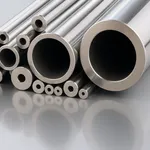
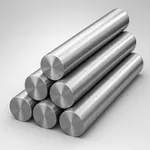
This image was created with artificial intelligence – marked under Art. 50 of the AI Act, Regulation (EU) 2024/1689. It is a placeholder until the company's photos arrive.
CNC turning of aluminium
CNC turning of aluminium explained: precision, surface quality and repeatability in focus – when the process is worth it.
In CNC turning, a rotating workpiece is machined precisely with a stationary tool to produce cylindrical and conical shapes. This definition provides a clear introduction and makes it clear that this is a process in which the rotation of the workpiece is the central element.
The CNC turning of aluminium is one of the most precise, efficient and versatile processes in modern metalworking. It enables the production of highly accurate, rotationally symmetrical components that are used in virtually all branches of industry – from mechanical engineering and medical technology through to aviation. The particular advantage lies in the combination of dimensional accuracy, reproducibility and a smooth surface finish, which in many cases requires no additional reworking.
Computer-aided control of the turning motion and tool guidance makes it possible to produce even complex contours with minimal scrap. For companies that prioritise quality and efficiency, the CNC turning of aluminium is therefore one of the key manufacturing technologies of the future.
Distinction from CNC milling
In CNC milling, the tool rotates and removes material from a stationary workpiece. In turning, by contrast, the workpiece itself rotates while the tool is guided linearly along its surface. This fundamental difference has a direct effect on the shapes that can be produced: milling is ideal for prismatic and complex geometries, while turning is suited to cylindrical and rotationally symmetrical components.
A decisive advantage of CNC turning lies in the high process speed. The cutting forces act evenly along the workpiece surface, which enables excellent surface quality and a long tool life. Modern turn-mill centres combine both processes in one machine – for example, mating surfaces can be milled and sealing faces then turned precisely without the workpiece having to be re-clamped. This combination saves time, reduces tolerance deviations and significantly increases process reliability.
Typical geometries and fields of application
CNC-turned aluminium parts are found in virtually all industrial sectors. Typical geometries are:
- Shafts and journals: for motors, pumps and gearboxes
- Sleeves, flanges and bushes: as connecting elements or housing parts
- Precision bolts and threaded parts: for assembly and fastening technology
- Rings and discs: with exact concentricity and face runout accuracy
Application examples range from sensor sleeves in metrology and lightweight components in mechanical engineering through to optical adjustment elements and sealing housings in fluid technology. Thanks to low material wear and high dimensional accuracy, CNC turning is particularly well established in series production with strict quality requirements.
Requirements for aluminium alloys
Not every aluminium alloy is equally well suited to turning. The decisive factor is the combination of machinability, chip formation, strength and surface reaction.
| Alloy | Properties | Advantages | Typical applications |
|---|---|---|---|
| EN AW-2011 (AlCuBiPb) | Very good chip formation, short chips | High cutting speed, best surfaces | Precision engineering, connection technology |
| EN AW-6082 | Tough, dimensionally stable, corrosion-resistant | Universally applicable, structurally load-bearing | Mechanical engineering, vehicle construction |
| EN AW-6061 | Good weldability, dimensionally stable | Good combination of strength and machinability | Housings, mounts |
| EN AW-7075 | Very strong, but abrasive | Suitable for highly stressed components | Aviation, motorsport |
| EN AW-1050 | Very soft, high purity | Suitable for simple turned parts | Electrical engineering, reflectors |
Influence on surface roughness
The achievable surface roughness (Ra) depends directly on the tool, feed rate, cutting speed and lubrication.
| Machining parameter | Influence on roughness (Ra) | Recommendation |
|---|---|---|
| High cutting speed | Lower roughness | Use of fine-ground carbide tools |
| Large feed rate | Higher roughness | Use only on non-critical surfaces |
| Coolant / MQL | Reduced friction | Improvement of tool life and surface |
| Cutting edge with wiper geometry | Very low roughness | Ideal for visible surfaces and sealing faces |
In practice, Ra values between 0.4 µm and 3.2 µm are achieved in the CNC turning of aluminium – depending on the tool, the alloy and the turning strategy.
Tool technology and process parameters
The CNC turning of aluminium requires the most modern tool technologies and precisely matched process parameters. In practice, the average tool life is around 6 to 10 hours per cutting edge, depending on the alloy, lubrication and speed. The use of minimum quantity lubrication (MQL) can extend tool life by up to 30 % while at the same time reducing lubricant consumption by around 80 %. High-performance coated cutting materials such as carbide with a polished cutting edge or diamond-coated tools (PCD/CBN) prevent soft aluminium chips from adhering and enable consistently high surface qualities. The choice of parameters – from cutting speed and feed rate through to depth of cut – always depends on the alloy, the workpiece diameter and the required accuracy.
The CNC turning of aluminium requires the most modern tool technologies and precisely matched process parameters. High-performance coated cutting materials such as carbide with a polished cutting edge or diamond-coated tools (PCD/CBN) prevent soft aluminium chips from adhering and enable consistently high surface qualities. The choice of parameters – from cutting speed and feed rate through to depth of cut – always depends on the alloy, the workpiece diameter and the required accuracy.
A typical machining operation is in the range of 400 to 1200 m/min cutting speed, 0.05–0.3 mm feed per revolution and 0.2–3 mm depth of cut. Instead of classic wet machining, minimum quantity lubrication (MQL) is often used, which reduces friction while at the same time minimising lubricant consumption. In high-performance cutting (HPC), chips are actively broken in order to improve heat dissipation and avoid tool downtime. This precise coordination ensures consistent process reliability even over long production cycles.
Machining times and cost-effectiveness
- Short cycle times: Modern CNC turning centres enable extremely fast machining cycles, as tool changes are automated and positioning movements are optimised.
- High process stability: Precise control and digital monitoring keep dimensional accuracy constant even in series production.
- Automated loading and unloading: Robot systems or bar feeder magazines reduce set-up times and increase productivity.
- Economic comparison: In contrast to milling, turning is particularly convincing for rotationally symmetrical geometries.
- Rule of thumb: CNC turning is particularly worthwhile when the workpiece is round, the tolerance range is narrow and the quantity is high.
Practical example: precision sleeve for sensor technology
- Material: EN AW-6061
- Dimensions: length 75 mm, tolerance ±0.01 mm
- Machining time: approx. 2 minutes per piece
- Process parameters: cutting speed 800 m/min, feed 0.1 mm/rev
- Result: surface with Ra = 0.6 µm, consistent dimensional accuracy over 1000 parts
- Efficiency: Automated chuck and MQL lubrication reduced tool wear by 25 %
- Benefit: High precision combined with low manufacturing costs and sustainable use of resources
Sustainability and material efficiency
Aluminium recycling enables considerable CO₂ savings for industrial companies, since recycling the material consumes up to 95 % less energy compared with primary production. This ecological significance makes the CNC turning of aluminium not only economically attractive but also relevant to environmental policy.
The CNC turning of aluminium is a prime example of the combination of precision and resource conservation. Aluminium is almost fully recyclable, and the chips produced during machining can be reused without any loss of quality. In modern manufacturing companies, process data is continuously monitored in order to extend tool lives and optimise material use. This reduces not only production costs but also energy consumption.
Compared with the production of primary aluminium, recycling saves up to 95 % energy, and reusing the chips keeps the ecological footprint low. In addition, minimum quantity lubrication and digital process control significantly reduce the consumption of lubricants and coolants. The interplay of process stability, recyclability and energy efficiency makes CNC turning a sustainable manufacturing technology with a future.
Future prospects: digitalisation and adaptive manufacturing
Alongside digital advances, new materials and sensor-based process control are also becoming increasingly important. Innovative aluminium alloys with higher temperature resistance and improved damping properties are expanding the range of applications. At the same time, integrated sensors in tool holders and spindles enable more precise recording of forces, vibrations and temperatures. This data forms the basis for adaptive control loops that optimise machining processes in real time and thereby further improve quality, tool life and energy efficiency.
Digitalisation is revolutionising CNC turning in all process phases. Intelligent machines monitor themselves, detect deviations in real time and adjust cutting parameters automatically. AI-supported systems analyse tool wear, chip formation and vibration behaviour in order to ensure consistent quality.
Adaptive manufacturing systems also enable flexible production: machines communicate with one another, automatically detect material properties and correct machining strategies independently. This development leads to a new generation of manufacturing processes in which humans and machines work in close interaction. The goal: maximum throughput with minimum energy consumption – with consistently high precision across all batch sizes.
Precision, efficiency and future-proofing
The CNC turning of aluminium is more than just a proven manufacturing process – it is a strategic key process of modern industrial production. It combines speed, cost-effectiveness and technological precision in a form that hardly any other process can achieve. Particularly in combination with digital process control and sustainable material use, CNC turning remains a future-proof tool for all industries in which quality and repeat accuracy matter.
Its advantages – from flawless surfaces and tight tolerances through to energy efficiency – make the process one of the supporting pillars of modern machining. With advancing automation and integration into intelligent manufacturing networks, CNC turning will remain indispensable in the future as well.
Rely on precise turned parts: get advice on materials and manufacturing or realise your project with custom-fit aluminium cut pieces as a basis.
FAQ
When is CNC turning better than milling? Whenever the workpiece is rotationally symmetrical and high dimensional or concentricity tolerances are required.
Which aluminium alloys are best suited to turning? EN AW-2011, 6082, 6061 and 7075 are particularly easy to machine and deliver clean surfaces.
What surface quality can be achieved in CNC turning? Depending on the tool and feed rate, roughnesses between Ra 0.4 µm and 3.2 µm are possible.
How does CNC turning affect sustainability? Thanks to high energy efficiency, full recyclability and minimal material losses, the process is regarded as environmentally friendly and future-proof.
How does digitalisation affect CNC turning? Data-based process optimisation, real-time monitoring and AI-supported tool analyses continuously improve quality and productivity.
What role does tool selection play in process quality? The choice of the right cutting material and the right coating determines tool life, dimensional accuracy and surface quality – and therefore the cost-effectiveness of the entire manufacturing operation.