Plastics in the military: resistance to oil, UV, sand & chemicals
Which plastics really withstand military field conditions? Comparison of resistance to oil, UV, sand, abrasion and chemicals – including PE 1000, PTFE, PA6 and polycarbonate.
Military vehicles, equipment and housings must function under extreme conditions: oil, UV radiation, sand, dust, chemicals, changing temperatures and mechanical stress act constantly on components.
Plastics play a central role here when it comes to realising robust, lightweight and permanently reliable components. The decisive factor is the choice of a material that withstands the specific field loads.
Find out more here about
Plastics in the defence industry
Why resistance in field deployment is essential
In a military environment, loads occur simultaneously and often unpredictably. Oil and fuels attack less suitable materials, intensive UV radiation leads to embrittlement, sand and dust cause abrasion and mechanical friction.
Chemicals from cleaning, decontamination and operating materials require high resistance. Components must reliably retain their shape, strength and function under these conditions. You can find supplementary basics in the guides on weather resistance, chemical resistance and temperature resistance.
Key types of load in military outdoor deployment
Plastics must cope with a large number of different stresses simultaneously:
- Oil and fuel contact: hydraulic oil, diesel, lubricants
- UV radiation: continuous exposure leads to material ageing
- Sand and abrasion: mechanical wear, friction
- Chemicals: cleaning agents, solvents, decontamination chemicals
- Temperature and weather influences: heat, cold, moisture
The right material selection determines whether a component remains permanently functional or fails prematurely.
Material comparison: PE-1000, PTFE, PA6 and polycarbonate
PE-1000 – abrasion resistance and impact resistance for harsh environments
PE-1000 (UHMW-PE) offers outstanding abrasion resistance, exceptional impact strength and very low moisture absorption. It is extremely resistant to sand and mechanical wear. Typical applications are bump rails, protective covers, sliding surfaces or interior linings in vehicles.
More on this under PE-1000.
PTFE – maximum chemical and temperature resistance
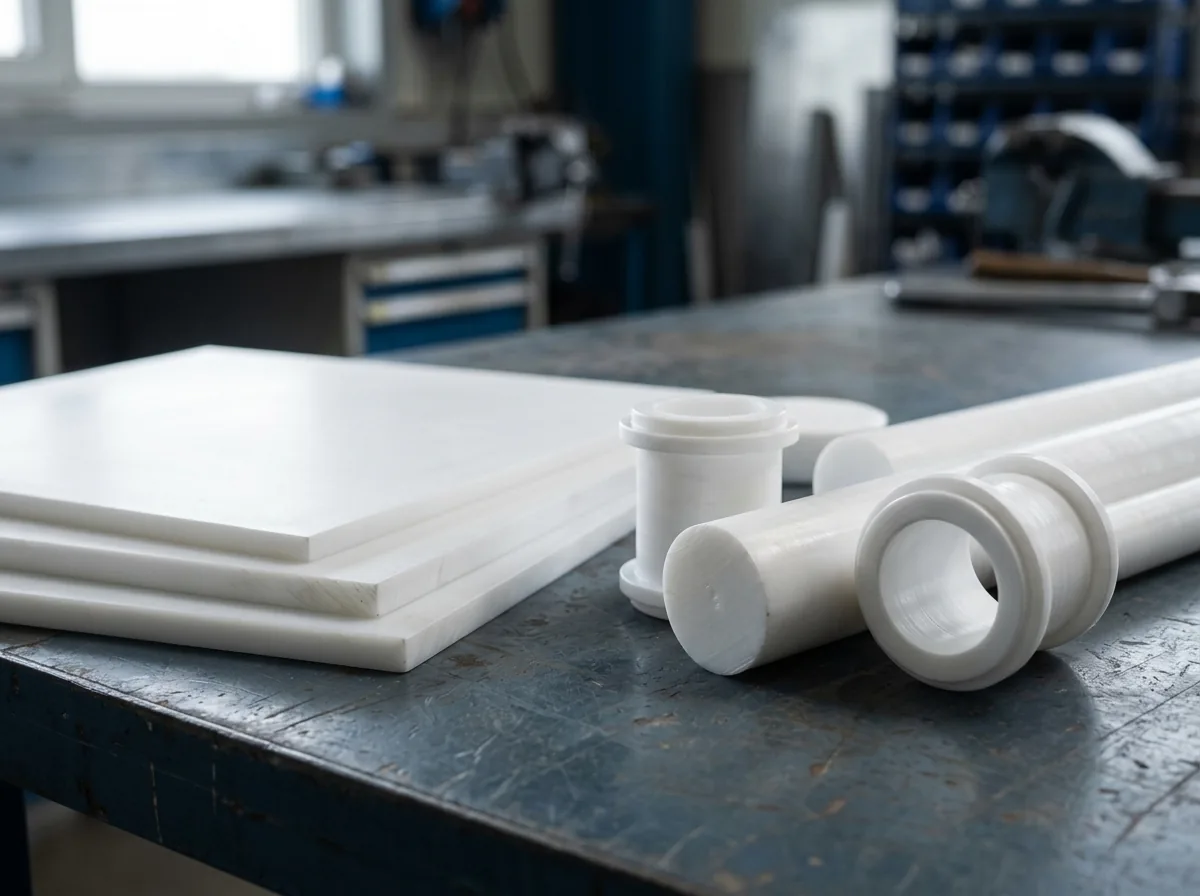
PTFE is almost completely resistant to chemicals, oils and solvents. It remains dimensionally stable even under extreme temperature changes and is ideal for seals, bearing points and functional components that come into contact with aggressive substances.
Material details: PTFE.
PA6 – mechanically robust and oil-resistant
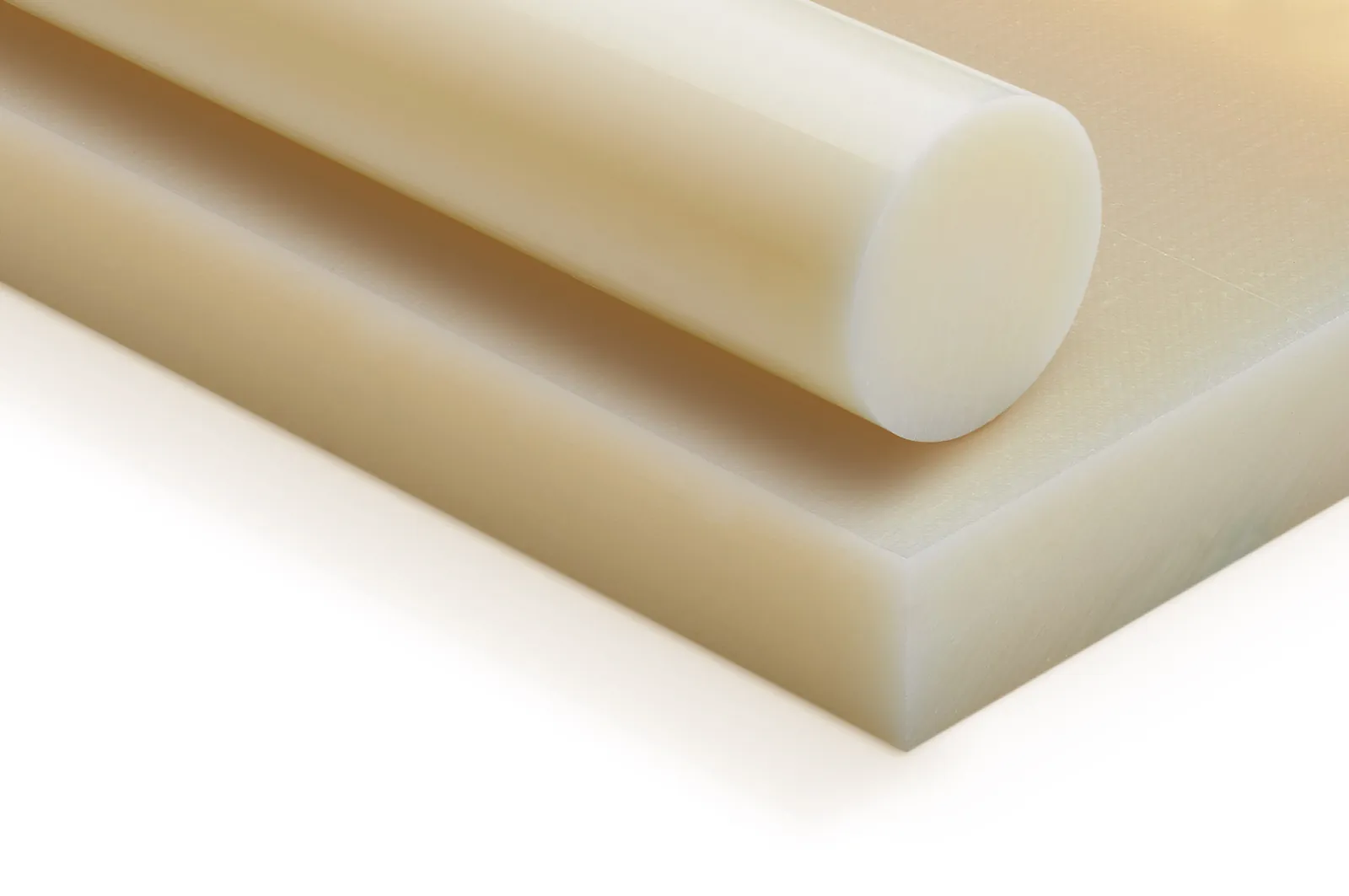
PA6 is a versatile engineering material with good oil resistance and high mechanical load capacity. It is suitable for housings, fastening elements and functional components in vehicles or equipment. However, PA6 is more UV-sensitive and absorbs more moisture than the other materials considered.
More information: PA6.
Polycarbonate – impact-resistant, UV-resistant and transparent
Polycarbonate offers a unique combination of transparency and impact strength. It is particularly suitable for viewing modules, windows, covers or protective panes on vehicles and containers. Polycarbonate shows good weather resistance and reliably withstands mechanical loads.
Details can be found under Polycarbonate.
PEEK – high-performance plastic for extreme field conditions
PEEK combines high temperature resistance, enormous chemical resistance and exceptional mechanical stability. It is suitable for structural functional components, technical modules, bearing bodies and components that are exposed to strong temperature, chemical or continuous loads. Thanks to its dimensional stability, PEEK remains reliable even with rapid temperature changes or contact with oils and aggressive media.
More information can be found under PEEK.
Click here if you would like to order PEEK cut pieces.
Which plastics withstand which loads?
| Material | Oil resistance | UV resistance | Sand/abrasion | Chemicals | Temperature | Typical applications |
|---|---|---|---|---|---|---|
| PE-1000 | good | good | excellent | good | good | bump rails, protective covers, sliding surfaces |
| PTFE | excellent | very good | good | outstanding | very high | seals, bearing points, functional components |
| PA6 | good | moderate | good | good | moderate | housings, functional parts, fastenings |
| Polycarbonate | good | good | good | moderate | good | windows, covers, viewing modules |
| PEEK | excellent | good | very good | very high | very high | highly loaded functional components, technical modules |
Typical areas of use in the defence environment
Plastics are used in virtually all military areas, for example in:
- vehicle components (panelling, functional modules, windows)
- field containers (door modules, impact edges, covers)
- tactical equipment (housings, encapsulations, protective modules)
- unmanned systems (sensor covers, interior modules)
- mobile deployment devices (friction surfaces, fuel-exposed components)
They enable long-lasting, lightweight and corrosion-free solutions that prove themselves even under adverse conditions.
Limits: where even robust plastics are not enough
Plastics are highly load-bearing, but they reach their limits when extreme requirements occur:
- high continuous temperatures
- direct flame exposure
- structural armour
- ballistic core functions
For these areas, metallic or ceramic composite systems are required. Further information on applications subject to impact and shock loads can be found in the article on the ballistic environment.
The right material selection ensures operational capability
Whether vehicle, container, equipment or housing – plastics significantly improve the durability and function of military systems. PE-1000 convinces with abrasion and sand, PTFE with chemicals and temperature, PA6 with mechanical applications and Polycarbonate with impact-resistant viewing modules. With the right selection, operational capability is maintained even under extreme field conditions.