POM, PA or PEEK – Which material for mechanical engineering?
Which plastic is best suited for mechanical engineering? Comparison of properties, advantages and areas of application.
In modern mechanical engineering, plastics are indispensable. They increasingly replace metal components, save weight, reduce costs and offer specific advantages in terms of friction, wear and chemical resistance. But which plastic is the right one? POM, PA and PEEK are used particularly often. This article highlights the differences between these materials and helps with selecting the right material for your application.
POM: Versatile, precise, durable
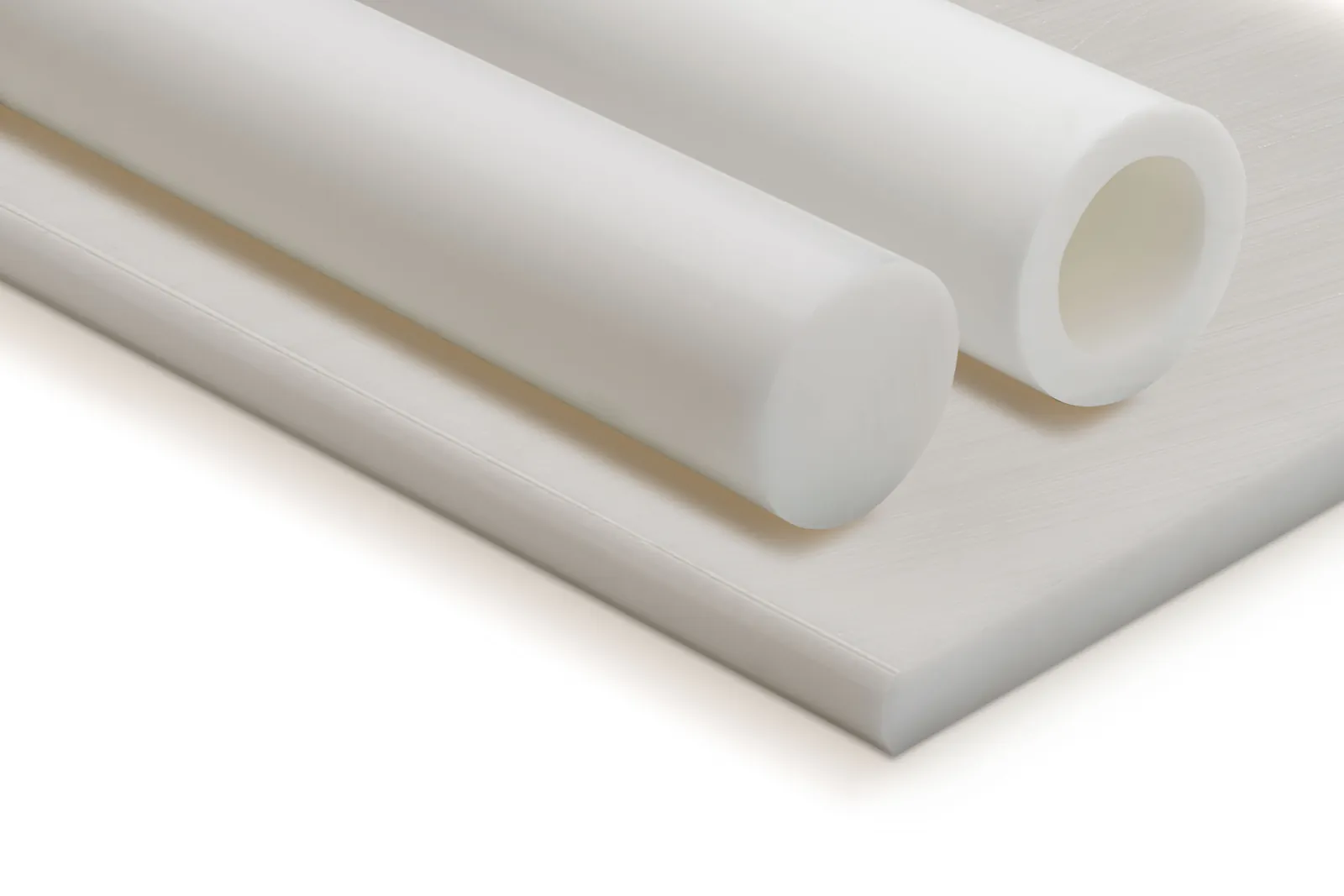
Polyoxymethylene (POM) is an engineering plastic with high dimensional stability and very good mechanical properties. It is particularly popular for precise components with tight tolerances.
Properties:
- high stiffness and strength
- good sliding and friction values
- low water absorption
- high dimensional accuracy
- good chemical resistance to oils, greases and fuels
Typical applications:
- gears, plain bearings, guide elements
- pump parts, valves, housings
- food technology (in FDA-compliant versions)
PA: Tough, flexible and economical
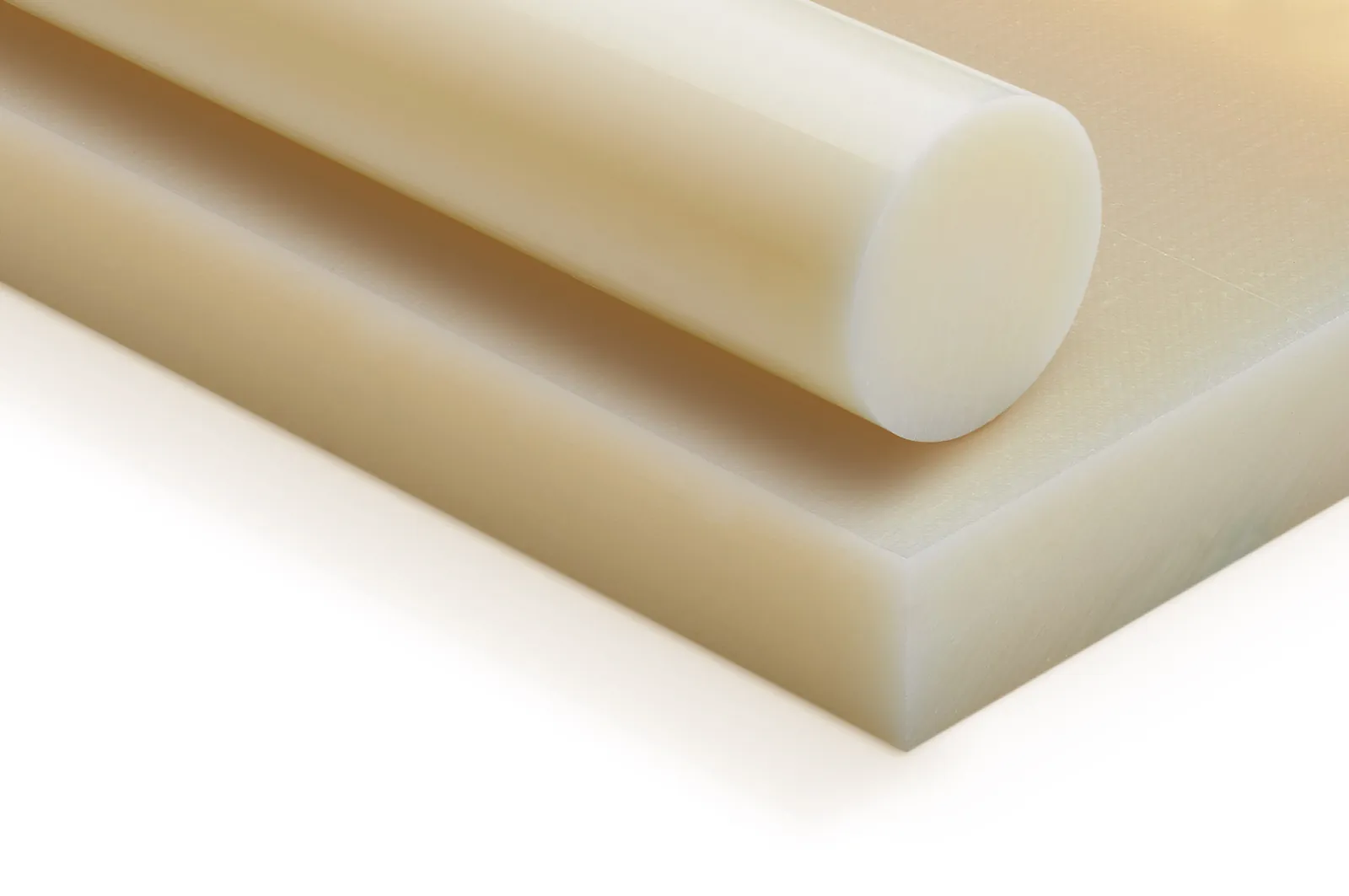
Polyamide (PA) is one of the most common industrial plastics and is available in many variants – including PA6, PA66 and glass-fibre-reinforced types.
Properties:
- high toughness and impact strength
- good wear resistance
- good damping properties
- cost-effective
- absorbs moisture (changes mechanical properties)
Typical applications:
- bearings, bushes, wheels, rollers
- components with a shock-absorbing effect
- cladding elements, covers
PEEK: The high-performance plastic
Polyetheretherketone (PEEK) is regarded as one of the most high-performance plastics on the market. It combines excellent mechanical, thermal and chemical properties, but is considerably more expensive than POM or PA.
Properties:
- very high temperature resistance (continuously up to 250°C)
- extremely high strength and stiffness
- resistant to almost all chemicals
- very good sliding and friction values
- biocompatible and FDA-compliant
Typical applications:
- high-temperature bearings, valves, pump parts
- applications in aviation, medical technology, semiconductor industry
- components with extreme requirements
POM vs. PA vs. PEEK – The comparison
| Property | POM | PA | PEEK |
|---|---|---|---|
| Strength | high | medium | very high |
| Temperature resistance | up to approx. 100°C | up to approx. 120°C | up to approx. 250°C |
| Chemical resistance | good | limited | excellent |
| Moisture absorption | very low | high | very low |
| Price level | low to medium | low | high |
| Sliding/friction behaviour | very good | good | very good |
Decision-making aid for design engineers
The selection of the suitable material depends heavily on the requirements of your application:
POM is suitable when you need precise, low-friction and dimensionally stable parts – for example for mechanical guides, gears or housing parts.
PA is the first choice when cost-effectiveness and impact toughness are the priority. Especially for parts that are exposed to mechanical loads, PA is often sufficient.
PEEK is worthwhile when extreme requirements apply – for example at high temperature, with aggressive media or very high loads. In such cases, the performance justifies the high price.
Conclusion
Industrial plastics such as POM, PA and PEEK each offer specific advantages for mechanical engineering. While POM and PA score above all in the standard range thanks to their cost-effectiveness, PEEK sets new standards in high-performance applications. A targeted selection based on area of application, load and budget is decisive for the optimum material choice.
Through a structured comparison and clear assessment of requirements, wrong decisions can be avoided and the performance of your design secured in the long term.