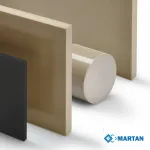
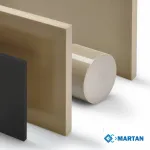
The special role of engineering plastics in industry
Find out how engineering plastics have shaped industry for many years in this blog article.
The world of plastics has experienced a revolutionary development over the last few decades, particularly in the field of engineering plastics. These special plastics have a broad range of applications and play a decisive role in the most diverse industries.
Innovations in the world of plastics:
Our plastics, also known as engineering thermoplastics, are characterised by their impressive mechanical, thermal and chemical properties. These plastics are produced by polymerisation and can be brought into various shapes by different processes. The innovations in this field have led to an impressive variety of products, each optimised for specific applications.
An example of a ground-breaking development are high-performance plastics such as polyetheretherketone (PEEK) and polyethylene (PE). These exhibit exceptional heat resistance, chemical resistance and mechanical strength, which makes them ideal for demanding applications in aerospace, electronics and medical technology.
Applications of engineering plastics:
1. Automotive industry:
In the automotive industry they have found a firm place. They are used for the manufacture of components such as bumpers, interior fittings, engine covers and even structural parts. Plastics offer a weight reduction compared with traditional materials such as metal, which leads to improved fuel efficiency.
2. Electronics and electrical engineering:
In the electronics industry they are indispensable due to their electrical insulating properties and heat resistance. They are used for the manufacture of housings for electronic devices, connectors and cable insulation.
3. Medical technology:
Engineering plastics play a decisive role in medical technology, where strict requirements apply to biocompatibility and sterilizability. They are used for the manufacture of implants, medical devices, laboratory ware and packaging.
4. Aerospace:
The aerospace industry benefits from the unique properties of plastics. They are used for components in aircraft, satellites and spacecraft, where low weight and high strength are crucial.
5. Construction:
In construction, engineering plastics find application in the form of insulation materials, window profiles, pipes and sealing systems. Their resistance to weathering and chemicals makes them a reliable choice for construction projects.
6. Packaging industry:
They also play a decisive role in the packaging industry. Their diverse properties, including flexibility, transparency and barrier protection, make them ideal for the manufacture of food packaging, films, bottles and other packaging materials.
7. Sports equipment:
From lightweight and robust helmets to protective clothing and sports equipment such as tennis rackets and ski helmets – engineering plastics offer the perfect combination of strength and flexibility to optimise sports equipment and ensure the safety of users.
8. Energy generation:
In the energy industry, engineering plastics are used for the manufacture of components in renewable energy systems. Wind turbines benefit from plastics with high resistance to environmental influences, while solar modules benefit from lightweight and UV-resistant plastics.
9. Food industry:
In the food industry, engineering plastics are used for machine components that process and package food. They meet strict hygiene requirements, are easy to clean and help to ensure food safety.
10. Furniture industry:
Engineering plastics find application in the furniture industry, particularly in the manufacture of modern furniture. They offer designers the freedom to create innovative shapes and structures, while at the same time being durable and easy to maintain.
Conclusion:
Engineering plastics have fundamentally changed the way we design and manufacture products. Their unique properties open up a multitude of possible applications in various industries. From the automotive industry to electronics and on to medical technology and aerospace, engineering plastics can no longer be imagined away from the modern world.
Continuous research and development in this field will undoubtedly lead to further innovations and expand the possible uses of engineering plastics in the future. However, it is also up to us to handle these materials responsibly and to promote sustainable solutions in order to minimise environmental impact and secure a sustainable future.
But plastic sheets are also a very good choice for private use, for example as weather-resistant sheets for outdoor use.