Plastic sheets
PE 300 (PE-HD) sheet – cut to size
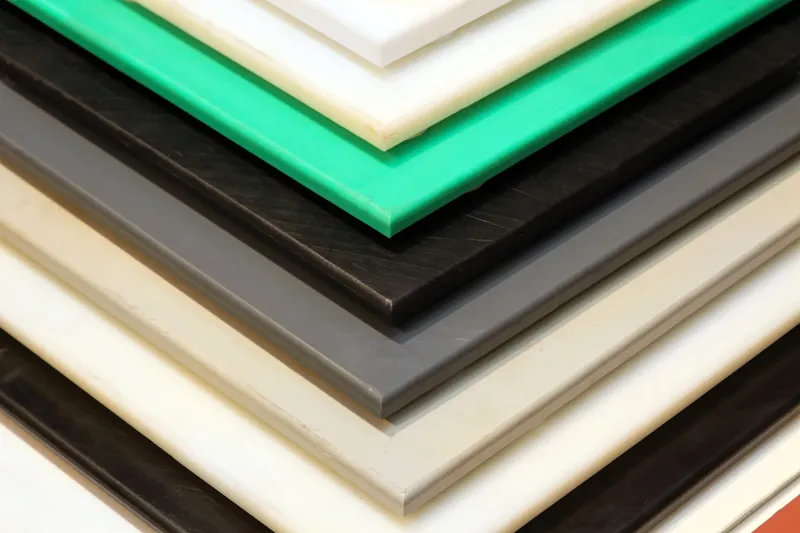
PE and HDPE sheets cut to size HDPE sheets, also known as PE 300 or PE-HD (High Density Polyethylene), are sheets made of polyethylene with a high density…
Colour
Description
PE and HDPE sheets cut to size
HDPE sheets, also known as PE 300 or PE-HD (High Density Polyethylene), are sheets made of polyethylene with a high density. This material stands out for its excellent chemical resistance and is resistant to most acids, alkalis, organic solvents and hot water. These properties make PE sheets particularly insensitive to chemical influences.
Thanks to its outstanding insulating properties, PE 300 is an ideal material for numerous industrial applications. It is easy to machine and is frequently used in chemical apparatus and tank construction. HDPE sheets in particular also offer high impact strength and rigidity, which makes them versatile in use.
What is HDPE?
HDPE stands for "High Density Polyethylene" and refers to a high-density polyethylene plastic from the PE-HD material group. HDPE sheets are characterised by their high impact strength, very good chemical resistance and low water absorption. This makes HDPE plastic suitable for numerous industrial applications, for example in mechanical engineering, tank construction, the food industry or conveyor technology.
PE-300 sheets belong to the group of HDPE sheets and offer a robust, durable and versatile solution for technical applications. The material can be milled, sawn, welded and machined and is frequently used as a low-wear plastic for slide rails, covers or technical cut pieces.
HDPE sheets (PE-HD) at a glance
HDPE sheets, also referred to as PE-HD sheets (high density polyethylene), are among the most commonly used engineering plastics. The material designation PE300 stands for a high-density polyethylene with very good chemical resistance, high impact strength and low moisture absorption. Because of these properties, HDPE sheets are used in numerous industrial applications.
A key advantage of HDPE plastic is its combination of robustness and low weight. PE-HD sheets are resistant to many acids, alkalis and cleaning agents and are therefore suitable for use in damp or chemically exposed environments. At the same time, the sheets are very easy to machine, mill, saw, drill and weld.
Typical areas of use for HDPE sheets are machine cladding, tank construction, conveyor technology, water treatment, the food industry and technical covers. Thanks to their smooth surface and good cleanability, polyethylene sheets are also frequently used in hygienically sensitive areas.
Within the PE-HD materials, PE300 represents the standard variant and offers a balanced ratio of cost-effectiveness, stability and resistance. For applications with higher requirements for wear resistance or sliding properties, PE500 or PE1000 are used as alternatives.
Advantages of HDPE sheets
- Light and stable: PE sheets are stable and light, which makes transport and installation easier.
- Waterproof and weather-resistant: Resistant to moisture and weather influences.
- Chemical-resistant: Resistant to many chemicals, ideal for industrial applications.
- Easy to process: HDPE and PE 300 sheets can be cut, milled and welded well.
- Recyclable: Fully recyclable and environmentally friendly.
Different PE types and their properties
- PE-LD (Low Density Polyethylene): Soft and flexible, low density, ideal for films, bags and packaging.
- PE-HD (High Density Polyethylene): High density, strength and rigidity, suitable for pipes, tanks and components.
- PE-HMW (High Molecular Weight Polyethylene): Particularly tough and abrasion-resistant, ideal for protective clothing, prostheses and wear parts.
PE sheets and HDPE sheets are a practical and cost-efficient solution for applications in the construction industry, mechanical engineering and the private sector. In contrast to PVC sheets, which are frequently used for pipes, window frames and floor coverings, or acrylic glass cut to size, which has its area of use as a display or transparent partition, polyethylene sheets are used in packaging, tanks and technical components.
What is the difference between PE 300 and PE 1000?
- PE 300: A robust and versatile material, ideal for general applications that require stability and resistance.
- PE 1000: Thanks to its ultra-high molecular mass, this variant offers superior mechanical properties, particularly in terms of abrasion resistance, impact strength and sliding properties. It is preferred for demanding industrial applications.
Our PE sheets and HDPE sheets are an excellent choice for numerous industrial applications. Download our data sheet for PE 300 to learn more about the technical properties.
Would you like to learn more about HDPE? Then you will find the relevant article here: What is HDPE?Processing of PE sheets
Cut to size
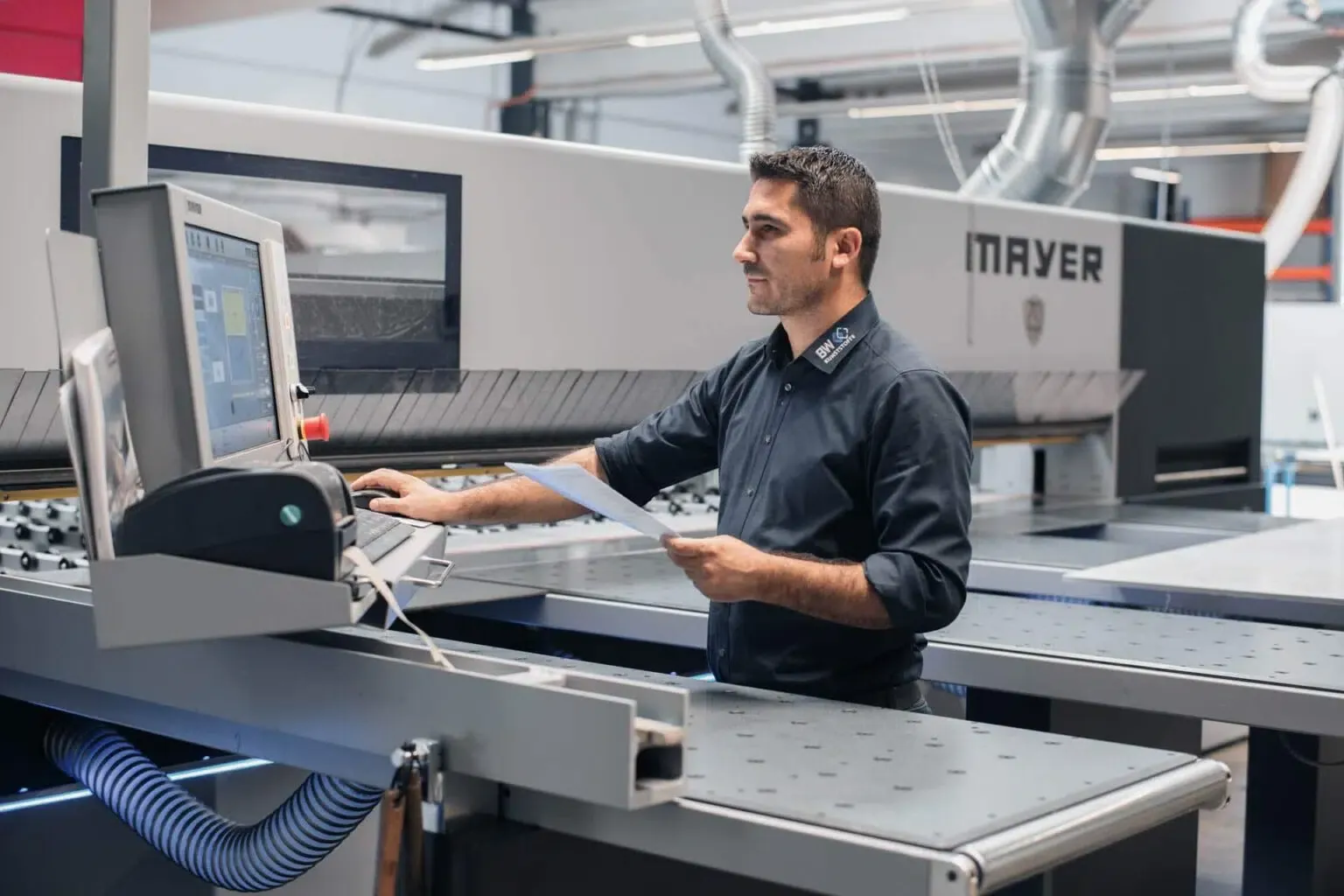
PE sheets can easily be cut to the desired dimensions. Common tools such as circular saws or cutters are excellent for cutting to size. Due to the flexibility of LDPE sheets, precise work may be required here.
Welding and bonding
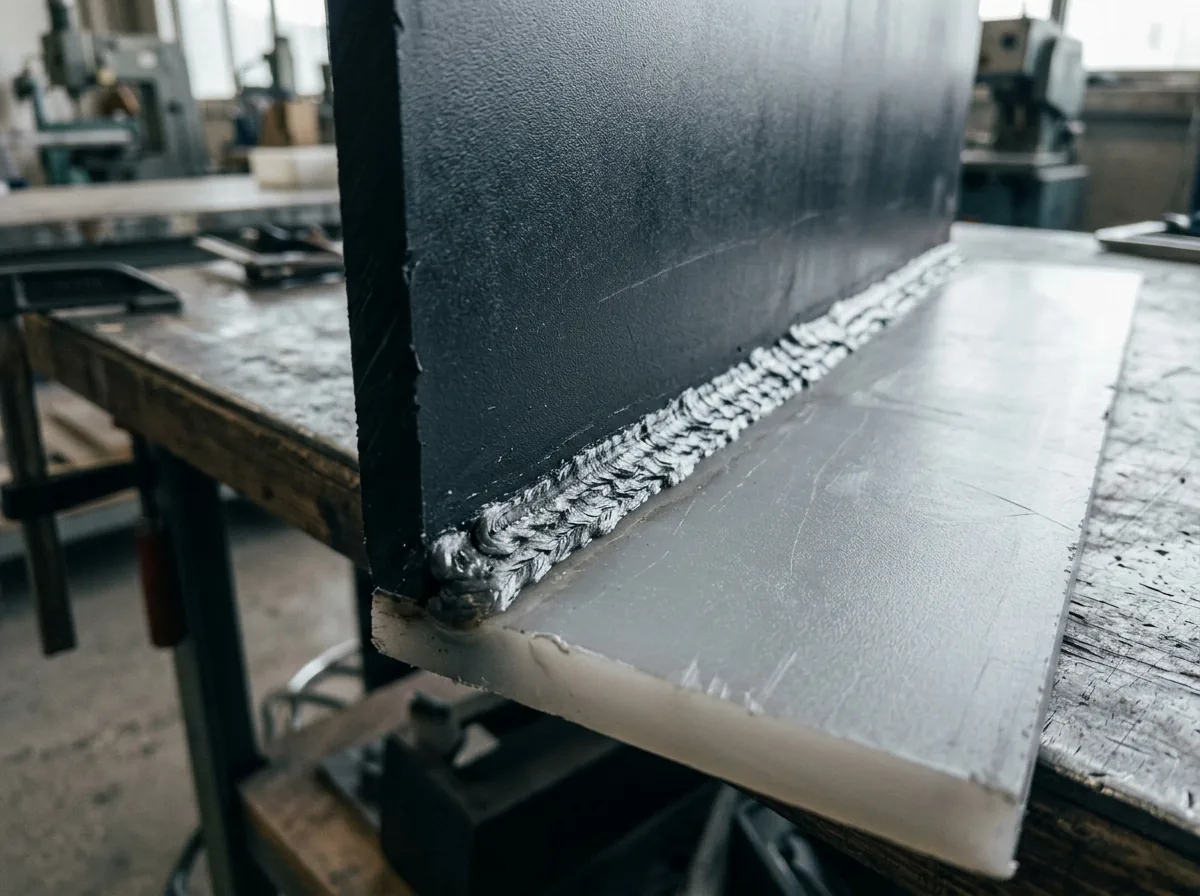
PE sheets can be joined by welding. This is the preferred method, as the material is difficult to bond due to its low surface energy. For special applications, however, suitable adhesives are available that enable a permanent bond.
Printing and processing
Due to its structure, the surface of PE sheets is not ideal for direct printing. However, pre-treatments such as corona or plasma treatment improve the adhesion of printing inks or coatings.
Typical applications of HDPE sheets
HDPE sheets or PE-300 sheets are used in many industrial areas. Thanks to their high impact strength, good chemical resistance and ease of processing, they are suitable for technical and mechanically stressed applications.
- Mechanical engineering
HDPE sheets are frequently used for covers, guides, slide rails or wear parts in mechanical engineering. - Food industry
Due to their moisture resistance and hygienic properties, PE-HD plastics are suitable for applications in food processing. - Tank and plant construction
HDPE plastic is used for chemical-resistant tanks, linings and technical constructions. - Conveyor technology
PE-300 sheets are used as sliding supports, chain guides or protective plates in conveyor systems. - Cut pieces and technical components
HDPE sheets can be milled, sawn and machined well and are therefore suitable for custom plastic cut pieces to size.
Difference between PE300, PE500 and PE1000
PE300, PE500 and PE1000 all belong to the polyethylene (PE) material group, but differ in terms of their molecular weight and the resulting properties. The higher the molecular weight, the better the sliding and wear properties of the material generally are.
Property PE300 PE500 PE1000 Material group PE-HD PE-HMW PE-UHMW Molecular weight Low Medium Very high Wear resistance Good Very good Outstanding Sliding properties Good Very good Excellent Impact strength High Very high Extremely high Moisture absorption Very low Very low Very low Chemical resistance Very good Very good Very good Machinability Very good Good Good Price level Inexpensive Medium Higher
PE300 is frequently used for general technical applications where good chemical resistance, high impact strength and cost-effective use of material are required. Typical areas of use are tank construction, machine covers, technical cladding and simple sliding surfaces.PE500 already offers significantly better wear and sliding properties.
The material is therefore frequently used for guides, slide rails, conveyor systems and mechanically stressed components.
PE1000 stands out for its exceptionally high abrasion resistance and very low coefficient of friction. This makes this material particularly suitable for applications in conveyor technology, the bulk materials industry, the food industry and wherever components are permanently exposed to high loads and friction.For many standard applications, PE300 is the most cost-effective solution. However, if wear resistance, sliding properties or the service life of the components are the priority, PE500 or PE1000 may be the better choice.
That is why PE sheets
- High durability: They withstand loads and weather influences.
- Chemical resistance: Ideal for contact with aggressive substances.
- Cost-effectiveness: The low weight saves transport and material costs.
- Versatility: Numerous variants for special requirements.
- Environmental friendliness: Many PE sheets are recyclable and sustainable.
Care of PE sheets
PE sheets are extremely easy to care for. They can simply be cleaned with water and mild cleaning agents. Due to their chemical resistance, stronger cleaners can also be used without damaging the material. However, avoid using abrasive agents to prevent scratches.
Properties
- High chemical resistance: PE is resistant to many chemicals, acids and alkalis
- Good electrical insulating properties: PE is a good insulator, ideal for cables and electrical applications
- Low weight: PE is light, well suited for packaging and transport applications
- High toughness and flexibility: PE is tough and flexible, ideal for films, hoses and pipes
- Food-safe: Some PE types are suitable for food packaging
- Processability: PE can easily be processed by extrusion, injection moulding or blow moulding
- Recyclable: PE can be recycled and processed into new products
PE sheets stand out for a wide range of properties that predestine them for different applications:
Comparison of HDPE and LDPE sheets
| Property | HDPE | LDPE |
|---|---|---|
| Density | Higher | Lower |
| Strength | Higher | More flexible |
| Temperature resistance | -50 °C to +80 °C | -50 °C to +70 °C |
| Application | Technical applications | Packaging, films |
Applications
Polyethylene sheets and polyethylene sheet cut pieces are made from various PE types and offered in various thicknesses and dimensions. They can be used for a wide range of applications, for example:
- Mechanical engineering: PE sheets for protective covers and machine components
- Furniture construction: PE sheets for furniture and kitchen fronts
- Advertising: PE sheets for advertising boards and displays
- Construction: PE sheets for seals and sound insulation
- Tank construction: PE 300 for tanks and chemical apparatus
- Cutting mats: PE 300 for chopping boards due to low wear
- Conveyor technology: PE 300 for low-friction sliding movements
- Food industry: PE-HD for easy cleaning
- Pipeline construction: PE 300 for chemical-resistant pipe systems
Construction and engineering
PE sheets are frequently used in construction as protective or sliding material. Their durability and water resistance make them ideal for applications such as:
- Covers
- Slide guides
- Water barriers
Food industry
Food-safe PE sheets are widely used in food processing due to their hygiene and cleaning properties. Typical applications are:
- Chopping boards
- Conveyor belts
- Partitions
Agriculture
In agriculture, PE sheets are used in irrigation systems or as protective material in stables. Their resistance to moisture and chemicals is an advantage here.
Packaging and logistics
LDPE sheets are often used in packaging because they are flexible and light. Examples of this are:
- Transport containers
- Protective films
Frequently asked questions about HDPE sheets
What is the difference between PE-300 and HDPE?
PE-300 belongs to the HDPE or PE-HD material group. HDPE stands for "High Density Polyethylene", while PE-300 describes the specific material version.
Are HDPE sheets chemical-resistant?
Yes, HDPE sheets have very good resistance to many chemicals, acids and alkalis. They are therefore frequently used in tank and plant construction.
Can PE-300 sheets be machined?
PE-300 sheets can be sawn, milled, drilled and welded very well. The material is therefore suitable for custom cut pieces and technical components.
Are HDPE sheets food-safe?
Many PE-HD materials are suitable for applications in the food sector. The exact suitability depends on the respective version and certification.
For which applications are HDPE sheets suitable?
HDPE sheets are used, among other things, in mechanical engineering, conveyor technology, tank construction, the food industry and for technical covers and sliding elements.
- HDPE stands for High-Density Polyethylene, which describes the material class. It is a thermoplastic material with high density and good chemical resistance.
- PE 300 is an alternative designation for the same material and is mainly used in the engineering plastics industry to indicate the density type (300 kg/m³ = HDPE).
Technical data
Physical properties:
- Density: 0.940 – 0.970 g/cm³
- Water absorption: < 0.01 %
- Melting temperature: 130 – 145 °C
- Flexural modulus of elasticity: 800 – 1,000 MPa
- Tensile modulus: 900 MPa
- Shore hardness (D): 60 – 70
Mechanical properties:
- Tensile strength: 25 – 37 MPa
- Elongation at break: 600 – 900 %
- Notched impact strength: Very high
- Tear strength: 20 – 30 N/mm²
- Abrasion resistance: High
Thermal properties:
- Service temperature: -50 °C to +80 °C (short-term up to +100 °C)
- Minimum temperature: down to -50 °C
- Thermal conductivity: 0.38 W/(m·K)
- Thermal expansion: 10 – 20 x 10⁻⁵/K
Chemical resistance:
- Resistant to: acids, alkalis, salts, alcohols, petrol
- Not resistant to: strong oxidising agents (nitric acid, chlorine)
Electrical properties:
- Dielectric strength: 40 kV/mm
- Surface resistance: 10¹⁴ – 10¹⁶ Ω
- Volume resistance: 10¹⁴ – 10¹⁶ Ω·cm
- Dielectric constant: 2.3 – 2.4 at 1 MHz