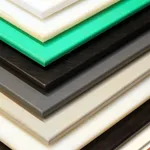
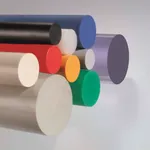
This image was created with artificial intelligence – marked under Art. 50 of the AI Act, Regulation (EU) 2024/1689. It is a placeholder until the company's photos arrive.
What is TPE? Properties, applications & comparison
TPE explained: properties, characteristic values, applications and differences, NBR and rubber. Find the right material for your application.
Thermoplastic elastomers (TPE) combine two material worlds that are frequently required simultaneously in practice: the elasticity of classic rubber materials and the processability of thermoplastic plastics. This produces a material that can be processed like a plastic while at the same time offering the flexibility, damping and feel of an elastomer.
In an industrial context, TPE opens up new possibilities in design and series production. Components can be manufactured efficiently, complex geometries realised economically and material properties tailored specifically. At the same time, companies benefit from high process stability, reproducible results and better integration into existing plastics processing operations.
SEBS-based TPEs are particularly widespread, as they offer high resistance to UV radiation, temperature and ageing. This makes them suitable for both indoor and outdoor applications and provides long-term stable material performance.
Properties of TPE sheets
TPE sheets are suitable for applications that demand flexibility, load-bearing capacity and clean further processing. The mechanical properties are characterised by high elasticity with good resilience. At the same time, the material offers pronounced impact resistance and an elongation of up to 650 %, which means that dynamically loaded components also function reliably. With a Shore A hardness of around 85, there is a balanced compromise between flexibility and stability.
TPE also demonstrates a broad range of service temperatures. The material remains flexible down to about −40 °C and can be used continuously up to around 110 °C. With appropriate stabilisation, the structure remains constant even under UV exposure and elevated temperatures.
In terms of material behaviour, TPE impresses with uniform colourability, good adhesion to PP-based materials and sensible recyclability within production processes.
Processing and production
TPE is generally processed into sheets by extrusion. These semi-finished products can then be converted into the desired geometry by thermoforming. This allows even complex components to be produced from simple starting shapes.
The major advantage lies in the combination of freedom of form and process reliability. Series components can be produced reproducibly, while design adjustments can be implemented quickly at the same time. This makes TPE particularly interesting for applications with medium to high unit volumes.
In addition to thermoforming, injection moulding processes are also used depending on the application, particularly for smaller or more complex components. TPE components can also be welded or joined using suitable processes, creating versatile design solutions.
Typical parameters apply for processing, such as pre-drying for about two hours at 90 °C and a melt temperature in the range of 190 to 200 °C. Higher temperatures are also possible for short periods, although the upper limit of about 250 °C should be observed.
Chemical resistance
The chemical resistance of TPE depends heavily on the specific formulation and the base polymer used (e.g. SEBS, TPU). In principle, TPE shows a broad, practical resistance profile that is sufficient for many industrial applications.
TPE exhibits very high resistance to water, moisture and ozone, making the material well suited to outdoor applications and damp environments. The material structure also remains stable against many cleaning agents, diluted acids and alcohols, which is particularly relevant in hygienic areas or areas that are cleaned regularly.
On contact with oils, greases and fuels, resistance drops significantly depending on the TPE type. In such applications, swelling, loss of properties or a change in the surface may occur. For oil-exposed areas of use, alternative materials such as NBR should therefore be considered, or specially formulated TPE compounds used.
Alkaline media are generally well tolerated in moderate concentrations, while aggressive chemicals or solvents can attack the material structure. Here, a media-specific test under real conditions of use is always recommended.
Practical classification:
- Very well suited: water, ozone, many cleaning agents
- Well suited: alcohol, weak acids and alkalis
- Limited suitability: oils, greases, fuels
- Critical: strong solvents and aggressive chemicals
For safety-critical applications, resistance should always be assessed on the basis of specific media, temperatures and exposure times.
Material variants of TPE
TPE is not a uniform material but comprises various material groups with different properties.
- SEBS: High UV and weathering resistance, suitable for outdoor applications and long-lasting components
- TPU: Very high abrasion resistance and mechanical load-bearing capacity, ideal for heavily stressed parts
- TPO: Cost-efficient variant for large-volume series applications with moderate requirements
Areas of use
- Automotive: TPE is used for interior trim, soft-touch surfaces, cable grommets and shock-absorbing components.
- Medicine and healthcare: In medical applications, TPE impresses with hygienic surfaces, easy cleaning and a pleasant feel.
- Electronics and household appliances: The material is suitable for impact-resistant housings, flexible coatings and functional surfaces.
- Industry: TPE sheets are used for machine cladding, protective lips, sealing surfaces and shock-absorbing elements.
Classification in practice
TPE plays to its strengths whenever requirements for flexibility, cost-effectiveness and series capability come together. Compared with classic elastomers, the material offers advantages in processing, as it can be processed like a thermoplastic and melted down again. This results in more efficient production processes and lower material losses.
At the same time, TPE opens up design freedoms, as complex geometries can be realised economically via thermoforming or other processes. For companies, this means shorter development times, faster adjustments and greater scalability in production.
TPE is particularly relevant in applications where weight is to be reduced, components integrated or surfaces designed functionally. Here the material combines technical performance with economic efficiency.
Comparison: TPE vs other elastomers
| Material | Strength | Weakness | Typical use |
|---|---|---|---|
| TPE | Flexible, thermally deformable, recyclable | Limited oil resistance | Series components, surfaces |
| EPDM | Weathering- and UV-resistant | Low oil resistance | Outdoor applications |
| NBR | High oil resistance | Weaker against UV and ozone | Seals, oil areas |
| Silicone | High temperature resistance | Lower mechanical load-bearing capacity | Medicine, food |
Quality criteria in selection
When selecting TPE, qualitative aspects should be taken into account alongside the technical characteristics. These include a uniform material structure, stable UV properties and reproducible quality in series production. These factors have a decisive influence on the service life and reliability in later use.
Selection aid: When is TPE the right choice?
TPE is particularly suitable when flexible components are to be manufactured in series and cost-effective processing is required at the same time. The material also plays to its advantages in applications with requirements for surface quality, feel or weight. For oil-intensive applications or extreme temperatures, it is worth looking at alternative elastomers.
Typical mistakes in selection
- Incorrect assessment of chemical resistance, particularly with oils and greases
- Unsuitable Shore hardness for the respective load situation
- Temperature range underestimated in real use
- Material selection without taking later processing into account
Technical characteristics (typical)
| Property | Value |
|---|---|
| Hardness | Shore A 85 |
| Temperature range | −40 °C to +110 °C |
| Elongation | up to approx. 650 % |
| UV resistance | good |
| Oil resistance | moderate |
In conclusion
TPE is a modern material for industrial applications, distinguished by its versatility and processability. The combination of elastic behaviour, easy processing and stable material properties makes it an attractive solution for numerous industries.
Companies benefit in particular where classic materials reach their limits or inefficient processes arise. TPE enables clear optimisation of components, manufacturing processes and material use and supports cost-effective series production with high quality.
Typical applications show that both functional and economic advantages can be realised with TPE. It is precisely in the combination of design freedom, material efficiency and series capability that a clear added value arises in industrial use.
For specific requirements, an individual consultation is recommended in order to optimally match material, design and processing to the respective case of use.
Request custom-cut TPE sheets
Further information on materials can be found in our section on elastomers as well as suitable solutions such as rubber sheets or technical seals.
Individual TPE sheets, cut pieces or thermoformed components can be adapted precisely to your requirements. Depending on the area of use, material, hardness and processing are selected specifically in order to achieve an optimal solution.
Get in touch and receive advice on suitable TPE solutions.
Individual TPE sheets, cut pieces or thermoformed components can be adapted precisely to your requirements. Depending on the area of use, material, hardness and processing are selected specifically in order to achieve an optimal solution.
Get in touch and receive advice on suitable TPE solutions.
Frequently asked questions about TPE
Is TPE suitable for outdoor use?
Depending on the type, TPE is suitable for outdoor use. For applications with UV radiation, moisture and changing temperatures, specially matched variants are used.
Which Shore hardnesses are available for TPE?
TPE is available in a broad hardness range. Depending on the application, the spectrum ranges from very soft, flexible materials to significantly firmer versions.
Is TPE food-safe?
Certain TPE types are suitable for contact with food. The respective formulation and the appropriate approvals and tests of the material are decisive here.
Is TPE UV-resistant?
UV resistance depends on the respective TPE type. For permanent outdoor use, compounds with improved weathering and UV stability are available.
Can TPE be recycled?
TPE can be melted down again and further processed. This makes the material well suited to resource-saving production processes and efficient material use.
What is the difference between TPE and classic rubber?
TPE combines elastic properties with thermoplastic processability. Classic rubber is usually vulcanised, while TPE can be processed like a plastic.
For which applications is TPE particularly suitable?
TPE is particularly suitable for seals, profiles, grips, technical moulded parts and series components where flexibility, cost-effectiveness and efficient processing are required.
Is TPE resistant to oil and chemicals?
Resistance to oil, grease and chemicals depends heavily on the material class. For applications with media contact, the selection should always be matched to the area of use.