Plastic sheets
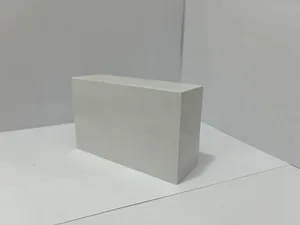
PP sheet – cut to size
PP Sheets - Polypropylene sheets for industrial applications Polypropylene sheets (PP sheets for short) are an extremely versatile solution in the field of…
Description
PP Sheets - Polypropylene sheets for industrial applications
Polypropylene sheets (PP sheets for short) are an extremely versatile solution in the field of engineering plastics. They stand out thanks to their high chemical resistance, their resistance to high temperatures and their extraordinary robustness, which makes them ideal for use in industrial applications.
Thanks to their high strength and low density, PP sheets are a preferred choice for mechanical engineering, tank and container construction, the food industry and many other areas of application. This versatility and reliability make polypropylene sheets an indispensable material in many industries in which technical precision and durability are of decisive importance.
PP sheets are characterised in particular by their ease of machining, which means the sheets can easily be brought into the desired shape. With their high rigidity, they provide a solid basis for constructions that require long-lasting stability.
PP sheets made of polypropylene are suitable for chemically demanding applications, tank and container construction, mechanical engineering and industrial cut pieces. At technischekunststoffe24.de you can obtain PP sheets as cut to size in various thicknesses and formats.
The low density also ensures a low weight, which is an advantage during processing and installation without compromising on mechanical stability. These special properties mean that PP sheets are frequently used for both indoor and outdoor projects.
PP sheets cut to size
PP sheets can be cut precisely to your requirements and adapted for a wide variety of applications. Whether simple rectangular cut pieces, complex contours or machined components – polypropylene stands out thanks to its good machinability and is suitable for one-offs as well as for series production.
Modern CNC milling processes, waterjet cutting and other machining techniques produce dimensionally accurate PP cut pieces for mechanical engineering, tank and container construction, the food industry or the chemical industry. Drilled holes, recesses, milled features and other machining steps can be integrated directly into the production process.
PP sheet cut pieces offer the advantage that material usage, machining effort and assembly times are reduced. Instead of machining standard sheets yourself, you receive precisely fitting components that can be processed or assembled directly.
We manufacture polypropylene sheets to measure in various thicknesses and dimensions and support you in selecting the suitable material for your application.
Advantages of PP sheets
- Chemical resistance against aggressive chemicals, for demanding environments
- Heat resistance: temperature-resistant up to 110 °C (short-term up to 140 °C)
- Food-safe: for the food sector, as no harmful substances are released
- Low moisture absorption: ideal for the food and chemical industry
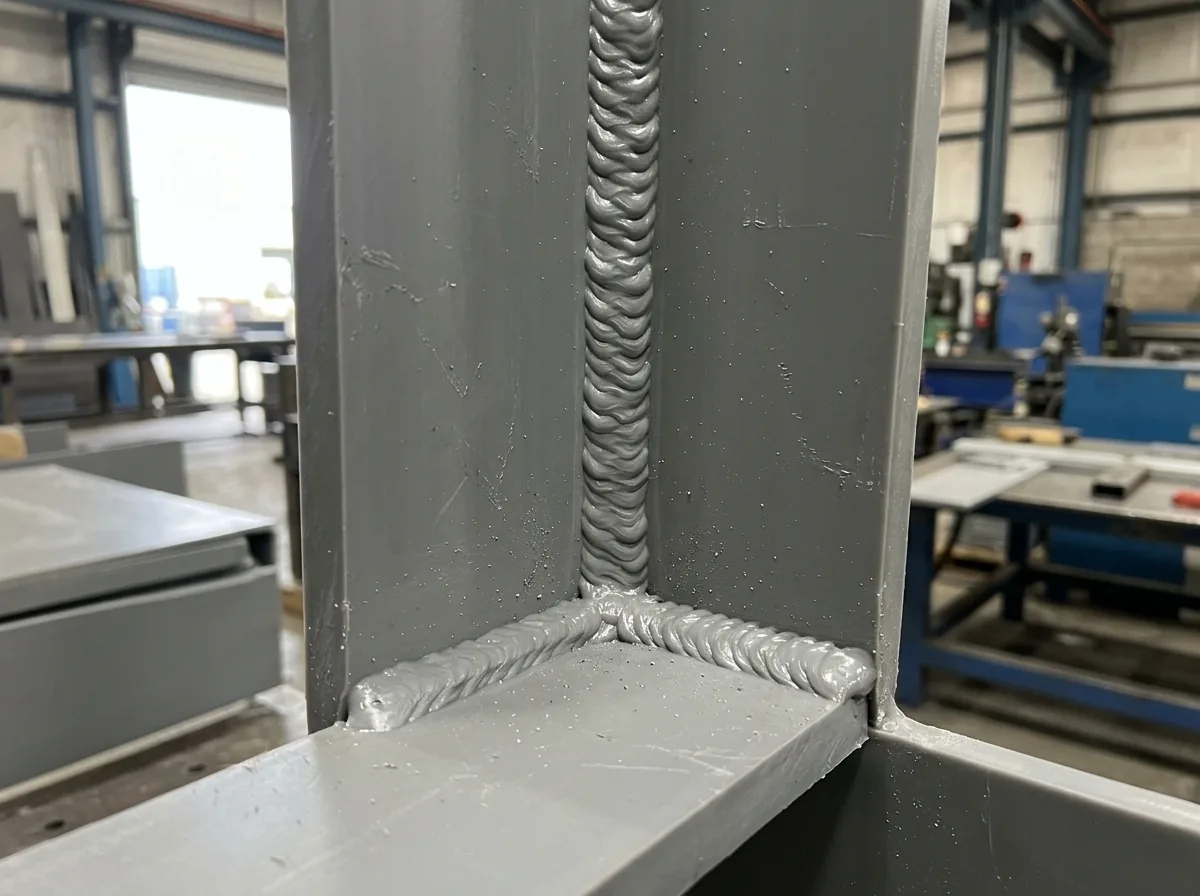
- Easy processing: easy to saw, drill, mill and weld
Buying PP sheets – what to look out for?
Anyone wishing to buy PP sheets should carefully consider the requirements of the later application. Polypropylene stands out thanks to its high chemical resistance, low water absorption and good weldability. As a result, the material is particularly suitable for tank and container construction, plant engineering, the food industry and numerous industrial applications.
When selecting, sheet thickness, dimensions, temperature load and mechanical stress play a particularly important role. For applications with direct contact with food, food-safe PP sheets are often used. In chemical plant engineering, on the other hand, resistance to acids, alkalis and other media is the priority.
The desired further processing should also be taken into account. PP sheets can be sawn, milled, drilled and welded. For economical production, ordering PP sheets as cut to size is often recommended, which reduces reworking.
Depending on the area of application, PP sheets are available in various colours, thicknesses and formats. The right selection ensures a long service life and reliable function of the components in daily use.
Polypropylene types and properties
PP sheets are available in various variants, such as PP-H (homopolymer), which is known for its high rigidity, as well as PP-C (copolymer), which is characterised by increased impact strength. Both types are electrically insulating, which also makes them interesting for applications in the electrical industry.
Our sheets are REACH and RoHS compliant and are therefore also suitable for environmentally conscious applications. Polypropylene homopolymer (PP-H) is particularly robust and is often used for constructions that must withstand high mechanical loads, while polypropylene copolymer (PP-C) is popular for dynamic applications thanks to its flexibility and fracture toughness.
A further advantage of polypropylene sheets lies in their good insulating properties, which makes them a preferred material in the electrical industry. Thanks to their resistance to a wide range of environmental influences, they are suitable not only for indoor applications but also for outdoor use, where resistance to weather influences is required.
The possible applications are therefore extremely versatile and make PP sheets an indispensable material in many industrial sectors.
Processing of PP sheets
The machining of PP sheets is straightforward and includes sawing, drilling, milling, thermoforming and welding. With the right tools, individual cut pieces can be produced precisely. For demanding constructions, we also offer special PP adhesives that guarantee a secure bond.
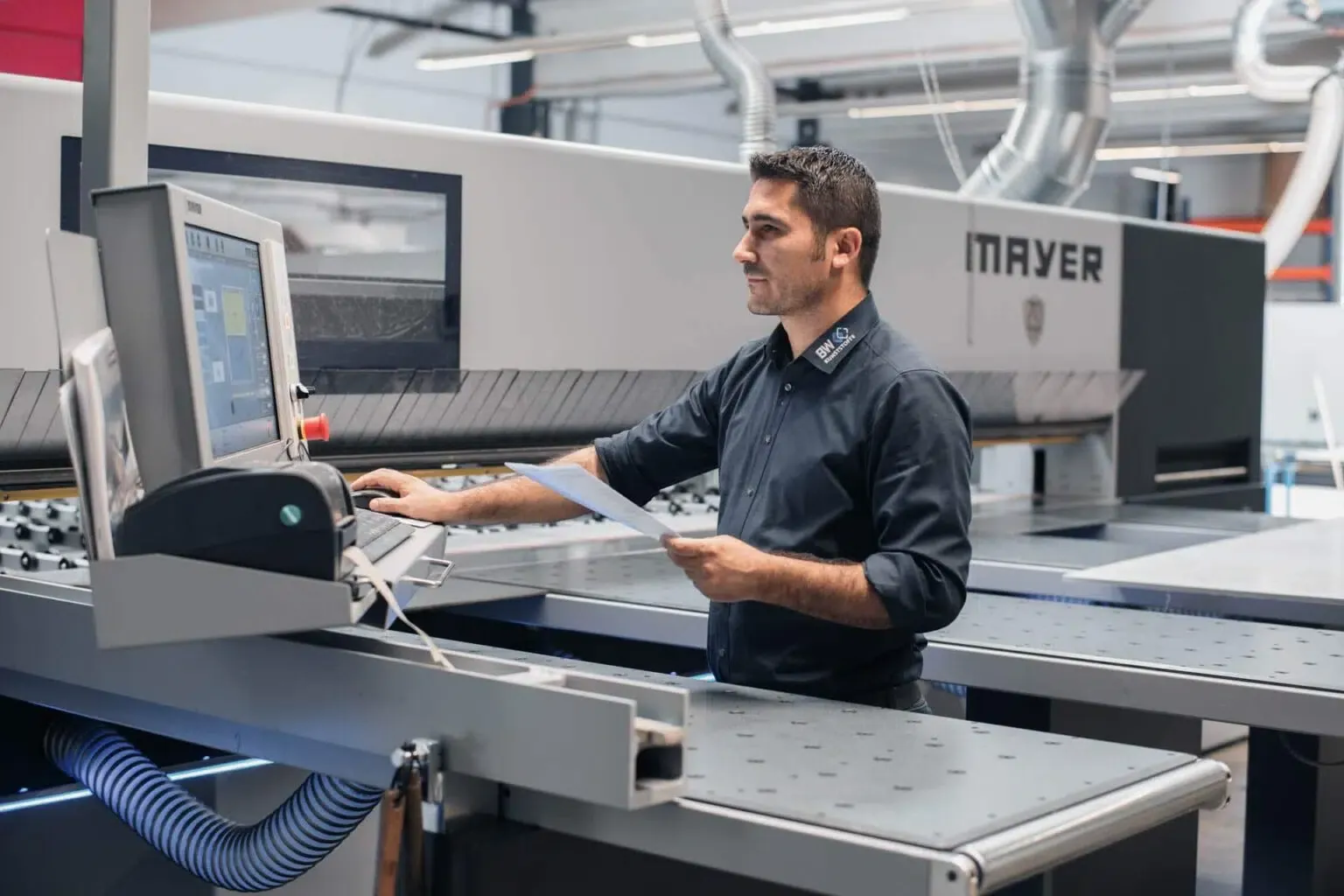
CNC machine for the machining of plasticsDue to the high melting temperature of polypropylene, welding requires particular care, yet at the same time the method offers the possibility of creating durable and stable bonds that are ideally suited for industrial applications.
No special machines are required for machining, as PP sheets can be sawn and drilled with standard tools for plastic machining. When selecting the right tools, however, care should be taken that they are suitable for plastics in order to obtain precise results and clean edges. The good machinability means that the sheets can be used in numerous constructions.
We also offer precise CO2 laser cutting or CNC machining, with which extremely accurate tolerances can be maintained. This is particularly important for applications where the highest precision is required, such as in mechanical engineering and in the electrical industry.
Our CNC milling machines enable the realisation of complex shapes and detailed components from PP sheets, acrylic sheets or PVC sheets, which allows great flexibility in the design of individual solutions.
Through thermoforming, PP sheets can be brought into a wide variety of complex shapes, which is particularly useful for applications in automotive engineering or in tank and container construction. Thermoforming offers the possibility of producing components directly in the desired shape, which shortens production times and enables tailor-made solutions.
Customer-specific options and additional services
Our polypropylene sheets are available in various sizes, thicknesses and variants in order to meet all customer requirements. In addition to standard and custom-made cut pieces, we offer electrically conductive and flame-retardant PP sheets. These variants significantly expand the range of applications and offer additional safety and functionality for special applications.
Use our CNC milling service to obtain tailor-made milled parts according to your specifications. We can guarantee tolerances of up to ±0.5 mm, which enables a precise fit, particularly for complex components. Our services also include thermoforming, which allows us to produce complex moulded parts quickly and efficiently, and the option of processing flame-retardant materials.
Formats and cut to size
Our polypropylene sheets are available in various sizes and thicknesses. They can be ordered both as a standard sheet and as an individual cut piece. Use our online configurator to specify your sheet dimensions exactly and complete your order directly.
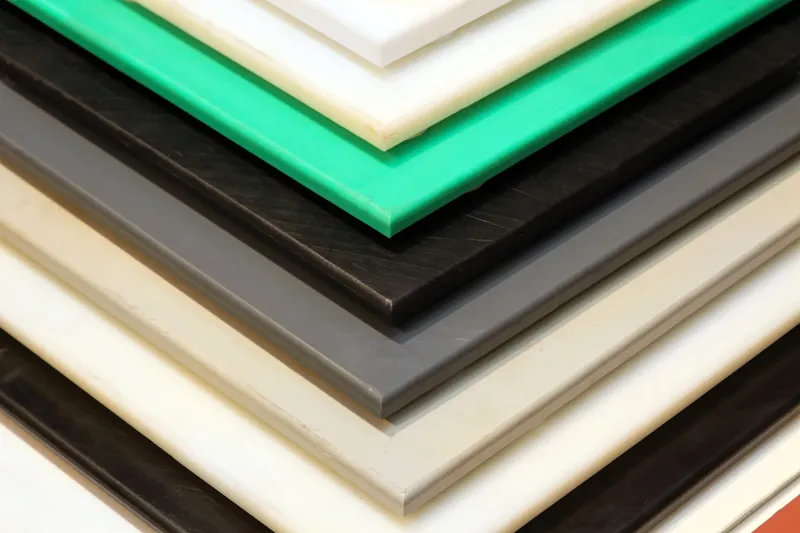
We offer a large selection of colours, including grey, white and natural, as well as thicknesses from 1 mm to 50 mm. This flexibility in the choice of size and thickness enables a broad range of applications, from simple covers to complex industrial projects.
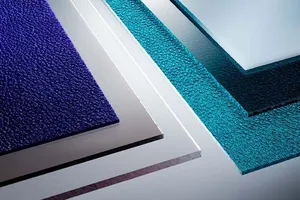
Polypropylene sheets can also be supplied in various surface finishes in order to meet the specific requirements of the respective application. Depending on requirements, smooth or textured surfaces are available, which offer different functional advantages.
Textured surfaces, for example, offer better slip resistance and are therefore often chosen for applications where safety plays a role.
Frequently asked questions about PP sheets
How heat-resistant is polypropylene?
PP is resistant up to 110 °C, and even up to 140 °C for short periods. Polypropylene is therefore eminently suitable for applications where high temperature resistance is required.
Is polypropylene food-safe?
Yes, our PP sheets are approved for use in the food sector. They do not release any harmful substances and are easy to clean, which makes them ideal for contact with food.
What machining options are there?
PP can be sawn, drilled, milled, welded and thermoformed. Precise temperature control is important during welding and thermoforming in order to achieve the best bond. Bending PP sheets is also possible, although controlled heating is necessary here in order to bring the material into the desired shape.
What advantages does CNC machining offer?
CNC machining enables precise cut pieces with extremely accurate tolerances. This method is ideal for demanding industrial applications that require high dimensional accuracy.
Are there electrically conductive or flame-retardant variants of PP?
Yes, we also offer electrically conductive and flame-retardant PP sheets that are specially designed for applications where there are increased requirements for safety or functionality.
Properties
- high mechanical strength
- high rigidity and surface hardness
- low density
- high heat deflection resistance
- very good chemical resistance
- good dielectric properties
- low moisture absorption
- easy to machine
Applications
Polypropylene sheets are ideally suited for applications in apparatus and mechanical engineering, for tank and container construction in the chemical industry as well as for other demanding industrial applications. Thanks to our tailor-made cut pieces and CNC-manufactured milled parts, we are able to implement both prototypes and series production according to your individual specifications.
- Mechanical engineering: PP sheets are eminently suitable for the construction of plain bearings, sliding discs and gears. The high abrasion resistance of polypropylene ensures that the components offer a long service life even under intensive use.
- Chemical industry: Thanks to their outstanding resistance to aggressive chemicals, they are the first choice for tank and apparatus construction. They are the preferred solution for tanks, containers and pipes that are exposed to chemical substances.
- Electrical industry: PP sheets offer excellent electrical insulation and are therefore ideal for control devices, plug connectors and other electronic components. The insulating properties of polypropylene make it the optimal choice for applications where electrical safety is of the utmost importance.
- Food industry: PP is food-safe and is often used in food processing. The sheets are used in the production and packaging of food, as they contain no toxic substances and are easy to clean.
- Tank and container construction: Due to their chemical resistance and the possibility of bringing the sheets into individual shapes, they are an outstanding choice for the construction of special containers. This applies both to small storage boxes and to large-volume tanks.
- Cleanroom technology: Thanks to their chemical resistance and their smooth surface, PP sheets are ideally suited for use in cleanrooms, where hygiene and chemical resistance play a major role.
- Furniture industry: PP is increasingly used in the furniture industry, in particular for weather-resistant outdoor furniture, as it is lightweight, robust and UV-resistant.
PP sheets in mechanical engineering
PP sheets are used in mechanical engineering for cladding, protective covers, containers, linings and technical constructions. The material stands out thanks to its high resistance to many chemicals as well as its low weight. At the same time, polypropylene is easy to machine and can be adapted to individual requirements by milling, drilling or welding. Particularly in areas with contact with moisture or aggressive media, PP sheets offer a long-lasting alternative to many other materials.
PP sheets for tank and container construction and plant engineering
In tank and container construction and plant engineering, PP sheets are among the most frequently used plastics. They are used for the manufacture of chemical tanks, spill trays, piping systems, ventilation systems and process vessels. Thanks to their high resistance to acids, alkalis and numerous chemicals, polypropylene sheets are eminently suitable for demanding industrial environments. Their good weldability also enables the economical production of complex constructions and individual custom solutions.
PP sheets in the food industry
PP sheets are frequently used in the food industry, as many variants are suitable for contact with food. Typical applications are cutting boards, covers, machine parts, conveyor technology components as well as containers for production and packaging processes. The low water absorption, the good cleanability and the high chemical resistance support hygienic production conditions. As a result, polypropylene sheets have become established in numerous areas of food processing and packaging technology.
Frequently asked questions about PP sheets
What are PP sheets?
PP sheets are made of polypropylene, a thermoplastic with high chemical resistance and good weldability. They are frequently used in mechanical engineering, tank and container construction and in the food industry.What are polypropylene sheets used for?
Polypropylene sheets are suitable, among other things, for containers, covers, technical components, welded constructions, laboratory applications as well as chemically demanding areas.Are PP sheets chemical-resistant?
PP sheets have a high resistance to many acids, alkalis and chemicals. As a result, they are particularly suitable for industrial applications and tank and container construction.Can PP sheets be ordered cut to size?
PP sheets can be manufactured as cut to size. This allows individual formats and thicknesses to be adapted exactly to the respective application.Can PP sheets be machined?
PP sheets can be sawn, milled, drilled and welded. The material is well suited for technical machining and individual plastic solutions.Are PP sheets food-safe?
Many PP sheets are suitable for applications in the food sector. The exact suitability depends on the material version and approval.
Technical data
- Density: approx. 0.91 g/cm³
- Tensile strength: 30 - 35 MPa
- Melting point: approx. 160 - 170 °C
- Operating temperature: -5 °C to +110 °C (short-term up to 140 °C)
- Water absorption: < 0.1%
- Chemical resistance: Very good against acids, alkalis and solvents
- Electrical insulation: Very good insulating properties
- Elongation at break: approx. 200 - 600 % depending on type
- Hardness (Shore D): approx. 65 - 70
- Tolerance for cut pieces: up to ±0.5 mm (CNC machining possible)
Formats: 2000 x 1000 mm 3000 x 1500 mm 4000 x 2000 mm
Thicknesses: 0.8 to 50 mm
We offer you a large selection of polypropylene sheets as cut pieces or as standard sheets in various sizes and thicknesses:
- PP standard sheets (2.0 x 1.0 metres) in thicknesses from 1mm to 50mm
- Cut pieces up to 4.0 x 2.0 metres in thicknesses from 1mm to 50mm
- PP sheets in grey, white or natural
- Welding rods in grey or natural