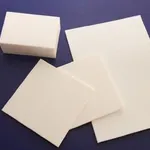
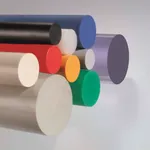
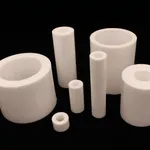
This image was created with artificial intelligence – marked under Art. 50 of the AI Act, Regulation (EU) 2024/1689. It is a placeholder until the company's photos arrive.
Viton seal
High-quality Viton seals for industry & trade. Resistant to chemicals, oils & heat. Discover our FKM seals.
Viton seals are high-performance sealing elements made from fluoro rubber (FKM) that have been developed specifically for demanding industrial operating conditions. The material is characterised by exceptional resistance to high temperatures, aggressive media and long-term mechanical stress.
In applications where standard elastomers such as NBR or EPDM reach their limits, Viton seals offer a reliable and permanently stable solution. They ensure a secure seal even under extreme conditions and thus make a significant contribution to operational safety and plant availability.
Typical areas of application are industrial plants with contact to oils, fuels, chemicals or thermally stressed systems. Particularly in critical applications where material failure can cause high consequential costs, FKM seals are specifically used.
For flat applications, sealing strips or individual geometries, FKM sheets are also available, from which dimensionally accurate cut pieces can be produced.
We supply Viton seals as precisely manufactured cut pieces as well as in defined standard dimensions – tailored to industrial requirements and series applications.
Areas of application for Viton seals
- Mechanical and plant engineering: Use at thermally and chemically stressed sealing points in complex plants.
- Chemical and process industry: Sealing in contact with aggressive media and solvents.
- Automotive industry and commercial vehicle engineering: Use in fuel systems and high-temperature-stressed components.
- Hydraulic and pneumatic systems: Ensuring tight connections under pressure and media contact.
- Oil and gas industry: Use in plants with hydrocarbons and high temperatures.
- Food technology: Use with suitable grades and corresponding approvals.
- Maintenance and servicing: Replacement and retrofitting in existing systems with increased requirements.
Properties of Viton seals (FKM)
Viton seals made from fluoro rubber are specifically used when classic elastomers reach their performance limits in the long term. The material combines high thermal stability with pronounced chemical resistance and remains dimensionally stable even under continuous stress.
The temperature resistance in continuous operation is typically up to +200 °C, with higher temperatures possible for short periods. At the same time, FKM shows a very low tendency to swell in contact with oils, fuels and many hydrocarbons, whereby the sealing function is maintained over long periods.
A further advantage lies in the low gas permeability as well as the high resistance to ozone, weathering and ageing. As a result, Viton seals are particularly suitable for applications with long maintenance intervals and high requirements for process reliability.
Compared to other elastomers, the material remains stable even under varying loads and shows consistent mechanical performance over the entire service life.
Chemical resistance
| Medium / substance class | Resistance | Note |
|---|---|---|
| Mineral oils & lubricating greases | Very good | Permanently resistant |
| Fuels (incl. E10) | Very good | Also usable with increased ethanol content |
| Aromatic hydrocarbons | Very good | e.g. benzene, toluene |
| Aliphatic hydrocarbons | Very good | e.g. hexane, heptane |
| Organic solvents | Good to very good | Type-dependent |
| Ketones (acetone, MEK) | Align area of application to other materials | Swelling/decomposition possible |
| Amines | Align area of application to other materials | Rapid degradation possible |
| Hot water/steam (>100 °C) | Assess use carefully | Type-dependent |
Temperature behaviour and key mechanical data (typical values)
| Viton® type | Temperature range (°C) | Shore hardness (A) | Density (g/cm³) | Special feature |
|---|---|---|---|---|
| Standard FKM | −20 to +200 | 75 ±5 | 1.80 | Universal use, good oil & fuel resistance |
| FKM type F | −20 to +200 | 75 ±5 | 1.85 | Increased resistance to acids & steam |
| FKM GLT (Low Temp) | −31 to +200 | 75 ±5 | 1.82 | Improved low-temperature flexibility |
| FKM GFLT (Low Temp) | −45 to +200 | 75 ±5 | 1.82 | Maximum low-temperature resistance |
Comparison: Viton (FKM) vs. other elastomers
| Material | Temperature resistance | Chemical resistance | Typical areas of application |
|---|---|---|---|
| FKM (Viton) | Very high | Very high | Chemicals, fuels, high temperature |
| NBR | Medium | Good with oils | Standard applications, hydraulics |
| EPDM | Medium | Very good with water/steam | Outdoor area, hot water |
| PTFE | Extremely high | Extremely high | Special applications, aggressive chemicals |
FKM positions itself as a high-performance material for applications in which temperature and chemicals occur simultaneously.
Typical errors when selecting Viton seals
- Media compatibility incorrectly assessed: use with unsuitable chemicals such as ketones or amines leads to swelling or material degradation.
- Operating temperature insufficiently taken into account: continuous and peak temperatures are set too low and accelerate wear.
- Wrong Shore hardness selected: unsuitable hardness impairs the sealing effect and the recovery capability.
- Geometry designed unsuitably: dimensions and shape do not match the installation situation.
- Pressure and load situation ignored: dynamic and static loads are insufficiently taken into account.
- Installation conditions neglected: surfaces, compression and installation clearance do not match the application.
- Unsuitable FKM type selected: standard, F, GLT or GFLT type is selected without reference to the application.
- Ageing and environmental factors underestimated: ozone, weathering and continuous load are insufficiently planned for.
Service life and durability of Viton seals
Viton seals achieve a significantly longer service life in industrial use than many standard elastomers. The high resistance to temperature, ozone and chemical media considerably reduces ageing processes and material degradation.
In many applications this leads to extended maintenance intervals and shorter downtimes. The actual service life depends on operating conditions such as temperature, pressure and medium, but in practice is often significantly longer than comparable materials.
Standards and approvals
Depending on the application, Viton seals are used in areas that require specific standards and approvals. These include, among others, requirements from the food industry, the chemical industry or the automotive sector.
Typical framework conditions include REACH conformity, possible FDA approvals for certain grades as well as industry-specific requirements for material resistance and safety.
Differences between the FKM types
Within the FKM material group there are various types that are optimised for different requirements. Standard FKM is suitable for many applications with oil and fuel contact, while type F offers increased resistance to acids.
Low-temp variants such as GLT and GFLT extend the area of application towards low temperatures and enable use in applications with changing climatic conditions.
Costs and economic efficiency
Viton seals are priced above many standard elastomers, but offer an economically sensible solution thanks to their high resistance and long service life.
The shorter maintenance intervals, reduced downtimes and increased process reliability lead to lower overall costs over the entire service life in many applications.
Practical examples from application
In hydraulic systems, Viton seals ensure reliable sealing in contact with oil-based media and increased temperatures. In the chemical industry they are used in pumps and valves to safely convey aggressive media.
In fuel systems of modern vehicles too, they ensure stable sealing under changing temperatures and media compositions.
Advantages of Viton seals in industrial use
Viton seals offer clear advantages over standard elastomers in demanding applications:
- Long service life under thermal and chemical stress
- Reduced maintenance effort due to less ageing
- High process reliability with critical media
- Broad spectrum of use in various industries
- Good combination of elasticity and strength
Particularly in the case of plant shutdowns or safety-relevant processes, the use of FKM seals pays for itself very quickly through reduced failure risks.
Limits and application notes
Despite the very good properties, there are areas of application in which alternative materials are better suited:
- Limited resistance to ketones and amines
- Limited suitability for hot water and steam (depending on type)
- Standard FKM only suitable to a limited extent for low temperatures
- Higher material costs compared to NBR or EPDM
A material-appropriate selection is therefore decisive for the long-term function of the seal.
Manufacture and cutting of Viton seals
Viton seals are manufactured using different production processes depending on the application and geometry. For series applications, punching processes are often used, while complex contours and smaller quantities are produced using waterjet or CNC technology.
The choice of production process depends on factors such as material thickness, tolerances, quantity and geometry. Particularly in technical applications, dimensional accuracy plays a central role, since even small deviations can influence the sealing function.
Individual cut pieces are produced on the basis of drawings, samples or technical specifications. Different Shore hardnesses, material types and specific requirements can be taken into account in order to ensure optimum adaptation to the respective application.
For flat sealing tasks and cut pieces made from FKM, the suitable solution is also available as Viton rubber sheet.
Selection criteria for the right Viton seal
The following factors should be taken into account when selecting:
- Medium and chemical stress
- Temperature range (continuous and short-term)
- Mechanical stress
- Pressure conditions
- Geometry and installation situation
- Approvals or standard requirements
A precise coordination of these parameters ensures that the seal functions reliably in the long term.
Frequently asked questions about Viton seals
What are Viton seals?
Viton seals are made from fluoro rubber (FKM). The material stands for high temperature resistance, very good media compatibility and stable sealing properties under continuous industrial load.
Where are Viton seals used?
Viton seals are used in the automotive industry, aerospace, the chemical and process industry as well as in mechanical and plant engineering, particularly in contact with high temperatures and chemically demanding media.
What advantages do Viton seals offer?
Viton seals offer very high resistance to temperatures, chemicals, oils and fuels. They are characterised by low ageing, long service lives and reliable sealing performance.
For which temperature range are Viton seals suitable?
Standard FKM types are typically designed for a temperature range of about −20 °C to +200 °C. Special grades enable extended high- or low-temperature ranges depending on the requirement.
What chemical resistance do Viton seals have?
Viton seals show very high resistance to oils, fuels, many solvents as well as aromatic and aliphatic hydrocarbons. The exact compatibility depends on the respective FKM type.
How is the size of a Viton seal determined?
The dimensions depend on the components, the groove geometry and the operating conditions. Dimensional accuracy and suitable preload are decisive for reliable sealing.
How are Viton seals maintained?
A clean installation situation, regular visual inspections and material-appropriate handling support a long service life. The seals should be kept free from mechanical damage.
How long do Viton seals last?
With suitable design, Viton seals achieve service lives of several years. Temperature, pressure, media contact and mechanical load influence the actual service life.
Are Viton seals suitable for food applications?
For direct food contact, specially certified FKM grades are used that comply with the corresponding legal requirements.
How are Viton seals installed?
Viton seals are inserted into the intended grooves and brought into position by defined compression. Uniform preload supports the permanent sealing effect.
Are Viton seals UV-resistant?
FKM offers good resistance to UV radiation and ozone, whereby Viton seals are also suitable for applications with environmental influences.
How do Viton seals differ from other elastomers?
Compared to NBR, EPDM or silicone, Viton offers particularly high chemical resistance and temperature resistance. Other elastomers are specifically used when other media or temperature ranges are the focus.
How can the tightness of a Viton seal be checked?
The sealing effect is assessed by visual inspections, pressure tests or application-specific test methods, depending on the area of application and safety requirements.
Can Viton seals be made to measure?
Viton seals are available as cut pieces or in individual dimensions. Precise production ensures consistent sealing performance.